Born in Honolulu, Mason Jennings moved to Pittsburgh with his family a short time later. Soon after that Minneapolis became his home. He wrote songs and made demo tapes, but eschewed record label offers in favor of self-releasing his first record in order to keep creative control. That first record, featuring only Jennings and his guitar, was recorded and re-recorded four times before he was satisfied enough to release it. Although his debut brought more interest from labels and led to a local performance residency, he remained an independent artist for several years.
“Be Here Now” is from his sixth album, Boneclouds, for which he finally moved to a major label (Epic). Although the arrangements are more filled out than on previous records, for the most part it represents a smooth transition from his earlier, more organic and stripped-down sound to one more suited for radio airplay–at least independent radio airplay.
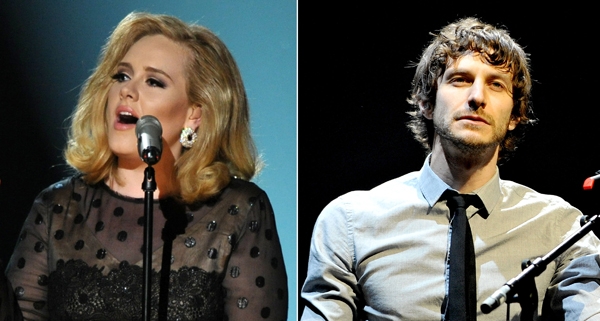
Adele’s mega-smash 21 was 2012’s best-selling album in the United States, marking the first time during the SoundScan era that the same album has taken that top spot two years in a row, Billboard reports.
Selling 4.41 million copies this year (down from last year’s 5.82 million), 21 also became the 21st album to sell 10 million copies since SoundScan started tracking music sales in 1991. The album hasn’t left the Billboard 200, nor the weekly top 40, since its debut on March 21st, 2011. Along with topping the Billboard charts again, Adele’s 21 was the best-selling album on iTunes two years running.
Coming in second in album sales was Taylor Swift’s Red, which moved 3.11 million copies. One Direction nabbed both the third and fifth spots with their two records, Up All Night (1.62 million) and Take Me Home (1.34 million), becoming the first act in the SoundScan era to take two of the top five spots. In fourth place was Mumford & Sons’ Babel, whose 1.46 million made it the biggest selling rock album of the year, and the only rock record appear in the top 10.
Gotye had the year’s biggest digital single with “Somebody That I Used to Know,” with sales of 6.8 million. Carly Rae Jepsen’s “Call Me Maybe” was second with sales of 6.47 million; and fun. came in third with their Janelle Monáe collaboration “We Are Young,” which sold 5.95 million. All three songs sold more than the previous record-holder for sales in a single year, which was Adele’s “Rolling in the Deep,” which moved 5.81 million in 2011.
In fourth place for singles was Maroon 5’s collaboration with Wiz Khalifa “Payphone,” while Nicki Minaj’s “Starships” sold 3.98 million copies to land in the fifth spot. Rounding out the top ten were One Direction’s “What Makes You Beautiful” at number six (3.89 million), fun.’s “Some Nights” in seventh (3.84 million), Kelly Clarkson’s “Stronger (What Doesn’t Kill You)” in eighth (3.82 million), Psy’s “Gangnam Style” in ninth (3.59 million) and Maroon 5’s “One More Night” in tenth (3.46 million).
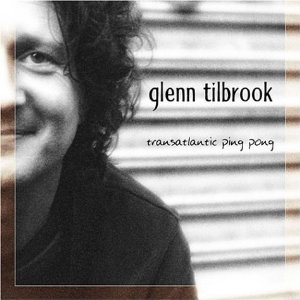
A typically tasty confection from the ex-Squeeze Tilbrook’s 2004 solo effort. The Difford-Tilbrook songwriting team is frequently compared by critics to Lennon-McCartney, but in America at least they never found the audience they deserved.
The purpose of Taylor Hackford’s 1987 film Hail! Hail! Rock ‘n’ Roll was to document two concerts held at the Fox Theatre in St. Louis to celebrate Chuck Berry’s 60 birthday, and that it does, giving audiences loads of concert footage. Berry plays the hits, backed by an all-star band of legendary bluesmen, R&B singers, and rock guitarists, assembled and directed by president of the Chuck Berry fan club, Keith Richards: There’s Bobby Keys and Chuck Leavell, Robert Cray and Eric Clapton, Etta James and Linda Ronstadt. And that’s not to mention the “talking head” appearances from people like Bo Diddley, Jerry Lee Lewis, Roy Orbison, Little Richard, and Bruce Springsteen. In the pantheon of rock-docs, it’s up there with Last Waltz. The live takes are electrifying—the band’s pistons pound as they struggle to keep up with Berry. If the man had slowed down any in his sixth decade, it’s little wonder he had trouble holding onto backing bands in his youth.
But there’s another reason Berry burned through musicians. He is not an easy man to work with (nor, I would think, for). Brilliant live performances abound in Hackford’s film, but its principal charm is the rehearsal footage, where Berry berates and bewilders his musicians–and sometimes, like he does above to Richards, takes them to rock ‘n’ roll school. In the clip above, Richards, Berry, and band rehearse “Carol,” but it takes them a good while to get going. Richards tries to play bandleader and, thinking he’s doing Chuck a favor—or not wanting to lose the spotlight—suggests that Berry play rhythm while he plays the lead. Berry agrees at first. They bicker and look daggers at each other as Richards spoils a bend that only Chuck can play to his own satisfaction. Finally he dives in and takes over. Why not? It is his song. Richards falls in line, takes the rhythm part, but looks a little sullen as Berry outshines him. It’s almost an oedipal struggle. But the old rock forefather isn’t about to roll over and let the Brit take over.
Elsewhere in the film, Berry gives voice to the underlying anger he harbored for Richards. The Stones and other British bands took Berry’s riffs (he claimed) and made millions, and Chuck never forgave them. He still doesn’t get enough credit. The Rolling Stones still tour and record, but Berry, almost twenty years older than Richards, is still out on the road too, still showing ‘em how it’s done.









 Every Moment Has A Song