Jonathan Coulton Explains How Glee Ripped Off His Cover Song — And Why He’s Not Alone

coulton(Source: Wired)

Fans of indie musician Jonathan Coulton were incensed last week when an alleged Glee version of “Baby Got Back” surfaced on the internet that seemed to shamelessly rip off Coulton’s distinctive arrangement of the 1992 Sir Mix-A-Lot song. Last night, that cover version was confirmed as an official Glee track when it appeared on the mid-season premiere of the Fox show, and is currently for sale on iTunes.

Fox’s hard-nosed, corporate disregard for the work of an independent musician seems ironic particularly in the context of Glee, a television show whose core themes have so often revolved around the plight — and triumph — of the underdog. “If this were an episode of Glee I would win. The way they’re behaving is so antithetical to the message of their show,” Coulton told Wired.

“It’s a little frustrating. Whether or not they’re in the right legally, it doesn’t seem like the best way to handle it. If you’re going to claim that you’re giving an artist exposure and they should be grateful — there’s a right way to do that. Contact them ahead of time. Say this is great, we’re going to talk about it on our blog and tell all our fans that they should be fans of yours. We’re going to put a credit in the show. That doesn’t cost them anything. It’s a show with something like a $3.5 million budget for each episode, but there are still so many free things they could have done to engender goodwill.”

Coulton’s version of “Baby Got Back”


“Baby Got Back” from Glee


After the “Sadie Hawkins” episode aired, Coulton posted a tweet that read “I am pretty angry,” and elaborated further on his blog:

Well, they aired it, seemingly unchanged. And it’s now for sale in the US iTunes store. They also got in touch with my peeps to basically say that they’re within their legal rights to do this, and that I should be happy for the exposure (even though they do not credit me, and have not even publicly acknowledged that it’s my version – so you know, it’s kind of SECRET exposure). While they appear not to be legally obligated to do any of these things, they did not apologize, offer to credit me, or offer to pay me, and indicated that this was their general policy in regards to covers of covers. It does not appear that I have a copyright claim, but I’m still investigating the possibility (which I consider likely) that they used some or all of my audio.

After the track first leaked, Coulton asked audio-savvy fans on Twitter to analyze the similarities between the two tracks, speculating that portions of his actual recording may have been lifted for the Glee version, particularly the hand claps and a duck quack sound he had substituted for an expletive. At least one fan, Paul Potts, conducted an in-depth analysis of both files during the duck quack, and while he says it was hard to prove definitively using only the compressed Fox audio, the waveforms appear remarkably similar.

“I’ve thought a lot about what satisfaction I can possibly get out of this situation and I’m not sure yet what the answer is,” said Coulton. “I’m still looking into what I consider to be a very real possibility that they used the audio tracks… That would be a pretty cut and dry violation. You can’t just use somebody’s audio without their permission. If they did, there’s not much question that they’re violated my copyright, as I understand the law. There’s still a chapter yet to come.”

Coulton’s willingness to speak up and enlist the support of his online audience also prompted other artists to come forward, claiming that their song arrangements had been lifted wholesale by Glee for songs aired on the show and sold for profit on iTunes.

DJ Earworm, a.k.a. the San Francisco-based mashup artist Jonathan Roseman, pointed out that a 2012 Glee cover of R. Kelly’s “I Believe I Can Fly” similarly appeared to be lifted from his arrangement of the song, as did singer/songwriter Greg Laswell, who told The Hollywood Reporter in 2011 that his version of Cyndi Lauper’s “Girls Just Want to Have Fun” also appeared to have been used without permission on the Fox show.

“Of the Glee version, I think they have enough talent over there that they shouldn’t need to go rummaging through other artists’ work,” said Laswell at THR. “Public acknowledgement of their note-for-note rendition would have gone a long way.”

“It does seems to be kind of a pattern,” said Coulton. “It doesn’t seem like it could possibly be a mistake you would make if you had that legal team… They decided it was a legal risk they feel comfortable taking.”

At the very least, he suggested, they could offer to pay artists whose arrangements they use the same amount of money they would otherwise pay a musical arranger. “If they opened with that, I’m sure a lot of artists would jump at the chance.”

Still, Coulton says he isn’t interested in financial compensation so much as he is a conversation about the way Fox treats the artists whose musical arrangements they use and profit from.

“The most frustrating thing is the completely silent nature of their approach to this ‘exposure bonus’ for me. The thing I would wish for most is a frank and open and public discussion with them about what they have done, what they believe they have done and what their actual policy is on this kind of thing. And I don’t know if I’m going to get that,” said Coulton.

When asked for comment on the issue, Fox representatives did not respond.

Coulton said that while his lawyers have been looking into the copyright issue, it seems unlikely that he will have any legal recourse. ”It seems that because of the compulsory license I purchased when I made a cover of this song, the arrangement itself is not protected under copyright, although it’s the darkest gray of the gray areas [of the law]… While there may be some weird offshoot of the law, it doesn’t seem like something where a little guy could sue to get any satisfaction.”

Science Proves: Pop Music Has Actually Gotten Worse

worse

(Reprinted from Smithsonian.com and Scientific American)

by John Matson

Music just ain’t what it used to be. At least, that’s the stereotypical lament of each receding generation of music listeners. It’s also one way to read a new study on the evolution of pop music in the past half-century.

A group of researchers undertook a quantitative analysis of nearly half a million songs to look for widespread changes in music’s character over the years. The findings, published online July 26 in Scientific Reports, show that some trends do emerge over the decades—none of them necessarily good. (Scientific American and Scientific Reports are both parts of Nature Publishing Group.)

The researchers based their analysis on the Million Song Dataset, a publicly available 280-gigabyte file that provides a sort of background sketch—name, duration, tempo, and so on—of songs from nearly 45,000 artists. Of the million songs therein, 464,411 came out between 1955 and 2010 and include data on both the sonic characteristics and the year of release.

Joan Serrà, a postdoctoral scholar at the Artificial Intelligence Research Institute of the Spanish National Research Council in Barcelona, and his colleagues examined three aspects of those songs: timbre (which “accounts for the sound color, texture, or tone quality,” according to Serrà and his colleagues); pitch (which “roughly corresponds to the harmonic content of the piece, including its chords, melody, and tonal arrangements”); and loudness (more on that below).

After peaking in the 1960s, timbral variety has been in steady decline to the present day, the researchers found. That implies a homogenization of the overall timbral palette, which could point to less diversity in instrumentation and recording techniques. Similarly, the pitch content of music has shriveled somewhat. The basic pitch vocabulary has remained unchanged—the same notes and chords that were popular in decades past are popular today—but the syntax has become more restricted. Musicians today seem to be less adventurous in moving from one chord or note to another, instead following the paths well-trod by their predecessors and contemporaries.

(This fake song demonstrates the lack of timbral variety and homogenization of much current pop)

Finally, it comes as no surprise that music has gotten louder. A piece of music’s loudness is an intrinsic characteristic of the recording, not to be confused with the listener-controlled volume. “Basically, the audio signal, when recorded and stored, is physically bounded to be between certain values (+1 and –1 volts in original recording systems),” Serrà explained in an email. “You can record signals fluctuating between –0.2 and +0.2 or between –0.6 and +0.6 (positive and negative fluctuations are necessary to make the loudspeaker membrane move). That’s the intrinsic loudness level we’re talking about.”

For years audiophiles have decried the “loudness wars”—the gradual upping of recorded music’s loudness over time, in an apparent effort to grab listeners’ attention. Loudness comes at the expense of dynamic range—in very broad terms, when the whole song is loud, nothing within it stands out as being exclamatory or punchy. This two-minute YouTube video does a great job of demonstrating how excessive loudness saps richness and depth from a recording:

Indeed, Serrà and his colleagues found that the loudness of recorded music is increasing by about one decibel every eight years.

It’s an interesting study, and it seems to support the popular anecdotal observation that pop music of yore was better, or at least more varied, than today’s top-40 stuff. (A recent study also found that song lyrics are darker and more self-focused than they used to be.) But I did wonder if there was a selection bias in play here. The Million Song Dataset, huge as it is, may not provide a representative slice of pop music, especially for old songs. Its contents are heavily weighted to modern music: the database contains only 2,650 songs released between 1955 and 1959, but nearly two orders of magnitude more—177,808 songs—released between 2005 and 2009. That’s because it draws on what’s popular now, as well as what has been digitized and made available for download. And the songs of yesteryear that people enjoy today (as oldies) may not be the same ones that people enjoyed when those songs first came out.

Let’s assume for the moment that the trends identified in the new study—especially the homogenous timbres and restricted pitch sequences—are bad. Then the rare song that bucked those trends, offering up novel melodies and sonic textures, would stand out as being good. Therefore, that song would have a better chance than its contemporaries of surviving the test of time—that is, a better chance of finding itself digitized and widely played some 50 years after its release, thereby boosting its odds of inclusion in the Million Song Dataset. Meanwhile, the blander tunes of decades past would have faded into analog obscurity. The relatively few old songs in such a database, then, would tend to be more sonically interesting than the average song of today, and any analysis comparing old songs to new would likely reflect that. So I wondered if part of what this study is telling us is that bland music can fool us, but not for long.

Serrà acknowledged in an email that a bias due to the “test of time” effect is possible but argued that its influence should be small. For instance, he noted, the long-term patterns and trends that he and his colleagues identified also hold over relatively short—and relatively recent—time periods (say, 1997 to 2007), where the “test of time” effect should be minimal. “The same happens with close and not-so-recent time periods (e.g., 1960 and 1968), where both years could partly incorporate such an effect,” he wrote. “Since the trend is consistent in short time spans where you assume the ‘test of time’ bias is minimal and, furthermore, the trend is also consistent for longer time spans, we can assume it is a general trend and, thus, that the ‘test of time’ effect is really small.”

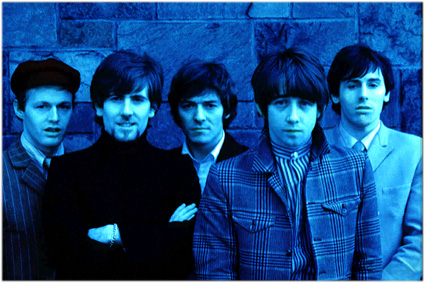
Ten Great Hollies Songs That Never Hit the U.S. Top 40

Hollies 2

When Beatlemania shook America in 1964 the band set the table, opened the door, primed the pump and greased the kitty for many other acts who to varying degrees capitalized on America’s sudden appetite for anything British.

Not only did the Hollies follow in the Beatles’ wake, but their early sound owed more to the Fab Four than did that of say, the Who or the Animals. So it’s hard to understand why it didn’t translate into greater stateside success–they were always a much more successful act back in England, where they charted 17 top ten singles, compared to 6 in the U.S.

Of course, we’re familiar with their classic songs that were smashes on both sides of the Atlantic: “Bus Stop”, “Carrie-Anne”, “Stop Stop Stop”, “He Ain’t Heavy, He’s My Brother”, “Long Cool Woman (In a Black Dress)” and “The Air That I Breathe”.

But there were a lot of quality songs seldom heard, or never heard, on American radio–songs that either missed the top 40 or were never released here at all. Here are ten singles and album tracks, all released between 1964 and 1968, that make the case for the Hollies being a better band than we generally realize:

_________________________

1. “Just One Look”

Their cover of Doris Troy’s 1963 hit, covered again by Linda Ronstadt in 1979. But only Troy’s original managed to crack the top 40.

2. “Here I Go Again”

This one wouldn’t be out of place on A Hard Day’s Night.

3. “Don’t You Know”

I hear “Eight Days a Week” in the rhythm here.

4. “I Can’t Let Go”

Another song that was later a hit for Ronstadt. But while she took it to the top 40 the Hollies’ version stalled just outside it.

5. “Tell Me To My Face”

Great song, great riff. I think if they’d only added their usual harmonies to this one it could have been a hit. Covered in an excellent version by Dan Fogelberg and Tim Weisberg in 1978 (they did add Hollies-type harmonies). But only Keith (the “98.6” guy) hit the top 40 with this song.

6. “You Need Love”

Just when you expect a guitar solo they come in with Tijuana Brass horns. In another similarity to the Beatles, the Hollies would throw in a curveball instrument for a solo (steel drums in “Carrie-Anne”, bells in “Pay You Back with Interest”, psychedelic banjo in “Stop Stop Stop”, etc.)

7. “Would You Believe”

Getting a little more ambitious here. This sounds like something from the Bee Gees’ Odessa album. (That’s a compliment.)

8. “Butterfly”

Now we’re into full-on psychedelia. Donovan, the Zombies, Chad & Jeremy–most Invasion acts jumped on the bandwagon with something in this vein.

9. “Wings”

For my money this might be the true lost treasure of the batch. And maybe not coincidently this one sounds like no one but the Hollies. It’s a bit of a rarity too, having never been included on one of the band’s albums. It appeared on a various artist collection entitled No-One’s Gonna Change Our World, made as a benefit for the World Wildlife Fund.

10. “Listen To Me”

The last single to feature Graham Nash in the band. A #11 hit in England. It didn’t chart in the U.S.

hollies

See also:

Ten Great Asia Songs That Never Hit the U.S. Top 40

Ten Great Irish Rovers Songs that Aren’t ‘The Unicorn’

Ten Great Proclaimers Songs that Aren’t ‘I’m Gonna Be (500 Miles)’

Ten Great Weezer Songs That Aren’t from the ‘Blue Album’

Dee Snider Confused by ‘Draft Dodger’ Ted Nugent’s Conservative Following

snyder

Over the past decade or so, Ted Nugent has gotten more publicity for his conservative political views than his music. Earlier this month, Nugent wrote an open letter to vice President Joe Biden about his views on gun control. However, Dee Snider recalls a time when the “Motor City Madman” wasn’t so thrilled with the idea of carrying a gun. In a new interview, the Twisted Sister frontman recalled Nugent’s unwillingness to fight in the Vietnam War.

“Ted’s always been a gun-toting conservative,” he told Noisecreep. “But what gets me is that he was actually a draft dodger! I mean, to the point where he didn’t bathe for a week, and vomited on himself to deliberately avoid the draft. I totally understand why he did that, but all of these Republicans who love Ted don’t seem to know or remember that too well. It’s crazy that he’s become one of the voices of Conservative America even though he was a draft dodger. If you don’t believe me, Google it.”

Snider is repeating the oft-told interview Nugent gave to High Times in 1977. “I got my physical notice 30 days prior to,” Nugent said. “Well, on that day I ceased cleansing my body. No more brushing my teeth, no more washing my hair, no baths, no soap, no water. Thirty days of debris build. I stopped shavin’ and I was 18, had a little scraggly beard, really looked like a hippie…Then two weeks before, I stopped eating any food with nutritional value…Then a week before, I stopped going to the bathroom. I did it in my pants. poop, piss the whole shot. My pants got crusted up.”

The result was, in his words, a “big juicy 4-F,” which meant that he was unfit for military service and thus ineligible for the draft. Nugent has since disavowed those words, stating that he had a student deferment and that he made up the story to fool the pro-marijuana publication.

However, Snopes has found that, while Nugent did have a deferment, it expired in 1968. He failed a physical a year later and was classified 1-Y (‘qualified for service only in time of war or national emergency”), which was changed to 4-F in 1971.

Songs You May Have Missed #303

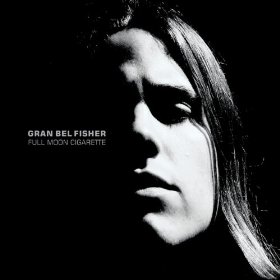
fisher 2

Gran Bel Fisher: “Tonight” (2006)

As irritating as CD hidden tracks can be (especially the ones that play only several minutes after the conclusion of the listed songs) I can understand the reasoning for their existence in some cases. Although the unlisted track at the back end of Gran Bel Fisher’s Full Moon Cigarette is an album highlight, its sound and lyrical tone are too far removed from the rest of the album to fit comfortably anywhere else. And it’s too good to be a B-side.

See also: https://edcyphers.com/2012/02/05/songs-you-may-have-missed-4/

Songs You May Have Missed #302

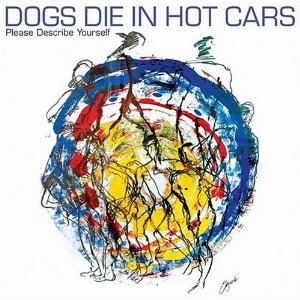
dogs die

Dogs Die in Hot Cars: “Celebrity Sanctum” (2004)

I can’t believe this album is almost a decade old now. In 2004 Scotland’s Dogs Die in Hot Cars gave us something fresh by updating 80’s new wave, specifically the slightly goofy sounds of XTC, Dexy’s Midnight Runners and Talking Heads. If you like tuneful, not-too-serious pop that sounds just a little like the stuff from a few decades ago, I highly recommend you pick up their only album, Please Describe Yourself. Current CD price on Amazon.com: less than four bucks.

See also: https://edcyphers.com/2012/02/02/songs-you-may-have-missed-3/

Previous Older Entries Next Newer Entries