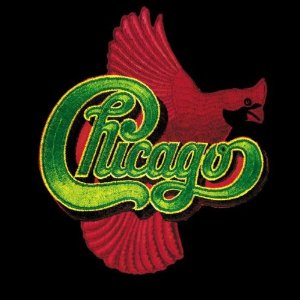
There’s nothing fancy going on here, just one of those songs that made a great album opener (complete with count-off) setting the tone for what I consider to be Chicago’s last great album. It’s a simple ditty, but has everything a good Chicago song should: the horn charts, the fiery Terry Kath guitar solo, and an uplifting vibe. They were a band nearing the end of their true classic period–but they weren’t quite dead yet.
If you’re over the age of 40 and continue to be exposed to contemporary pop radio I don’t have to tell you the landscape has changed a bit since say, the 70’s.
Some of the more profound and obvious developments would include the greater prominence of the “bottom end” in the sound mix (70’s AM radio catered to the portable transistor radio) and of course the emergence of rap and hip-hop.
But there are several whole types of pop songs that were much more commonly found on the radio in past decades whose absence you may not have even noticed. Allow me to call attention to a few:
Six Types of Songs That Aren’t on the Pop Charts Anymore
1. Songs About God
The pop charts are a more secular place these days, while religion formerly found a regular spot on the radio, particularly in the five-year period from 1969-74. For example:
“Oh Happy Day”-Edwin Hawkins Singers (#4 in 1969)
“My Sweet Lord”-George Harrison (#1 in 1970)
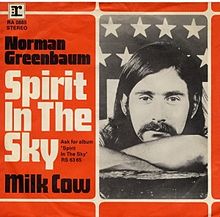
“Spirit in the Sky”-Norman Greenbaum (#3 in 1970)
“Put Your Hand in the Hand”-Ocean (#2 in 1971)
“The Wedding Song (There is Love)”-Paul Stookey (#24 in 1971)
“Mighty Clouds of Joy”-B.J. Thomas (#34 in 1971)
“Morning Has Broken”-Cat Stevens (#6 in 1972)
“Amazing Grace”-Royal Scots Dragoon Guards (#11 in 1972)
“Day By Day”-Godspell (#13 in 1972)
“Speak to the Sky”-Rick Springfield (#14 in 1972)
“Why Me”-Kris Kristofferson (#16 in 1973)
“The Lord’s Prayer”-Sister Janet Mead (#4 in 1974)
2. Jazz Crossover Hits
It’s strange to even realize there was a time–called the Big Band Era–when jazz was the top 40. I’m not going too far out on a limb to predict it’ll never happen again. But jazz had at least a presence on pop radio right up until about 1980–a little later if you consider what Kenny G did to be jazz, or allow for a bit of a one-off with US3’s “Cantaloop” in 1993. What happened to the jazz hit song?
“Take Five”-Dave Brubeck Quartet (#25 in 1961)
“The Girl From Ipanema”-Stan Getz with Astrud Gilberto Byrd (#5 in 1964)
“The ‘In’ Crowd”-Ramsey Lewis (#5 in 1965)
“The Look of Love”-Sergio Mendes & Brasil ’66 (#4 in 1968)
“Grazing in the Grass”-Hugh Masekela (#1 in 1968)
“Breezin'”-George Benson (#63 in 1976)
“Feels So Good”-Chuck Mangione (#4 in 1978)
“Morning Dance”-Spyro Gyra (#24 in 1979)
3. Instrumental Hits
Of course, there’s a certain degree of overlap between instrumental and jazz hits of past decades, but there have been countless surf, R&B, disco and movie soundtrack instrumental hits too. When was the last time a pure instrumental became a top 40 hit?
“Sleep Walk”-Santo & Johnny (#1 in 1959)
“Last Date”-Floyd Cramer (#2 in 1960)
“Stranger on the Shore”-Acker Bilk (#1 in 1962)
“Classical Gas”-Mason Williams (#2 in 1968)
“Love is Blue”-Paul Mauriat (#1 in 1968)
“Popcorn”-Hot Butter (#9 in 1972)
“The Entertainer”-Marvin Hamlisch (#3 in 1974)
“TSOP (The Sound of Philadelphia)”-MFSB (#1 in 1974)
“Pick Up the Pieces”-Average White Band (#1 in 1974)
“Gonna Fly Now (Theme from Rocky)”-Bill Conti (#1 in 1977)
“Music Box Dancer”-Frank Mills (#3 in 1979)
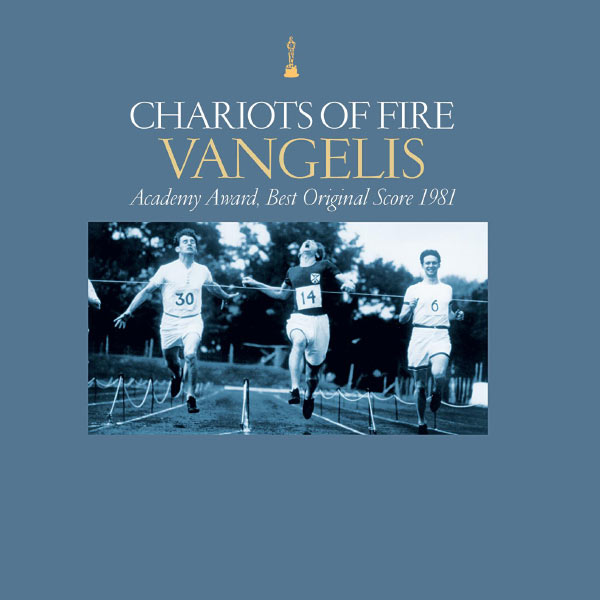
“Chariots of Fire”-Vangelis (#1 in 1982)
“Axel F Theme” (from Beverly Hills Cop)”-Harold Faltermeyer (#3 in 1985)
4. Story Songs
Maybe it’s testament to our shorter attention spans nowadays, but nobody’s telling a linear story in a hit song anymore. Honestly I find it very difficult to think of the last time a true story song was a hit. Once again it seems that the period loosely encompassing the first half of the ’70’s was the last time pop radio was fertile ground for this type of thing. Leaving out such novelty songs as “The Unicorn” (and anything written by Shel Silverstein) here are some examples:
“Silhouettes”-The Rays (#3 in 1957)
“Ode to Billie Joe”-Bobbie Gentry (#1 in 1967)
“Harper Valley P.T.A.”-Jeannie C. Riley (#1 in 1968)
“The Ballad of Bonnie and Clyde”-Georgie Fame (#7 in 1968)
“Timothy”-The Buoys (#17 in 1971)
“You Don’t Mess Around with Jim”-Jim Croce (#8 in 1972)
“Taxi”-Harry Chapin (#24 in 1972)
“Brother Louie”-Stories (#1 in 1973)
“Tie a Yellow Ribbon Round the Ole Oak Tree”-Tony Orlando & Dawn (#1 in 1973)
“Daisy a Day”-Jud Strunk (#14 in 1973)
“The Night the Lights Went Out in Georgia”-Vicki Lawrence (#1 in 1973)
“Bad, Bad Leroy Brown”-Jim Croce (#1 in 1973)
“Billy, Don’t Be a Hero”-Bo Donaldson and the Heywoods (#1 in 1974)
“The Night Chicago Died”-Paper Lace (#1 in 1974)
“Dark Lady”-Cher (#1 in 1974)
“Cat’s in the Cradle”-Harry Chapin (#1 in 1974)
“The Wreck of the Edmund Fitzgerald”-Gordon Lightfoot (#2 in 1976)
“The Devil Went Down to Georgia”-Charlie Daniels Band (#3 in 1979)
“Escape (The Pina Colada Song)”-Rupert Holmes (#1 in 1979)
“Coward of the County”-Kenny Rogers (#3 in 1980)
“Same Old Lang Syne”-Dan Fogelberg (#9 in 1981)
5. TV Show Theme Songs
It used to be the popularity of a hit TV series coupled with a catchy theme song might create a spin-off radio hit. No more. If you liked being able to purchase the full-length version of the theme of your favorite sitcom or drama, then as Archie and Edith sang on their 1972 hit single, “Those were the days”…
“Hawaii Five-O”-The Ventures (#4 in 1969)
“Quentin’s Theme” (from Dark Shadows)-Charles Randolph Grean Sounde (#13 in 1969)
“The Rockford Files”-Mike Post (#10 in 1975)
“Theme from S.W.A.T.”-Rhythm Heritage (#1 in 1976)
“Happy Days”-Pratt & McClain (#5 in 1976)
“Making Our Dreams Come True” (from LaVerne & Shirley)-Cyndi Grecco (#25 in 1976)
“Nadia’s Theme (The Young and the Restless)”-Barry DeVorzon and Perry Botkin, Jr. (#8 in 1976)
“Welcome Back” (from Welcome Back Kotter)-John Sebastian (#1 in 1976)
“Theme from ‘Greatest American Hero’ (Believe it or Not)”-Joey Scarbury (#2 in 1981)
“The Theme from Hill Street Blues”-Mike Post (#10 in 1981)
“Moonlighting”-Al Jarreau (#23 in 1987)
6. Re-worked Classical Music
Whether you tend to see the pop reimagining of masterpieces by Bach, Beethoven and Rachmaninov as musically adventurous or horrible misguided and cheesy, the arrow once again seems to point in the direction of the 70’s as the decade of this type of song’s proliferation.
“A Lover’s Concerto”-The Toys (#2 in 1965)
Adapted from Bach’s Minuet from The Anna Magdalena Notebook
“A Song of Joy”-Miguel Rios (#14 in 1970)
Based on the last movement of Beethoven’s Ninth Symphony
“Mozart Symphony No. 40 in G Minor”-Waldo De Los Rios (#67 in 1971)
(Self-explanatory)
“Joy”-Apollo 100 (#6 in 1972)
Based on Bach’s Jesu, Joy of Man’s Desiring
“Also Sprach Zarathustra (2001)”-Deodato (#2 in 1973)
Written by Richard Strauss in 1896
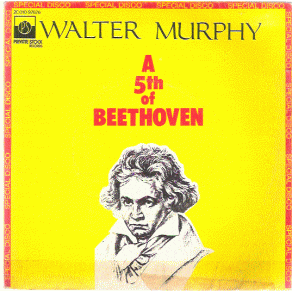
“A Fifth of Beethoven”-Walter Murphy (#1 in 1976)
Based on Beethoven’s Fifth Symphony
Note: There are plenty of examples of more (or less) subtle borrowing of classical themes and melodies, from Procol Harum’s “A Whiter Shade of Pale” (Bach’s Air on a G String) to Starship’s “Sara” (Fantasia by Tallis) to “I Can” by rapper Nas (Beethoven’s Fur Elise) and Beyoncé’s “Ave Maria”. A few other examples:
“Could it be Magic”-Barry Manilow (#6 in 1975, originally released in 1971)
Inspired by Chopin’s Prelude in C Minor
“All By Myself”-Eric Carmen (#2 in 1976)
Based on Rachmaninov’s Piano Concerto No. 2
“Never Gonna Fall in Love Again”-Eric Carmen (#11 in 1976)
Based on Rachmaninov’s Second Symphony
“This Night”-Billy Joel (B-side in 1983)
Based on Beethoven’s Pathetique Sonata
…but the era of an artist hitting the top 40 with an actual contemporized cover of a classical composer’s work is well behind us.
The overarching point being: there seems to be an overall narrowing of the definition of a hit song. It can represent any of a number of genres or styles, but it seemingly can’t be religious, or jazz, or an instrumental, or classical homage, or a story song, or a song created for a TV show. I’d venture the opinion that this isn’t a positive development–certainly not if you like diversity in pop music.
Comments on this topic or other examples of songs in the above categories are welcome.
Zach Sestili: “When the Lashes and the Stars Fall” (Year Unknown)
Frequently I hear musicians capable of producing enjoyable music. Occasionally I’m fortunate enough to come across someone with a true musical gift. Rarely is my soul graced by an artist who inspires true awe. And exactly once in my life I was blessed to be able to call such an awe-inspiring artist my friend.
Zach Sestili, whose performing name at the time was Zee Steel, used to haunt the weekly local (Pittsburgh) open stages in the 90’s. Since I also owned a guitar and wrote songs, we did this together. But we didn’t really do it together. More accurately, I played Salieri to his Mozart. Zach praised in earnest tones the melodies I came up with, but I always wondered if he was busting out in that mischievous Tom Hulce giggle behind my back. Because when Zee Steel took the stage, jaws dropped across the room.
_________________________
Zach Sestili was born in Pittsburgh and moved to Mobile, Alabama at age 6.
Beginning at age 7 when his dad taught him some drumming technique, Zach had quickly progressed in his mastery of: drums, saxophone, piano, guitar, bass, vocals, songwriting and music theory. At age 11 he sang lead vocals and played drums as his band performed Yes’ “Owner of a Lonely Heart” in his middle school talent show. By age 12, with his brother on guitar, Zach’s band was actually gigging, and he was developing his compositional skills.
Influenced mainly by progressive rock at the time, Zach’s next band (ages 14-16) covered Yes, Rush, Genesis and Mr. Mister and actually played in the 1988 Mardi Gras parade, and their accompanying outdoor courtyard performance placed them in front of a crowd of about 6,000.
Moving to Atlanta at age 16, Sestili met new friends who helped expand his horizons by introducing him to jazz fusion. For the next several years some major influences were Michael Hedges, Pat Metheny, Al DiMeola, Kazumi Watanabe, Chic Corea and Weather Report.
It was the intrigue this complex, colorful music held for him that sparked an interest in music theory and effectively charted the course of his subsequent musical interests. While beginning to read widely on relationships between modes and scales, he found published sources to lack the explanations he sought regarding what he calls the “logical but intangible relationships” between musical moments within related scales and modes. His desire to understand the nature of the interconnectedness of modes and scales has led to his own original modal theory, which he has been working on for about two decades. He lives in Hawaii now and has presumably had his head so deep in modal theory that he’s only recently begun reconnecting with the outside world via the wonderful world of social media. I hear he’s married.
_________________________
When I first met Zach (then “Zee Steel” and later “Zach Pendulum”) he was back in Pittsburgh (temporarily) and around 21 years of age, managing the keyboard department of a now-defunct downtown music store, writing musically adventurous songs in a genre that seemed to blend jazz fusion complexity with new age optimism, and playing solo at open stages. While he was most enthusiastic about playing his latest compositions, he was a gracious performer and always willing to give a slot in his 3-song set to one of his older songs that we his friends and fans begged him to do.
One such song is “When the Lashes and the Stars Fall”, which Zach says he mainly wrote at age 16, finishing the guitar parts by age 17. Although this is only a demo, sourced from a cassette that must be at least 20 years old, you can still hear the complex interweaving of instruments–all played by Zach himself–in a song that is screaming for a modern digital upgrade.
There are so many moments of musical magic here, from the quite original drum pattern that opens and closes the song, to the echo-effect guitar that vaguely trails the vocal melody, to the little vocal exhalation that follows the line “caught in my mind, it’s impossible”, to the variety of keyboard sounds that begin to inhabit the corners of the song shortly after the first chorus, playing lines of such subtlety I only discerned some of them for the first time on recent re-listening.
Yes, it’s a muddy old analog recording. Yes, it might sound dated to your ears (although not to mine–I’ll admit to a complete lack of objectivity here.) But it’s hard to deny this is an imaginative composition wondrously arranged. On the occasion of hearing it again for the first time in years I had all the mixed emotions I once had every Thursday night at The Artery in Shadyside: the awe of hearing someone who clearly seems to be touched by God, and the little twinge of envy that comes from knowing the same gift was not given to me, much as I desired it. I’ve always thought if I could write and perform just one song as good as “When the Lashes and the Stars Fall” in my life, I’d be content with that.
But I’ve come to accept that my destiny was merely to be witness to the Gift–to be Salieri.
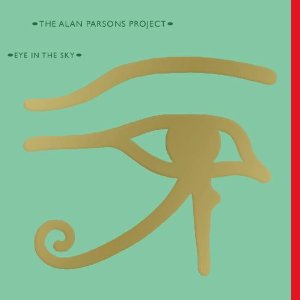
Perhaps no one of his era straddled genres as seamlessly as Alan Parsons. Like all of his releases, Eye in the Sky is at least by loose definition a concept record, inhabiting the more commercial fringes of progressive rock. Beyond that it has the hooks of a pop record and the smooth sheen of an adult contemporary album.
Whatever his music is, Parsons thankfully seemed to focus on doing what he did well rather than fitting it into a niche–usually an approach that yields good results.
“Old and Wise” is a wistful, nostalgic lyric rendered beautifully by the breathy voice of none other than former Zombies vocalist Colin Blunstone.
Caution: attach this song to a personal relationship, add a pinch of goodbye, and you’ve got the perfect recipe for tears.







 Every Moment Has A Song
