Recommended Albums #40

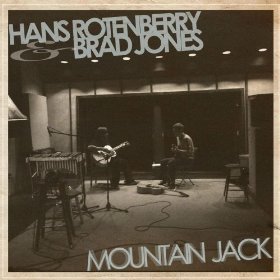
mountain jack

Hans Rotenberry & Brad Jones: Mountain Jack (2010)

The original compact disc, as developed by engineers from Philips and Sony in a rare collaborative effort, was 74 minutes, 42 seconds in length. Why? Because Norio Ohga, the head of Sony and a former opera singer, insisted his company not produce a new format that could not play Beethoven’s Ninth Symphony in its entirety.

But musically speaking it’s a long way down from Beethoven to the bottom-feeders. And the fact that we now have 70+ minutes’ capacity on an album, as opposed to the 45 or so the vinyl LP afforded, is too often taken as an invitation for modern artists to shovel additional music onto an album–music that wouldn’t have made the cut in the vinyl era.

That’s why it’s refreshing when an album like Mountain Jack comes along. Clocking in at under 33 well-paced, enjoyable and ballad-free minutes, it sounds like an edit I’d make myself from a longer album.

Hans Rotenberry is lead singer, guitarist and songwriter of Nashville power pop band the Shazam and Brad Jones is that band’s long-time producer. Outside of Tennessee the Shazam’s profile is pretty low; for these guys to release an album outside the band umbrella places it into even more obscure territory.

But this one’s well worth tracking down.

Mountain Jack is just a good old-fashioned guitar rock album, leaning toward the power pop sound in some places (“Back to Bristol” and the sunny, anthemic album closer “It Would Not Be Uncool”) and hewing closer to a rootsy Americana vibe in others (the Steve Earle-channeling “Ain’t Gonna Hurt Anyone” and the Wilburyesque shuffle “Next to You”). And “Greef” is the best new Rolling Stones song I’ve heard in years.

Rotenberry always knew how to deliver power pop with a little more backbone than most. His winning formula consists of plenty of bottom, some vocal grit and an extra helping of guitar riffage. And personally, I’m always trying to get more riffage in my diet.

Listen to: “A Likely Lad”


Listen to: “Next to You”


Listen to: “Ain’t Gonna Hurt Anyone”


Listen to: “Greef”


Don’t miss: “Back to Bristol”


Listen to: “Putting On Airs Tonight”


Listen to: “It Would Not Be Uncool”

Recommended Albums #39

three

3: Revisions (2009)

Joey Eppard is quite simply a beast. As lead guitarist, lead vocalist and main songwriter of the band with the Google search-challenged moniker of 3, he’s the kind of talent TV shows like American Idol and The Voice are geared not to discover–which is probably a post for another day, but I’ll touch on it here anyway.

In 1964 the Beatles essentially began re-formatting youth culture. It’s always kind of cute when a latter-day band is compared with them in any serious way (or when a band–Oasis, for example–has the stones to make the comparison themselves) because the fact is no band since the Beatles has come close to making the kind of impact they had on music and culture. We can talk about everything from haircuts to sitars here, but pertinent to the matter at hand is the fact that they helped make the rock foursome–lead, rhythm and bass guitars and a drummer–de rigueur.

There have been many exceptions, of course. To achieve a different purpose, a different–and usually larger–configuration is required. Jam bands who feature multiple soloists, for example; or ELO.

3

But for most of the past 50 years when most kids dreamed of making it in music, their dream usually included a few pals, three guitars and a drum kit.

And one more thing: original songs. The Beatles, in defining the new Pop Standard, included writing  new pop standards. Elvis hadn’t needed to write his own songs to become an icon of the young in the 50’s. Country singers still don’t. But in the pop and rock music arenas in the last half-century there has been a premium on good original songwriting, and the artists performing their own compositions just have more credibility, in part because that’s the way the Beatles did it.

Slowly, though, that imprint seems to finally be giving ground to a new and, I would insist, a lesser, standard. In the era of the modern singing competition TV show genre, momentum is swinging toward a new de facto format: the solo artist with microphone. American Idol and its competitors are now funneling prefabricated “stars” into the recording studios and up the charts every year, most of whom share these common traits: no ability to play an instrument or to write songs.

Perhaps if there were a successful show with a focus on young rock bands, it would help bring us back around to an appreciation of that combination of instrumental virtuosity and writing talent that none of these shows is showcasing, and the playing field would tilt again toward talents other than voice.

In the absence of such a change, many talents like Joey Eppard are destined to exist in popular music’s margins, remaining undiscovered by the public at large, perhaps selling enough music to carry on year to year, and perhaps not.

The music of 3 straddles metal, prog and even emo. But essentially their forte is propulsive melodic rock which blends acoustic and electric textures to exhilarating effect, with lyrics which may have you scratching your head if you try to understand every line. But when it comes to any kind of metal, I always prefer head-scratching to mind-numbing. Eppard’s songs do have a degree of lyrical sophistication–this is no Mötley Crüe record.

3

These arrangements are polished, well-constructed, and filled with sonic detail. Eppard and Co. know how to build up to great moments within a song, such as the guitar solo, intercut with vocals, which reaches a climax at 2:27 in “The Better Half of Me”.

They also take the trouble to show originality even in the way they end a song. There are bands who rely heavily on formula here, ending most of their songs in the same way simply because it’s not a priority to “write” an ending. Then there’s the work of a great band like Fleetwood Mac, who often wrote a coda, unlike any other part of the song, as a conclusion. (Think of the “falling, falling, falling” ending to “Say You Love Me” or the “ooh, don’t you look back” that fades out on “Don’t Stop”) That, I suspect, is attributable to Christine McVie and Lindsay Buckingham’s dedication to pop craftsmanship. “Rabid Animals” and “Automobile” are, similarly, songs that have original, written endings and not just a lazy fadeout. These songs, and this band, seem to have a pure strain of 70’s-80’s classic rock running in their veins.

Revisions’ title is a reference to the fact that it is a collection of previously-recorded songs that the band saw fit to give new life to, since they’d refined their sound quite a bit over a 5-album span. Although it wasn’t universally well-received by the band’s established fans (who were eager for new material at the time) it is the ideal introduction to the band for the uninitiated.

If this is a “metal” band, as they’re usually categorized, they’re the best kind–much less concerned with showing off their shredding skills than filling their songs with great hooks.

Listen to: “Rabid Animals”

Listen to: “The Better Half of Me”

Listen to: “Automobile”

Songs You May Have Missed #335

thresholdThreshold: “The Hours” (2012)

There are all kinds of rock road songs.

The Rolling Stones helped us see the unsavory side of it all with “Torn and Frayed”:

“Well, the ballrooms and smelly bordellos,
And dressing rooms filled with parasites.
On stage the band has got problems
They’re a bag of nerves on first nights.

Motorhead’s “(We Are) the Road Crew” gave us something pretty straightforward:

“Another town another place,
Another girl, another face,
Another truck, another race.
I’m eating junk, feeling bad,
Another night, I’m going mad.”

Grand Funk Railroad reminded us it’s all a party with “We’re an American Band”:

“On the road for forty days,
Last night in Little Rock put me in a haze.
… We’re coming to your town, we’ll help you party down.
We’re an American band.”

Journey’s “Faithfully”, perhaps rock’s definitive road ballad, is a mixture of self-pity and determination to man up and see the good side:

They say that the road ain’t no place to start a family…

two strangers learn to fall in love again/I get the joy of rediscovering you

The Ramones’ “Touring” capably demonstrated that a road song can be just as mindless as…any other Ramones song:

“Well we’ve been around this great big world,
And we’ve met all kinds of guys and girls,
From Kamoto Islands to Rockaway Beach.
No, it’s not hard, not far to reach.”

Jackson Browne’s “The Load Out” is typical Jackson Browne–mopey and self-absorbed:

“We do so many shows in a row,
And these towns all look the same.
We just pass the time in our hotel rooms,
And wander ’round backstage.”

And then there’s Bob Seger’s “Turn the Page”, which almost deserves its own category:

“So you walk into this restaurant,
Strung out from the road,
And you feel the eyes upon you,
As you’re shaking off the cold.
You pretend it doesn’t bother you
But you just want to explode.”

Most times you can’t hear ’em talk
Other times you can
All the same old clichés
“Is that a woman or a man?”

Of all these songs, as well as the many I didn’t quote–like “Lodi”, “Two-Lane Highway”, “Six Days on the Road”, “Travelin’ Band”, “Postcard” and Fountains of Wayne’s road-song skewering “A Road Song”, none are half as loathsome to me as the dirge of self-pity that is “Turn the Page”.

For a full five minutes we are seriously expected to mourn the plight of a rock star and his life of unadulterated fan adoration and adulterated one-night stands. And that sax riff is supposed to make me weep for the guy who takes a little ribbing because he’s been too busy counting gate receipts to stop in at the barber. Waaaaahh!

Tough life, Bob.

Anyway, prog metallers Threshold have put their own spin on the road song. These guys make taking to the road sound like a gladiator striding into the arena, girded with the steel of love and devotion, willing to “stand until my strength is gone” and “fight against the hours” he must endure until he can return home to the object of his devotion. This is hero fantasy quest stuff!

A little dramatic? Well, yeah that’s the point. I mentioned they were prog metal, right? No half-assing this stuff. Life on the road, to a prog metal band, isn’t about moping in the corner of a hayseed bar trying not to cry because some ignorant redneck called your gender into question. (Ironically, he’ll recognize you later ’cause he has tickets to see Ted Nugent, who’s your opening act. So you see you’ll get the last laugh when you take that guy’s money too.)

Life on the road, in prog metal terms, is about fighting the big bad balrog of loneliness, temptation, and confusion as to which unfamiliar corridor leads to the stage. It’s about taking up the sword of overconfidence, and the talismanic gold chain hung ’round your neck with the extra hotel key tucked inside your tunic, and marching forward to greet the screaming hordes with a bellowing “Hello Cleveland!”

“I mean Akron!”

See also: https://edcyphers.com/2012/11/21/songs-you-may-have-missed-249/

Songs You May Have Missed #334


blind pilot

Blind Pilot: “The Colored Night” (2011)

Something pretty to let wash over you on a Saturday morning, as you begin your recovery from a long night of self-abuse.

Or whatever.

See also: https://edcyphers.com/2013/01/12/songs-you-may-have-missed-291/

See also: https://edcyphers.com/2019/05/18/songs-you-may-have-missed-638/

“Wagon Wheel”: Raiding Bob Dylan’s Wastebasket

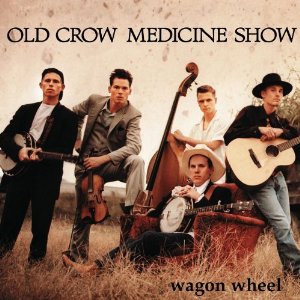
old crow rucker

“Wagon Wheel” is a song with a very interesting story. It doesn’t sound like a typical 21st century country song. But it’s the kind of song 21st century country artists love to cover because it’s the kind modern country songwriters have so much trouble coming up with. Which is to say, it comes from a more instinctive place, taking the express track from the writer’s gut without that stop at the brain for mental market-testing.

whiskey river wagon wheel

“Wagon Wheel” sounds like the work of one of the great folk songwriters of the 20th century, say a Woody Guthrie or a Stephen Foster…because it is in fact the work of one of the great folk songwriters of the 20th century–at least in part. I direct you to Wikipedia for the story:

(The following reprinted from Wikipedia)

“Wagon Wheel” is a song originally sketched by Bob Dylan and later completed by Old Crow Medicine Show. Old Crow Medicine Show’s version was certified gold by the Recording Industry Association of America in November 2011.

“Wagon Wheel” is composed of two different parts. The chorus and melody for the song comes from a demo recorded by Bob Dylan during the Pat Garrett and Billy the Kid sessions. Although never officially released, the Dylan song was released on a bootleg and is usually named after the chorus and its refrain of “Rock Me Mama.” Although Dylan left the song an unfinished sketch, Ketch Secor of Old Crow Medicine Show wrote verses for the song around Dylan’s original chorus. Secor’s additional lyrics transformed “Rock Me Mama” into “Wagon Wheel.” Secor has stated the song is partially autobiographical. The song has become extremely popular since its inclusion on Old Crow Medicine Show’s major label debut, O.C.M.S. in 2004, although the song appeared in earlier form on the now out of print “Troubles Up and Down the Road” EP in 2001. Dylan’s song is often credited to “A. Crudup.”, and the official publishing information is Dylan/Secor.

Old Crow Medicine Show: “Wagon Wheel” (2004)

Dan Milliken, reviewing the song for Country Universe, gave it an A+ rating, calling it “one of country music’s all-time great sing-alongs”.

The song has since been covered by numerous artists, including: Darius Rucker, Chad Brownlee, The Menzingers, Nash Street, Great American Taxi, Against Me!, Stephen Kellogg and the Sixers, Chris Pureka, David McMillin, Jeremy McComb, Matt Andersen, Mumford & Sons, Bodega, Little Feat, Donegal X-Press, Pat Buzzard of Saving Jane, Little Big Town, and Samjack Boys. (Note: there are lots more versions besides.)

Darius Rucker joined Old Crow Medicine Show at the Grand Ole Opry July 6, 2012, “for a special rendition of ‘Wagon Wheel.’” The fans “went crazy over Rucker’s cover of the Old Crow Medicine Show hit,” setting the stage for his tweeted announcement: “Secret out after @opry perf. I recorded a version of ‘Wagon Wheel’ for my new record & @ladyantebellum sings on track.” The new album, True Believers, is his third solo project on Capitol Records. Rucker’s cover is the album’s second single.

Darius Rucker: “Wagon Wheel” (2012)

The song did not at first appeal to Rucker. “Somebody had played ‘Wagon Wheel’ for me years ago,” he says. “It was one of those things that I didn’t really get.” When the faculty band from his daughter’s high school performed it, though, it had a different effect. Relating the story . .

“So, I’m at my daughter’s high school talent show, and I’m sitting in the audience with my family. We were watching my daughter, and the faculty band gets up. It’s just the faculty from her school, and they play ‘Wagon Wheel.’ I’m sitting in the audience, and they get to the middle of the chorus, and I turned to my wife, and I go, ‘I’ve got to cut this song.’ I’m serious. This all happened in three-and-a-half minutes, four minutes, while they’re playing the song.”

A Lil Wayne Guitar Solo is a Lot Like…

Previous Older Entries Next Newer Entries