The guzheng was born in China over 2500 years ago. Originally made out of bamboo and silk strings, the instrument became very popular in the imperial court during the Qin period (221 to 206 BCE), and by the Tang Dynasty (618 CE to 907 CE), it was perhaps the most popular instrument in China. According to the San Francisco Guzheng Music Society, it remained popular through the late Qing dynasty (1644 A.D. – 1911 A.D.) and into the 20th century, when, in 1948, “the renowned musician Cao Zheng established the first university level guzheng program” in the country, and the “old silk strings were replaced with nylon strings, which are still being used today.”
In the estimation of most long-time Yes fans, Rick Wakeman would be considered part of the band’s “classic” lineup–the keyboard player they’d most like to see manning the Moog if they were to put money down to see the band live.
Wakeman’s contributions to pop also include the atmospheric Mellotron on David Bowie’s “Space Oddity” and the sublime piano on Cat Stevens’ “Morning Has Broken”.
But in addition to his musical contributions, he’s pretty well-known for leaving bands too. He bolted from Strawbs in 1971 when Chris Squire invited him to join Yes. And he left Yes on several occasions for various reasons.
In 1973 ambitious rock acts like Yes were enjoying a boom in terms of popularity–and income. Prog magazine writer Mike Barnes picks up the story:
But although Wakeman might have been a young musician who was, in his own words ‘riding a wave’ with no idea when it might break, in 1973 the money started to pour in. “Suddenly the band was earning enough money for someone to collect your suitcase in the morning,” he reminisces. “I thought: ‘Bloody hell, what’s going on?'”
Wakeman feels that this new-found wealth had adverse effects on Yes and contributed to the disaffection he felt with Tales from Topographic Oceans, which resulted in him leaving the group for the first time in 1974.
“That was a difficult time. Because if a band is earning so much money that it can do anything it wants, that power is really dangerous,” Wakeman admits. “We had an interesting situation with Topographic Oceans. From pre-orders we already knew we had a
Number One album (In England. The record peaked at number 6 in America). We had enough material for an album and a bit, so we could either reduce it or add to it and the vote went in favour of adding to it. But most of the additional material was made up in the studio–and it was a lot of padding.
“That annoyed me because I said: ‘Listen guys, there are some great melodies and sounds, what’s all this crap that’s going on there–a percussion thing”?’ It was a mixture of everyone’s banging drums, which went on for an eternity. I was going: ‘What the fuck’s all that about”‘ They were going: ‘That’s another six minutes, lads!’ And I’m going: ‘No, no, no, no, no, no, no’. I ended up really hating the album because of that and because the more I said I hated it, the more said they loved it.
“Jon (Anderson) and I have discussed this numerous times at length and we both agree that if the CD had been available back then we wouldn’t have had the problem, because the album would have been 60 minutes long.”
Tales from Topographic Oceans was the most ambitious (slash pompous) release of the band’s career–possibly the most ambitious of any band’s career: it was comprised of four album-side length songs, which Wakeman disliked performing live because of the time it took away from playing their more popular material. It was after this tour that Wakeman departed from Yes.
He’d return for the albums Going for the One and Tormato, which has the following amusing story attached to it (quoting Wikipedia):
The original album title was to be Yes Tor, referring to a geological formation in southern England. The photographs taken by Hipgnosis for the album cover were seen as so unimpressive that Rick Wakeman, in frustration, threw a tomato at the pictures. The cover and title were adjusted accordingly.
Wakeman is correct in his assessment that Tales from Topographic Oceans contains some beautiful bits of music, which perhaps remain undiscovered by the band’s more casual fans due to being buried within non-radio friendly 18-to-20-minute pieces. The edits below extract two such highlights:
“The Ancient: Giants Under the Sun” (2:22 edit)
“The Revealing Science of God: Dance of the Dawn” (8:17 edit)
In his excellent and devastatingly funny piece Give Me Centrism or Give Me Death! (reprinted here) Chuck Klosterman examines the most accurately rated artists in music. His evaluation of Mathhew Sweet is as follows:
Every Matthew Sweet album has only one good song, and this good song is inevitably the first single, and this single is always utterly perfect (“Sick of Myself” off 100% Fun, “Where You Get Love” off Blue Sky on Mars, “Girlfriend” off Girlfriend, etc.). He sells enough albums to live comfortably, and that seems reasonable.
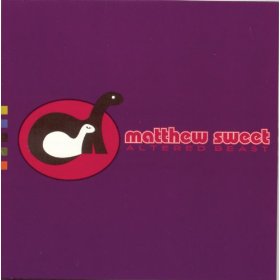
Funny, and not so far from my opinion of Sweet. “Time Capsule” is most certainly the highlight of 1993’s Altered Beast. Sweet is an artist to compile a homemade compilation of; the highlights may not come as often as you’d like, but they certainly make it worth checking out each new release.
From the short-lived San Francisco duo’s swan song, 2011’s Father, Son, Holy Ghost. This is a band that will be missed. It seemed they were just hitting their stride.
Los Angeles-based band Family of the Year offer a catchy, sunny-sounding Beach Boy-influenced brand of indie folk pop, splashed with a bit of a hippie vibe here and there.
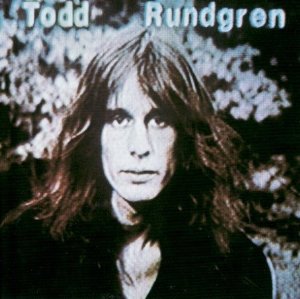
Love seems to have a variety of effects on Todd Rundgren. On the one hand, it inspired beautiful and timeless ballads like “Hello it’s Me”, “I Saw the Light” and “Can We Still be Friends”.
But it also can, as he puts it, “rearrange my brain in a strange cacophony”. A series of sound effects bring Todd’s dysfunction vividly to life. One suspects the studio wizard had studio time to fill, or needed one more song to fill out the album. Or perhaps he simply wanted to show off his studio wizardry. Whatever–your small children will love it.




 Every Moment Has A Song