Steely Dan is known for jazz-influenced arrangements, quirky lyrics, and pristine production. Even non-fans recognize the brilliance of their 1977 album, Aja. For many music lovers, it’s their first choice for a late night listen accompanied by iced Manhattans. Audiophiles use it to audition high end stereo speakers. Jazz purists discuss its intricacies with classic rock veterans.
Donald Fagen and Walter Becker had formed Steely Dan as a band in the early seventies, serving as the group’s principal songwriters. They combined their love of rhythm and blues with their deep appreciation of jazz. They weren’t a rock band with horns or a jazz fusion band. Steely Dan was something different and unique — a rock band that used jazz harmonies.
By the time of Aja, Fagen and Becker were the only permanent band members (although original guitarist Denny Dias often appeared as a guest). They supplemented their instruments with the best session players in New York and Los Angeles. Their jazz rock sound, with hardly a traditional major or minor chord in sight, was recorded with the utmost care thanks to the work of producer Gary Katz and engineer Roger Nichols…
(Reprinted from The International Society of Music Snobs & Elitists)
It is the most that a vinyl obsessed person can do; die and have his remains pressed into vinyl. It is, in fact, the obsession becoming complete, when the obsessee becomes the obsessed.
The company And Vinyly is offering this dream come true for vinyl enthusiasts. They actually will take your ashes and press them into vinyl so you can actually become a record. They offer a few different packages and, like an album, you get two sides to get your message across, albeit each side is only 12 minutes long…
Budding songwriters and fledgling lyricists, look on the work of William Martin Joel and despair.
The average Billy Joel composition is a compact master class in lyric writing. This guy just gets so many things right, most of which escape a typical listener as he hums “Just the Way You Are”, or rocks out to “Big Shot”, or sings along with any number of dozens of Joel’s classic entries in our collective cultural hymnal.
By the way, I’ve long held the opinion Billy Joel was the best pop lyricist of his era. And I’m pretty sure “Only the Good Die Young” is the best pop rock lyric of the past 40 years. But since everyone knows that song and dozens of other pop masterpieces in Joel’s oeuvre, the focus of this particular series of posts forces me to delve into what passes for “deep cut” territory to talk about the man’s talents.
A deep cut this may be, but certainly not of lesser quality than the singles chosen from 1986’s The Bridge album. “Modern Woman”, “This is the Time” and “A Matter of Trust” are fine songs–but the twitchy lyrical joyride that is “Running on Ice” would itself have made a great single.
One thing about Joel’s writing that has always stood out to me is that he never seems content to simply observe pop music norm in repeating a chorus; Joel raises his game by varying the lyric with each. Frequently you could even say he customizes each chorus to suit its accompanying verse.
The first chorus here begins with “Sometimes I feel as though I’m running on ice…” which not only sums up what came before in verse one, but makes a good introduction, so to speak, to the song’s hook line and concept.
When the second chorus rolls around, preceded as it is by the flood of multisyllabic elocution that is verse two, it almost serves as a punchline when he says “And all that means is that I’m running on ice…” Brilliant.
The song is lavishly littered with alliteration, assonance and internal rhyme. What’s more, since the same torrent of verbiage that makes this a great lyric also tends to make it a bit of a challenge to sing along to, Joel supplies a well-placed bridge (You’ve got to run…) to momentarily relieve the tension and give the listener something to belt out. Genius.
This is no typical song. It’s a great one. Though that makes it a typical Billy Joel song.
There’s a lot of tension in this town I know it’s building up inside of me I’ve got all the symptoms and the side effects Of city life anxiety
I could never understand why the urban attitude Is so superior In a world of high rise ambition Most people’s motives are ulterior
Sometimes I feel as though I’m running on ice Paying the price too long Kind of get the feeling that I’m running on ice Where did my life go wrong
I’m a cosmopolitan sophisticate Of culture and intelligence The culmination of technology And civilized experience
But I’m carrying the weight of all the useless junk A modern man accumulates I’m a statistic in a system That a civil servant dominates
And all that means is that I’m running on ice Caught in the vise so strong I’m slipping and sliding, cause I’m running on ice Where did my life go wrong
You’ve got to run You’ve got to run
As fast as I can climb A new disaster every time I turn around As soon as I get one fire put out There’s another building burning down
They say this highway’s going my way But I don’t know where it’s taking me It’s a bad waste, a sad case, a rat race It’s breaking me
I get no traction cause I’m running on ice It’s taking me twice as long I get a bad reaction cause I’m running on ice Where did my life go wrong
You’ve got to run You’ve got to run
Running on ice Running on ice Running on ice Running on ice
(Everything I am about to tell you is boiled down. Exceptions abound, I can’t tell the whole story in a few hundred words, and music is so big and complex that it wouldn’t be hard to find another angle on this. But I want to point out the way our ideas about music were deeply shaped by African culture, beyond rhythms and “blues scales.”)
If you love blues, classic rock, jazz, or modern pop, you owe a debt to West African stringed instruments. Here’s why…
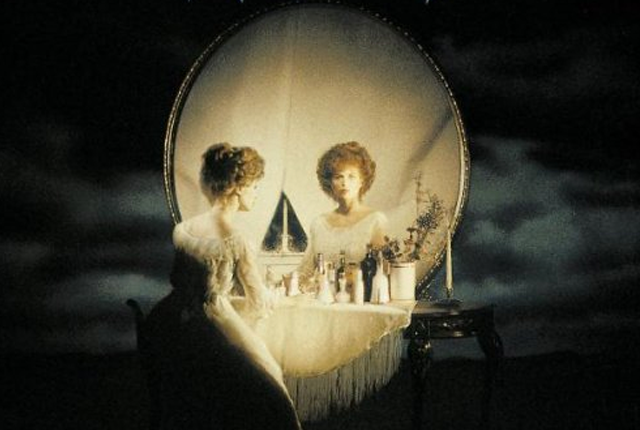
Def Leppard’s Retro Active features a 19th century woman sitting at a dressing table staring at a mirror. If you look at the cover at a distance, you can see a skull made up of the woman and her reflection. Artist Charles Allan Gilbert’s 1892 painting All is Vanity was Def Leppard’s inspiration for the album cover.
8. Harry Nilsson & John Lennon // Pussy Cats
Recording artist Harry Nilsson teamed up with John Lennon to produce Pussy Cats in 1974. The album cover features a rug under a table with two block letters—”D” and “S”—flanking it. If you sound out the puzzle, it reads, “D-rug-S” or specifically, “Drugs under the table.” This was an inside joke during Lennon’s “Lost Weekend” era, a drunken and drug-fueled 18 month period between 1973 and 1975.
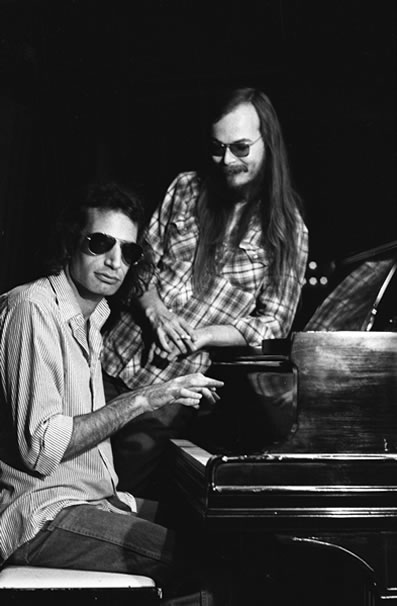 Steely Dan is known for jazz-influenced arrangements, quirky lyrics, and pristine production. Even non-fans recognize the brilliance of their 1977 album, Aja. For many music lovers, it’s their first choice for a late night listen accompanied by iced Manhattans. Audiophiles use it to audition high end stereo speakers. Jazz purists discuss its intricacies with classic rock veterans.

![23325[1]](https://edcyphers.com/wp-content/uploads/2016/03/233251.jpg)

 Every Moment Has A Song