The Resurgent Appeal of Stevie Nicks

nicks

By Amanda Petrusich

(via The New Yorker)

The cover of “Bella Donna,” Stevie Nicks’s first solo album, shows the artist looking slender and wide-eyed, wearing a white gown, a gold bracelet, and a pair of ruched, knee-high platform boots. One arm is bent at an improbable angle; a sizable cockatoo sits on her hand. Behind her, next to a small crystal ball, is a tambourine threaded with three long-stemmed white roses. Nicks did not invent this storefront-psychic aesthetic—it is indebted, in varying degrees, to Hans Christian Andersen’s Thumbelina, de Troyes’s Guinevere, and Cher—but, beginning in the mid-nineteen-seventies, she came to embody it. The image was girlish and delicate, yet inscrutable, as if Nicks were suggesting that the world might not know everything she’s capable of.

nicks-2

This intimation is newly germane: a vague but feminine mysticism is in. Lorde, Azealia Banks, FKA Twigs, CHVRCHES, Grimes, and Beyoncé have all incorporated bits of pagan-influenced iconography into their music videos and performances. Young women are now embracing benign occult representations, reclaiming the rites and ceremonies that women were once chastised (or worse) for performing. On runways, on the streets, and in thriving Etsy shops, you can find an assortment of cloaks, crescent-moon pendants, flared chiffon skirts, and the occasional jewelled headdress.

While Nicks’s sartorial choices have been widely mimicked, it’s rare to hear echoes of her magnanimity in modern pop songs, which are frequently defensive and embattled, preaching self-sufficiency at any cost. It’s difficult to imagine Nicks singing a lyric like “Middle fingers up, put them hands high / Wave it in his face, tell him, boy, bye,” as Beyoncé does in “Sorry,” a song from her newest album, “Lemonade.” Nicks’s default response to betrayal is more introspective than aggressive. Her music has long been considered a balm for certain stubborn strains of heartache; her songs are unsparing regarding the brutality of loss, yet they are buoyed by a kind of subtle optimism. It’s as if, by the time Nicks got around to singing about something, she already knew that she would survive it…


Read more: http://www.newyorker.com/magazine/2016/11/28/the-resurgent-appeal-of-stevie-nicks?mbid=social_facebook

Video of the Week: Emmylou Harris Moved to Tears by First Aid Kit Singing “Emmylou”

See also: Songs You May Have Missed #358 | Every Moment Has A Song (edcyphers.com)

See also: Video of the Week: First Aid Kit’s ‘Emmylou’ Live in Dublin | Every Moment Has A Song (edcyphers.com)

Recommended Albums #71

lonely

Lonely Robot: Please Come Home (2015)

A broad appreciation of music often requires the effort of shedding certain personal prejudices we may have acquired, whether it’s a dislike for soft rock, an aversion to steel guitar, an intolerance for unpolished vocals, or simply the lack of interest in a particular genre.

mitchell

Of course, if you’ve decided you really don’t enjoy the blues, for example, it’s valid to stop trying to like the blues. Appreciation shouldn’t be work.

The prejudice Lonely Robot’s Please Come Home helped dispel for me was against female vocals in progressive tock. Weaned on Pink Floyd, Yes and Jethro Tull like so many my age, I’d had a deep-rooted belief that this genre just didn’t work with pretty female vocals out front.

But Lonely Robot is indeed a prog album–though it’s more proggy in terms of its atmosphere and aesthetic than by virtue of any compositional complexity or lyrical impenetrability. And it does feature prominent female vocals on several songs. And it works.

mitchell-3

Lonely Robot is the nom de plume of singer/songwriter/guitarist/producer John Mitchell, one of the busiest and most prolific figures of the British progressive rock scene. As a member of bands such as Arena, It Bites, Kino, Frost and The Urbane he’s seemingly always either recording or touring the work of one or another band.

This time he decided to step out on his own, although many modern prog notables appear as support. This concept album, inspired by Mitchell’s love of science fiction, is similar to the work of fellow Brits Steve Thorne and Dave Kerzner, who carefully craft albums of thoughtful and melodic crossover prog and record them with the help of an impressive cast of luminaries of the genre.

Please Come Home‘s eleven tracks are linked lyrically by certain motifs and phrases, and Mitchell describes its arc thusly:

“The concept is about the way in which some ancient civilisations – for instance, the Mayans, the Egyptians and the Chinese – had technology way beyond what they should have had at the time. And I’m talking about the millennium up to 1000AD. It’s as if some people had been transplanted onto the planet from another world and time.”

As for project name, in addition to saying Lonely Robot sounded much more interesting than releasing an album under the name John Mitchell, he says:

“It represents the human condition. I’m not suggesting that human beings behave like robots, but so many people lead regimented lives and it’s easy to get stuck in a rut and not realise or know how to get out of it.”

mitehell-4

Although the record contains enough uptempo tunes to maintain rock cred, ballads such as “Why Do We Stay” and “Humans Being” are some of the most alluring and affecting compositions here. Gilmouresque guitar solos add to the gloomy Englishness of the album.

If the feel of Please Come Home appeals to you, check out the above-mentioned Steve Thorne and Dave Kerzner as well as perhaps this blog’s most oft-recommended band, Blackfield.

Accessible melodies are a strong suit for Mitchell and he plays to that strength here. Although fans of Frost and It Bites may argue, I think this is his best work yet.

Listen to: “Why Do We Stay?”

Listen to: “Lonely Robot” (edit)

Listen to: “Oubilette”

Listen to: “Construct/Obstruct”

Listen to: “Humans Being”

See also: https://edcyphers.com/2013/05/07/songs-you-may-have-missed-409/

See also: https://edcyphers.com/2012/03/15/songs-you-may-have-missed-53/

Video of the Week: Todd Rundgren and Utopia’s Spot-On 1980 Beatles Parody

deface

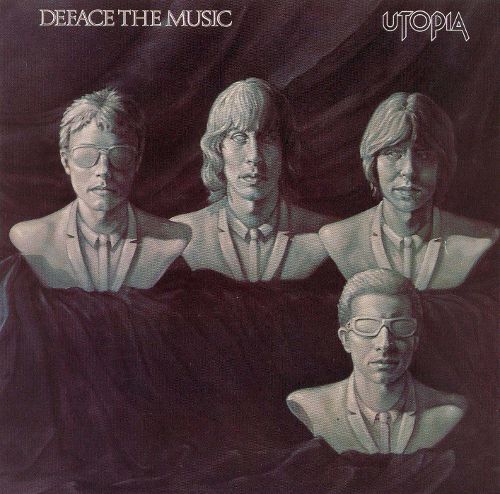
Todd Rundgren’s band Utopia, with whom he released albums sporadically while maintaining a solo career (think Phil Collins and Genesis) explored both short-form pop and ambitious progressive-leaning rock. They also released one of the great Beatle parody works, their 1980 Deface the Music album.

In the above Spinal Tap-esque retrofied video the band perform “I Just Want to Touch You” while evoking Ed Sullivan shows of yore and the “I Want to Hold Your Hand” Beatles era. Other tracks from Deface the Music explore later period Beatle tunes, sending up “Eleanor Rigby”, “Penny Lane” and others.

Utopia were also responsible for the original recording of England Dan & John Ford Coley’s hit “Love is the Answer”, written by Rundgren.

http://https://www.youtube.com/watch?v=1uCaIuPg-Fk

Video of the Week: Top 10 Worst Cover Songs

The Surprising Chord That Helped Make “Penny Lane” a Masterpiece

paul

by Scott Freiman

via CultureSonar

McCartney pulls off a difficult songwriting feat by placing the verses and the choruses in neighboring keys (the verses are in B and the choruses are in A). At the end of the song, McCartney writes a key change so that the final chorus is in B, bringing the song full circle. Yet, it’s in the verse that McCartney injects a magical chord that helps make “Penny Lane” a case study in great songwriting. I’ll let you in on McCartney’s secret in this video.

Read more: http://www.culturesonar.com/penny-lane/

Previous Older Entries Next Newer Entries