
Mozart Meets Bob Dylan: Amadeus VS A Complete Unknown

(via WETA) by James Jacobs

I recently saw A Complete Unknown. Bob Dylan is one of my favorite artists, and I actually got to meet and work with Pete Seeger (in fact I visited his log cabin that Dylan spends the night in early in the film, and I can attest that they got those details right) so I was excited to see those two icons acknowledged in our current popular culture and introduced to a new generation. Judging from reactions to the film on social media, the movie was a resounding success on that front (though Joan Baez seems to be the artist depicted in the film who’s really resonating with the younger generation.)  

There is no such thing as a perfect biopic that will satisfy both the people who know the history going in and those for whom the film acts as an introduction to the subject. I knew the film would take liberties, and that my reaction would be colored by my own feeling of connection to the period and milieu it depicts. The movie opens in 1961, the year Dylan arrived in New York at age 19, and also the year I was born on Long Island approximately 35 miles east of Greenwich Village. 31 years later I moved to New York and I played at some of the same clubs Dylan played in and got to meet icons like Pete, and Alan Lomax, and Theodore Bikel. I figured that’s the world I would be obsessed with upon exiting the film. 
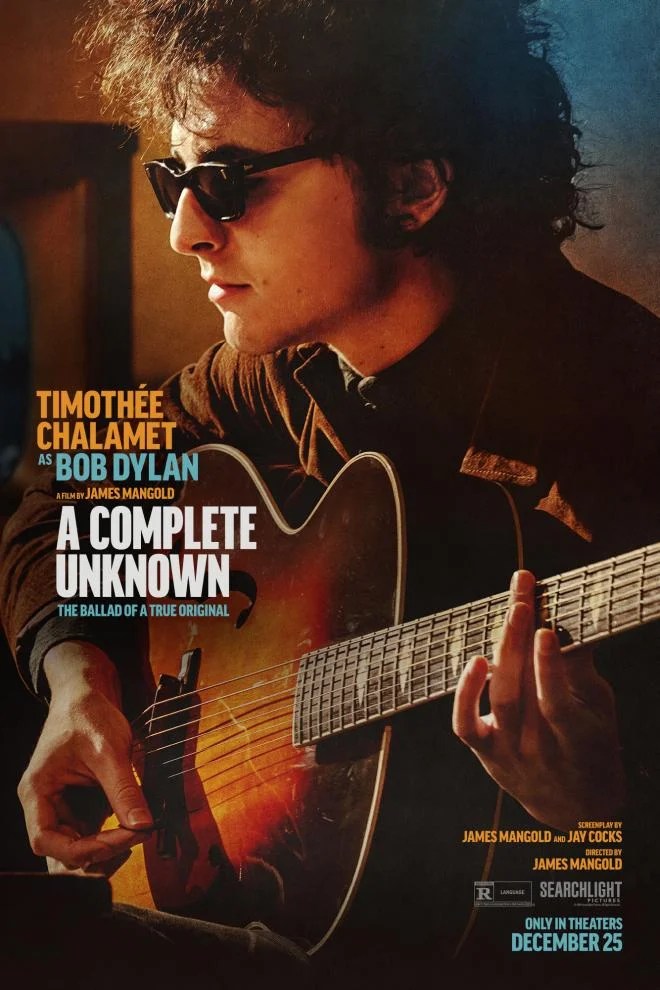
Courtesy of Searchlight Pictures. © 2024 Searchlight Pictures All Rights Reserved.rchlight Pictures

But instead I left the film thinking about another artist I am obsessed with but had never previously associated with this universe: Wolfgang Amadeus Mozart. 

Actually I thought about TWO Mozarts: the real one and the one dreamed up by the demented Antonio Salieri in Peter Shaffer’s play and screenplay Amadeus.  

Both Amadeus and A Complete Unknown are about immature genius savants who produce art that contains a deep well of wisdom and humanity completely lacking in their social personalities. The main characters are almost supporting players in their own stories, because what they’re really about are the people who try to connect with them but just can’t make sense of the profound disconnect between the sublime music and the selfish brats that produced it.  

Bob Dylan’s journey from provincial Minnesota to exciting New York is remarkably similar to Mozart’s escaping Salzburg for Vienna. They were both young, hungry, probably on the neurodivergent spectrum, had a justified confidence in their own abilities that made them both impatient with those who didn’t “get” them and distrustful of those who did, craving attention but unwilling to follow the established protocols necessary to cultivate their reputation and status within the industry – though they intuited that their rebelliousness actually helped their celebrity status even as it aggravated those managing their careers…

Read more: https://weta.org/fm/classical-score/mozart-meets-bob-dylan-amadeus-vs-complete-unknown
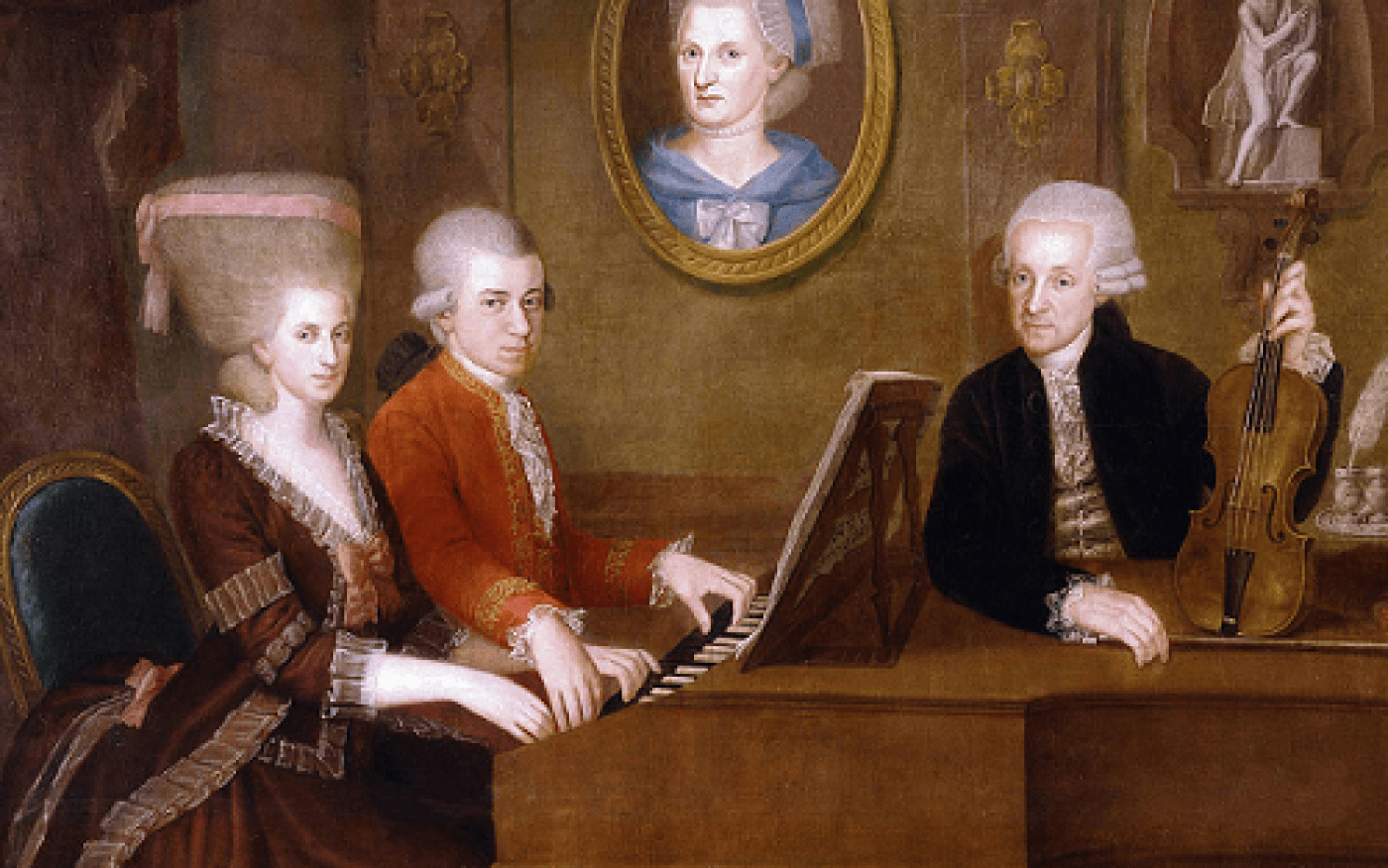

Wolfgang Amadeus Mozart (seated at piano) with his sister Maria Anna (left) and his father Leopold

Video of the Week: John Mayer Putting His Guitar in the Freezer is Pure Nigel Tufnel

Recommended Albums #92

Beabadoobee: This is How Tomorrow Moves (2024)

If you’ve patronized your local open mic night with any regularity there’s a type of song, commonly proffered by young songwriting aspirants, that you’ve probably heard–and talked over–frequently:

A bit over-earnest. Angsty but unfocused. Marked by a single word, phrase or melodic line repeated four times (or eight). Marred by the clumsy sound of the wrong syllables being stressed (which a tweak of phrasing would have smoothed out). Overreliance on naughty words to signal “raw honesty”.

And sometimes the cathartic experience of wailing that phrase (naughty word included) eight times is enough to satisfy the writing/performing urge.

But if and when a songwriter graduates from open mic grade to something more accomplished, it’s typically attended by a move outward, from self-indulgence to a creative munificence. From “raw honesty” to emotional depth. From four-letter words to eloquence.

This is How Tomorrow Moves is the third full-length album from Beatrice Laus (aka Beabadoobee), and the one on which her transformation from open mic girl to pro is complete. It’s her first record of grown-up songs.

The heartrending “Tie My Shoes”, for example, is the work of no amateur. It may be autobiographical, but it’s crafted by a girl who has learned how to tap into something universal–and very affecting.

Bea’s juvenescent coo is a singular instrument, ideally suited to put across this reflection on a disappointing father-daughter relationship and the lack of trust unresolved feelings engender moving forward into adulthood.

A subtle harmony line in the chorus is sung high above the melody, in a child’s register, effectively manifesting the presence of both of the song’s protagonists–adult singer and young Beatrice–in a song about how the disillusionment of one is still borne by the other.

It’s a deft production touch, delicate but devastating. “Tie My Shoes” is a remarkable song and the album’s emotional center.

“Coming Home” is exactly the kind of whimsy that evokes the Juno movie soundtrack, a prime influence on a teenage Bea’s nascent songwriting efforts.

“A Cruel Affair” explores an emotional rivalry without self-pity or excessive hand-wringing. In fact it comes wrapped in a lilting bossa nova of all things.

On the other hand “Beaches” sounds like something you want to crank up in the car as you flee the traffic–or hear as a concert set encore.

Thanks to production work by the renowned Rick Rubin, the instrumentation and variety in the arrangements has expanded on album three to accommodate the leap forward in the maturity of the Filipino-British songwriter’s writing.

guitarworld.com

Rubin dressed up Beabadoobee’s music for a date with a wider audience. And she made an impression; the album debuted at number one on the UK charts.

Where the artist’s playfully meandering stream-of-consciousness lyrics first endeared her to a young audience, This is How Tomorrow Moves edges her into true singer-songwriter territory–while managing to retain the wide-eyed charm.

Where noisepop influences overwhelmed some of her early material, Rubin’s production holds the buzzy guitars in check, always in service of actual songs.

And Beabadoobee truly emotes, now that she’s stopped trying to emo.

Listen to: “Take a Bite”

Listen to: “One Time”

Listen to: “Tie My Shoes”

Listen to: “Girl Song”

Listen to: “Coming Home”

Listen to: “A Cruel Affair”

Listen to: “Beaches”

Video of the Week: Muse Troll Italian TV Show, Switch Instruments When Forced to Lip Sync

Shortly after their 2009 album The Resistance debuted atop the Italian charts, Muse were invited to appear on an Italian daytime TV show.

When the band learned the show wasn’t set up to let them sing live and they’d have to lip sync, they decided to, as drummer Dom Howard put it, “arse about”.

Howard took over lead, uh, vocals and bass while front man Matt Bellamy sat in rather unconvincingly on drums. Bassist Chris Wolstenholme moved to keyboard and guitar.

The resistance, indeed.

Video of the Week: Rockstars Who Don’t Like Eric Clapton

Songs You May Have Missed #761

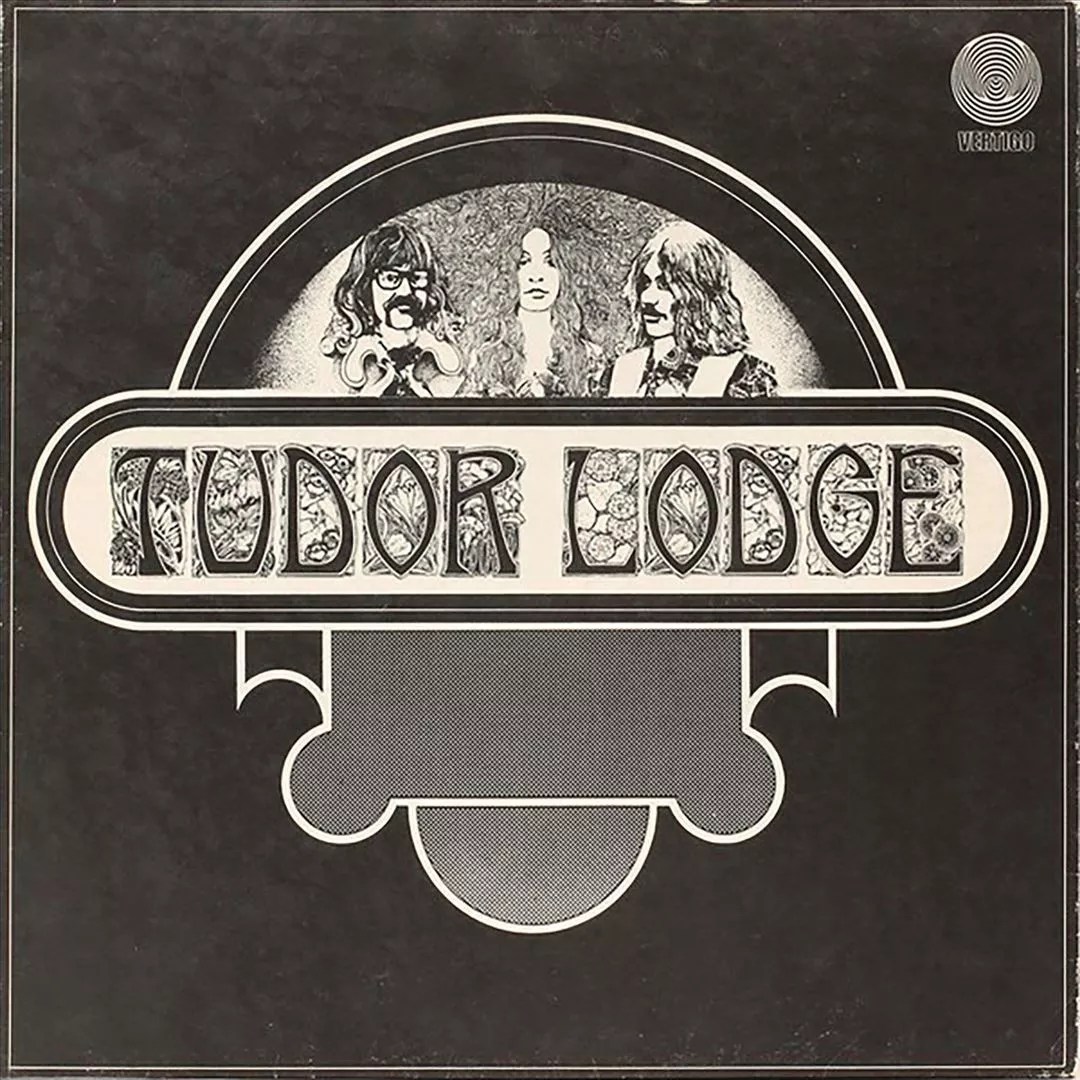
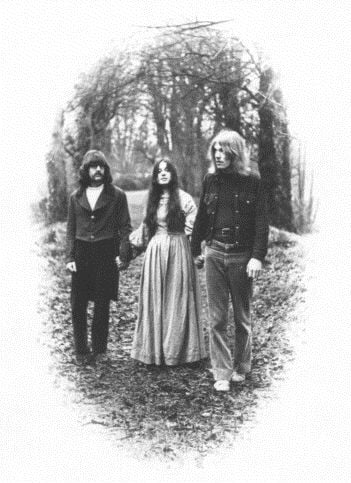
Tudor Lodge: “Forest” (1971)

There’s a reason collectors will pay steep prices for reissues of now-obscure British folk from the late ’60’s and early ’70’s. And there’s a reason specialty labels strive to keep it in print.

Seldom does contemporary pop offer a whiff of this rustic, pastoral style of music of bygone days. There haven’t been enough Belle & Sebastians to scratch this particular itch.

But if the frantic pace, economic uncertainty and political chaos of the 21st century have you seeking respite in the sound of simpler times and greener, quieter places, then this trio of John Stannard, Lyndon Green and Ann Steuart may offer the antidote you need.

Evoking early Strawbs, Heron, The Sallyangie, or Donovan, circa 1967–and continuing in some form well into the current century like most of those acts–Tudor Lodge sing songs that evoke idyllic summer scenes from other centuries.

While the American folkies were protesting war, their English counterparts simply escaped into the past.

Tudor Lodge welcomes you, road-weary guest. And this blog offers many other ancient winding paths to explore:

Heron

The Sallyangie

Hunter Muskett

Fairport Convention

Donovan

Linda Thompson

Tir Na Nog

Sally Oldfield

Lindisfarne

Gorky’s Zygotic Mynci

Jethro Tull

Steeleye Span

Amazing Blondel

Previous Older Entries Next Newer Entries