Adolf Fredrik Girls Choir: “Varmlandsvisan” (1993)
Choral music from one of Sweden’s most acclaimed and awarded choirs, representing the Adolf Fredrik Music School in Stockholm.
The choir is comprised of girls from grades 6 to 9, so membership turns over each year, but the spirit and sound remain consistent, and consistently excellent, through the years.
She just turned seven yesterday. Seems young, but some seem to gather in more in seven trips around the sun than others. She’s always looking for the next thing to love, the next thing to dive into. Like her mom did at seven.
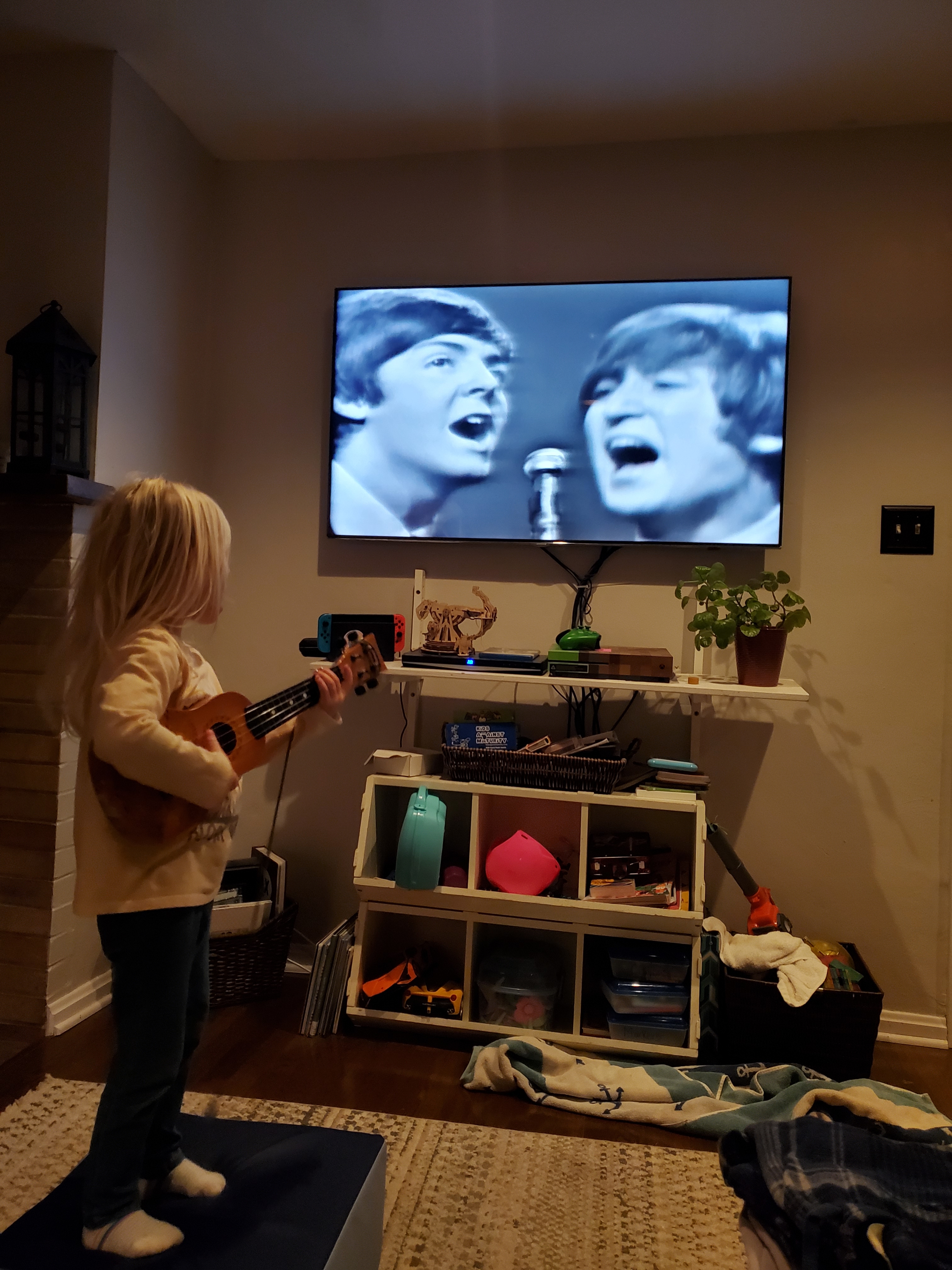
A musically-obsessed grandpa throws a lot of things her way. Certain things have stuck, become obsessions of her own. She loves Herman’s Hermits, Veggietales, Vivaldi, singing cats, the Cowsills, Julieta Venegas, ABBA, Veruca Salt singing “I Want it Now”, Lennon’s leather-tonsilled “Twist and Shout”, McCartney’s “Uncle Albert/Admiral Halsey”, this video, and, most obsessively, “Maybe” from Annie.
She’s long been enamored of the two better-known songs from this musical. She’s watched the “Hard Knock Life” movie clip on YouTube countless times. And when we visited a community park with an old bandshell she took the stage to give her grandpa an exclusive performance of “Tomorrow”, taking immense pride in holding the final note even longer than Andrea McArdle did.
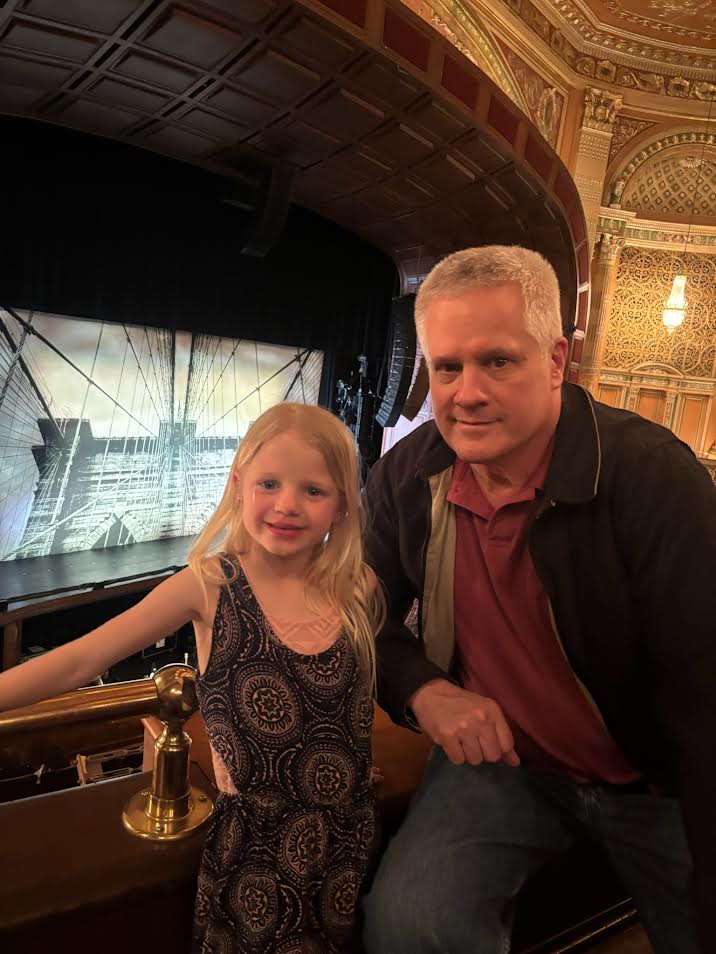
Finally this year the off-Broadway production of Annie came to town. We knew that “Tomorrow” and “Hard Knock Life” would be highlights.
What we didn’t know was that an unfamiliar song would be the highlight.
In the show’s first number, lead character Annie is quieting a younger housemate who’s had a bad dream. The conversation turns to their dreams of being taken in by a real family. Annie, who holds onto hope that her parents will return for her any day, sings the heartbreaking “Maybe”.
Grandpa and granddaughter alike were, apparently, blindsided. Enthralled. That moment, that song, that performance–it was magic. The kind of moment you wish could last and want to relive over and over.
So by the end of intermission she’d made sure I’d put “Maybe” on the Spotify playlist she curates on my phone. And on the way home from the theater we heard one song on repeat. And after every play she asked me if I was sick of it yet. And I answered honestly that I wasn’t.
A couple days later we went to our favorite coffee shop for chai and to the roller rink. It’s become a semiregular routine of ours and involves a bit of a drive. We stopped at Chipotle to pick up some dinner, then to my house to eat it, then back home for her. I think I heard “Maybe” over 30 times that day.
“Are you sick of it yet?”
“Nope”
And even if I was, I wouldn’t say it. She’ll get no wet blanket from me. It’s a joy to see the joy she gets from music. In a young person there’s no pretense and no posing; the love of music is luminous, instinctive and real.
Even when the car contains two older brothers, their devices, their more contemporary urban music tastes and their propensity to tease her for her musical sensibilities, she only sings louder, completely undeterred.
This is the gift of being inside the music, coupled with that of being too young to feel shame about loving the stuff you love.
Annie has become a bit of an obsession for both of us. The next musical obsession will come along of course, but until it does we watch YouTube Annie performances and compare the Annies over the years (she prefers Brooklyn-accented Lilla Crawford while I’m partial to the original cast’s McArdle). We rate which girls sing the best versions of this song that stole both our hearts unexpectedly.
We can’t wait until another production of Annie comes to town, and this time “Maybe” will be the most anticipated moment.
Don’t call Soledad Rodríguez Zubieta a DJ. She prefers the term “Selector — a small, but important distinction.
The Argentine artist, entrepreneur, and influencer has built a career through careful, intentional curation. After earning a psychology degree from The University of Buenos Aires, she worked in radio at 95.9 FM, managed festival events, and founded Modular, a bespoke music curation company catering to brands, restaurants, and hotels around the world.
Behind the decks, she’s played internationally, performing in cities like New York, Miami, Madrid, and South America. If you’re outside Buenos Aires, you might know her from Instagram. As of publication, Zubieta, who uses the tag “SRZ” for most of her artistic work, has amassed 212,000 followers in just a few years of serious engagement.
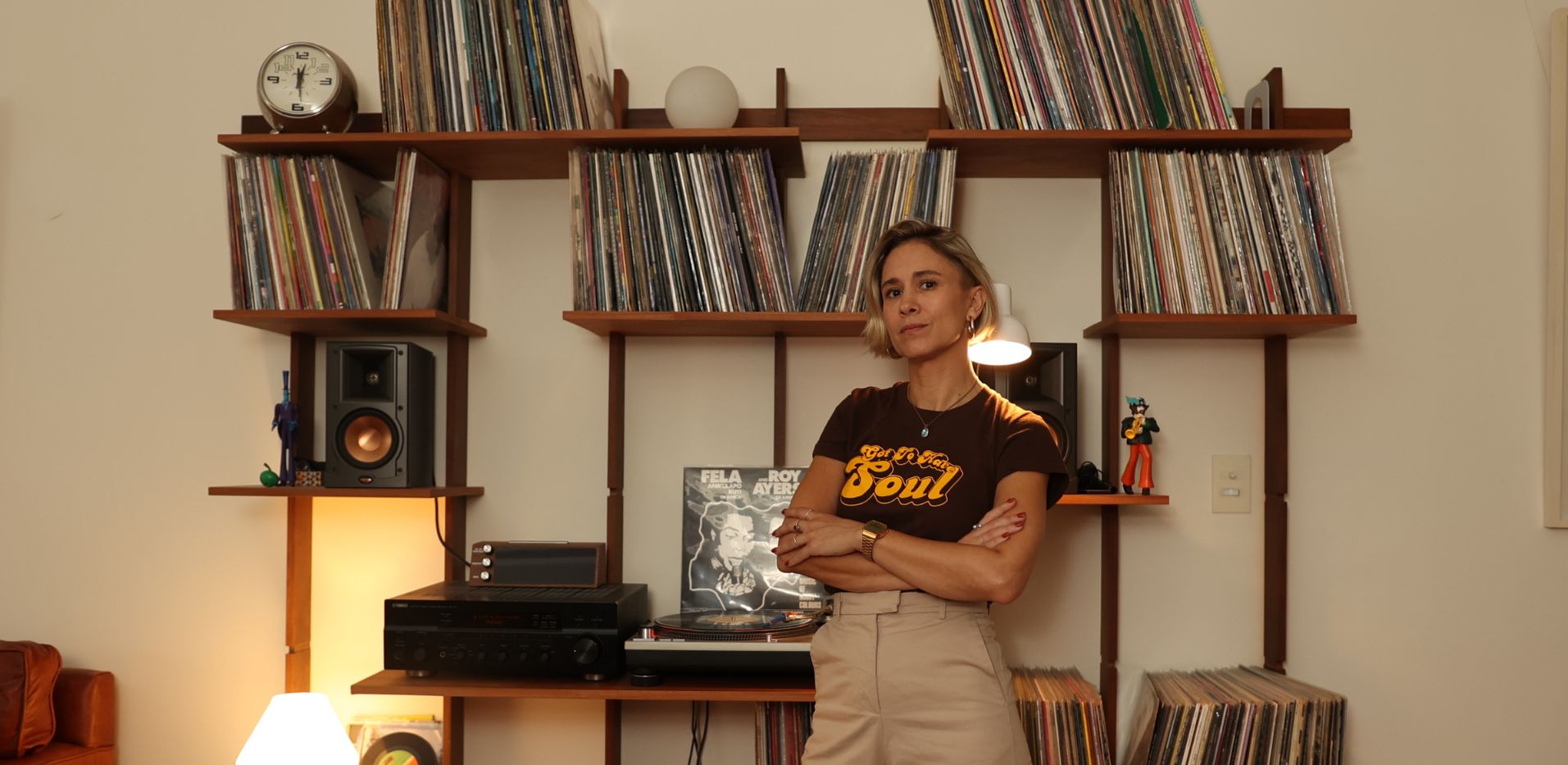
Her curatorial eye extends to social media, where followers admire her mid-century modern listening room in a recently renovated 1920s, English-style home. The space has all the makings of eye candy — hundreds, perhaps thousands of records placed on custom-built block shelving, warm lamp lighting, a speaker visualizer, and the must-have for any vibey listening room — an Eames chair (she’s not afraid to admit it’s a replica, she’d rather spend the money on records.) In what appears to be a separate area of her home, there are 4,000-5,000 CDs beautifully cataloged along the length of a wall.
People aren’t just drawn to her space — Zubieta also serves as a go-to source for music discovery. She regularly shares album recommendations, curating selections under different themes. In one video, she highlights rising Brazilian artists like Pulma, Bruno Berle, Sessa, Ana Frango Elétrico, and Gabriel Da Rosa. In another, she spotlights essential Argentine indie records, including Silencio by Los Encargados, Flopa Manza Minimal by Flopa, Manza, Minimal, La Misma Tierra by Copiloto Pilato, and Sentidos Congelados by La Sobrecarga — her longtime white whale. “I found it by chance at a fair in a park, at a good price, and I even knew the seller, who gave me a discount. Absolute happiness when something like that happens.”
Curating comes naturally to her — it’s in her DNA. She has been obsessed with music for as long as she can remember, shaping her role as a tastemaker since childhood.
“I was the one making mixtapes for friends, always wanting to share music,” Zubieta said. “That’s the motivation behind what I do. I try to remember what first drove me — loving a song so much that I wanted others to feel the same way. It’s nice to keep that in mind because, in the end, that’s still what I do at work and on social media.”
The young Okinawan 4-piece girl group Haku set the internet on fire with a video of the band covering a song called “Mono No Aware”.
As the performance, which is essentially a string of tongue twisters in Japanese, was presumably recorded on a lark, there is (so far at least) no official release of the song by the band.
Since the video has become the addiction of viewers from Asia to Mexico and seemingly everywhere else, the inability of fans to satisfy their craving by downloading or adding the tune to a playlist is a perfect example of the concept of mono no aware, a term meaning “a sensitivity to ephemera” or “a Japanese concept that describes an awareness of impermanence and the beauty found in the fleeting nature of existence, often evoking a gentle sadness or wistfulness”.
For CD collectors (ahem) it’s enough to drive one crazy–or of course to develop one’s sense of mono no aware.
But in the absence of downloads or hard copies, the video is, as the kids say, “everything”.





 Every Moment Has A Song