Name the song:
If I could move I’d get my gun and put her in the ground
Answer: “Ruby, Don’t Take Your Love to Town”-Kenny Rogers and the First Edition
"There's a time in life for Hoagy Carmichael. There's a time in life for Claude Debussy. There's a time in life for Jerry Lee Lewis. There's a time in life for Destiny's Child. All these things have their moment." ~Elvis Costello
09 Nov 2012 2 Comments
in Lyric Quiz
Name the song:
If I could move I’d get my gun and put her in the ground
Answer: “Ruby, Don’t Take Your Love to Town”-Kenny Rogers and the First Edition
09 Nov 2012 Leave a comment

Jimmy Beaumont and The Skyliners: “Where Have They Gone” (1974)
Pittsburgh vocal group the Skyliners are best known for the 1959 doo wop classic “Since I Don’t Have You”, and the voice of Jimmy Beaumont–perhaps the greatest of the early rock ‘n roll era.
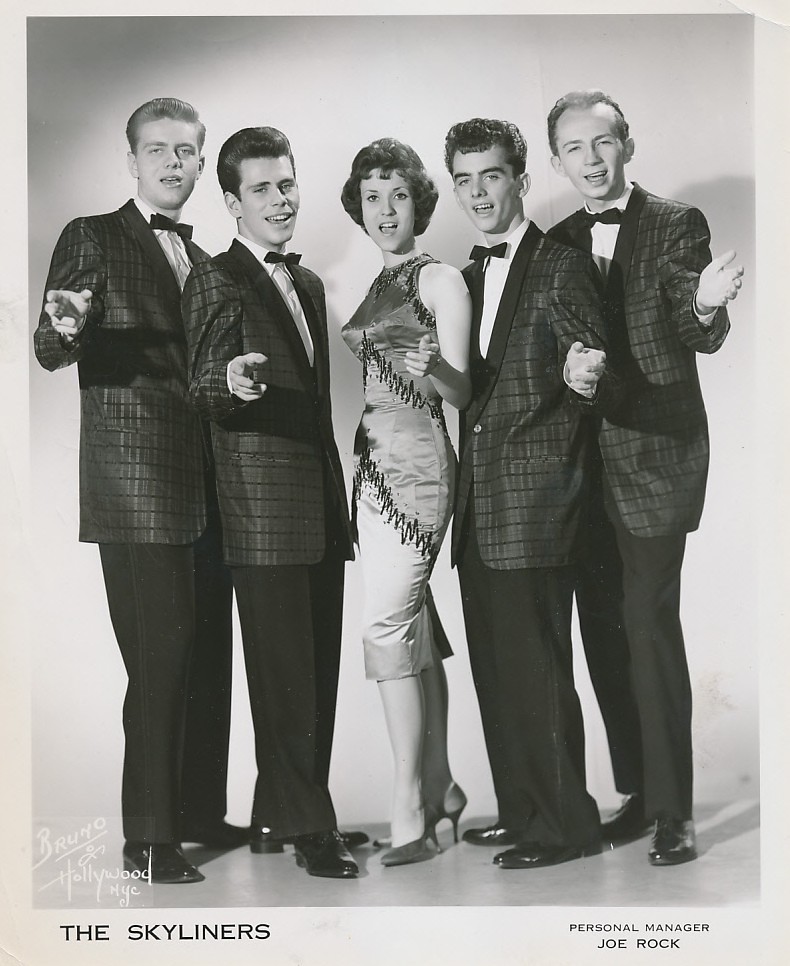
By 1963 the group disbanded, but 11 years later Beaumont brought a new lineup together to record one of the saddest and most nostalgic songs ever committed to vinyl, “Where Have They Gone”.
The song wistfully, wonderfully recollects sweet memories of earlier days, and love (and perhaps group members) lost.
This beautifully rendered song enjoyed lots of airplay in the local Pittsburgh market, but barely scratched the national charts, peaking at #100 in March of 1975.
This quote (source unfortunately unknown) says it best:
The title is both literal and metaphorical — it speaks to the group’s own journey: members leaving, time passing, and the fading of their early days. It’s a fitting farewell to the original era and a reminder of where they “went” — into history, into the memories of fans, and into the doo‑wop canon.
09 Nov 2012 Leave a comment
in Songs You May Have Missed Tags: cellarful of noise, donnie iris, mark avsec, samantha

Cellarful of Noise: “Samantha” (1988)
Here’s a nearly forgotten song that was quite a big local hit in Pittsburgh, though it only charted nationally at #69. It was written and sung by Mark Avsec, who was a member not only of Donnie Iris’ Cruisers but also of Wild Cherry (“Play That Funky Music”).
 If this one sounds like a Donnie Iris song, there’s good reason: Avsec co-wrote all of Iris’ biggest hits, including “My Girl”, “Love Is Like a Rock” and “Ah! Leah!”. His other band, Cellarful of Noise, released two albums.
“Samantha” is in my opinion the second-best pop song about an abortion, number one being ELO’s “Livin’ Thing”. (I’d rank Ben Folds’ “Brick” third, ’cause I have to–it’s the only other one I know.)
See also: https://edcyphers.com/2020/03/14/songs-you-may-have-missed-656/
See also: https://edcyphers.com/2026/07/15/songs-you-may-have-missed-853/
09 Nov 2012 Leave a comment
in Songs You May Have Missed Tags: muse, undisclosed desires

Muse: “Undisclosed Desires” (2009)
Weird band, Muse. Sometimes they sound like they grew up listening to ELO. Sometimes they sound exactly like U2. They definitely seem to merge a bunch of influences and don’t seem to try to hide them.
Prog websites and publications claim them for prog, but I don’t hear that at all. Some consider them one of the great bands of this era. I’m not sure I hear that either. But each of their last few releases has had at least a couple of tracks that caught my attention–like this one.
See also: https://edcyphers.com/2020/01/11/songs-you-may-have-missed-645/
09 Nov 2012 Leave a comment
in Songs You May Have Missed Tags: the house band, tom hark

The House Band: “Tom Hark” (1994)
Formed in Edinburgh in 1984, The House Band had a nice little run that lasted until 2001 and saw them tour Britain, Europe, Africa, Australia, New Zealand and the United States playing a diverse selection of British folk, Cajun, Celtic, and even jazz and reggae music.
“Tom Hark” is extracted from a longer medley (“Tom Hark/African Marketplace”) which, microcosmically, clashed styles together–in this case Irish and Mideastern sounds. I’ve extracted the Irish-sounding bit. It’s a song that stood out for me when I saw them live back in the 1990’s, and sent me to the merch table to buy their Another Setting album.
09 Nov 2012 Leave a comment
in General Posts Tags: taylor swift

(Source: NPR)
Taylor Swift’s new album, Red, sold more 1.2 million copies in its first week — the highest first-week sales total for an album in over a decade. She did it partly by answering a surprisingly complicated question: What’s the best way to sell an album?
There are so many ways to release your music these days. You can sell it at Amazon, iTunes, Wal-Mart, and Starbucks. You can release it to streaming sites like Spotify. You can go on tour.
Each artist chooses a mix of tools from this toolbox. And choosing the right mix can help an artist make money — something that’s hard to do in an era when it’s so easy to get free music.
Taylor Swift picked expertly. As Paul Resnikoff, editor and founder of Digital Music News points out, she has chosen from the toolbox only the outlets that would give her the most money for every album sold: Outlets that pushed a full album purchase.
The first week her album came out, you could only get it in a few key places: i-tunes, Walgreens, Wal-Mart, Target. You could order a Papa Johns pizza and receive the CD — at the sticker price of around 14 bucks.
But the tools Swift didn’t use are as important than the ones she did. By refusing to release her singles on Spotify, or any other streaming site, she pushed her fans to buy the album. Spotify pays the artist pennies on the dollar. Taylor Swift skipped it.
“Taylor already has so many fans, that she doesn’t need to have that, like, incentive,” 16-year-old superfan Lindsey Feinstein says. “Like, ‘Oh, listen to this, and then you’ll buy it.’ She’s past that level.”
Streaming music is more like an advertisement for the artist. It’s a process of music discovery, not necessarily music fandom. You build brand loyalty to the artist through streaming. Taylor Swift does not have a problem with brand loyalty. As Lindsey says, she’s past that.

