"There's a time in life for Hoagy Carmichael. There's a time in life for Claude Debussy. There's a time in life for Jerry Lee Lewis. There's a time in life for Destiny's Child. All these things have their moment." ~Elvis Costello
We say that’s not who we are but it is Injustice rising, de-civilising We say that’s not who we are but it is Our collective conscience Is proven nonsense every minute of the day
I’ve watched these years of decline Now I’m an old man I’d like to say things would get better I don’t think that I can
We say that’s not who we are but it is When did we decide to aid a genocide? We say that’s not who we are but it is Causing hunger Following warmongers to the deepest pits of Hell
We talk of barbarism Like we left it in the past While we elect malignant scoundrels Each one as bad as the last
We lecture others on morality While wi’ the de’il we sup We say we face down terror Just hold a mirror up
Well, we say that’s not who we are but it is Injustice rising, de-civilising We say that’s not who we are but it is Our collective conscience Is proven nonsense every minute of the day Nonsense every minute of the day
(via Business Insider) by Max Kalnitz and Amanda Geffner
Great music isn’t just found in a few iconic cities — it thrums through every corner of the United States. Each state has produced many bands that helped define its sound and leave a lasting mark on music history.
To figure out the most famous band from every state, Business Insider weighed reputation, record sales, and awards. Crucially, each act was judged in the context of its own era because today’s chart-toppers don’t necessarily eclipse the legends of decades past.
We focused exclusively on groups — no solo acts — but took a flexible approach to what counts as a “band,” including any musical act made up of more than one person. While we primarily looked at where each band was formed, we also considered where their music took off and the hometowns that shaped them.
So, which band puts your state on the map? Let’s find out.
Emmie Martin and Christi Danner contributed to a previous version of this article.
ALABAMA: Alabama
Alabama. Frazer Harrison/ Getty Images
One of the most successful bands of all time, Alabama has sold over 56 million records, per the The Recording Industry Association of America (RIAA), and has scored 43 No. 1 hits. It also has 11 multi-platinum albums and two Grammys. The band, which formed in Fort Payne, Alabama, sold more records during the ’80s than any other band. Not only is their success impressive by any measure, but they also did a lot to make country music popular in the mainstream.
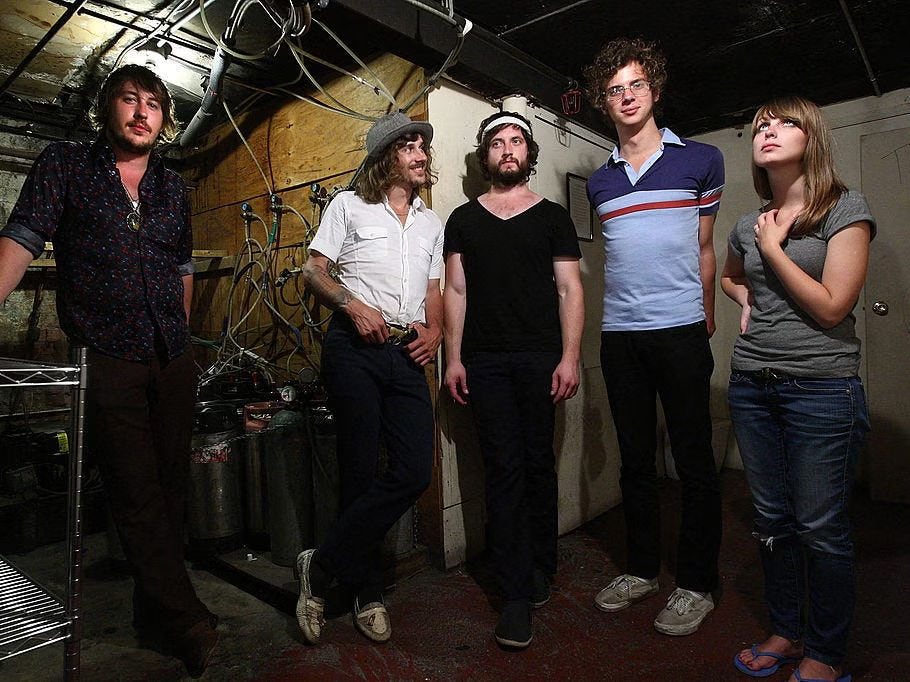
ALASKA: Portugal. The Man
Portugal. The Man. Michael Loccisano/Getty Images
Alaska was far away from the rock ‘n roll scene that defined the late 1960s and continued into the ’70s in the continental United States, and rarely have any bands found success beyond the state’s borders. That is, until Portugal. The Man exploded into the alt/indie rock scene.
Since releasing its debut album “Waiter: You Vultures!” in 2006, the band from Wasilla, Alaska, has become an indie-rock phenom, hitting major stops on the festival circuit and collaborating with artists including “Weird Al” Yankovic, Tom Morello, and Danger Mouse.
The band’s biggest claim to fame is its 2017 hit single “Feel It Still,” which dominated the airwaves and earned the group its first and only Grammy Award for best pop duo/group performance.
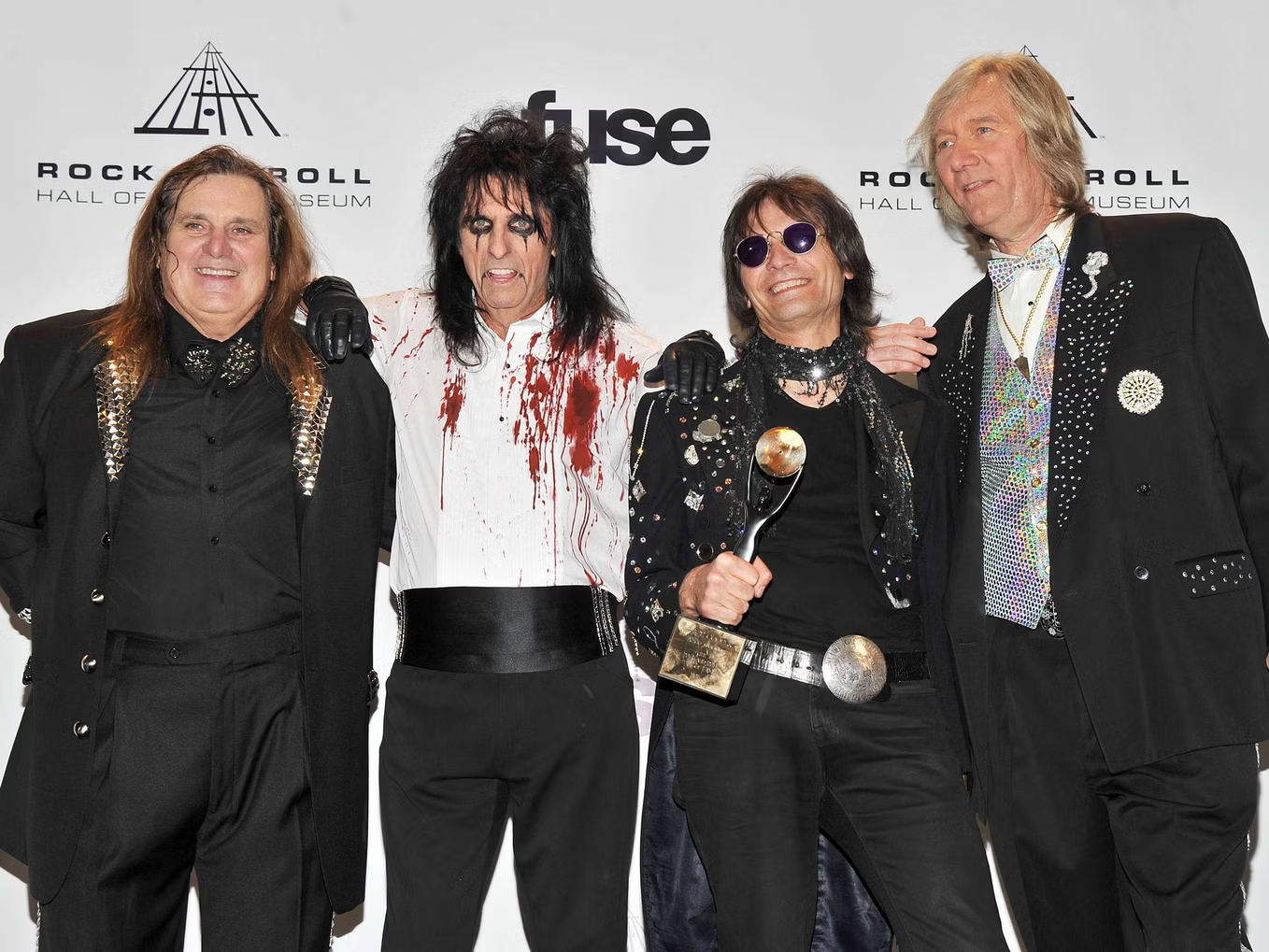
The first of the many shock-rock bands of the ’70s, Alice Cooper kept fans entranced with their gender-bending outfits and dark onstage theatrics — concert-goers could expect performances to include stunts like Cooper’s faux-beheading via guillotine.
But it’s the music that kept fans coming back for more, and their riff-heavy brand of hard rock produced a string of hits, including “School’s Out” and “Be My Lover.” Alice Cooper was inducted into the Rock & Roll Hall of Fame in 2011.
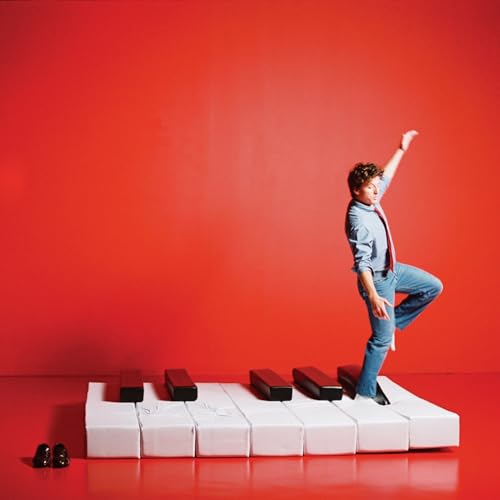
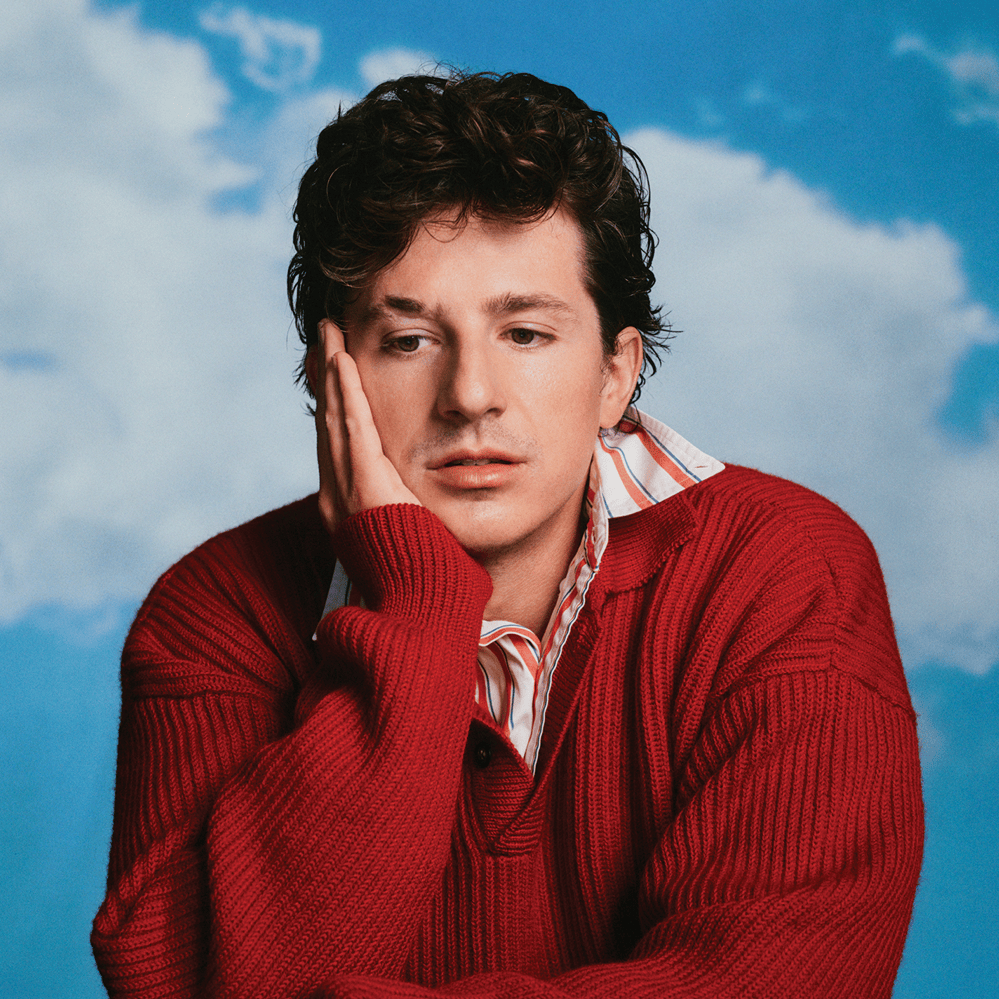
“Reply to This” has been teased by Charlie Puth for 6 years.
Originally titled “Reply 2 This”, an incomplete earlier version was heard during a July 2020 Instagram live stream then shared by Puth on TikTok in August of that year with the message “Tell me to drop it and I will…”
Another TikTok in 2023 featured a snippet of a higher-quality take of the song, with Puth asking “Should I?”
Fans responded in the affirmative of course, but it took until the second half of 2026 when, as part of the expanded edition of his Whatever’s Clever! album, Puth finally gave the song its official release–to a chorus of “Finally!” and “I’ve waited 6 years for this!” but also lots of “The earlier version was better” comments.
So we include the earlier take, preferred by some fans, and let you be the judge.
Whichever your preference, this song has more hooks and lures than a fisherman’s tackle box.
These were the qualities that marked Adam Schlesinger’s songwriting. And, frankly, on a survey of what rank-and-file fans would say they prize most about rock ‘n’ roll, these would probably end up near the very bottom. Maybe, as attributes, they’d be even closer to antonyms for the crude rush most people associate with, if not love about, rock.
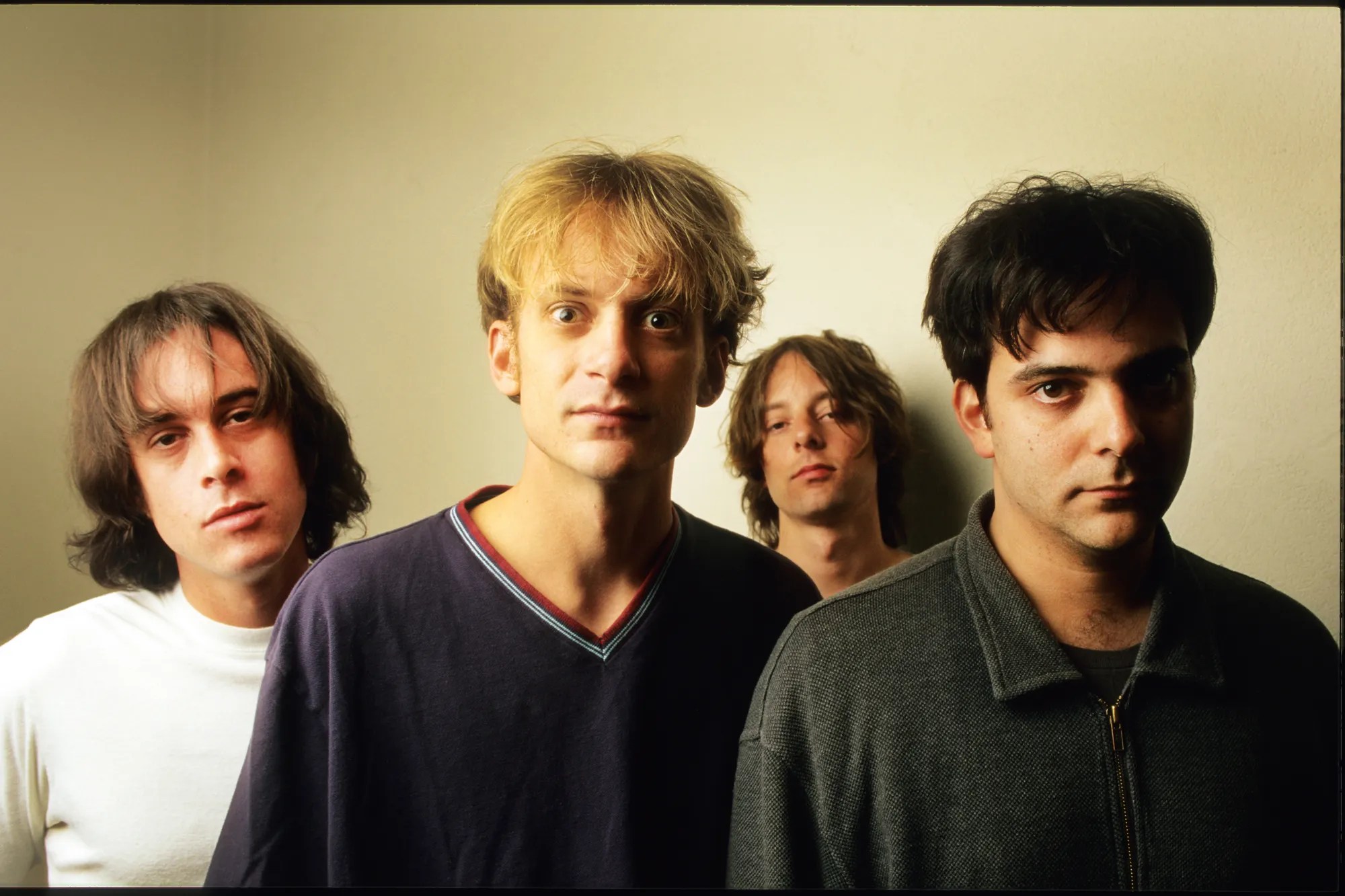
But that’s all right: Fountains of Wayne was not for everybody, despite the wide-open accessibility of the band’s earworms. For a select few of us with a special taste for the sweet-and-sour, FoW, with Schlesinger as one of its two co-architects, was something like the greatest rock band of the last quarter-century…
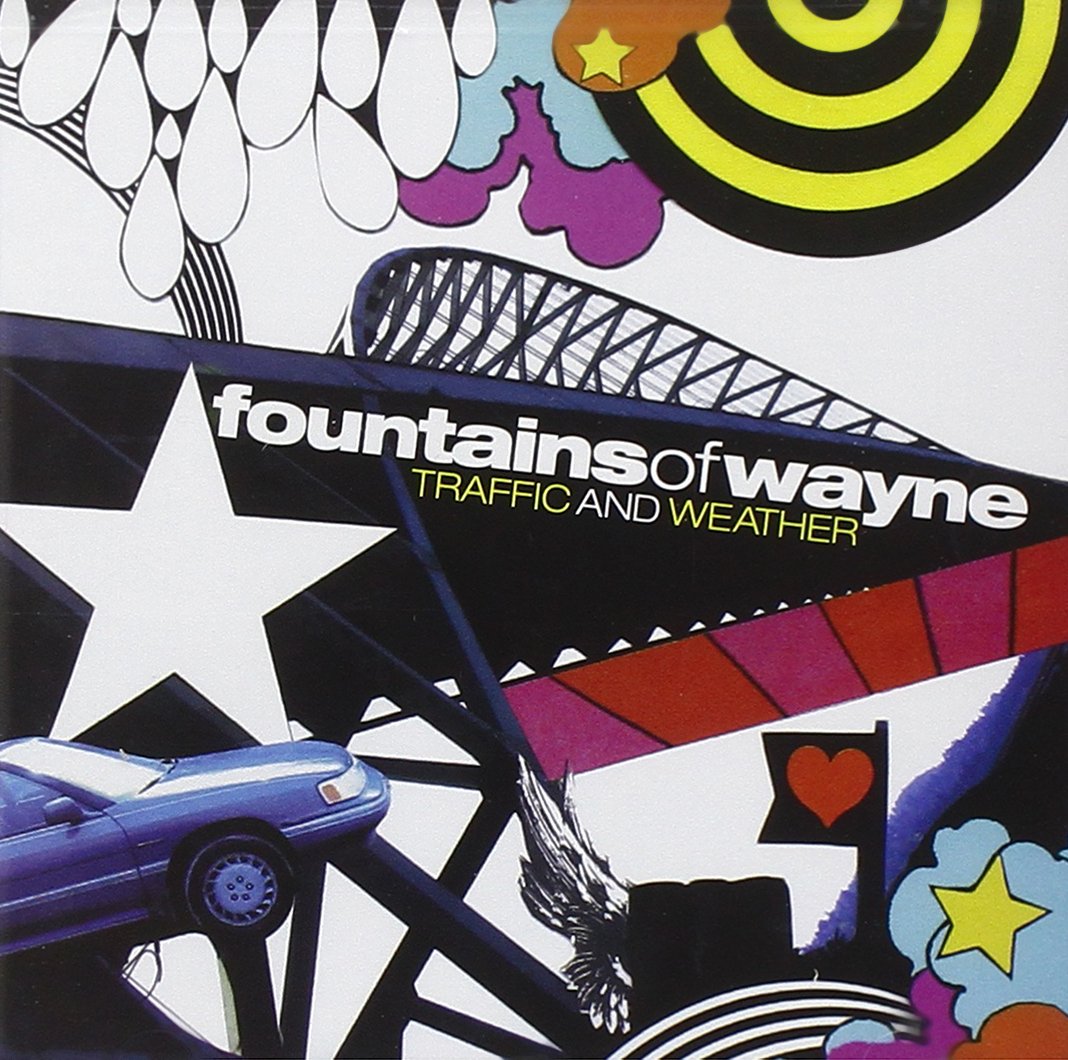
For a band that only recorded 5 official studio albums and one collection of rarities, Fountains of Wayne certainly made an impact among the power pop and geek rock crowd, who know the quality of the songs Chris Collingwood and Adam Schlesinger produced.
Only trouble is, concise, clever, wryly observational lyrics and harmony-layered earworms aren’t prized by the masses like angst-filled bellowing, flirtsy dance pop or beer-soaked, cliched-for-your-safety country fare.
It’s a central tenet of my appreciation of FOW that “Stacy’s Mom” was not exactly the strongest brand ambassador for the band. With this and other posts (see links below) we hope to remedy that a little.
The specificity of detail in a FOW lyric is arresting. When fledgling songwriters are told to avoid tired, cliched phrases, they should be made to listen to the work of Schlesinger and Collingwood, whose lyrics are the opposite of cliche.
It’s a trait they share with Weezer’s Rivers Cuomo, who also continues to write great original melodies in an era when they have all the apparent appeal of a barbershop quartet or Bach minuet.
FOW’s eye for resonant lyrical detail pulled you into the story songs. Perhaps then it wasn’t surprising that Schlesinger made his mark on the theater stage as well: he co-wrote the songs for the stage adaptation of the film Cry Baby (which debuted the year of this album’s release) and other musicals as well.
The narrative lyric was a band strength.
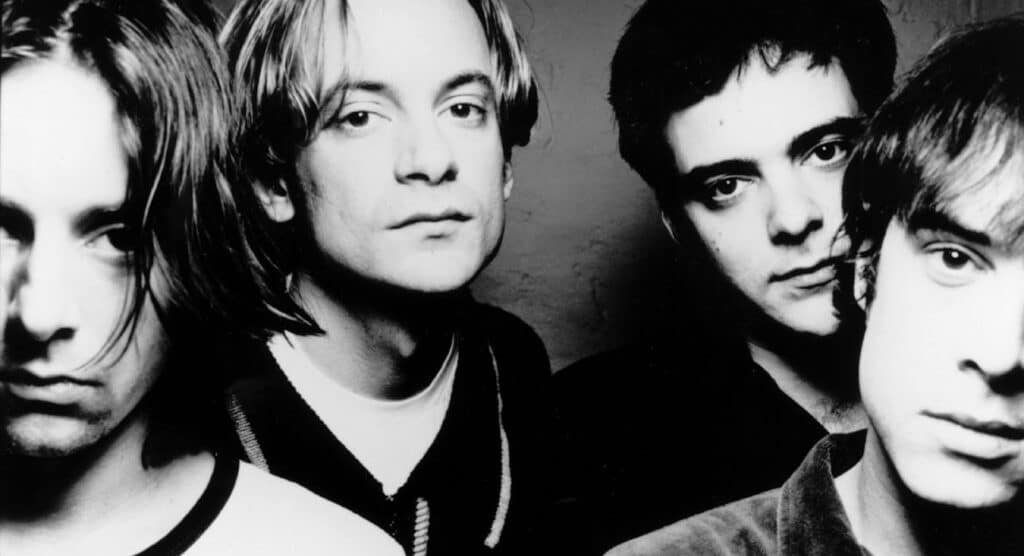
To this listener’s ears, Fountains of Wayne were (Adam Schlesinger succumbed to COVID in April of 2020) the best of the latter day purveyors of power pop, the pop rock sound that descended from the Raspberries, Badfinger, etc.
But like the best pitchers, FOW weren’t working with just one pitch. The change up–their ability to turn in a heart-tugging ballad such as “I-95”–set them apart from lesser one-trick artists.
Collingwood and Schlesinger didn’t feel constrained to match lyrics to the mood of the music, either. Sometimes downer lyrics graced an ebullient arrangement a la ABBA.
Conversely songs like “Halley’s Waitress” (from 2003’s Welcome Interstate Managers) are musically somber with a witty lyric.
These juxtapositions give their songs dimension. It’s as if they found and revealed the joy amid life’s struggle, and the poignancy in a light-hearted situation. Cause life is like that.