"There's a time in life for Hoagy Carmichael. There's a time in life for Claude Debussy. There's a time in life for Jerry Lee Lewis. There's a time in life for Destiny's Child. All these things have their moment." ~Elvis Costello
These were the qualities that marked Adam Schlesinger’s songwriting. And, frankly, on a survey of what rank-and-file fans would say they prize most about rock ‘n’ roll, these would probably end up near the very bottom. Maybe, as attributes, they’d be even closer to antonyms for the crude rush most people associate with, if not love about, rock.
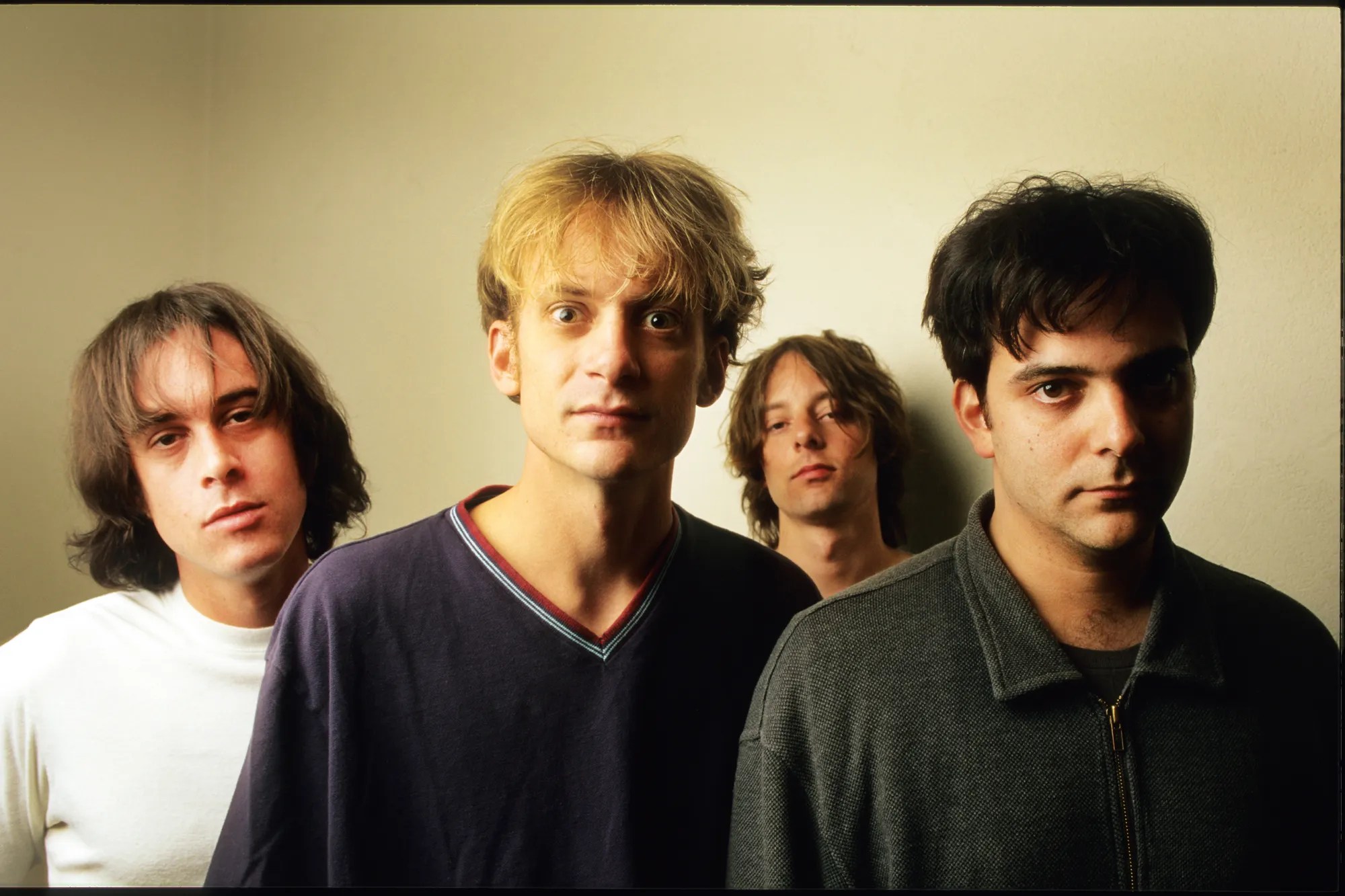
But that’s all right: Fountains of Wayne was not for everybody, despite the wide-open accessibility of the band’s earworms. For a select few of us with a special taste for the sweet-and-sour, FoW, with Schlesinger as one of its two co-architects, was something like the greatest rock band of the last quarter-century…
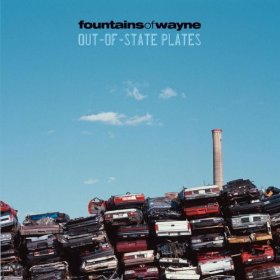
For a band that only recorded 5 official studio albums and one collection of rarities, Fountains of Wayne certainly made an impact among the power pop and geek rock crowd, who know the quality of the songs Chris Collingwood and Adam Schlesinger produced.
Only trouble is, concise, clever, wryly observational lyrics and harmony-layered earworms aren’t prized by the masses like angst-filled bellowing, flirtsy dance pop or beer-soaked, cliched-for-your-safety country fare.
It’s a central tenet of my appreciation of FOW that “Stacy’s Mom” was not exactly the strongest brand ambassador for the band. With this and other posts (see links below) we hope to remedy that a little.
The specificity of detail in a FOW lyric is arresting. When fledgling songwriters are told to avoid tired, cliched phrases, they should be made to listen to the work of Schlesinger and Collingwood, whose lyrics are the opposite of cliche.
It’s a trait they share with Weezer’s Rivers Cuomo, who also continues to write great original melodies in an era when they have all the apparent appeal of a barbershop quartet or Bach minuet.
FOW’s eye for resonant lyrical detail pulled you into the story songs. Perhaps then it wasn’t surprising that Schlesinger made his mark on the theater stage as well: he co-wrote the songs for the stage adaptation of the film Cry Baby (which debuted the year of this album’s release) and other musicals as well.
The narrative lyric was a band strength.
To this listener’s ears, Fountains of Wayne were (Adam Schlesinger succumbed to COVID in April of 2020) the best of the latter day purveyors of power pop, the pop rock sound that descended from the Raspberries, Badfinger, etc.
But like the best pitchers, FOW weren’t working with just one pitch. The change up–their ability to turn in a heart-tugging ballad such as “I-95”–set them apart from lesser one-trick artists.
Collingwood and Schlesinger didn’t feel constrained to match lyrics to the mood of the music, either. Sometimes downer lyrics graced an ebullient arrangement a la ABBA.
Conversely songs like “Halley’s Waitress” (from 2003’s Welcome Interstate Managers) are musically somber with a witty lyric.
These juxtapositions give their songs dimension. It’s as if they found and revealed the joy amid life’s struggle, and the poignancy in a light-hearted situation. Cause life is like that.
Who releases a “career-spanning”, two-disc rarities compilation when their career has only spanned three albums?
Who follows up their big breakthrough hit with a sprawling, untidy musical curio cabinet of B-sides, soundtrack contributions, live tracks, covers, out and out jokes…and little nuggets of pure pop gold?
For that matter, who is nominated for a Best New Artist Grammy award for their third album?
Fountains of Wayne had a career as strange as their name–taken from a lawn ornament store in New Jersey. Alas, both the store and the band are no more.
But power pop burners like “Maureen” are testament to the songcraft of founding members Chris Collingwood and Adam Schlesinger, perhaps the best songwriting pair in the genre.
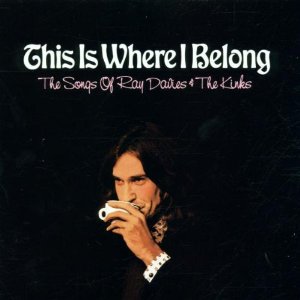
The 2002 Rykodisc Kinks tribute This is Where I Belong focused not on the “tired and true” Ray Davies-penned material; there’s nary a “Lola” or “You Really Got Me” or “Come Dancing” in the bunch. Instead, a collection of well-qualified, well-respected men and women such as Jonathan Richman, Bebel Gilberto, Steve Forbert, Ron Sexsmith and Matthew Sweet knock around some of the more interesting second-tier Davies material–the deep cuts.
So tunes like “Starstruck”, “Victoria”, “Picture Book” and “Muswell Hillbilly” get a fresh look-in. And power poppers Fountains of Wayne turn up the volume on “Better Things”, an anthem for graduates if I ever heard one.
Fountains of Wayne: “The Girl I Can’t Forget” (2005)
Great power pop story song from the genre’s cleverest lyricists. The intelligence and wit of Chris Collingwood and Adam Schlesinger is unmatched among bands making this type of music.
Pigeonholed by their 2003 hit “Stacy’s Mom”, the band made a lot of fake fans, many of whom flaked away as soon as they realized FOW’s other songs weren’t similarly written for single-celled organisms. “Stacy’s Mom Syndrome” should be the name for that phenomenon of a band having one massive hit that is totally unrepresentative of their catalog. (Sounds better than “Tubthumping Syndrome”, right?)