Songs You May Have Missed #95

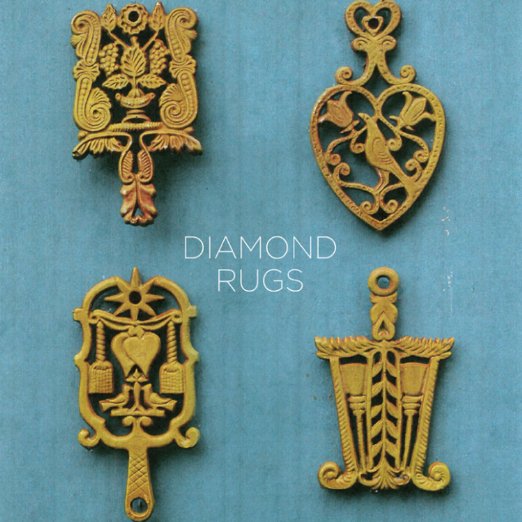
diamond rugs

Diamond Rugs: “Call Girl Blues” (2012)

A little like early 70’s Van Morrison meets early J. Geils. This is the most fun I’ve had over a four-minute span since…well, nevermind.

When were the fun horn charts banned from rock and roll? I didn’t see it on the news or I’d have surely been in the streets protesting, along with several unemployed Squirrel Nut Zippers.

Wedding Chemistry: The “Trust Molecule” at Work at a Wedding Ceremony (and Elsewhere)

Paul J. Zak’s book The Moral Molecule suggests that a chemical substance in the body, oxytocin, is connected to feelings of trust and empathy. The complete article is linked below, but I’ve reprinted the portion brides and grooms may find of particular interest–an experiment in the chemical’s effect at a wedding:

[SB10001424052702304723304577369981418664696]

…Consider a real-life experiment that I conducted with a bride named Linda Geddes. A writer for the British magazine New Scientist, Linda had been following my research and thought it would be fun to see if the emotional uplift of her wedding would alter the guests’ levels of oxytocin.

I arrived at the venue, a Victorian manor house in the English countryside, with a 150-pound centrifuge and 70 pounds of dry ice. I unpacked my equipment—syringes, 156 prelabeled test tubes, tourniquets, alcohol preps, Band-Aids—and got to work. The plan that I’d worked out with Linda was to take two samples from a cross section of the friends and family in attendance—one draw of blood immediately before the vows and one immediately after.

After all the blood had been drawn, I slipped out with my test tubes nestled in their cushion of dry ice. It took two weeks for the samples to arrive at my California lab via FedEx, but the results showed just what we were hoping for: a simple snapshot of oxytocin’s ability to read and reflect the nuances of a social situation.

The changes in individual oxytocin levels at Linda’s ceremony could be mapped out like the solar system, with the bride as the sun. Between the first and second draws of blood, which were only an hour apart, Linda’s own level shot up by 28%. For the other people tested, the increase in oxytocin was in direct proportion to the likely intensity of their emotional engagement in the event. The mother of the bride? Up 24%. The father of the groom? Up 19%. The groom himself? Up 13%…and on down the line.

But why, you may ask, would the groom’s increase be less than his father’s? Testosterone is one of several other hormones that can interfere with the release of oxytocin, and the groom’s testosterone level, according to our blood test, had surged 100%! As the guests admired Linda in her strapless bridal gown, he was the alpha male.

Our study at the wedding had demonstrated just the kind of graded and contingent sensitivity that allows oxytocin to guide us between trust and wariness, generosity and self-protection. Should I feel safe and warm and cuddly in this crowd, or do I have to be on guard? Or maybe it is a situation in which the best outcome results from oxytocin dominating in one person and testosterone driving the other.

It is the sensitivity of oxytocin in its interaction with a range of other chemical messengers that helps to account for why human behavior is so infinitely complex—and why the bliss of the wedding day (and night) is often hard to maintain. (Consider the old joke about the guy who couldn’t understand why his wife was unhappy. “I told you that I loved you when I asked you to marry me,” he said. “I don’t see why I need to tell you again.”)…

Read more: http://online.wsj.com/article/SB10001424052702304811304577365782995320366.html?mod=googlenews_wsj
If American TV Had More of This Type of Music Entertainment to Offer…

…maybe I’d turn mine on once in a while.


Video

Don’t Like Pop Music at Baseball Games? Blame the Pirates

(Source: Rolling Stone)

High and Tight: Our Rock & Roll Baseball Experts Take On Pop Music at Ball Parks

Tom Morello, Scott Ian, Ben Gibbard and other rocker fanatics sound off on our national pastime

Seventy-one years ago last week, workers dragged an organ into Wrigley Field  before a Saturday afternoon contest between the Chicago Cubs and the St. Louis  Cardinals, hooked it up to the ballpark’s P.A. system — and for the first time  in major league history, fans were treated to organ music during a ballgame. The  concept quickly caught on throughout the majors, as other teams began hiring  their own organists; by the 1950s, live organ accompaniment had become as  integral to the ballpark experience as the aroma of hot dogs, peanut shells and  spilled beer. But in the late 1970s, contemporary pop music entered the  ballpark, and things got complicated.

Blame it on Sister Sledge — or rather, the Pittsburgh Pirates intern who  began spinning the group’s Nile Rodgers-produced disco hit “We Are Family” at  Three Rivers Stadium after every Bucs victory during the summer of 1979. Since  then, pop recordings have increasingly (and often jarringly) dominated the  soundscape at ballgames.

Read more: http://www.rollingstone.com/music/news/high-and-tight-our-rock-roll-baseball-experts-take-on-pop-music-at-ball-parks-20120502#ixzz1tljSLUCV

Songs You May Have Missed #94

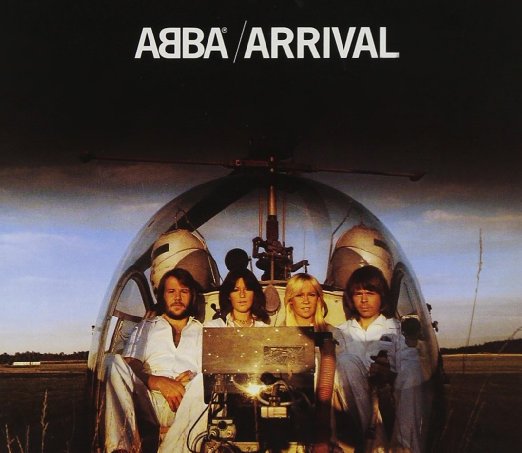
abba

ABBA: “My Love, My Life” (1977)

One of the great album tracks from ABBA’s strongest record, 1977’s Arrival. Never before or since ABBA has the sadness of marital disintegration been related in such bittersweet pop music. The lyric aches, the melody is pure resignation.

“Pop” music can, at its best, be fine art.

See also: https://edcyphers.com/2020/10/28/songs-you-may-have-missed-670/

See also: https://edcyphers.com/2021/11/12/songs-you-may-have-missed-717/

Video

Songs You May Have Missed #93

wes

Wes Cunningham: “Not Enough” (1998)

Singer-songwriter Wes Cunningham, born in the Philipines and raised in Texas, makes music that is simultaneously left-of-center and accessible, straddling the border of “alternative” (whatever that is) and power pop. His kitchen sink approach keeps it interesting: he raps in Spanish in one song, goes on a cheesy elevator muzak bossa nova detour on another. “Not Enough”, typically, includes a pseudo-salsa piano break and mariachi horns. It should be a mess, but somehow it works–the song’s unconventional arrangement only lends it greater immediacy.

“Not Enough” is from Wes’ first album, 12 Ways to Win People to Your Way of Thinking. With 2001’s Pollyanna, the angst of the first record was replaced by a newfound blissed-out romantic vibe–clearly the album was inspired by a blossoming love affair. The pop songwriting instincts, though, remained.

I’d love to hear more from Wes, who no longer seems to have major label distribution.

See also: https://edcyphers.com/2013/07/10/songs-you-may-have-missed-445/

Previous Older Entries Next Newer Entries