Songs You May Have Missed #335

thresholdThreshold: “The Hours” (2012)

There are all kinds of rock road songs.

The Rolling Stones helped us see the unsavory side of it all with “Torn and Frayed”:

“Well, the ballrooms and smelly bordellos,
And dressing rooms filled with parasites.
On stage the band has got problems
They’re a bag of nerves on first nights.

Motorhead’s “(We Are) the Road Crew” gave us something pretty straightforward:

“Another town another place,
Another girl, another face,
Another truck, another race.
I’m eating junk, feeling bad,
Another night, I’m going mad.”

Grand Funk Railroad reminded us it’s all a party with “We’re an American Band”:

“On the road for forty days,
Last night in Little Rock put me in a haze.
… We’re coming to your town, we’ll help you party down.
We’re an American band.”

Journey’s “Faithfully”, perhaps rock’s definitive road ballad, is a mixture of self-pity and determination to man up and see the good side:

They say that the road ain’t no place to start a family…

two strangers learn to fall in love again/I get the joy of rediscovering you

The Ramones’ “Touring” capably demonstrated that a road song can be just as mindless as…any other Ramones song:

“Well we’ve been around this great big world,
And we’ve met all kinds of guys and girls,
From Kamoto Islands to Rockaway Beach.
No, it’s not hard, not far to reach.”

Jackson Browne’s “The Load Out” is typical Jackson Browne–mopey and self-absorbed:

“We do so many shows in a row,
And these towns all look the same.
We just pass the time in our hotel rooms,
And wander ’round backstage.”

And then there’s Bob Seger’s “Turn the Page”, which almost deserves its own category:

“So you walk into this restaurant,
Strung out from the road,
And you feel the eyes upon you,
As you’re shaking off the cold.
You pretend it doesn’t bother you
But you just want to explode.”

Most times you can’t hear ’em talk
Other times you can
All the same old clichés
“Is that a woman or a man?”

Of all these songs, as well as the many I didn’t quote–like “Lodi”, “Two-Lane Highway”, “Six Days on the Road”, “Travelin’ Band”, “Postcard” and Fountains of Wayne’s road-song skewering “A Road Song”, none are half as loathsome to me as the dirge of self-pity that is “Turn the Page”.

For a full five minutes we are seriously expected to mourn the plight of a rock star and his life of unadulterated fan adoration and adulterated one-night stands. And that sax riff is supposed to make me weep for the guy who takes a little ribbing because he’s been too busy counting gate receipts to stop in at the barber. Waaaaahh!

Tough life, Bob.

Anyway, prog metallers Threshold have put their own spin on the road song. These guys make taking to the road sound like a gladiator striding into the arena, girded with the steel of love and devotion, willing to “stand until my strength is gone” and “fight against the hours” he must endure until he can return home to the object of his devotion. This is hero fantasy quest stuff!

A little dramatic? Well, yeah that’s the point. I mentioned they were prog metal, right? No half-assing this stuff. Life on the road, to a prog metal band, isn’t about moping in the corner of a hayseed bar trying not to cry because some ignorant redneck called your gender into question. (Ironically, he’ll recognize you later ’cause he has tickets to see Ted Nugent, who’s your opening act. So you see you’ll get the last laugh when you take that guy’s money too.)

Life on the road, in prog metal terms, is about fighting the big bad balrog of loneliness, temptation, and confusion as to which unfamiliar corridor leads to the stage. It’s about taking up the sword of overconfidence, and the talismanic gold chain hung ’round your neck with the extra hotel key tucked inside your tunic, and marching forward to greet the screaming hordes with a bellowing “Hello Cleveland!”

“I mean Akron!”

See also: https://edcyphers.com/2012/11/21/songs-you-may-have-missed-249/

A Lil Wayne Guitar Solo is a Lot Like…

A Fred Durst Guitar Solo is a Lot Like…

Songs You May Have Missed #316

magic pie

Magic Pie: “Full Circle Poetry” (2005)

Reason number one to either love or hate prog rock: songs that don’t even get to the chorus for seven minutes. As much as I appreciate epic ambition, concept albums and the like, it’s a rare 14-minute song that I really enjoy. This is one.

These Norwegian proggers aren’t cutting edge innovators of the genre. Rather they tend to construct their epics from pieces nicked from classic-era bands such as Yes, Kansas and Gentle Giant.

Which is okay by me. Hardcore progressive rock fans are notoriously immoderate in their criticisms of derivative bands, concepts and sounds–as if the genre should reinvent itself every time a band releases an album. Sometimes it should be enough to simply appreciate an artist rearranging the existing pieces into something agreeable. The vocals, the musicianship and the song craft here are exemplary. It’s okay with me that I hear echoes of more original bands from a past era. In fact, it’s kind of comforting. Most of the time I don’t require music to challenge me, only to please me.

What a concept.

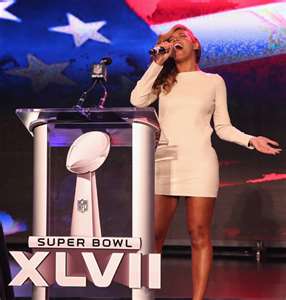
Beyoncé Practices Singing Until Her Feet Bleed, Turns National Anthem Into Self-Serving Stunt

super bowlRolling Stone reports:

Beyoncé Sings National Anthem Live at Super Bowl Press Conference

‘Any questions?’ pop star says with a laugh

Beyoncé opened a Super Bowl press  conference on Thursday afternoon in New Orleans with a rousing rendition of the  national anthem – and this time it was definitely live. After a rapturous round  of applause by the media in attendance, the singer took questions about her upcoming Super Bowl gig as well as her controversial  lip-syncing of “The Star-Spangled Banner” at President Obama’s second inauguration last week.

“I am a perfectionist. One thing about me, I practice until my feet bleed, and I did not have time to rehearse with the orchestra,” Beyoncé said. “It was a live television show and a very, very important, emotional show for me – one of  my proudest moments. Due to the weather, due to the delay, due to no proper sound check, I did not feel comfortable taking a risk. It was about my president and the inauguration, and I did not want to take away from that. I decided to go  with a pre-recorded track, which is very common in the music industry. And I am  very proud of my performance.”

Beyoncé added that  she will be “absolutely singing live” at her Super Bowl performance this coming Sunday. “I am well rehearsed. I will absolutely be singing live. This is what I was born to do.” 

It’s bad enough that our National Anthem is turned into an episode of The Voice on a regular basis–merely seen as a chance for singers to showcase their abilities of song embellishment. But here it was actually used merely to make a point–to give the media the finger in reaction to criticism the singer received for her previous lip-synched performance.

I guess the song really isn’t as sacred as I grew up believing. Because contrary to its lyrics, which suggest it’s a song about pride in the brave, indomitable American spirit, it’s usually rendered with all the faux agony and ecstasy of a breakup song or Marvin Gaye seduction anthem.

If we do need a new National Anthem, as some suggest, it’s because we need to start from scratch. We’ve added too many superfluous spangles to the current one.

Yes, I have a question, Beyoncé: What’s up with rehearsal causing bleeding feet? Does that happen when you sing with too much sole?

Six Types of Songs That Aren’t on the Pop Charts Anymore

If you’re over the age of 40 and continue to be exposed to contemporary pop radio I don’t have to tell you the landscape has changed a bit since say, the 70’s.

Some of the more profound and obvious developments would include the greater prominence of the “bottom end” in the sound mix (70’s AM radio catered to the portable transistor radio) and of course the emergence of rap and hip-hop.

But there are several whole types of pop songs that were much more commonly found on the radio in past decades whose absence you may not have even noticed. Allow me to call attention to a few:

Six Types of Songs That Aren’t on the Pop Charts Anymore

greenbaum

1. Songs About God

The pop charts are a more secular place these days, while religion formerly found a regular spot on the radio, particularly in the five-year period from 1969-74. For example:

  • “Oh Happy Day”-Edwin Hawkins Singers (#4 in 1969)
  • “My Sweet Lord”-George Harrison (#1 in 1970)
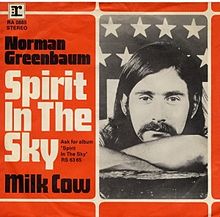
  • “Spirit in the Sky”-Norman Greenbaum (#3 in 1970)
  • “Put Your Hand in the Hand”-Ocean (#2 in 1971)
  • “The Wedding Song (There is Love)”-Paul Stookey (#24 in 1971)
  • “Mighty Clouds of Joy”-B.J. Thomas (#34 in 1971)
  • “Morning Has Broken”-Cat Stevens (#6 in 1972)
  • “Amazing Grace”-Royal Scots Dragoon Guards (#11 in 1972)
  • “Day By Day”-Godspell (#13 in 1972)
  • “Speak to the Sky”-Rick Springfield (#14 in 1972)
  • “Why Me”-Kris Kristofferson (#16 in 1973)
  • “The Lord’s Prayer”-Sister Janet Mead (#4 in 1974)

take five

2. Jazz Crossover Hits

It’s strange to even realize there was a time–called the Big Band Era–when jazz was the top 40. I’m not going too far out on a limb to predict it’ll never happen again. But jazz had at least a presence on pop radio right up until about 1980–a little later if you consider what Kenny G did to be jazz, or allow for a bit of a one-off with US3’s “Cantaloop” in 1993. What happened to the jazz hit song?

  • “Take Five”-Dave Brubeck Quartet (#25 in 1961)
  • “The Girl From Ipanema”-Stan Getz with Astrud Gilberto Byrd (#5 in 1964)
  • “The ‘In’ Crowd”-Ramsey Lewis (#5 in 1965)
  • “The Look of Love”-Sergio Mendes & Brasil ’66 (#4 in 1968)
  • “Grazing in the Grass”-Hugh Masekela (#1 in 1968)
  • “Breezin'”-George Benson (#63 in 1976)
  • “Feels So Good”-Chuck Mangione (#4 in 1978)
  • “Morning Dance”-Spyro Gyra (#24 in 1979)

vangelis

3. Instrumental Hits

Of course, there’s a certain degree of overlap between instrumental and jazz hits of past decades, but there have been countless surf, R&B, disco and movie soundtrack instrumental hits too. When was the last time a pure instrumental became a top 40 hit?

  • “Sleep Walk”-Santo & Johnny (#1 in 1959)
  • “Last Date”-Floyd Cramer (#2 in 1960)
  • “Stranger on the Shore”-Acker Bilk (#1 in 1962)
  • “Classical Gas”-Mason Williams (#2 in 1968)
  • “Love is Blue”-Paul Mauriat (#1 in 1968)
  • “Popcorn”-Hot Butter (#9 in 1972)
  • “The Entertainer”-Marvin Hamlisch (#3 in 1974)
  • “TSOP (The Sound of Philadelphia)”-MFSB (#1 in 1974)
  • “Pick Up the Pieces”-Average White Band (#1 in 1974)
  • “Gonna Fly Now (Theme from Rocky)”-Bill Conti (#1 in 1977)
  • “Music Box Dancer”-Frank Mills (#3 in 1979)
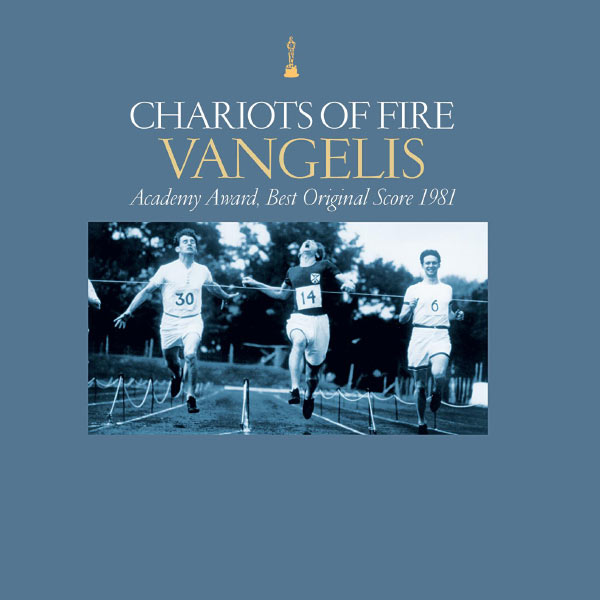
  • “Chariots of Fire”-Vangelis (#1 in 1982)
  • “Axel F Theme” (from Beverly Hills Cop)”-Harold Faltermeyer (#3 in 1985)

eddie fitz

4. Story Songs

Maybe it’s testament to our shorter attention spans nowadays, but nobody’s telling a linear story in a hit song anymore. Honestly I find it very difficult to think of the last time a true story song was a hit. Once again it seems that the period loosely encompassing the first half of the ’70’s was the last time pop radio was fertile ground for this type of thing. Leaving out such novelty songs as “The Unicorn” (and anything written by Shel Silverstein) here are some examples:

  • “Silhouettes”-The Rays (#3 in 1957)
  • “Ode to Billie Joe”-Bobbie Gentry (#1 in 1967)
  • “Harper Valley P.T.A.”-Jeannie C. Riley (#1 in 1968)
  • “The Ballad of Bonnie and Clyde”-Georgie Fame (#7 in 1968)
  • “Timothy”-The Buoys (#17 in 1971)
  • “You Don’t Mess Around with Jim”-Jim Croce (#8 in 1972)
  • “Taxi”-Harry Chapin (#24 in 1972)
  • “Brother Louie”-Stories (#1 in 1973)
  • “Tie a Yellow Ribbon Round the Ole Oak Tree”-Tony Orlando & Dawn (#1 in 1973)
  • “Daisy a Day”-Jud Strunk (#14 in 1973)
  • “The Night the Lights Went Out in Georgia”-Vicki Lawrence (#1 in 1973)
  • “Bad, Bad Leroy Brown”-Jim Croce (#1 in 1973)
  • “Billy, Don’t Be a Hero”-Bo Donaldson and the Heywoods (#1 in 1974)
  • “The Night Chicago Died”-Paper Lace (#1 in 1974)
  • “Dark Lady”-Cher (#1 in 1974)
  • “Cat’s in the Cradle”-Harry Chapin (#1 in 1974)
  • “The Wreck of the Edmund Fitzgerald”-Gordon Lightfoot (#2 in 1976)
  • “The Devil Went Down to Georgia”-Charlie Daniels Band (#3 in 1979)
  • “Escape (The Pina Colada Song)”-Rupert Holmes (#1 in 1979)
  • “Coward of the County”-Kenny Rogers (#3 in 1980)
  • “Same Old Lang Syne”-Dan Fogelberg (#9 in 1981)

welcome back

5. TV Show Theme Songs

It used to be the popularity of a hit TV series coupled with a catchy theme song might create a spin-off radio hit. No more. If you liked being able to purchase the full-length version of the theme of your favorite sitcom or drama, then as Archie and Edith sang on their 1972 hit single, “Those were the days”…

  • “Hawaii Five-O”-The Ventures (#4 in 1969)
  • “Quentin’s Theme” (from Dark Shadows)-Charles Randolph Grean Sounde (#13 in 1969)
  • “The Rockford Files”-Mike Post (#10 in 1975)
  • “Theme from S.W.A.T.”-Rhythm Heritage (#1 in 1976)
  • “Happy Days”-Pratt & McClain (#5 in 1976)
  • “Making Our Dreams Come True” (from LaVerne & Shirley)-Cyndi Grecco (#25 in 1976)
  • “Nadia’s Theme (The Young and the Restless)”-Barry DeVorzon and Perry Botkin, Jr. (#8 in 1976)
  • “Welcome Back” (from Welcome Back Kotter)-John Sebastian (#1 in 1976)
  • “Theme from ‘Greatest American Hero’ (Believe it or Not)”-Joey Scarbury (#2 in 1981)
  • “The Theme from Hill Street Blues”-Mike Post (#10 in 1981)
  • “Moonlighting”-Al Jarreau (#23 in 1987)

fifth

6. Re-worked Classical Music

Whether you tend to see the pop reimagining of masterpieces by Bach, Beethoven and Rachmaninov as musically adventurous or horrible misguided and cheesy, the arrow once again seems to point in the direction of the 70’s as the decade of this type of song’s proliferation.

  • “A Lover’s Concerto”-The Toys (#2 in 1965)
    • Adapted from Bach’s Minuet from The Anna Magdalena Notebook
  • “A Song of Joy”-Miguel Rios (#14 in 1970)
    • Based on the last movement of Beethoven’s Ninth Symphony
  • “Mozart Symphony No. 40 in G Minor”-Waldo De Los Rios (#67 in 1971)
    • (Self-explanatory)
  • “Joy”-Apollo 100 (#6 in 1972)
    • Based on Bach’s Jesu, Joy of Man’s Desiring
  • “Also Sprach Zarathustra (2001)”-Deodato (#2 in 1973)
    • Written by Richard Strauss in 1896
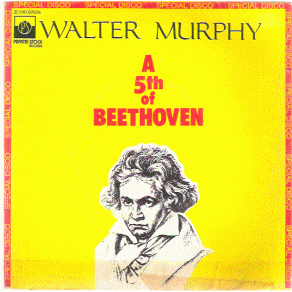
  • “A Fifth of Beethoven”-Walter Murphy (#1 in 1976)
    • Based on Beethoven’s Fifth Symphony

Note: There are plenty of examples of more (or less) subtle borrowing of classical themes and melodies, from Procol Harum’s “A Whiter Shade of Pale” (Bach’s Air on a G String) to Starship’s “Sara” (Fantasia by Tallis) to “I Can” by rapper Nas (Beethoven’s Fur Elise) and Beyoncé’s “Ave Maria”. A few other examples:

  • “Could it be Magic”-Barry Manilow (#6 in 1975, originally released in 1971)
    • Inspired by Chopin’s Prelude in C Minor
  • “All By Myself”-Eric Carmen (#2 in 1976)
    • Based on Rachmaninov’s Piano Concerto No. 2
  • “Never Gonna Fall in Love Again”-Eric Carmen (#11 in 1976)
    • Based on Rachmaninov’s Second Symphony
  • “This Night”-Billy Joel (B-side in 1983)
    • Based on Beethoven’s Pathetique Sonata

…but the era of an artist hitting the top 40 with an actual contemporized cover of a classical composer’s work is well behind us.

The overarching point being: there seems to be an overall narrowing of the definition of a hit song. It can represent any of a number of genres or styles, but it seemingly can’t be religious, or jazz, or an instrumental, or classical homage, or a story song, or a song created for a TV show. I’d venture the opinion that this isn’t a positive development–certainly not if you like diversity in pop music.

Comments on this topic or other examples of songs in the above categories are welcome.

Previous Older Entries Next Newer Entries