Songs You May Have Missed #300

Zach Sestili

Zach Sestili: “When the Lashes and the Stars Fall” (Year Unknown)

Frequently I hear musicians capable of producing enjoyable music. Occasionally I’m fortunate enough to come across someone with a true musical gift. Rarely is my soul graced by an artist who inspires true awe. And exactly once in my life I was blessed to be able to call such an awe-inspiring artist my friend.

Zach Sestili, whose performing name at the time was Zee Steel, used to haunt the weekly local (Pittsburgh) open stages in the 90’s. Since I also owned a guitar and wrote songs, we did this together. But we didn’t really do it together. More accurately, I played Salieri to his Mozart. Zach praised in earnest tones the melodies I came up with, but I always wondered if he was busting out in that mischievous Tom Hulce giggle behind my back. Because when Zee Steel took the stage, jaws dropped across the room.

_________________________

Zach Sestili was born in Pittsburgh and moved to Mobile, Alabama at age 6.

Beginning at age 7 when his dad taught him some drumming technique, Zach had quickly progressed in his mastery of: drums, saxophone, piano, guitar, bass, vocals, songwriting and music theory. At age 11 he sang lead vocals and played drums as his band performed Yes’ “Owner of a Lonely Heart” in his middle school talent show. By age 12, with his brother on guitar, Zach’s band was actually gigging, and he was developing his compositional skills.

Influenced mainly by progressive rock at the time, Zach’s next band (ages 14-16) covered Yes, Rush, Genesis and Mr. Mister and actually played in the 1988 Mardi Gras parade, and their accompanying outdoor courtyard performance placed them in front of a crowd of about 6,000.

Moving to Atlanta at age 16, Sestili met new friends who helped expand his horizons by introducing him to jazz fusion. For the next several years some major influences were Michael Hedges, Pat Metheny, Al DiMeola, Kazumi Watanabe, Chic Corea and Weather Report.

It was the intrigue this complex, colorful music held for him that sparked an interest in music theory and effectively charted the course of his subsequent musical interests. While beginning to read widely on  relationships between modes and scales, he found published sources to lack the explanations he sought regarding what he calls the “logical but intangible relationships” between musical moments within related scales and modes. His desire to understand the nature of the interconnectedness of modes and scales has led to his own original modal theory, which he has been working on for about two decades. He lives in Hawaii now and has presumably had his head so deep in modal theory that he’s only recently begun reconnecting with the outside world via the wonderful world of social media. I hear he’s married.

_________________________

When I first met Zach (then “Zee Steel” and later “Zach Pendulum”) he was back in Pittsburgh (temporarily) and around 21 years of age, managing the keyboard department of a now-defunct downtown music store, writing musically adventurous songs in a genre that seemed to blend jazz fusion complexity with new age optimism, and playing solo at open stages. While he was most enthusiastic about playing his latest compositions, he was a gracious performer and always willing to give a slot in his 3-song set to one of his older songs that we his friends and fans begged him to do.

One such song is “When the Lashes and the Stars Fall”, which Zach says he mainly wrote at age 16, finishing the guitar parts by age 17. Although this is only a demo, sourced from a cassette that must be at least 20 years old, you can still hear the complex interweaving of instruments–all played by Zach himself–in a song that is screaming for a modern digital upgrade.

There are so many moments of musical magic here, from the quite original drum pattern that opens and closes the song, to the echo-effect guitar that vaguely trails the vocal melody, to the little vocal exhalation that follows the line “caught in my mind, it’s impossible”, to the variety of keyboard sounds that begin to inhabit the corners of the song shortly after the first chorus, playing lines of such subtlety I only discerned some of them for the first time on recent re-listening.

Yes, it’s a muddy old analog recording. Yes, it might sound dated to your ears (although not to mine–I’ll admit to a complete lack of objectivity here.) But it’s hard to deny this is an imaginative composition wondrously arranged. On the  occasion of hearing it again for the first time in years I had all the mixed emotions I once had every Thursday night at The Artery in Shadyside: the awe of hearing someone who clearly seems to be touched by God, and the little twinge of envy that comes from knowing the same gift was not given to me, much as I desired it. I’ve always thought if I could write and perform just one song as good as “When the Lashes and the Stars Fall” in my life, I’d be content with that.

But I’ve come to accept that my destiny was merely to be witness to the Gift–to be Salieri.

See also: https://edcyphers.com/2015/04/27/songs-you-may-have-missed-529/
Recommended Albums #37

mona lisa

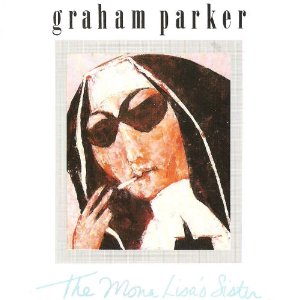
Graham Parker: The Mona Lisa’s Sister (1988)

I’ve always wondered about the tendency, when you discover an artist well into their career, to forever prefer the album that served as your introduction to that artist over the rest of their catalogue. Although it may be merely a sentimental, subjective attachment, there could also be valid reasons why this so often happens.

If that album was recommended by a fan of the artist it’s entirely appropriate that they should select that artist’s finest work in their attempt to evangelize you. And it just makes sense that, whether it’s word of mouth or a tendency for a music retailer (we used to call them “record stores”) to stock more copies of the better stuff, that a singer or band’s best work will be the most likely to blow through your transom at some point.

My introduction to Graham Parker was overlaid with all the symmetry of obsolete two-sided music media: a friend made me a cassette with the The Mona Lisa’s Sister on one side and Warren Zevon’s Sentimental Hygiene on the other. Each album has been described as a return to form by a long-established rocker, each served as my introduction to an artist, and each remains my favorite of the two artists’ respective catalogues.

I’m just gonna tell it like it is: as much as music critics rave about Howlin’ Wind and Squeezing Out Sparks–Parker’s early work from the late 70’s–to my ears The Mona Lisa’s Sister is his most satisfying record. But of course I must add the disclaimer that it was the one I heard first, so I may be biased.

This album features more acoustic guitar than on Parker’s previous work. As he described it, the desire to make a record that focused on the singer, the song and acoustic guitar in the era of blown-up Phil Collins, George Michael and Whitney Houston productions got him kicked off his record label. Sticking to his intentions to not sound like everyone else’s music, he signed on with RCA and proceeded to make an album “stripped of superfluous information, devoid of artifice, and free from the stamp of a ‘producer'”.

Cutting his vocals live as opposed to overdubbing, adding bass, keys and lead guitar only as spare enhancements, Parker made an album that still sounds good today, while much 80’s pop and rock sounds like it was buried under an avalanche of synths. Graham himself relates:

“Funnily enough, I bumped into two engineer/producers not long after the album had been released and they seemed confused by its popularity and good reviews. One thought it sounded ‘unfinished’ and the other one decided that there was something just plain wrong with it!  I knew then that I had attained Success.”

While I agree it was indeed a success (or, as Graham might say, “SUCK-sess”) in the interest of equal time I’ll reprint Allmusic Guide‘s brief and particularly unflattering review:

Graham Parker moves to his fourth record label (actually, his fifth, if you count Atlantic, which dumped him before releasing an album) for one of his less inspired efforts. When he sings “Get Started, Start A Fire,” he seems to be talking to himself, and when he resorts to covering the old Sam Cooke hit “Cupid,” he seems to be grasping for material.

Of course, I couldn’t disagree more strongly but, as a recent post on this site asserted, the appreciation of music is a very subjective thing, and one man’s “great” is another man’s “meh”. So listen and decide for yourself…

Listen to: “Don’t Let it Break You Down”


Listen to: “Success”


Listen to: “Get Started, Start a Fire”


Listen to: “The Girl Isn’t Ready”


Listen to: “I Don’t Know”


See also: Songs You May Have Missed #685 | Every Moment Has A Song (edcyphers.com)

Recommended Albums #35

ketelby

Ketèlbey: In a Monastery Garden (1959)

Most of us probably have strong feelings about the music our parents loved–either affection or revulsion. I look back as an adult at the music collection of my father with admiration: right up until age fifty or so he was buying and listening to then-current top 40 music, adding it to an eclectic collection encompassing every era since the time of big band jazz (one style he had little use for).

In every decade and in nearly every genre it seems he found something to like, and a scan of his albums and 45’s reveals his discernment of quality music: The Ames Brothers–genius. Roger Miller–genius. The Carpenters–genius. Herb Alpert, The Seekers, The Stylistics, The Spinners, Stevie Wonder, ABBA, Nat Cole, Bobby Darin, Jerry Reed, Marty Robbins, Johnny Cash, Glen Campbell…the degree to which my father’s taste shaped mine is astonishing, and I only wish I’d told him sooner–like when I was shutting the bedroom door to blare my Elvis Costello records.

But Dad also took great enjoyment in what some would now call “guilty pleasure” music (although I’m sure he did so without guilt because to him music was never about hipness or cred, only enjoyment). Tony Orlando & Dawn, Sandie Shaw, Connie Francis, Bobby Sherman and Olivia Newton-John were some of the artists he enjoyed without shame. And I’m grateful that he was no elitist. From this I learned that music is for enjoyment primarily, and doesn’t need to challenge to have validity.

Thanks at least in part to my dad I know it doesn’t have to be Miles Davis, or Mozart, or Dylan to matter. And sometimes I drive around with ELO playing from my car because, whatever a critic or an ordinary hater might have to say, the enjoyment is the thing.

Which brings us (trust me) to Albert Ketèlbey. Although my dad’s record collection included more serious classical music, it was the “light music” of Ketèlbey that more often made it into the thick stack of albums the record changer would drop in succession onto Dad’s turntable.

Ketèlbey could be considered the Henry Mancini or Leroy Anderson of his time, his time being from about 1912 to the mid-1930’s. During that period the English composer made music that was more about charm than pretension, more about pure enjoyment than depth or so-called substance. And he was so successful doing it that he was able to retire to the Isle of Wight while still only in his forties.

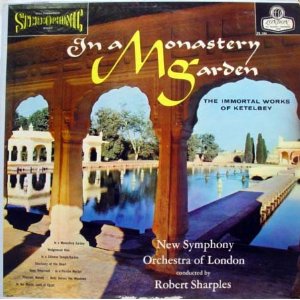
In a Monastery Garden: The Immortal Works of Ketèlbey was the recording that the majority of the eleven kids in my family grew to love without realizing it at the time. It’s an album that was background music to our childhood years, hardly noticed, but has become dear to us since our dad passed on, as nostalgia for those innocent years grows.

Perhaps this album’s particular attraction for us among my dad’s many records is due to the built-in nostalgic feel of Ketèlbey’s melodies. That’s the magic of Ketèlbey’s impressionistic music: He didn’t rigorously adhere to authentic Persian or Egyptian styles in writing songs like “In a Persian Market” or “In the Mystic Land of Egypt”. “In a Chinese Temple Garden” doesn’t sound remotely like the music of China. Rather he immersed the listener in an imagined version of faraway places, incorporating such flourishes as birdsong, church bells, monks’ chant, and most importantly, hauntingly beautiful melody.

With no disrespect to the Bachs and Beethovens of the world, what Ketèlbey created is just as dear to many, especially in his homeland of England. There’s nothing “light” about the beauty of Albert Ketèlbey’s melodies.

Listen to: “In a Monastery Garden”

Listen to: “In a Persian Market”

Listen to: “Wedgwood Blue”

Listen to: “Bells Across the Meadows”

Steve Shows You Howe

The Yes lead guitarist demonstrates three of prog rock’s most indelible riffs:

‘Roundabout’

‘I’ve Seen All Good People’

‘Long Distance Runaround’

I Didn’t Know That Was a Cover! Part 2

In the interest of the betterment of your overall pop music knowledge/ability to spout random trivia…here’s another installment in the always popular (with me) I Didn’t Know That Was a Cover! series. Part 2 is subtitled: I Didn’t Know That Would Become a Series! Let’s dive in:

____________________

Our first three songs are examples of artists covering themselves; that is, revisiting songs they’d previously recorded with less well-known bands.

“Do Ya”-Electric Light Orchestra

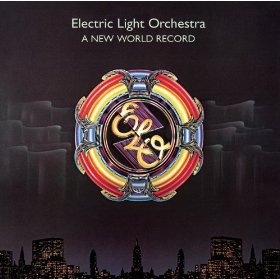
Years Before Jeff Lynne’s “Do Ya” appeared on ELO’s 1977 A New World Record LP and peaked at #24 on the pop chart, he recorded a less polished version with The Move, a band that included English rock legend Roy Wood and another ELO member, Bev Bevan. Their version came with no strings attached–but plenty of cowbell.

____________________

“Somebody to Love”-Jefferson Airplane

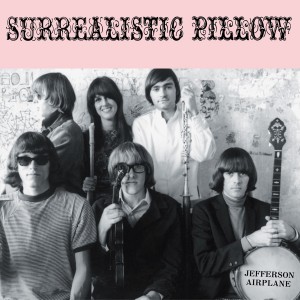
Grace Slick’s band The Great Society recorded the original version of her “Somebody to Love”, as well as “White Rabbit”. Both later appeared on Jefferson Airplane’s 1967 Surrealistic Pillow album and are probably that band’s two most important/popular recordings. This clip suggests that Airplane was much the better band.

____________________

“Cherry Bomb”-Joan Jett & The Blackhearts

Another member of The Runaways was mentioned in the previous post on this topic. This time it’s Joan Jett, whose “Cherry Bomb” was first recorded with that band. While both versions have their fans, neither exactly blew up (blew up I say) on the pop charts.

____________________

“Take Me In Your Arms (Rock Me)”-The Doobie Brothers

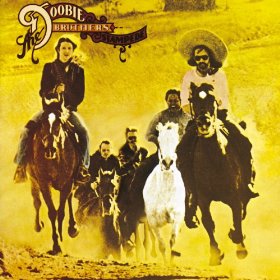
The Doobies proved their versatility in 1975 by following up their first #1 single–the bluegrass-flavored “Black Water”–with an old Holland-Dozier-Holland chestnut originally recorded ten years earlier by Kim Weston.

____________________

“They Don’t Know”-Tracey Ullman

British actress/comedienne and sometimes singer Tracey Ullman was a one-hit wonder in the U.S. although several of her singles were well-received abroad. Her schtick was to update the 60’s girl group sound, and “They Don’t Know” was an irresistible nugget of retropop. The backing vocals were supplied by the same woman who provided the song itself, Kirsty MacColl. Kirsty’s version is much the same–Tracey just upped the cute factor some.

____________________

“Big Ten Inch Record”-Aerosmith

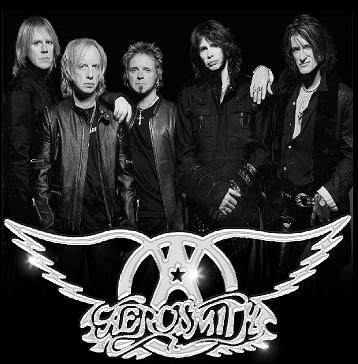
This song certainly clashed stylistically with the rest of the classic 1975 Toys in the Attic album, but I think that was the point. It’s a safe bet to be the only Bull Moose Jackson song in most Aerosmith fans’ collections.

____________________

“Unchained Melody”-The Righteous Brothers

What we have here is your all-purpose guide to “Unchained Melody”, starting with the Righteous Brothers and moving backward in time. (We will ignore versions by LeAnn Rimes, Heart, The Sweet Inspirations and even Elvis Himself, all of whom recorded versions after the Righteous Brothers, none of whom should have bothered.)

The above clip is a little medley, a Bill Medley if you will, of snippets of the six versions of this song that matter. Here’s what you hear in succession:

  1. The newly recorded 1990 version done by the Righteous Brothers in response to demand created by the song’s inclusion in the Patrick Swayze/Demi Moore film Ghost. This is not, however, the version which appeared in that movie. This version charted at #19 in 1990.
  2. The Righteous Brothers’ first hit version, which went to #4 in 1965 and climbed to #13 in 1990 after its inclusion in Ghost. Yes, incredibly they had two different recordings of their song chart at numbers 13 and 19 in the same year.
  3. Vito & The Salutations’ fast doo wop version from 1963. Sounds like a parody of the Righteous Brothers, but it actually came two years earlier.
  4. Roy Hamilton’s #6 hit from 1955
  5. Al Hibbler’s #3 hit from 1955
  6. Finally, Les Baxter’s #1 version, also from 1955 and the only time the song has gone to the top of the charts. If you count June Valli’s #29 hit of the same year, the song had four top 40 versions in 1955 alone, three of them top ten.

If you’ve always wondered why this song carries around such a strange title, it’s because Les Baxter’s original version was from the movie Unchained (which starred football star Elroy “Crazylegs” Hirsch).

p.s. Why don’t football players have nicknames like “Crazylegs” anymore?

See also: https://edcyphers.com/2012/11/19/i-didnt-know-that-was-a-cover/

See also: https://edcyphers.com/2016/06/11/i-didnt-know-that-was-a-cover-part-3/

Anatomy of a Classic: Deconstructing the Raspberries’ ‘Go All the Way’

When Eric Carmen wrote the Raspberries’ first and most timeless hit, the quintessential power pop classic “Go All the Way”, he took inspiration (to say the least) from some other great songs. Let’s have a listen:

Although The Who and Faces are most often mentioned as the templates for the Raspberries’ sound, I think The Rolling Stones’ “Brown Sugar” is the closest match for Carmen’s opening riff and may have inspired it. This is speculation on my part, but there’s a clear similarity:

The next bit isn’t speculation at all; Carmen has admitted he lifted the staccato guitar in the verses from The Beach Boys’ “Don’t Worry Baby”:

For the chorus, Mr. Carmen said he was aiming for the sound of The Left Banke’s “Walk Away Renee”. This isn’t quite as obvious, but see if you can hear the similarity:

The bridge pretty clearly seems to be nicked from The Beatles’ “Please Please Me”:

Here’s an edit containing all four points of comparison:

Amazingly, this Frankenstein of assembled stolen song parts turned out to be not a mess of ugly stitches, but a seamless pop classic in its own right, perhaps even the equal of those that inspired it:

Even the idea for the song was directly inspired by another song–The Rolling Stones’ “Let’s Spend the Night Together”. When Carmen saw them perform it on TV, forced to sing it as “Let’s Spend Some Time Together”, he got the idea to write a sexually explicit lyric that would be understood by kids but could avoid similar censorship. Carmen also cleverly had the most explicit line, ‘please go all the way’ come from the song’s female subject and not directly from its male protagonist. As you can see by its performance on the Mike Douglas show below, he succeeded in skirting the censors.

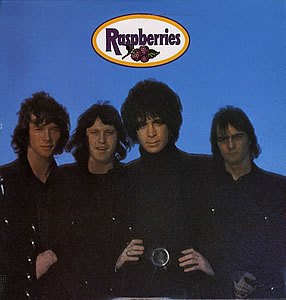
Raspberries trivia: the band’s first album came with a raspberry scented scratch-and-sniff sticker. While searching for names for the band, one member rejected another’s suggestion by quoting a line from the old Our Gang comedies saying, “Aw, raspberries”. It stuck.

See also: https://edcyphers.com/2012/03/10/songs-you-may-have-missed-43/

See also: https://edcyphers.com/2013/04/09/songs-you-may-have-missed-386/

Previous Older Entries Next Newer Entries