(Reprinted from Spinner)
January 30 marks the 41st anniversary of Bloody Sunday — the infamous massacre in North Ireland at the hands of the British army that saw 14 people die and provided a rallying cry for generations of republicans.
And while you may or may not be a history buff, songs like U2’s “Sunday Bloody Sunday” have helped history live on by commemorating events ranging from great victories to terrible tragedies. (To wit, this week also marks the anniversary of the school shooting that inspired the Boomtown Rats’ “I Don’t Like Mondays.”)
That’s why we’ve rounded up 20 historically inspired songs. Now, even if you’re not particularly into the subject, you’ll know the meaning behind a few of Bob Dylan’s and Dr. Dre’s biggest songs.
_________________________
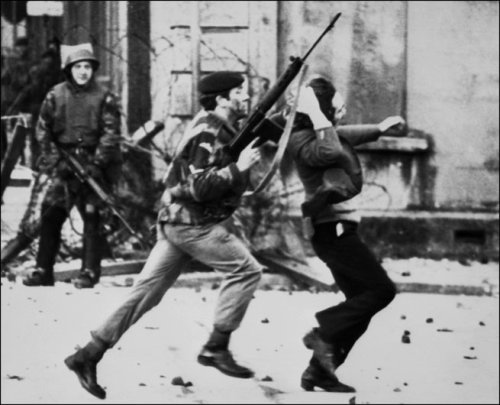
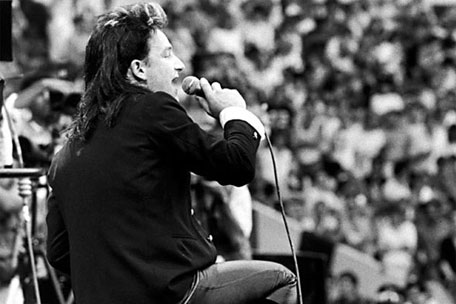
U2 “Sunday Bloody Sunday”
Bogside Massacre, January 30, 1972
As tensions rose between the British and Irish, they boiled over on a Sunday in January, when the English opened fire on a protest march in Bogside, North Ireland. And while event specifics are still the subject of debate, U2’s feelings towards The Troubles were — and are — not.
 Gordon Lightfoot “The Wreck of the Edmund Fitzgerald”
The sinking of the SS Edmund Fitzgerald, November 10, 1978
Seventeen years after its launch in 1958, the SS Edmund Fitzgerald freightersank during a storm on Lake Superior, taking with it a crew of 29 — whose bodies have never been found. The event continues to draw controversy, research, and debate, and the Shipwreck Museum actually cites Gordon Lightfoot’s ballad about the vessel as a major catalyst in public interest around the ship.
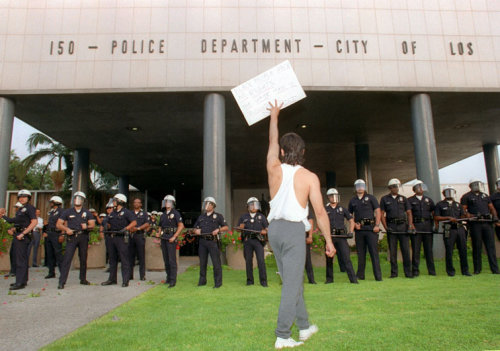 Dr. Dre “The Day the Niggaz Took Over”
Los Angeles Riots, April 29, 1992 – May 4, 1992
The riots that stemmed from Rodney King’s severe beating at the hands of the LAPD sparked debate, discussion, and awareness throughout North America. However, for five days, Los Angeles was in chaos as rioting broke out across the city, killing 53 people and injuring another 2000. It may be currently hard to imagine, but one listen to Dr. Dre’s track off The Chronic (which was also notably on the Natural Born Killers soundtrack), and that frustration, aggression, and call for attention of ’92 is immediately felt.
 Bob Dylan “Hurricane”
The wrongful arrest/conviction of Rubin “Hurricane” Carter, 1967 and 1976
Due to racial profiling and shoddy police work, boxer Rubin “Hurricane” Carter was found wrongfully guilty (twice) of a 1966 triple homicide in a New Jersey bar. Ten years before being finally freed in 1985, Bob Dylan commemorated the event with a song, providing a perfect narrative of Rubin’s injustice at the hands of the system.
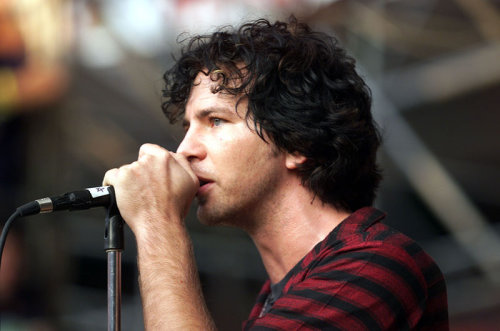 Pearl Jam “Jeremy”
Richardson High School shooting, January 8, 1991
Pearl Jam’s Eddie Vedder wrote “Jeremy” in response to the suicide of 15-year-old Jeremy Delle; a sophomore at Richardson High School, who sadly shot himself in front of his teacher and classmates. The situation was actually similar to that of something Vedder indirectly experienced, when a student from his middle school also brought a gun to class.
 Billy Joel, “We Didn’t Start the Fire”
Anything important between 1949 and 1989
Consider this track your historical cliff notes. Alluding to over 100 newspaper headlines spanning 40 years, Billy Joel covers everything from Joe McCarthy to Richard Nixon; Studebaker to television; North Korea, South Korea, and Marilyn Monroe. Ryan started the fire! Oh, wait. I guess jokes about The O.C. are history now, too.
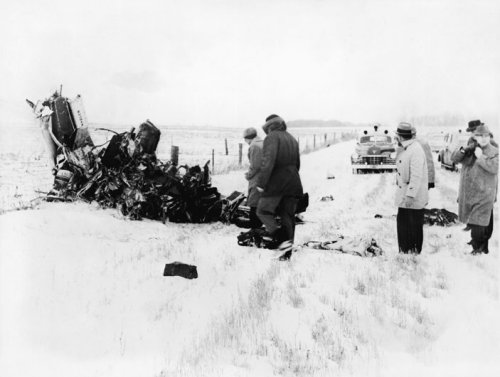
Don McLean “American Pie”
The death of Buddy Holly, Richie Valens, and the Big Bopper (February 3, 1959)
After a plane crash killed Buddy Holly, Richie Valens, and the Big Bopper on their way to Minnesota, Don McLean commemorated it appropriately with “American Pie” — a song that begins with that tragedy, but ends on another: the 1969 Altamont Free Concert that saw deaths at the hands of the Hell’s Angels, temporary security for the Rolling Stones. And suddenly, “for 10 years we’ve been on our own” make a lot more sense.
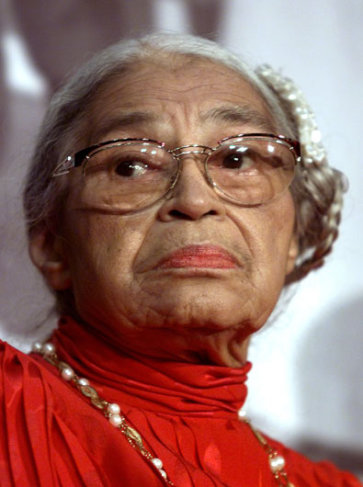
The Neville Brothers “Sister Rosa”
Rosa Parks’ civil protest, December 1, 1955
When Rosa Parks refused to give up her bus seat to a white man in Montgomery, Alabama, she was arrested and charged with violation of the then-segregation law. She became a civil rights hero, and was commemorated in a song by the Neville Brothers in 1989. (She also provided the namesake of an OutKast song that wasn’t really about her and led to a lawsuit from her legacy-focused family.)
 The Tragically Hip, “Wheat Kings”
The wrongful conviction of David Milgaard, January 31, 1970
While both “38 Years Old” and “Wheat Kings” are inspired by the same event, it’s “Wheat Kings” that rings truest to the case that saw David Milgaard wrongfully accused, arrested, and convicted for the rape and murder a Saskatoon nurse. Evidently, Tragically Hip singer Gord Downie was right: no one was interested in something [David] didn’t do — until 1997, when actual killer Larry Fisher was finally arrested.
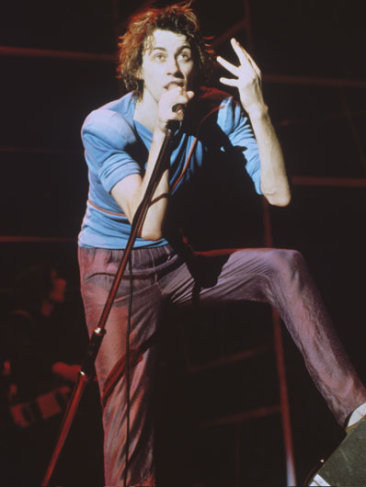 Boomtown Rats “I Don’t Like Mondays”
Grover Cleveland Elementary school shooting, January 29, 1979
After 16-year-old Brenda Ann Spencer walked into a California elementary school and shot two teachers, eight students, and a police officer, her defense was simple: “I don’t like Mondays. This livens up the day.” Enter: Boomtown Rats’ Bob Geldof, who released the song nearly seven months later, and used it to address the complete senselessness of the tragedy.
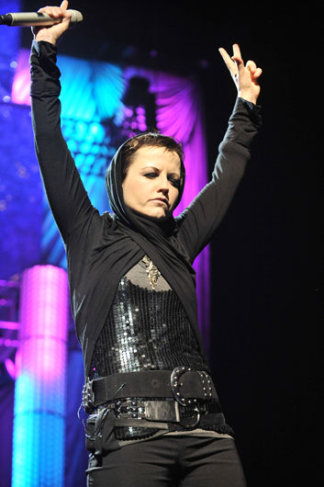 The Cranberries “Zombie”
Warrington Bomb Attacks, February 26, 1993
Written in 1994 in response to the two separate bombings in Warrington, England at the hands of the IRA, the Cranberries released one of their greatest hits. A protest track renowned for its aggressive tone and stirring lyrics, the group went on to win an MTV Europe award for the song that so perfectly articulated their political frustrations.
 Bloc Party “Hunting for Witches”
London bombings, July 7, 2005
With innocents targeted in the same vein as the September 11 attacks, London commuters were killed in a series of bombings that targeted the city’s transit system in July, 2005. However, Bloc Party singer-songwriter Kele Okereke used “Hunting for Witches” to address the media’s ugly response to the terror attack.
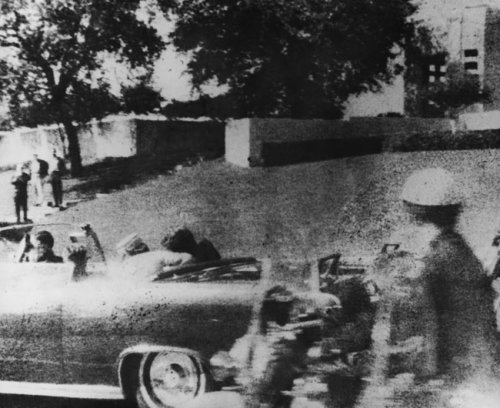 Postal Service “Sleeping In”
The assassination of JFK, November 22, 1963
You may think the emotional electro-pop of Ben Gibbard’s Postal Service is the last place to find historical references, but “Sleeping In” deals with JFK’s assassination head on by focusing on the (alleged) shooter Lee Harvey Oswald. History and break up songs — themes to look forward to on the group’s next album, perhaps?
 Bruce Springsteen “The Rising”/”My City of Ruins”
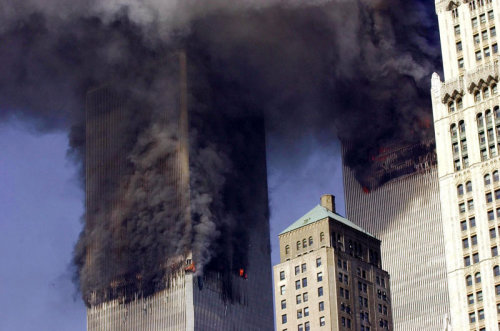
September 11, 2001
The title track of Bruce Springsteen’s The Rising (not to mention the whole album) has been critically praised for its messages of hope and of emotion in the wake of the September 11 attacks. But while the “My City of Ruins” also became a 9/11 anthem, it was actually written years earlier about the economic collapse of New Jersey’s Asbury Park.
 Arlo Guthrie “Alice’s Restaurant Massacre”
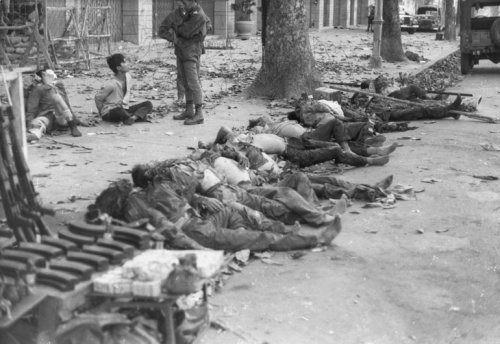
The Vietnam War Draft
The 18-minute-long largely spoken-word song is inspired by Arlo Guthrie’s 1965 littering conviction which led to his rejection from the army after being drafted. As Arlo puts it, he’s not “moral enough to join the Army, burn women, kids, houses and villages after bein’ a litterbug.” Alice’s Restaurant Massacre” (pronounced “masa-cree”) became a beacon of ’60s counter-culture, and hailed as one of the definitive anti-war songs of the time.
 Filter, “Hey Man, Nice Shot”
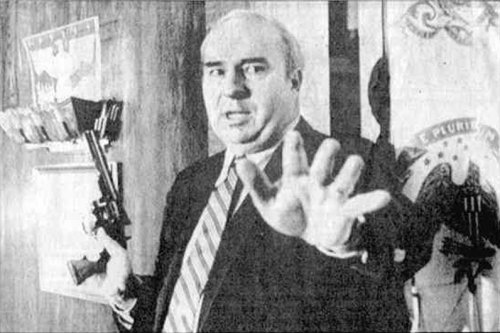
The suicide of R. Budd Dwyer, January 22, 1987
After being found guilty of bribery charges, Pennsylvania state treasurer R. Budd Dwyer shot and killed himself during a press conference. Broadcast live during mid-day hours, Dwyer read a prepared statement and left notes with his staffers before turning a gun on himself and scarring witnesses indelibly. Eight years later, Filter responded with “Hey Man, Nice Shot,” a song written about and directed to Mr. Dwyer himself. (When it came out, though, many music fans mistakenly believed it to be about Kurt Cobain’s suicide.)
 KISS, “Detroit Rock City”
Death of a fan, 1976
While the tragedy of a KISS fan dying in car accident en route to a KISS concert cannot be questioned, “Detroit Rock City” is a great tribute. Written by Paul Stanley and Bob Ezrin in 1976, its true meaning is often overlooked, and has since earned a place in pop culture through film titles, soundtracks, and even video games. A sad reason to be written, but what a way to live on.
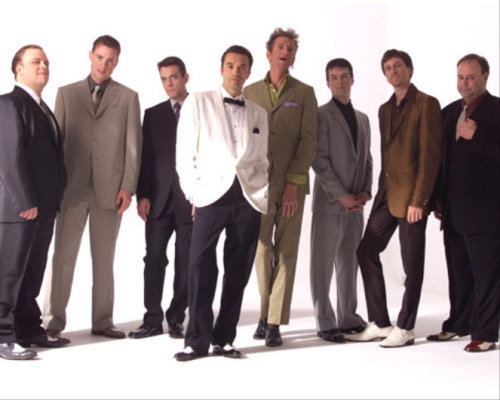
 Cherry Poppin’ Daddies, “Zoot Suit Riot”
Zoot Suit Riots, 1943
WWII saw tensions both away and at home, leading to race riots in Los Angeles throughout 1943 between white American marines and sailors and Latino youths (who were identified by their “zoot suits”). As such, ironic swing revivalists Cherry Poppin’ Daddies used their ’40s vibe to pay homage to the violence — minus political or social statements, that is.
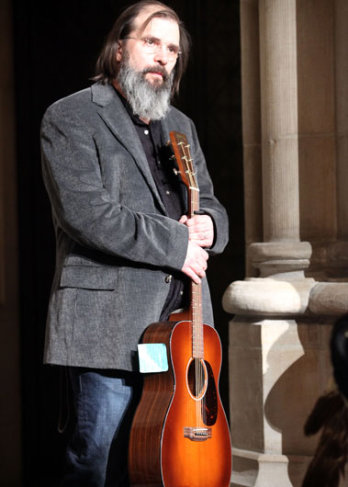
Steve Earle, “Ben McCulloch”
Confederate Benjamin McCulloch, circa 1862
Written from the point of view of a young Confederate soldier, “Ben McCulloch” calls out the infantry’s leaders, who led men into countless losing battles under the guise of “the cause.” One such man was Texan Benjamin McCulloch, who died during battle in 1862, and despite that being over 150 years ago, Steve Earle’s words still translate today.
 Arcade Fire “Neighbourhood #3 (Power Out)”
North American ice storm, January 4 – 10, 1998
There was a lot of time to think during the North American ice storm that left Montreal without power for a week — which is how Arcade Fire’s Win Butler and Regine Chassagne came to write “Neighbourhood #3,” a song based on her experiences during the disaster. With lyrics as dark as the city itself, the track helped the group win the 2006 Juno for Songwriter of the Year — though we doubt anyone would be willing to recreate the circumstances to write something similar.