Backup Singer Documentary ‘Twenty Feet From Stardom’ Set for Summer Release

stardomDirector of ‘Twenty Feet From Stardom,’ Morgan Neville.

(Reprinted from Rolling Stone)

by Katie Van Syckle

Several years ago, former A&M Records head Gil Friesen was stoned at a  Leonard Cohen concert when he became fixated on Cohen’s backup singers. 

The  result of Friesen’s musings is Twenty Feet From Stardom, a documentary  that explores the culture of such supporting singers. Friesen once quipped to  its director, Morgan Neville, that the movie was “the most expensive joint I  ever smoked,” and the final product premiered last week at the Sundance Film  Festival.

“This is a story about people whose fingerprints are all over the music we  know but we have no idea who they are,” Neville, a self-described “hardcore  music geek,” tells Rolling Stone. His other credits include  Troubadours, Respect Yourself: The Stax Records Story and Johnny  Cashs America. He is currently at work on a film about the  rivalry between Gore Vidal and William F. Buckley.

Friesen, who passed away from cancer in December, saw the final film before  his death and knew it would premiere at Sundance. It was purchased last week by  the Weinstein Company’s label Radius-TWC and, according to Neville, is set for a  summer release.

“You could have talked about Nashville, you could have talked about girl  groups. . . To me, the interesting story was the rise of these black voices from  the church into the studios and onto vinyl,” says the director. “What was Lou  Reed singing about [in “A Walk on the Wild Side”]? This is what he was singing  about.”

The film includes interviews with artists who are notable for their use of  backup singers, including Mick Jagger, Bruce Springsteen, Stevie Wonder and  Sting. Many well-known supporting vocalists are also interviewed, including  Darlene Love, Merry Clayton, Lisa Fischer, Tata Vega, Judith Hill, Claudia  Lennear, Gloria Jones and Dr. Mable John.

These performers – who Neville says “can often sing circles around lead  singers” – have produced a soulful, harmonic blend for decades, one derived from  the Motown, rock and R&B of the 1960s, 1970s and 1980s. 

”There was really  kind of a heyday in the late 1960s and 1970s,” Neville explains. “The Brits were  coming and they were pale white guys and they thought, ‘Hey, if I am really into  R&B and soul, why don’t I just invite black singers to come onstage with  me?'”

In Twenty Feet, Neville also explores the psychology of standing in  the shadows of super-stardom and the lack of individual identity – which,  depending on the singer, can feel like bliss or purgatory. He also looks at how  relatively recent changes in the recording business – including lead singers  recording their own backing tracks – caused the backup singer scene to dry  up.

“I asked them, ‘When do you think it changed?’ And one singer said, ‘In  1993,'” Neville says. “Hip-hop, grunge in the 1990s – all those things were  going on as well as changes in taste, business and technology.” What hasn’t  changed is the talent of these artists – and soon, their story will be told.

Who Is Making Today’s Most Original Music?

bjork_bastards(Reprinted from MSN)

by Robin Hilton

Full disclosure: I stole this one from a friend’s Facebook page.

I also know the answer (I don’t really know the answer). It’s The Dirty Projectors. No, wait! It’s Animal Collective. It’s definitely Animal Collective. Or actually, maybe it’s Radiohead. Or … Micachu.

Lord. I don’t know. I guess first we should define what it means to be original, especially in an age where it feels like there are no new ideas. (Ask any generation and we’ve been in this age since the beginning of time. When Loglog, a Neanderthal, started banging rocks together around 200,000 years ago, everyone said he “borrowed heavily” from Ahknok, a well-known Homo Erectus who was doing the same thing with sticks in the later Pleistocene epoch. Duh!)

When I listen to music, it’s usually easy for me to hear its roots. I can tell where it’s coming from. This is how we come up with phrases like “folk-flavored Brit psych-pop” or “punk-inspired drone-rock.” (I’m sorry about that, by the way). The vast majority of what we hear can be traced to an earlier sound which, in turn, can be traced to an earlier sound, and so on and so on. And, of course, that’s totally fine.

For me, the less I can make sense of the music’s roots, the more original it feels. I mentioned Dirty Projectors and Animal Collective, and the music of both of those bands often does leave me scratching my head as I attempt to link it to the past. Some of the stuff on Sufjan Stevens’ Age Of Adz challenged me to rethink what makes a song a song, especially the genius closing track “Impossible Soul.”

With that in mind, I think I’m going to have to go with Bjork. Bjork most consistently challenges just about all of my notions of music — where it comes from, how it’s made, what it means and, most importantly, my expectations of how it should be. Over the year’s she’s obliterated standard chord progressions, rhythms and melodies, severing ties to any clear, preexisting genres and reconnecting them in ways most of us have never imagined. Her most recent project, Biophilia, was so inventive it was hard to say what, exactly, it was. It was music, sure. But it was also a series of apps with strangely alluring, interactive graphics that allowed you to travel through the songs visually and even dismantle the music to make your own versions of each “track.” The beats, lyrics, everything about the sounds felt like it came from another planet. It’s easy to dismiss Bjork as just being “weird,” and a lot of people do. But really, I think she’s a genius who’s thinking and operating on a completely different level.

But Bjork is far from the only musician doing these sorts of things. Tell us who you think is making the most original music now, in the comments section.

Report: Bunny Wailer blasts Snoop Dogg for new Rastafari persona

Snoop Lion Portraits

(Reprinted from MSN)

Bob Marley’s former The Wailers bandmate Bunny Wailer has reportedly taken aim at rapper Snoop Dogg for posing as a member of the  Rastafari movement after immersing himself in Jamaican culture last year.

The hip-hop superstar previously revealed he had been anointed Snoop Lion by a Rastafarian priest after experiencing a spiritual awakening while recording his first reggae project, “Reincarnated.” He adopted the traditional dress and  dreadlocked hair during his time in Jamaica and filmed his transformation for a documentary, also titled “Reincarnated.”

But Wailer is not convinced by Snoop’s new lifestyle and he has accused the rapper of the “outright fraudulent use of (the) Rastafari community’s  personalities and symbolism,” according to TMZ.

Members of the Rastafari Millennium Council have also launched a verbal  attack on Snoop, demanding he refrain from using the moniker Snoop Lion and  apologize for his behavior or face legal action, according to TMZ. They have also fired off a seven-page letter to the marijuana-loving star, insisting that “smoking weed and loving Bob Marley and reggae music is not what defines the Rastafari Indigenous Culture.”

Top Ten Singles 30 Years Ago This Week

Week ending January 29, 1983

  1. Down Under-Men at Work
  2. Africa-Toto
  3. Sexual Healing-Marvin Gaye
  4. Dirty Laundry-Don Henley
  5. The Girl is Mine-Michael Jackson/Paul McCartney
  6. Maneater-Hall & Oates
  7. Baby, Come to Me-Patty Austin (with James Ingram)
  8. Rock the Casbah-The Clash
  9. Shame on the Moon-Bob Seger & The Silver Bullet Band
  10. You and I-Eddie Rabbitt/Crystal Gayle

(Source: Billboard Hot 100)

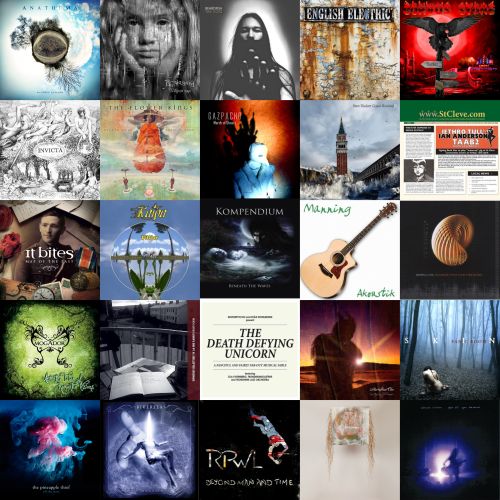
The European Perspective Looks at the Top Prog Albums of 2012

prog

The European Perspective is a place for fans of British and European progressive music to gorge. The site’s weekly podcasts can run between four and five hours, covering prog from its origins in the late ’60’s and ’70’s to the very latest releases.

I must warn you: if you’re any more than a casual fan of the genre you may find it hard to keep your visit to the site a brief one. It’s a rich listening experience full of diverse, interesting music you probably won’t be exposed to elsewhere. And all (as their name suggests) with a distinctively European perspective.

Check out their special year-end show, featuring their top 25 progressive rock albums of 2012 as voted by their listeners:

http://www.theeuropeanperspective.com/?p=1853


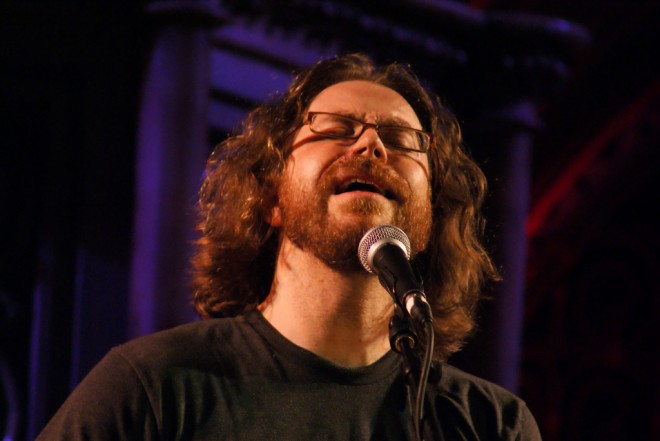
Jonathan Coulton Explains How Glee Ripped Off His Cover Song — And Why He’s Not Alone

coulton(Source: Wired)

Fans of indie musician Jonathan Coulton were incensed last week when an alleged Glee version of “Baby Got Back” surfaced on the internet that seemed to shamelessly rip off Coulton’s distinctive arrangement of the 1992 Sir Mix-A-Lot song. Last night, that cover version was confirmed as an official Glee track when it appeared on the mid-season premiere of the Fox show, and is currently for sale on iTunes.

Fox’s hard-nosed, corporate disregard for the work of an independent musician seems ironic particularly in the context of Glee, a television show whose core themes have so often revolved around the plight — and triumph — of the underdog. “If this were an episode of Glee I would win. The way they’re behaving is so antithetical to the message of their show,” Coulton told Wired.

“It’s a little frustrating. Whether or not they’re in the right legally, it doesn’t seem like the best way to handle it. If you’re going to claim that you’re giving an artist exposure and they should be grateful — there’s a right way to do that. Contact them ahead of time. Say this is great, we’re going to talk about it on our blog and tell all our fans that they should be fans of yours. We’re going to put a credit in the show. That doesn’t cost them anything. It’s a show with something like a $3.5 million budget for each episode, but there are still so many free things they could have done to engender goodwill.”

Coulton’s version of “Baby Got Back”


“Baby Got Back” from Glee


After the “Sadie Hawkins” episode aired, Coulton posted a tweet that read “I am pretty angry,” and elaborated further on his blog:

Well, they aired it, seemingly unchanged. And it’s now for sale in the US iTunes store. They also got in touch with my peeps to basically say that they’re within their legal rights to do this, and that I should be happy for the exposure (even though they do not credit me, and have not even publicly acknowledged that it’s my version – so you know, it’s kind of SECRET exposure). While they appear not to be legally obligated to do any of these things, they did not apologize, offer to credit me, or offer to pay me, and indicated that this was their general policy in regards to covers of covers. It does not appear that I have a copyright claim, but I’m still investigating the possibility (which I consider likely) that they used some or all of my audio.

After the track first leaked, Coulton asked audio-savvy fans on Twitter to analyze the similarities between the two tracks, speculating that portions of his actual recording may have been lifted for the Glee version, particularly the hand claps and a duck quack sound he had substituted for an expletive. At least one fan, Paul Potts, conducted an in-depth analysis of both files during the duck quack, and while he says it was hard to prove definitively using only the compressed Fox audio, the waveforms appear remarkably similar.

“I’ve thought a lot about what satisfaction I can possibly get out of this situation and I’m not sure yet what the answer is,” said Coulton. “I’m still looking into what I consider to be a very real possibility that they used the audio tracks… That would be a pretty cut and dry violation. You can’t just use somebody’s audio without their permission. If they did, there’s not much question that they’re violated my copyright, as I understand the law. There’s still a chapter yet to come.”

Coulton’s willingness to speak up and enlist the support of his online audience also prompted other artists to come forward, claiming that their song arrangements had been lifted wholesale by Glee for songs aired on the show and sold for profit on iTunes.

DJ Earworm, a.k.a. the San Francisco-based mashup artist Jonathan Roseman, pointed out that a 2012 Glee cover of R. Kelly’s “I Believe I Can Fly” similarly appeared to be lifted from his arrangement of the song, as did singer/songwriter Greg Laswell, who told The Hollywood Reporter in 2011 that his version of Cyndi Lauper’s “Girls Just Want to Have Fun” also appeared to have been used without permission on the Fox show.

“Of the Glee version, I think they have enough talent over there that they shouldn’t need to go rummaging through other artists’ work,” said Laswell at THR. “Public acknowledgement of their note-for-note rendition would have gone a long way.”

“It does seems to be kind of a pattern,” said Coulton. “It doesn’t seem like it could possibly be a mistake you would make if you had that legal team… They decided it was a legal risk they feel comfortable taking.”

At the very least, he suggested, they could offer to pay artists whose arrangements they use the same amount of money they would otherwise pay a musical arranger. “If they opened with that, I’m sure a lot of artists would jump at the chance.”

Still, Coulton says he isn’t interested in financial compensation so much as he is a conversation about the way Fox treats the artists whose musical arrangements they use and profit from.

“The most frustrating thing is the completely silent nature of their approach to this ‘exposure bonus’ for me. The thing I would wish for most is a frank and open and public discussion with them about what they have done, what they believe they have done and what their actual policy is on this kind of thing. And I don’t know if I’m going to get that,” said Coulton.

When asked for comment on the issue, Fox representatives did not respond.

Coulton said that while his lawyers have been looking into the copyright issue, it seems unlikely that he will have any legal recourse. ”It seems that because of the compulsory license I purchased when I made a cover of this song, the arrangement itself is not protected under copyright, although it’s the darkest gray of the gray areas [of the law]… While there may be some weird offshoot of the law, it doesn’t seem like something where a little guy could sue to get any satisfaction.”

Previous Older Entries Next Newer Entries