Dancing Lessons From James Brown

(Reprinted from Open Culture)

Don’t go into this expecting Arthur Murray-level clarity of instruction. This is Soul Train-era James Brown, shaking way more than any simple footprint pattern could convey. That’s not to say there isn’t concrete information to be gleaned here, especially if you never really knew which moves constitute The Funky Chicken…The Boogaloo, The Camel Walk…If – as the song goes – You Don’t Give A Doggone About It, you’ll have a lot of fun. Leave the shades open, and your neighbors will too.

More Awesome Spam Comments From This Blog

spam


  • it was a great experience to read such kind of great work i really enjoyed while reading this article.
  • I together with my guys happened to be studying the good information and facts found on the blog and so immediately I had a horrible feeling I had not thanked the web blog owner for those tips. All the young boys happened to be  excited to read them and already have clearly been loving them. Many thanks for being well kind and then for choosing this kind of fantastic areas millions of individuals are really eager to learn about. My very own sincere regret for not saying thanks to you sooner.
  • Unquestionably believe that which you stated. Your favorite justification appeared to be on the net the simplest thing to be aware of.I say to you, I certainly get annoyed while people think about worries that they just don’t know about. You managed to hit the nail upon the top and also defined out the whole thing without having side-effects , people could take a signal. Will probably be back to get more. Thanks

…and a notice to legitimate commenters: Please identify yourself when commenting (first name is sufficient) so your comments aren’t filtered out as spam. I noticed a few comments that were whisked away unseen simply because the commenter was anonymous–and I believe they might have been comments by people who comment regularly.

Thanks.

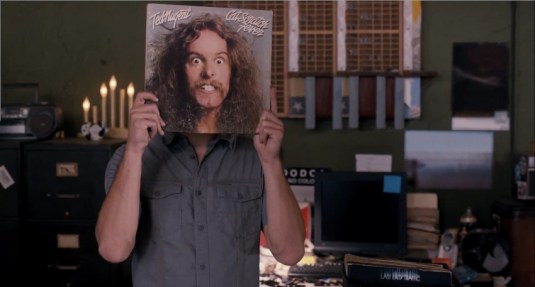
More of the Faces of Sleeveface

What is Sleeveface? Let’s review:

Sleeveface: one or more persons obscuring or augmenting any part of their body or bodies with record sleeve(s) causing an illusion.

(…and one more thing you can’t do with a download.)

See our previous sleeveface posts: https://edcyphers.com/?s=sleeveface

sleeve 1

Photo credit: Pitch Perfect

sleeve 7

Credit: Elien & Johan Copermans

sleeve 10

Credit: Torge and Lasse

OLYMPUS DIGITAL CAMERA

Credit: Craig and Pete

sleeve 5

Credit: DJ 440 / Terça do Vinil (Brasil)

sleeve 4

Credit: Talia Joseph

sleeve 3

Credit: Jaap Hermans

sleeve 2

Credit: Elien & Johan Copermans

sleeve 6

Credit: Toby Gilbert

sleeve 9

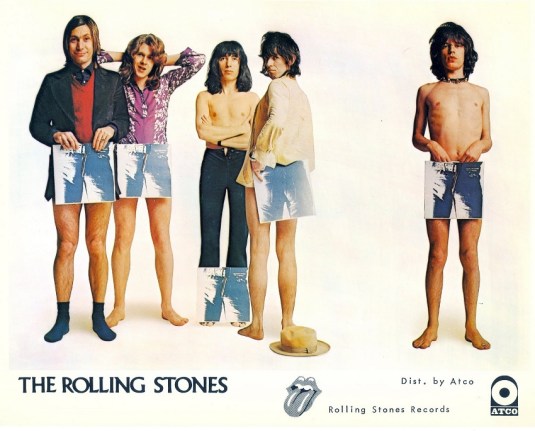
And, via The Fly magazine, a vintage photo of The Rolling Stones Sleevefacing themselves long before it was cool–or even a word!

Credit: The Rolling Stones


Check out the site at: http://www.sleeveface.com/

Rockers Who Died at Age 27

(Reprinted from Ultimate Classic Rock)

by Matthew Wilkening

Jimi300

Of all the rockers who died at age 27, perhaps none left the world with such a gaping sense of “what could have been” than Jimi Hendrix, who died of asphyxiation in his girlfriend’s London apartment on Sept. 18, 1970.

His unparalleled ability to express and innovate on the guitar, as well as his endless desire to redefine everything about what rock music could be and how it was presented, make it all but certain that the four original albums we got to hear from Hendrix were only the tip of what he could have accomplished with more time. Sadly, a combination of red wine and sleeping pills (reportedly, stronger than expected) took that all away from us.

brian jonesOn July 3, 1969, just a month after being kicked out of the famous group he had helped form — the Rolling Stones — guitarist and multi-instrumentalist Brian Jones drowned in his own swimming pool.

Jones, a slide guitar genius who intended to be the Stones’ leader as they performed more traditional blues-based music, was slowly pushed to the side in favor of the impressive songwriting abilities (and charismatic on-stage presences) of Mick Jagger and Keith Richards.  After he contributed to just two songs on 1969′s ‘Let it Bleed’ album, Jones’ substance abuse problems — including an arrest that threatened his ability to tour overseas — became too much for his bandmates. Those same abuse problems are also believed to have contributed to his drowning death.

Jim300

The sense of mystery created by the music of the Doors, specifically their charismatic frontman Jim Morrison, has helped make it hard for some people to believe that he’s truly dead. Of course, the fact that an autopsy was never performed doesn’t help, either.

The singer reportedly died on July 3, 1971 — again, at the age of 27 — of heart failure in the bathtub of his Paris apartment. In accordance with French law, since there was no sign of foul play, no further investigation was performed. However many people suspect that Morrison in fact died of a heroin overdose, possibly in the bathroom stall of a nearby club. Or… maybe he faked the whole thing and is raising horses in Oregon.

Janis300

Janis Joplin, solo star and singer for Big Brother and the Holding Company, died at age 27 on Oct. 4, 1970 of a heroin overdose. The distinctive vocalist had endured a long history of drug and alcohol problems.

According to Rolling Stone’s account, Joplin was found dead in L.A.’s Landmark Hotel, with fresh needle marks on her arm and $4.50 clutched in her hand. It has been suggested that her dealer accidentally sold her and several other clients an overly strong dose of the drug. She was in the process of finishing up what would turn out to be the her posthumously-released 1971 solo album ‘Pearl,’ having just completed the a cappella track ‘Mercedes Benz‘ three days earlier.

kc

It was the Shot Heard Around the World, only it wasn’t until days later that somebody discovered he was dead. The April 5, 1994 suicide of Kurt Cobain was a dreadful paradox: totally unexpected, yet in retrospect somehow all too predictable. The Nirvana singer had been in the public spotlight for less than three years when he took his life, both cementing the theory of the 27 Club and silencing the wary voice of a generation with a single shotgun blast.

aw

Amy Winehouse was already considered a tragic figure when she passed away from alcohol poisoning on July 23, 2011. Winehouse had very publicly suffered from serious drug and alcohol abuse issues, all-the-while thumbing her nose at them with her breakout hit, ‘Rehab’ (“They tried to make me go to rehab, I said no, no, no.”) Nobody seemed too surprised by her untimely passing — which, in a way, made everybody feel guilty about it. Our celebrity culture loves to see stars fall hard, then recover gracefully, but Winehouse sadly just fell.

Pigpen300

Keyboardist and vocalist Ron ‘Pigpen’ McKernan of the Grateful Dead died at age 27 on March 8, 1973 from internal hemorrhaging caused by excessive drinking.

Pigpen, who apparently earned his nickname as you might suspect, from a lack of personal hygiene and a generally unkempt approach to life, is credited with pulling the Dead together in the mid-’60s, and served as their first frontman. After touring with the band for years and performing on several of their important early albums, failing health brought on by his addiction forced him to leave the Dead in 1972. Less than a year later, he passed away.

Ham300

On April 23, 1975, just three days shy of his 28th birthday, Badfinger singer and guitarist Pete Ham killed himself, reportedly because he was despondent over his poor financial situation and an ongoing battle with the band’s manager, Stan Polley.

According to Rolling Stone, Ham left a note near his body declaring, ‘Stan Polley is a soulless bastard.’ His bandmates said the manager had withheld financial information from them. Despite writing several of the band’s hit singles, including ‘Day After Day’ and ‘No Matter What,’ Ham apparently found himself broke and concerned as to how to help support his about-to-be born child, which apparently led to his tragic decision.

johnson300

Legendary bluesman Robert Johnson, whose songs have been recorded by the Rolling Stones, Bob Dylan, Eric Clapton, the Allman Brothers and many other classic rockers, died at age 27 in 1938.

Since so little is known about Johnson — who recorded barely more than two dozen songs, including ‘Dust My Broom’ and ‘Sweet Home Chicago’ in his unnaturally short life — some pretty crazy myths and rumors about him have taken hold in many people’s minds.  He’s rumored to have sold his soul to the Devil, and to have died after being poisoned by the jealous boyfriend of a woman he was talking to, just as famed talent scout John Hammond was trying to hand him a one-way ticket to fame and fortune.

Others who died at age 27 include:

Dave Alexander (Iggy Pop and The Stooges)

Kristen Pfaff (Hole)

Chris Bell (Big Star)

Jeremy Michael Ward (The Mars Volta)

D. Boon (The Minutemen)

Richard Turner (Friendly Fires)

Richey James Edwards (Manic Street Preachers)

Mia Zapata (The Gits)

10 Albums That Almost Killed Careers

career kill

(Reprinted from Ultimate Classic Rock)

by Matthew Wilkening

Rock musicians, much like professional athletes and romantic partners, are constantly in danger of being asked, “But what have you done for me lately?” Even the biggest bands and solo stars can find themselves suddenly out of favor and plummeting down the charts if their latest album doesn’t live up to either their own legacies or fan expectations.

From Van Halen‘s ill-fated attempt to prove lightning can strike not just twice, but with three different lead singers, Kiss‘s mind-boggling attempt at creating a critic-pleasing concept album, the mighty Rolling Stones wandering too far from their strengths and many more, Ultimate Classic Rock and Diffuser.fm take a look at the 10 albums that almost killed the careers of some of rock’s biggest stars.

As you’ll see, luckily in nearly every case the “offending” artists were able to regroup, learn from their mistakes, re-connect with the magic that made us fall in love with them in the first place and resurrect their careers. Now let’s see exactly how and where they went wrong in the first place…

van halen

Van Halen: ‘III’

As far as selecting lead singers goes, the third time was definitely NOT the charm for Van Halen.

After racing straight to the top of the rock mountain with original frontman David Lee Roth, and miraculously managing to stay there for another decade after he was replaced by Sammy Hagar, Van Halen chose Extreme singer Gary Cherone as the group’s third vocalist. Their first (and only) album together, 1998′s ‘III,’ was a shapeless mess that was panned by critics and avoided by fans. It would be 14 years before the group returned — with Roth on the mic — with the triumphant ‘A Different Kind of Truth.’

kiss

Kiss: ‘Music from the Elder’

After watching their reign atop the late-’70s arena rock scene disappear in a puff of disco smoke, Kiss knew they had to do something big and bold to get back in the game. Unfortunately, 1981′s ‘Music from the Elder’ was an even bigger misstep.

Producer Bob Ezrin, fresh off the success of Pink Floyd‘s ambitious concept album ‘The Wall,’ decided that the facepainted marvels, whose lyrical depth typically topped out with tracks like ‘Love Gun’ and ‘Christine Sixteen,’ should tackle an album-length suite of songs about a young medieval warrior’s epic quest to save the world… or something. The end product, while admirably daring, is one of the most universally panned and mocked records in rock history. To their credit, they righted their creative ship the next year.

stones

Rolling Stones: ‘Their Satanic Majesties Request’

OK, here’s where we stretch the boundaries of this list’s title right up to the breaking point. After all, it’s not likely that any one album could kill the Rolling Stones‘ career, even one as odd, out of character and poorly received as 1967′s ‘Their Satanic Majesties Request.’

But it definitely sent them back to the drawing board. Clearly influenced by the psychedelic music of the era — and some would say, overly focused on keeping up with the Beatles‘ ‘Sgt. Pepper‘ — the Stones delivered an ambitious but ultimately unfocused effort that made them look like followers instead of leaders — at least, until they kicked off perhaps rock’s most impressive four-album run ever with ‘Beggars Banquet’ the next year.

neil-young-trans-300x300

Neil Young: ‘Trans’

If ever a rocker has valued chasing the constantly changing sounds in his head over making commercially safe career choices, it’s Neil Young.

Young, who followed up his warm, lush commercial breakthrough LP ‘Harvest’ with the abrasively dark ‘Tonight’s the Night,’ dabbles in genres like rockabilly, country and R&B as quickly as others change shirts. Even by those standards, 1982′s ‘Trans’ stands out as his most risky move; a synth-heavy semi-concept album featuring heavily processed vocals that confused many fans. Together with 1983′s ‘Everybody’s Rockin’,’ ‘Trans’ led Geffen Records to sue Young for making “unrepresentative” albums. He won, and has continued marching to his own drum regardless of the chart results to this day.

Bob-Dylan-Under-red-sky

Bob Dylan: ‘Under the Red Sky’

Much like Neil Young, the creatively restless Bob Dylan has often — and seemingly willfully — tried to shake his fans loose from time to time.

Whether he was embracing electric guitars on 1965′s ‘Bringing it All Back Home,’ country and Americana on 1967′s ‘John Wesley Harding,’ or Christianity on 1979′s ‘Slow Train Coming,’ there have been plenty of times where Dylan risked alienating his listeners. But 1990′s ‘Under the Red Sky,’ filled with nursery-rhyme level lyrics and overly slick production, was the point where many wondered if the former visionary had simply lost the trail — or worse, given up. Luckily, the singer launched another (still going) winning streak with 1997′s ‘Time Out of Mind.’

Machine-300

Smashing Pumpkins: ‘Machina/The Machines of God’

According to Billy Corgan, there are numerous reasons that Smashing Pumpkins‘ 2000 would-be swan song sold fewer copies than ‘Adore,’ the divisive electronic-tinged album that came two years earlier. First, it’s a concept album whose storyline went way over people’s heads. And then there was the timing. The band was in the midst of breaking up, and the alt-rock scene was then ruled by the loud and dumb likes of Korn and Limp Bizkit.

“So the combination of those elements was a career-killer,” Corgan said in a 2006 interview. “‘Adore didn’t alienate the audience, they were just sort of like, ‘Oh, it’s not the record I want.’ [‘Machina’] alienated people.”

Corgan waited seven years to revive the Pumpkins and issue a proper follow-up, ‘Zeitgeist.’ The album divided critics, but it reached No. 2 on the Billboard 200. Last year’s ‘Oceana’ seemed to fare better, at least critically, and many hailed the disc as Corgan’s finest since the early ’90s.

weezer-pinkerton-cover

Weezer: ‘Pinkerton’

After the success of Weezer‘s debut, 1994′s so-called ‘Blue Album,’ Geffen execs no doubt wanted more nerdy power-pop nuggets like ‘Buddy Holly’ and ‘The Sweater Song.’ Instead, mastermind Rivers Cuomo gave them a brutally honest, emotionally fraught song cycle based on the opera ‘Madame Butterfly.’ The tunes were catchy, but Cuomo’s sexual hangups and struggles with fame weren’t exactly the stuff of Top 40 singalongs. Critics balked, the disc peaked at No. 19 and Weezer went on hiatus.

When Weezer returned in 2001, it was with another self-titled effort, this one all about pop hooks. The ‘Green Album’ kicked off an unlikely second act that continues to this day. Interestingly, Weezer’s comeback was largely due to ‘Pinkerton,’ which had grown in stature throughout the ’90s. Whether better than ‘Blue,’ it trumps anything Cuomo has released since, though the middling likes of the ‘Red Album’ and ‘Raditude’ have done little to hurt the band’s standing.

REM-Around-Cover-Art

R.E.M.: ‘Around the Sun’

R.E.M.‘s unlucky 13th album missed the U.S. Top 10 and failed to yield a hit single. For the first time since the mid-’80s, the Athens alt-rock heroes found themselves outside of the mainstream, only this time, it wasn’t because they were a cutting-edge cult act awaiting a commercial break. As guitarist Peter Buck admitted, they were tired old superstars who’d lost the plot.

“[‘Around the Sun’] just wasn’t really listenable, because it sounds like what it is, a bunch of people that are so bored with the material that they can’t stand it anymore,” Buck said in 2008, the same year the band dropped ‘Accelerate,’ the first of two back-to-basics albums that reaffirmed R.E.M.’s relevance and ended their career on a relative high note. History was always going to look kindly on the group, but ‘Around the Sun’ would have been a dim end to the story.

U2-Pop-cover

U2: ‘Pop’

In the late ’90s, no flop was really going to kill U2‘s career, but ‘Pop’ was cause for concern. Following ‘Zooropa’ (1993) and ‘Achtung Baby’ (1991), the album capped a trilogy that saw these venerable stadium gods reinvent themselves as electro-rock experimentalists. The songs are built around loops, samples and the like, and while the band had made successful use of such techniques, ‘Pop’ suggested that Bono and the boys had run out of ideas and reached the end of a particular phase of their career. The public more or less agreed, and ‘Pop’ became U2′s lowest-selling disc since 1981′s ‘October.’

Having perhaps learned their lesson, U2 returned three years later with the more guitar-centric ‘All That You Can’t Leave Behind.’ The album spawned four smash singles and won seven Grammys, and to date, it’s sold more than 12 million copies.

Clash-Sandinista1

The Clash: ‘Sandinista!’

No record better encapsulates the Clash‘s story than ‘Sandinista!’ Brilliant, infuriating, bursting with ambition yet bogged down with bad ideas, this 36-track triple LP perplexed fans and angered execs at CBS, who were strong-armed by the band into selling it for the price of a single album.

‘Sandinista!’ may have been a bargain, but it hardly flew off shelves. At a time when Joe Strummer, Mick Jones, Paul Simonon and Topper Headon might have become punk’s Fab Four, they went ‘White Album’ times 10, experimenting with soul, hip-hop, funk, disco, dub and even gospel, virtually ensuring there’d be no hits.

The Clash were already starting to splinter, and sessions for the follow-up, ‘Combat Rock’ (1982), proved extremely contentious. Remarkably, that album proved the band’s commercial breakthrough, and thanks to the singles ‘Should I Stay or Should I Go?’ and ‘Rock the Casbah,’ the “Only Band That Matters” found itself on the pop charts, if only briefly.

Watch the Only Known Footage of the Legendary Bluesman Lead Belly (1935 and 1945)

(Reprinted from Open Culture)

Huddie Ledbetter, better known by his nickname “Lead Belly,” was one of the greatest blues musicians of all time.  His songs have been covered by hundreds of artists, ranging from Frank Sinatra to Led Zeppelin. Lead Belly is also famous for what his biography at the Rock and Roll Hall of Fame describes as “the mythic outline of his life”:

Born circa 1885 in rural northwest Louisiana, Lead Belly rambled across the Deep South from the age of 16. While working in the fields, he absorbed a vast repertoire of songs and styles. He mastered primordial blues, spirituals, reels, cowboy songs, folk ballads and prison hollers. In 1917, Lead Belly served as Blind Lemon Jefferson’s “lead boy”–i.e., his guide, companion and protégé–on the streets of Dallas. A man possessed with a hot temper and enormous strength, Lead Belly spent his share of time in Southern prisons. Convicted on charges of murder (1917) and attempted murder (1930), Lead Belly literally sang his way to freedom, receiving pardons from the governors of Texas and Louisiana. The second of his releases was largely obtained through the intervention of John and Alan Lomax, who first heard Lead Belly at Angola State Prison whiile recording indigenous Southern musicians for the library of Congress.

In 1935 the March of Time newsreel company told the story of Lead Belly’s discovery by John Lomax in the short film above. Although the scripted film will strike modern viewers as dubious in some respects (March of Time founder Henry Luce described the series as “fakery in allegiance to the truth”), the newsreel is nevertheless a fascinating document of Lead Belly, who was about 50 years old at the time, along with Lomax and Lead Belly’s wife, Martha Promise. At one point Lead Belly sings his classic song, “Goodnight, Irene” According to Sharon R. Sherman in Documenting Ourselves: Film, Video, and Culture, the 1935 Lead Belly newsreel is the earliest celluloid document of American folklore. Lead Belly did work for Lomax after his second release from prison, as the newsreel says, following him back to the East Coast and serving as his chauffeur. In New York Lead Belly played in Harlem and also came into contact with leftist folk singers like Woody Guthrie and Pete Seeger. Lead Belly became known as the “King of the Twelve-String Guitar.”

Three Songs by Leadbelly, the only other film known to exist of the great bluesman, was made ten years after the newsreel. It was photographed in 1945 by Blanding Sloan, with the assistance of Wah Mong Chang, and edited two decades later by Pete Seeger. It begins with scenes of the graveyard in Mooringsport, Louisiana, where Lead Belly was buried after his death in 1949, accompanied by an instrumental version (with humming) of “Where Did You Sleep Last Night?” Lead Belly actually performed six songs for the film, but only three could be salvaged. Seeger is quoted by Charles Wolfe and Kip Lornell in The Life and Legend of Leadbelly as describing Sloan’s film as “pretty amateurish”:

I think that he recorded Leadbelly in a studio the day before, then he played the record back while Leadbelly moved his hands and lips in synch with the record. He’d taken a few seconds from one direction and a few seconds from another direction, which is the only reason I was able to edit it. I spent three weeks with a Moveiola, up in my barn, snipping one frame off here and one frame off there and juggliing things around. I was able to synch up three songs: “Grey Goose,” “Take This Hammer,” and “Pick a Bale of Cotton.”

Previous Older Entries Next Newer Entries