Rockers vs. Critics: The 10 Greatest Musician-Journalist Feuds


(Source: Spinner)

Music criticism has existed since the 1700s, creating relationships between artists and writers that can range from close pals to bitter enemies.

Of course, there are musicians who can’t take a bad review and critics who can’t stop from going a little overboard, leading to controversies and, in some cases, decades-long feuds.

Below, we’ve compiled 10 of the best rocker-journo fights, featuring some of music’s biggest names. Between unhinged faxes and alleged fisticuffs, these are some classic moments from rock ‘n’ roll history.

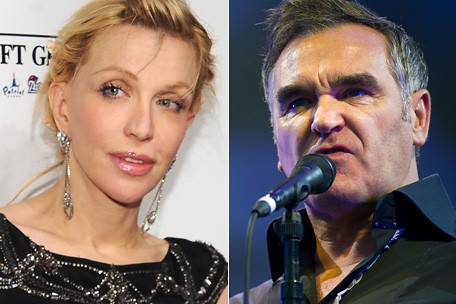
Courtney Love vs. Lynn Hirschberg

In a 1992 Vanity Fair profile, journalist Lynn Hirschberg reported that Courtney Love’s heroin use overlapped with the early stages of her pregnancy with daughter Frances Bean Cobain. Thanks to the article, the baby was taken by Los Angeles Children’s Services and returned months later after a legal battle.
At the time, Love left harassing voiecmails for Hirschberg, calling her a “c–t,” and threatened to beat her with Quentin Tarantino’s Oscar statue in 1995. The feud is still going strong: In 2011, Courtney implicated Hirschberg’s article in Kurt Cobain’s suicide, saying, “She humiliated and emasculated him. She sent him over the edge. She deserves most of the blame for his death.”
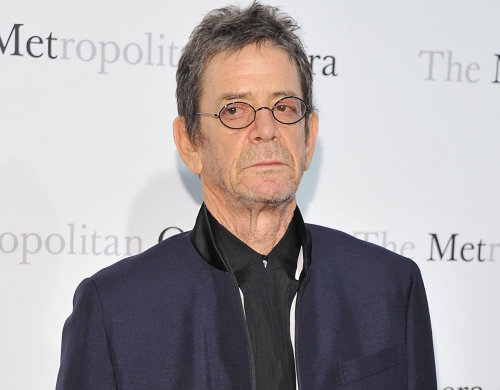
Lou Reed vs. Lester Bangs

The Lou Reed and Lester Bangs feud is more complicated than most journo-musician dust-ups. Bangs was a manic fan that could overly praise the Velvet Underground frontman’s albums while completely slagging others. While commending Reed’s talent in several reviews, Bangs still had a hard time with Reed as a person, calling him “a liar, a wasted talent, an artist continually in flux, and a huckster selling pounds of his own flesh.” Reed would never let Bangs have the last word, and the pair seemed to fight all the time. Maybe they just liked to argue with each other?
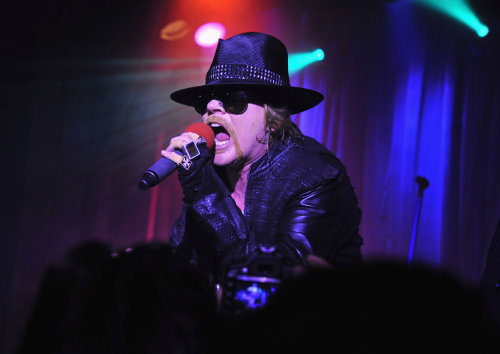
Axl Rose vs. Marc Allan

In 1991, Guns N’ Roses released “Get in the Ring,” a profanity-laced track that personally dissed journalists who drew singer Axl Rose’s ire.

Lesser known and definitely crazier, Axl fired off a scathing 1992 missive (via fax) to Indianapolis Star critic Marc Allan, who panned a GNR show after the band took the stage two hours late. Axl promised Allan that he could “suffer your redneck, blind, narrow minded refuse about ranting — you nor anyone will ever dictate my actions, attitudes, comments, oratation, and musical performances on stage.”

Calling himself Allan’s “Rock N’ Roll nightmare,” Axl strangely signed off by saying “stay away from microwaves.”
Billy Corgan vs. Jim DeRogatis

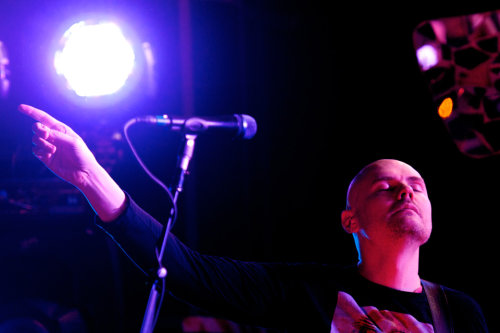
Jim DeRogatis, a Chicago Sun-Times music journalist and Sound Opinions co-host, has always been the Smashing Pumpkins’ biggest troll. As Flavorpill points out, DeRogatis wrote an unfavorable review of the band’s Siamese Dream album in ’93, comparing it to “sophomoric poetry.” Corgan retorted that Jim was a “fat f—.”DeRogatis is no longer invited to any Pumpkins shows, but that hasn’t stopped the writer from continuously trashing Corgan in the press.
Keith Richards vs. Markus Larsson

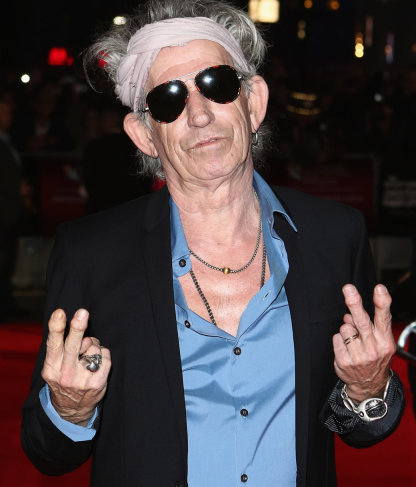
Three years after penning a negative review of a Rolling Stones concert, particularly the performance of Keith Richards, Swedish journalist Markus Larsson found himself face-to-face with the legendary guitarist. Before Richards realized who he was talking to, he said he wanted to meet Larsson “one day in a dark room.” After a heated exchange in which Richards said “You’re going to be lucky that you got out alive,” Larsson claims that Keef smacked him in the head before storming out of the room. Charges were never filed.
Ryan Adams vs. Jim DeRogatis

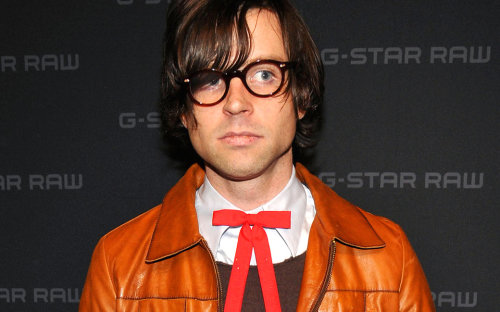
Ryan Adams used to be kind of a jerk before he kicked booze and got married to the lovely Mandy Moore. Jim DeRogatis (aka The Bane of Corgan) doesn’t really like Ryan Adams, and every time the Heartbreaker kid came to town, DeRo took the chance to give him an unfavorable concert review that ended with the line “Note to Ryan Adams: Wish you were anywhere but here.” Finally, Adams couldn’t take it any longer. He called up the journalist and left a biting voicemail about the “stupid, bulls— review” that ended with this soundbite: “I’m going keep coming back and you can’t f—ing stop it. Old man, it’s time for you to probably get out of the f—ing business.”

M.I.A. vs. Lynn Hirschberg

Eighteen years after her feud with Courtney Love, Lynn Hirschberg drew M.I.A.’s ire thanks to a somewhat unflattering New York Times profile of the Sri Lankan-born singer. One moment seized upon by other outlets came when M.I.A. discussed international politics while eating truffle fries, a detail that painted her as an elitist hypocrite.
Enraged, she posted Hirschberg’s personal phone number on Twitter and released audio of the interview showing that the journalist had rearranged quotes and actually ordered the fries herself. In the end, the Times issued a small correction and nobody came off looking any better.
The Airborne Toxic Event vs. Pitchfork

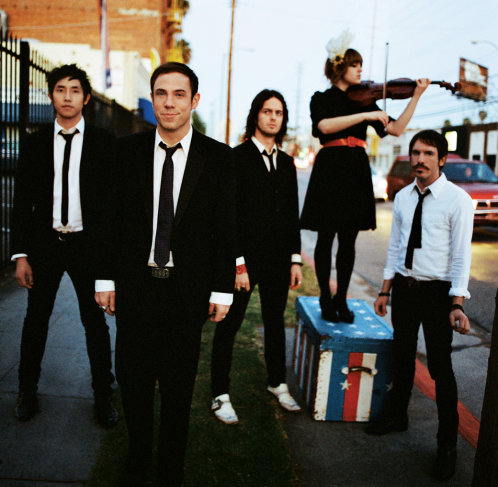
Following the release of their self-titled debut album in 2008, L.A. quintet the Airborne Toxic Event were aggressively panned by Pitchfork’s Ian Cohen, who gave the LP a 1.6 and called it “almost insulting in its unoriginality.”
The band, fronted by former music journalist Mikel Jollett, decided to respond, politely, with an open letter: “We have to admit that we found ourselves oddly flattered by your review. I mean, 1.6? That is not faint praise. That is not a humdrum slagging. That is serious fist-pounding, shoe-stomping anger.”
They concluded by inviting Cohen to a show, but since then Pitchfork hasn’t reviewed anything by the band, who are set to put out their third album in 2013.
Morrissey vs. NME

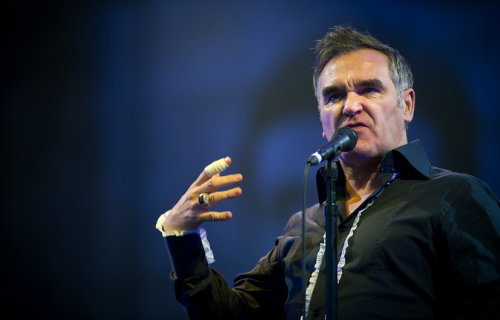
In a 2007 interview with NME, Morrissey spoke on immigration, stating the “British identity disappears” when more and more foreigners come to London. Moz thought this painted him as a racist, and he immediately took legal action. In June 2012, the British publication issued an apology to the former Smiths singer, saying, “We never set out to upset Morrissey and we hope we can both get back to doing what we do best.” Despite saying “sorry,” NME probably won’t be doing an interview with the Pope of Mope anytime soon.
Sonic Youth vs. Robert Christgau

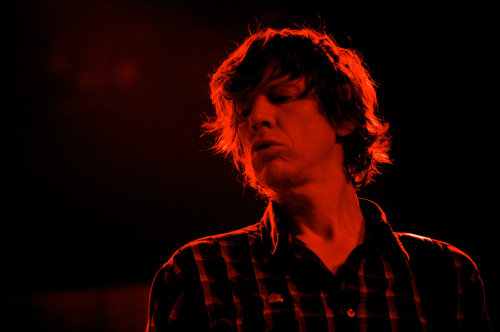
The self-proclaimed Dean of American Rock Critics, Robert Christgau is not necessarily a fan of Sonic Youth. Though he has given the band’s albums Daydream Nation and Goo A-ratings, other reviews are the equivalent to telling the noise rockers to just pack up their instruments and jump off a bridge. Thurston Moore and co. responded to their worst critic on the song “Kill Yr Idols,” saying “I don’t know why/You wanna impress Christgau/Ah let that s— die/And find out the new goal.” The Village Voice critic was not impressed, and responded in a scathing, casual way: “I wasn’t flattered to hear my name pronounced right, not on this particular title track.”

Rob Smith’s Solo Bass Performance of “In My Life”

Don’t ask me about Rob Smith; this is my first exposure to him. But he certainly can make the electric bass stand in for a lot of other instruments–even harpsichord!

(Thanks Dave!)

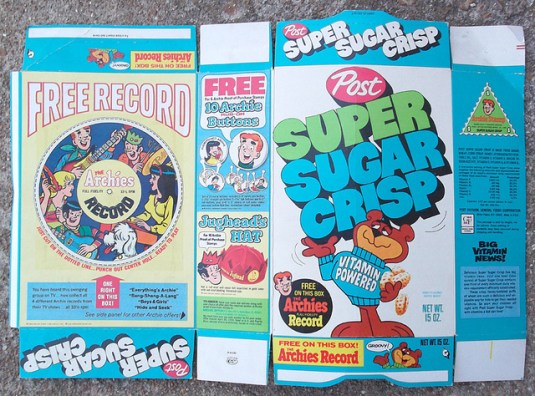
Do You Remember Cereal Box Records?


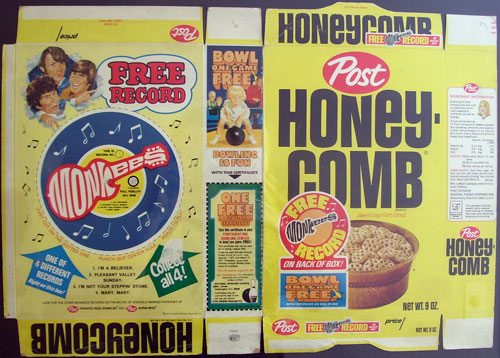
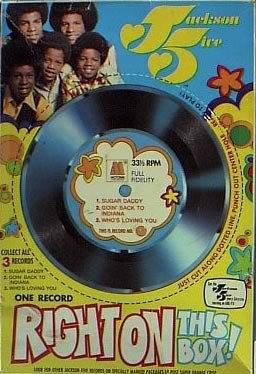
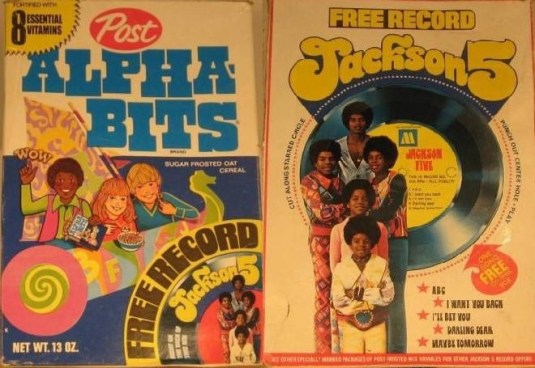
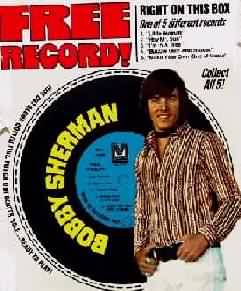
It was one of those 70’s things: a box of cereal with an actual record on the back that you could cut out and play on a record player.

The Archies, the Jackson Five, The Monkees and Bobby Sherman seemed to be the artists whose music most often found its way onto a box of Alpha Bits or Super Sugar Crisp. Which contained more sugar, the music or the cereal?

Paul McCartney: ‘Still prancing’

The Famous Beatles Songwriter and Musician Speaks to Sir David Frost About His Life in the Spotlight

(Source: Aljazeera)

Paul McCartney, one of the most famous musicians of all time, rose to prominence 50 years ago as part of the British pop sensation The Beatles.

From humble, working-class beginnings, McCartney, 70, is now one of the richest men in the world. He has even topped the bill at the White House, playing for Barack Obama, the US president.

He sits down with Sir David for a full hour to tell his own story of the band, and its break up; to discuss some of the highs – and a few lows – of his life; and to provide a glimpse into his world behind the headlines.

The Beatles – John, Paul, George and Ringo – helped to define the 1960s, transforming modern music. They played sell out concerts all over the world, in front of hysterical fans. At the height of “Beatle Mania”, fans screamed so loud that the band said they could not hear their own music.

With more than 20 number one hits through the 1960s, they were seemingly unstoppable.

But the glory days did not last and the group split in 1970. However, the songs written by McCartney and the late John Lennon continue to live on through the generations.

“John and I wrote together something like 300 songs, just short of 300. We would meet up, sit down to write and three hours later we would have a song. And never, never did we have a dry session, we always wrote a song …. It was a great thing. Looking back on it I really feel blessed to be the guy who wrote with John. Because he was pretty hot stuff. And writing with me, I was pretty hot stuff too, so the two of us gelled,” McCartney says.

Recalling the break-up of The Beatles, McCartney says: “I think it was time for John certainly to leave. It was a bit of a shock to all of us, he just announced ‘oh I am leaving the group’. We all said ‘are you sure about this?’ We tried to keep it together but he was definitely going to leave, so that was basically what did it.

“But I think, in a way, then we realised that we had come full circle, we had kind of done everything we wanted to do … So in actual fact it wasn’t that bad a thing.”

On Yoko Ono, Lennon’s then-wife who is often blamed for the break-up of The Beatles, McCartney says: “She certainly didn’t break the group up.”

“The group was breaking up and I think she attracted John so much to another way of life that he then went on to, very successfully, add a sort of second part to his career, writing things like ‘Imagine’ and ‘Give Peace a Chance’. I don’t think he would have done that without Yoko.”

On his own enduring career in music, McCartney says: “I saw something the other day where I was quoted as saying ‘It will be pretty sad to be prancing around on a stage at 40’.

“But no, I am still prancing,” he laughs. “And enjoying it.”

Let’s Talk About Max Raabe

German bandleader and composer Max Raabe champions the German dance music of the 1920’s and 30’s with his Palast Orchester, which has become a worldwide touring attraction. His original music also appears regularly in German films.

But he’s arguably at his most cheeky and entertaining when he’s covering English language pop stars like Britney Spears, Salt-n-Pepa and Tom Jones. In a world where Grammy voters had a clue, Max’s version of “Let’s Talk About Sex” would have been honored for its genius clash of song and style. Check out a few highlights:

“Oops…I Did it Again”:

“Let’s Talk About Sex”:

“Supreme:

The Top-Earning Dead Musicians of 2012

(Source: Forbes)

Zack O’Malley Greenburg, Forbes Staff

Michael Jackson may not be the top-earning dead celebrity anymore–last week he ceded that title to his friend, Liz Taylor, on FORBES’ annual list–but he’s still the world’s best-paid musician, living or dead. The King of Pop pulled in $145 million in 2012, the third straight year of nine-figure earnings for the “Thriller” mastermind.

Jackson isn’t the only musician raking it in from beyond the grave. In honor of Halloween, we present this year’s list of the top-earning dead musicians: six singers, songwriters and composers who earned more than $5 million from October 2011 to October 2012 despite no longer walking the Earth. They account for nearly half the names on our overall dead celebs list, thanks to continued demand for their music, image, name and likeness.

Some of the most creative business deals of music’s dead legends have come from the estate of Michael Jackson. In addition to continued revenues from the work of other artists (through his 50% stake in the Sony/ATV publishing catalog) and his own material (the Mijac Music catalog), the Gloved One’s latest large revenue stream is the Michael Jackson Immortal World tour. The joint venture with Cirque Du Soleil grossed $160 million during its first leg, making it the most successful tour in North America during the first half of 2012.

Jackson’s $145 million total would be even higher if FORBES hadn’t credited the advance for the Cirque show to last year’s $170 million total. Expect the bonanza to continue in 2013 as the tour goes to other parts of the world, where Jackson enjoys arguably even greater popularity that he does in the United States.

Elvis Presley ranks second on this year’s list with $55 million (matching the earnings of Justin Bieber). The King of Rock n’ Roll’s earnings are flat this year—the closure of his Viva Elvis show in Las Vegas was offset by an uptick in Graceland attendance due to 2012′s unusually warm weather. The estate’s value was clear to billionaire Leon Black, whose Apollo Global Management purchased CKX, the parent company of American Idol and the estates of both Elvis and Muhammad Ali, for $509 million last year.

Bob Marley claims the third spot on the list with $17 million–more than living herbal enthusiasts like Wiz Khalifa or Snoop Lion (the artist formerly known as Snopp Dogg). Not necessarily known for commercial ventures during life, Marley has become a diversified businessman from beyond the grave. In addition to selling over 75 million albums in the past 20 years, he’s recently added the Marley Beverage company (home to the “relaxation drink” known as Marley’s Mellow Mood) and House of Marley (producer of eco-friendly audio and lifestyle products) to his portfolio.

The rest of the list is rounded out by Beatles–John Lennon and George Harrison continue to share in the group’s spoils (over 63 million albums sold in the U.S. alone since 1992)–along with composer Richard Rodgers. Though the latter’s Rodgers and Hammerstein body of work sold for a reported $200 million back in 2009, his estate continues to benefit from his solo works and collaborations with Lorenz Hart, including songs like “Blue Moon” and “This Can’t Be Love.”

There were a few big names who didn’t make the Top 13, perhaps most prominently Whitney Houston. Though the singer signed a $100 million record deal in 2001, she still hasn’t earned back the $30-$40 million advance she received as part of the deal, and didn’t leave behind much in the way of unreleased material (for more, see the story “Why Whitney Houston Didn’t Make Forbes’ List Of Top Earning Dead Celebs”).

Jimi Hendrix, Les Paul and Tupac Shakur all pulled in more than $3 million, but not enough to make our list. Watch out for Shakur next year–his holographic appearance at Coachella in early 2011 could be a sign of big things to come.

  1. Michael Jackson
  2. Elvis Presley
  3. Bob Marley
  4. John Lennon
  5. Richard Rodgers
  6. George Harrison

Near misses:

Michael Jackson, Elvis Presley, Bob Marley, John Lennon, Richard Rodgers and George Harrison are the only dead musicians who earned more than $5 million over the past year. But there were a few who were right on the bubble — including Jimi Hendrix, Les Paul and Tupac Shakur, all of whom are still earning millions annually in the afterlife.

Previous Older Entries Next Newer Entries