Please, Stop Believin’

Journey’s ridiculous anthem is back, as a singalong for both World Series teams. Why does this awful song endure?

(This article by Stephen Deusner was printed in Salon Friday, Oct. 26)

The Giants and the Tigers should play for something real this World Series. Instead of compete for a big trophy and bigger bragging rights, the two teams should play for Journey: The winner gets to keep “Don’t Stop Believin’” as a stadium singalong, and the loser has to find some other song for its playlist.

Of course, San Francisco would have much more to lose in that wager, since singer Steve Perry is an avowed Giants fan who performed during the Giants run to the 2010 World Series title and even appeared in the team’s victory parade. (Perry’s “Lights” is also an AT&T Park favorite.)

For Detroit, however, it’s just one of many rousing numbers in its stadium playlist, albeit one with a shout-out to the Tigers’ hometown: “Just a city boy, born and raised in South Detroit.” Of couse, there is actually no such place as South Detroit, unless you count Lake Erie or Windsor, Ontario. In that regard, Detroit’s adoption of “Don’t Stop Believin’” seems awfully self-deprecating, as though the team is desperate for any song that mentions the city. (Why not rock to the MC5, the Stooges or pretty much anything from that small, obscure local label called Motown?)

So let the World Series loser stop believin’. In which case, we’d all win if both teams lost? That Journey hit has become ubiquitous, an inescapable part of watching TV, attending sporting events, going to the grocery store, or just listening to the radio (although, really, who does that anymore?).

How did this possibly happen? Rock critic Lester Bangs once observed that we don’t agree on anything anymore the way that we did on Elvis. But he was wrong: There was once a time when we all believed Journey sucked. So how did they go from corporate-rock pariahs and prom theme embarrassments to everyone’s not-so-secret guilty pleasure? After all, our seventh-inning stadium singalongs tend to be reserved for icons. It’s where we sing Kate Smith and Neil Diamond.

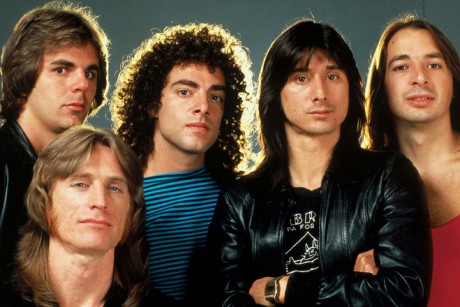
The story starts, of course, in San Francisco, back when the Giants were still playing in Candlestick Park. Neal Schon was a teenage guitar prodigy who dropped out of high school to join Santana, playing on one album, “Santana III,” in 1971. He left the band soon after, but the experience would prove helpful, if only for introducing him to keyboard player Gregg Rolie. Together, they formed a new band with bassist Ross Valory and rhythm guitarist George Tickner; they chose their name through a contest on local radio station KSAN-FM. Like Santana, they were primarily an instrumental act, which meant long jams and middling sales. In late 1977, they hired a drummer named Steve Perry to front the band.

That decision proved more than advantageous, as Journey quickly grew into a pop behemoth, notching multi-platinum and more or less owning radio with hits like “Anyway You Want It,” “Separate Ways (Worlds Apart),” “Open Arms” and “Lovin’, Touchin’, Squeezin’.” Such was their popularity that they even had their own video games, both in actual arcades and on the Atari 2600, where you had to guide the band backstage past shady agents and paparazzi to their limousine, while an eight-bit version of “Don’t Stop Believin’” played in the background.

Perhaps most important to Journey’s success was MTV, then a fledgling network hungry for videos of any quality by any band. Journey realized the possibilities of the medium before a lot of other bands, and some of their early clips have a certain DIY charm. For “Separate Ways,” the band flew to New Orleans, where they played invisible instruments on the docks: air guitar, air keyboards, air drums, even air microphone. It was a bit corny, but also pretty inventive, early music-video special effects at their cheapest and their finest. As the network grew, so did the band. Journey even participated in one of the network’s very first contests, “One Night Stand With Journey,” where a viewer was flown anywhere in the world to go backstage with the band.

“Don’t Stop Believin’” was only one in a series of hit singles, but it wasn’t even their most successful: The song peaked at No. 9 in 1981, but “Who’s Crying Now” and “Open Arms” both charted higher and longer. Despite their success, Journey were constantly derided by critics who viewed them as bland, dopey, opportunistic and worse. Reviewing their 1981 album “Escape” in Rolling Stone, Deborah Frost wrote, “Journey could be any bunch of fluff-brained sessioneers with a singer who sounds like a eunuch under assault  from thrashings of a West Coast-style identi-riffer (Schon, Craig Starship or Steve Toto).” In the Los Angeles Times, Robert Hilburn listed “Don’t Stop Believin’” as one in the year’s “Cavalcade of Cringe-Causing Hits”: “These guys do touch on rock’s inspirational turf, but the lyrics are so hapless and Steve Perry’s vocal is so overblown that the record is a mockery of rock as a meaningful form of artistic expression.”

By the mid 1980s, Journey had stalled, unseated by a wave of younger, synth-based bands like the Eurythmics and Duran Duran, who crowded MTV’s rotation with bigger-budget videos. Perry embarked on a short-lived solo career, and his ’84 debut “Street Talk” produced two big hits: “Oh Sherrie” and “Foolish Heart.” But Journey’s 1986 album “Raised on Radio” was a relative flop, and a new vanguard of hair metal acts, including Bon Jovi and Poison, shunted Journey to the sidelines in the latter half of the decade. The group disbanded and reunited several times over the next 25 years, but never again achieved their former level of success — at least not with any new material. They seemed safely forgotten, or at least relegated to the state fair circuit forever.

But something funny — or, depending on your taste for the song, something incredibly discouraging — happened in the late 2000s. “Don’t Stop Believin’” found new life and a new audience, experiencing a resurgence of popularity and a new status as something like a rock ‘n’ roll classic, thanks primarily to two popular television shows. “The Sopranos” used it to soundtrack its confounding series finale, where Tony Soprano and his family are sitting at a diner eating French fries just seconds before the final blackout. Series creator David Chase, who directed the finale, seemingly chose the song for its intense banality, putting it on par with fresh-from-the-freezer fries, laminated menus and suburban dining. Chase was almost teasing his audience, playfully raising the question of what in the long-running series was worth believing in.

In other words, “The Sopranos” was aware of the song’s dubious place in pop culture. “Glee,” on the other hand, could see it only as a motivational anthem, shorthand for character development. In that series’ 2009 premiere, the members of the high school glee club perform a suspiciously polished a cappella version of the tune as a means of persuading Will Schuester (played by ex-boy band singer Matthew Morrison) to stay on as their teacher. It’s a pretty insipid version of the song, the kids’ squeaky-clean harmonies contrasting weirdly with Journey’s attempt at urban grit, but the “Glee” cover was a hit, propelling “Don’t Stop Believin’” back onto the charts. The song hit No. 6 in 2009, making it the rare single (alongside Queen’s epic “Bohemian Rhapsody” and Sheriff’s “When I’m With You”) to find not only new life but greater success long after its initial run.

Since then, “Don’t Stop Believin’” has shown up on numerous soundtracks (“Yogi the Bear” and “Moneyball,” for example) and as a staple on televised talent shows. It remains on radio playlists and blasts — well, secretes — from grocery store speakers. It was even a centerpiece on the sloppily revisionist musical-cum-flop movie “Rock of Ages.” The song simply won’t die. In 2012, 31 years after its initial release, “Don’t Stop Believin’” is deeply entrenched in current rock culture, such as it is, provoking a Pavlovian response in nostalgists old enough to associate it with the ‘80s and a raised glass from those who see it as an artifact from another era, on par with “YMCA” or “Celebration” as cheeseball anthems that everybody knows the words to and everybody can sing along with.

This sort of pop Lazarus rarely happens on this scale. As tastes change, of course, listeners reevaluate certain assumptions about the past and reconsider music that might once have been considered bad or, worse, uncool. Led Zeppelin were once considered hard-rock scourges, dumb playboys who assaulted the tastes and eardrums of stupid audiences; now they are revered by the same publications that once skewered them. In the 1970s and ‘80s, Hall & Oates were derided as slick faux-soul pioneers; now that stigma has been removed and “Rich Girl” has found new life as a hipster standard.

In the case of “Don’t Stop Believin’” it helps that the general listener isn’t old enough to remember when the song was first released. The song is older than almost all of the Tigers and the Giants, and it predates every single member of the William McKinley High School Glee Club (Morrison was barely 3 years old in 1981). Over the years, the song has shed its disreputable associations, yet retains its power as a pop cultural artifact with the weight of history behind it. A new generation ostensibly hears it for what it is: a shameless go-get-‘em-tiger anthem with a catchy chorus and a straightforward sentiment about not disbelieving. Modern-day listeners can ignore its pandering take on poverty and struggle (which is particularly ironic during the current recession), as well as such awkward phrasings as “streetlights people,” “living just to find emotion” and, of course, “South Detroit.”

They can do this because “Don’t Stop Believin’” was a blank to begin with. It wasn’t punk or new wave; it wasn’t muscle car rock or heavy metal; it wasn’t glam or lite pop or any other genre that can be popularly associated with a particular scene or era. It grew out of ‘70s and ’80s corporate rock, which tended to erase any regional traits or distinctive personalities to appeal to the broadest swath of listeners possible. Journey is more or less interchangeable with Survivor, Toto, REO Speedwagon, Mr. Mister and so many other anonymous bands of that era. In fact, those groups are so bland that they barely constitute an identifiable genre, which allows a song like “Don’t Stop Believin’” to live slightly out of time and out of style, unburdened by any identification with a larger movement good or bad, popular or obscure. The very traits that drew the most criticism have become crucial to Journey’s longevity: Their blankness allows for more than simple nostalgia. Subsequent generations can paint whatever they like on this blank canvas.

Furthermore, the lyrics to “Don’t Stop Believin’,” while ostensibly chronicling the romance of a small-town girl and a big-city boy, are so general they can apply to almost any situation and make it sound much more dramatic than it actually is: a baseball game, a plate of French fries, high school extracurricular activities. Sure, Bon Jovi’s “Livin’ on a Prayer” more or less made the song obsolete in 1986, with its similar dropped g and its much more detailed take on the struggles of youth in love — not to mention its unique vocal rhythm (ooh-wah-ooh-ooh-wah).

But Bon Jovi’s characters have names (Tommy and Gina) and jobs (he used to work on the docks, she’s a waitress); they’re almost too real, and whatever success they find is based on hard work and sacrifices rather than on their simple refusal to stop believing. “Don’t Stop Believin’” is a perfect storm of bland and vague and cheesy and catchy and inoffensive, but most crucially it exhorts listeners to “hold onto that feeling,” which is important. “That feeling” is not the victory, but the hunger, the struggle. Journey extols the journey, not the destination. In other words, whoever wins the World Series is less important than the passion of the players and their fans.

In a sense, the renewed success of “Don’t Stop Believin’” is a self-fulfilling prophecy, as though the song never stopped believin’ in itself. On the other hand, in 2012 it has taken on a whole new set of associations: an unsatisfying end to a beloved series, a big scene in a divisive one, and Schon’s recent elopement with Real Housewife and White House crasher Michaele Salahi. We’re stuck with it forever. But perhaps we can stop pretending that’s worth celebrating.
A&M Records: Independent, With Major Appeal

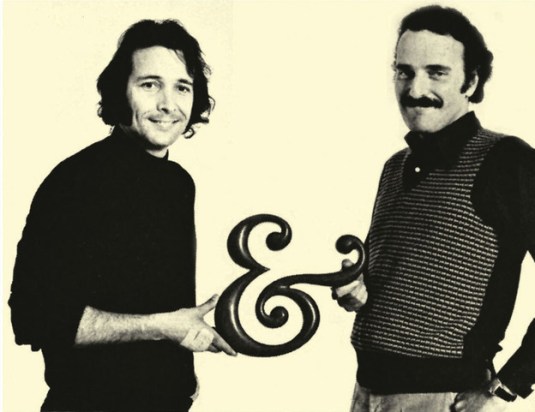
Herb Alpert (left) and Jerry Moss, who founded A&M Records in Alpert’s garage in 1962

(Source: NPR)

From the early 1960s to the late ’80s, A&M was one of the most eclectic and powerful independent record labels in the world. The roster of artists who recorded there includes The Carpenters, Captain Beefheart, The Police, Joe Cocker, Suzanne Vega, Procol Harum and Janet Jackson.

This year marks the 50th anniversary of A&M’s founding by trumpeter Herb Alpert and record promoter Jerry Moss. Among the first releases on the label was a song Alpert recorded in 1962 with his band, The Tijuana Brass, inspired by the bullfights he and Moss used to go to in Mexico.

“I was intrigued by the bass bands in the stands, announcing the bullfights,” Alpert recalls. “I was trying to capture that feeling. Jerry came up with the name.”

“The Lonely Bull” was the first hit for their fledgling record label, A&M (Alpert’s and Moss’ initials). The company was started out of Alpert’s garage in West Hollywood. “We kind of wired it up a little bit,” Moss recalls, sitting next to his partner. “There was a two-line phone in there and Herb, was it a two- or three-track Ampex tape recorder?”

“Two tape recorders,” Alpert answers, “and that’s where the Tijuana Brass sound started.”

Charlie Chaplin Studios

In time, the partners moved their operations into offices that once housed the studios of silent film star Charlie Chaplin (today it’s the headquarters of Jim Henson productions). Alpert says that from the start he wanted A&M to be something different from the cold, corporate record labels where he’d recorded before — something more personal.

“Jerry and I were in sync, not wanting to find the beat of the week,” he says. “We wanted to find something that was unique, find artists that had something to say in a unique way. We weren’t thinking of how much money we could make on each artist. We were just thinking about, ‘How can we put out great records? How can we put out records that we would buy ourselves?’ ”

Alpert says he wouldn’t necessarily have bought a Carpenters record himself, but A&M signed the duo in 1969. After receiving an unsolicited demo tape, he says he immediately he recognized the talent in Karen Carpenter’s voice.

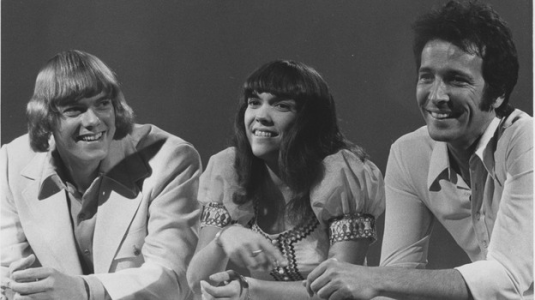
Herb Alpert with Karen and Richard Carpenter, whom the label signed in 1969.

I learned something years back, watching Sam Cooke,” Alpert says. “He showed me how to close my eyes and just go for the feel. He says people are just listening to a cold piece of wax and it either makes it or it don’t.”

The Carpenters went on to score 12 Top 10 singles. Their success, and that of other middle-of-the-road acts like Sergio Mendes and Brasil ’66, allowed the label to sign or license less well-known artists like Joe Cocker and Fairport Convention.

A&M had a remarkable reputation both for picking winners and for its eclectic taste, says longtime music journalist Dave Di Martino, now executive director of Yahoo Music.

“Every record was worth picking up, paying attention to,” DiMartino says. “Track for track and numbers for numbers, artists for artist, A&M’s accomplishments were fairly staggering. If you wanted smooth stuff, intelligent folksy stuff, they were very famous for sticking by their artists. If you wanted hard rock, particularly in the ’70’s, they had a lot of it.”

Frampton Sticks Around

In 1970, A&M signed the British band Humble Pie, featuring guitarists Steve Marriot and Peter Frampton. When Frampton decided to go solo, he stuck with A&M.

“If there was ever the perfect label for a musician at that time, it was A&M,” Frampton says. “They wanted the artists to become themselves.”

Frampton says Alpert — the musician — and Moss — the music lover — were always available whenever he wanted to drop in and talk. And he says A&M’s laid-back studios provided a family vibe.

“I never went to college, but I felt I was going to college at the A&M campus. That’s what it was like,” he says. “You’d see The Carpenters going into the studio and one day I saw Sting come in on a motorbike. It was the great place to hang out.”

Frampton says he got to sit in on other musicians’ sessions and was invited to help choose the cover art for his albums.”Word on the street was, ‘We’ve never had it so good here,’ ” he says. “They never once said, ‘You should do more of this,’ or ‘Don’t do that.’ They just let us do our thing. We made mistakes, and we learned by our own mistakes. And that’s sort of unheard of now.”

Nurturing Artists

Frampton’s third album for the label, Frampton Comes Alive, became the best-selling album of 1976. And just as it did with Frampton, A&M stuck with another artist until she finally scored a hit. From her home in England, singer-songwriter Joan Armatrading says success didn’t come until her third album with A&M.

“If you think about that today, after that first album, I don’t think I would have the second album made because people would probably be saying, hang on a minute, how come you haven’t given us that song yet? And the second album came and they’d probably be saying, well, you’ve had two albums and you haven’t done it, ” says Armatrading. “So A&M were very much into nurturing artists.”

Bryan Adams was just an 18-year-old Canadian singer when he got signed to A&M. “Those were great times,” he recalls. “The record business was flourishing; radio was a force. The people who were involved were dedicated to building A&M — which at the time was just an independent label — into a major label. It was a label that took their chances with artists who weren’t exactly mainstream until they found their niche. They took huge chances.”

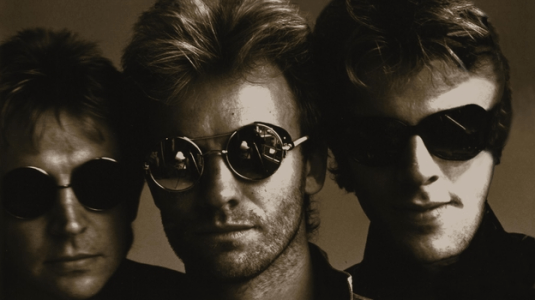
The label helped launch the careers of Joe Jackson, Suzanne Vega and The Police — as well as Sting. Producer Quincy Jones says he and many other jazz musicians also have fond memories of recording at A&M.

“Honey, are you kidding?” Jones asks. “We recorded ‘We Are the World’ there in the A&M studios, That’s something you never forget.”

The Police’s 1978 single “Roxanne” helped the band secure its deal with A&M Records.

End Of An Era

A&M continued to produce hits through the 1980s. But in 1989, Moss says, he and Alpert decided to sell their label to Polygram Records for half a billion dollars.

“It was sad because we really wanted to make it bigger,” Moss says. “They bought the company, they said, ‘No changes. There will be no changes. You guys can run it the way you feel like.’ The first thing you hear is, ‘Um, we’re gonna close the Paris office.’ ”

Then A&M’s New York offices were shuttered. Moss says he and Alpert managed the label for three more years before bowing out, unhappy with their new bosses.

“They didn’t appreciate the founder’s way, so to speak, of doing business,” he says. “All of a sudden, they were taking away from us our individuality. And we thought, ‘That’s what you were buying, was the fact that we were different and unique!’ ”

Moss says they knew it was all over when, the week after he and Alpert sold the company, the new owners painted over murals — created by musicians from the San Francisco band The Tubes — on the outside walls of the recording studios. “Now why would anybody do that?” Moss says, shaking his head. “This is great art, this is important art. And they just whitewashed it. And it was like, ‘OK, that’s who they are, these people.’ ”

Moss and Alpert filed several lawsuits against their label’s subsequent owners for violating an “integrity clause” written into the sale. The suits were settled years ago. Since then, Moss and Alpert have donated A&M’s archives to UCLA, and in 2006 the partners were inducted into the Rock and Roll Hall of Fame.

Today, the label launched in Herb Alpert’s garage is owned by the giant Universal Music Group, which has released a 50th-anniversary collection of A&M artists. To this date, nearly 600 of A&M’s original albums are still available.

Madonna Bares Her Butt for Sandy Victims

(Reprinted from MSN Entertainment)

Madonna found a saucy way to raise money for victims of superstorm Sandy by baring her butt onstage as she asked for donations during her show in New York City this week.

The pop superstar went to visit relief workers at Far Rockaway in Queens on Monday to publicize aid efforts in the hours before she took to the stage for her MDNA show at Madison Square Garden. Madonna opened up about her experience at Rockaway Beach during the concert and paid tribute to all those who have stepped up to help in the aftermath of the storm.

She told the audience, “We … have to call attention to the fact that New York has been devastated by a hurricane and I think that people really underestimate the damage that has been done. The homes, the jobs, the livelihoods that have been lost. … There are many wonderful people, some of them here tonight, who have started amazing initiatives and have been giving help to people who have nowhere to live, who have no food and nowhere to sleep.

“A big thank you to all these people … I went down to Rockaway Beach yesterday with my children and we saw what was going on down there and we saw the destruction and it was really sad but we also saw amazing acts of humanity, people working hard, handing out food, blankets, giving love. … I wanna give a big thanks to those people too. We owe them a lot. New York owes them a lot.”

She took off her top to reveal the words “No fear” scrawled on her back and pulled down her pants, telling the audience “(I am) showing (my) naked a– for Hurricane Sandy victims” and encouraging them to throw cash donations at the stage. She added, “If you are going to look at the crack of my a–, you better raise some cash.”

_______________________________________

Not even two days ago I tacked something up here about Bono’s ridiculously ineffectual fundraising efforts. Compared to Mad Madge though, that guy deserves a Nobel Prize. I guess we all do what we’re capable of doing. And Madonna’s specialty, in this her pathetic career downside, has become the flashing of what I’d be calling her “lady parts” if she were a lady.

Sad for two reasons: 1) after visiting relief workers to call attention to the hurricane’s devastation (thanks, we were completely unaware) this is what a cultural icon decided would be her contribution to the effort, and 2) didn’t she used to be a singer? Seriously, didn’t people once talk about Madonna for reasons related to music? Now she’s reduced to selling primarily nostalgia and sex. The phrase “If you are going to look at the crack of my a–, you better raise some cash” sounds exactly like a prostitute because that’s what Madonna has become.

Oh, and way to show your sensitivity to the human suffering.

Is the Sound on Vinyl Records Better than on CDs or DVDs?

(Reprinted from HowStuffWorks)

The answer lies in the difference between analog and digital recordings. A vinyl record is an analog recording, and CDs and DVDs are digital recordings. Take a look at the graph below. Original sound is analog by definition. A digital recording takes snapshots of the analog signal at a certain rate (for CDs it is 44,100 times per second) and measures each snapshot with a certain accuracy (for CDs it is 16-bit, which means the value must be one of 65,536 possible values).

Comparison of a raw analog audio signal to the CD audio and DVD audio output

This means that, by definition, a digital recording is not capturing the complete sound wave. It is approximating it with a series of steps. Some sounds that have very quick transitions, such as a drum beat or a trumpet’s tone, will be distorted because they change too quickly for the sample rate.

In your home stereo the CD or DVD player takes this digital recording and converts it to an analog signal, which is fed to your amplifier. The amplifier then raises the voltage of the signal to a level powerful enough to drive your speaker.

A vinyl record has a groove carved into it that mirrors the original sound’s waveform. This means that no information is lost. The output of a record player is analog. It can be fed directly to your amplifier with no conversion.

This means that the waveforms from a vinyl recording can be much more accurate, and that can be heard in the richness of the sound. But there is a downside, any specks of dust or damage to the disc can be heard as noise or static. During quiet spots in songs this noise may be heard over the music. Digital recordings don’t degrade over time, and if the digital recording contains silence, then there will be no noise.

From the graph above you can see that CD quality audio does not do a very good job of replicating the original signal. The main ways to improve the quality of a digital recording are to increase the sampling rate and to increase the accuracy of the sampling.

The recording industry has a new standard for DVD audio discs that will greatly improve the sound quality. The table below lists the sampling rate and the accuracy for CD recordings, and the maximum sampling rate and accuracy for DVD recordings. DVDs can hold 74 minutes of music at their highest quality level. CDs can also hold 74 minutes of music. By lowering either the sampling rate or the accuracy, DVDs can hold more music. For instance a DVD can hold almost 7 hours of CD quality audio.

CD Audio DVD Audio
Sampling Rate 44.1 kHz 192 kHz
Samples per second 44,100 192,000
Sampling Accuracy 16-bit 24-bit
Number of Possible Output Levels 65,536 16,777,216

DVD audio discs and players are rare right now, but they will become more common, and the difference in sound quality should be noticeable. To take advantage of higher quality DVD audio discs, however, you will need a DVD player with a 192kHz/24-bit digital to analog converter. Most DVD players only have a 96kHz/24-bit digital to analog converter.  So if you are planning to take full advantage of DVD audio be sure to look for a 192kHz/24-bit DAC.

(Thanks Dave!)

Acoustic Ke$ha: Stripped-Down Sensitivity or Dreck Laid Bare?

The post below is reprinted, along with video attachments, from BuzzFeed. My comments are beneath it.

Ke$ha Made A Beautiful Acoustic Version Of “Die Young”

Who knew that underneath her hit pop song was a really gorgeous ballad?

Ryan Broderick, BuzzFeed Staff

It’s really easy to write off a pop star like Ke$ha (especially because she still insists on using that dang dollar sign). But it’s also really exciting when someone like her takes a step back, strips off all her usual radio pop nonsense and does something genuinely really nice.

This ambient, pretty gorgeous version of “Die Young,” off her upcoming album, Warrior, gives a really startling insight into the person underneath the auto-tune.

And this isn’t the first time Ke$ha’s take a quick foray to genuine musicianship. Last year she released a bafflingly subdued and heartfelt cover of Bob Dylan’s “Don’t Think Twice, It’s All Right,” which is definitely a must-hear if you missed it.

Original post:

http://www.buzzfeed.com/ryanhatesthis/keha-made-a-beautiful-acoustic-version-of-die-yo

____________________________________________

I understand the concept, Ryan Broderick of BuzzFeed staff. Sometimes stripping away the noise and letting an artist’s voice, melody and song be heard in a more intimate, sympathetic setting brings out the song’s beauty and the singer’s gifts. Good examples would be Robyn’s reworkings of her dance pop hits and Kylie Minogue’s brand new Abbey Road Sessions album.

That’s not what’s happening here.

Really nice? Ambient? Gorgeous? Genuine musicianship? Are we listening to the same stuff? I’ll tell you what it sounds like to me: it could use the synth dance backing track to cover up all that “gorgeousness” because it just reveals Ke$sha’s limitations as a singer and bad judgment as an artist.

Her acoustic “Die Young” is merely ordinary–the stuff a thousand teenage girls do as well on YouTube on a daily basis. But the festival of secretions that is her “subdued and heartfelt” take on Dylan is something that made me feel ickiness penetrating my brain through my ears. It wasn’t just unpleasant to hear; it was something I wish I could unhear. I mean, thanks for spraying all that “musicianship” all over one of my favorite Dylan songs. Hope you didn’t permanently ruin it for me.

Yeah, good thing she “stripped off all her usual radio pop nonsense” to “do something really nice”–like have an emotional breakdown with the mic on. There’s a difference between conveying emotion (which is what an actual good singer can do) and simply demonstrating your own emotion (which, when done so artlessly, can leave listeners cold or maybe wondering what the hell kind of issues you have).

I suspect Ke$ha either a) has watched too many bleary Amy Winehouse performances and thinks raw self-destruction is kind of a cool image to adopt (maybe to make inroads with the angsty Evanescence crowd?) or b) is desperate to be taken more seriously than she deserves, given that she’s probably the most one-dimensional act since KC & The Sunshine Band.

Either way she comes across as a poseur to me.

I do agree about that pointless dollar sign though.

How to Dismantle Bono’s Image as a Great Philanthropist

(Reprinted from Thought Catalog)

From a post by Ben Branstetter entitled “6 Liberals This Liberal Can’t Stand

1. Bono

Aside from his music (U2 being one of those bands it’s safe for Boomers to like mostly because it’s where he works out his messiah complex), Bono is also an avid douche. While I cannot deny him the power of his philanthropy, it’s hard not to wonder how many mosquito nets he could buy if he sold off his collection of designer aviator sunglasses. That, and his humanitarian efforts are often laughed at by charities and economists alike. Take, for example, Product Red, the vestige of every enlightened liberal in your college. Built on the idea that people love buying things for themselves more than they like changing lives, the project to fight AIDS, tuberculosis, and malaria was largely a boondoggle, with companies such as Nike, The GAP, and Apple refusing to reveal what portion of their special (RED) products would actually go to charity, not to mention they spent $100 million on advertising for the project and, five years after it’s launch, had only raised $18 million. Also, all three of those companies use foreign labor associated with sweatshops, meaning people with these horrid diseases were likely making clothing for upper-class American teenagers who believed they were actually helping to fight those same diseases. You want to support a cause? Make a direct donation and skip the fashionable t-shirt.

Or let’s look at U2’s 2006 world tour for their album How To Dismantle An Atomic Bomb, a tour more largely seen to sell his ONE campaign for international aid. The gross ticket receipts of that tour managed to hit over $448 million dollars (putting it fifth for the world’s most lucrative tour though the top spot is also held by U2 for their 2009 360 Tour which netted the band over $760 million). That’s gluttonous compared to the ONE Campaign’s 2010 earnings of $14.9 million, of which only 1% actually goes to charity (the rest is spent on employee salaries). So remember, when you see his egoistic, holier-than-thou, eternally-unshaven mug on your TV asking for money, donate to an actual charity instead of buying the latest brand because some self-styled Irish demigod told you it was cool.

__________________________________

Articles Branstetter cites for support include:

Bono and Bob Geldof increase Africa’s problems say Charity (NME): http://www.nme.com/news/bono/32704

Bottom Line for (Red) (New York Times Business): http://www.nytimes.com/2008/02/06/business/06red.html?pagewanted=all

U2’s Bono in Charity Scandal (Fabulous Buzz): http://fabulousbuzz.com/2010/10/03/u2s-bono-in-charity-scandal/

Previous Older Entries Next Newer Entries