"There's a time in life for Hoagy Carmichael. There's a time in life for Claude Debussy. There's a time in life for Jerry Lee Lewis. There's a time in life for Destiny's Child. All these things have their moment." ~Elvis Costello
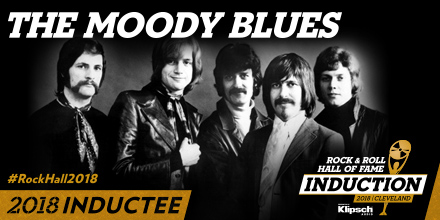
If you’ll pardon a little subjective “homerism”…my favorite band of all will be 2018 Rock and Roll Hall of Fame inductees and, well, I’m very pleased about it.
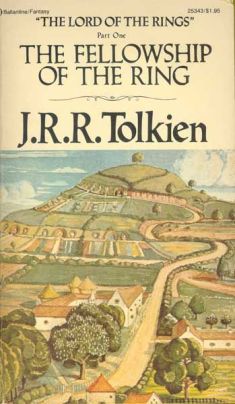
My now-deceased oldest brother passed the music of the Moodies on to me at a formative age, as he did so many other works of music and literature. I owe the love of my favorite band and my favorite book–The Lord of the Rings–to brother Jim.
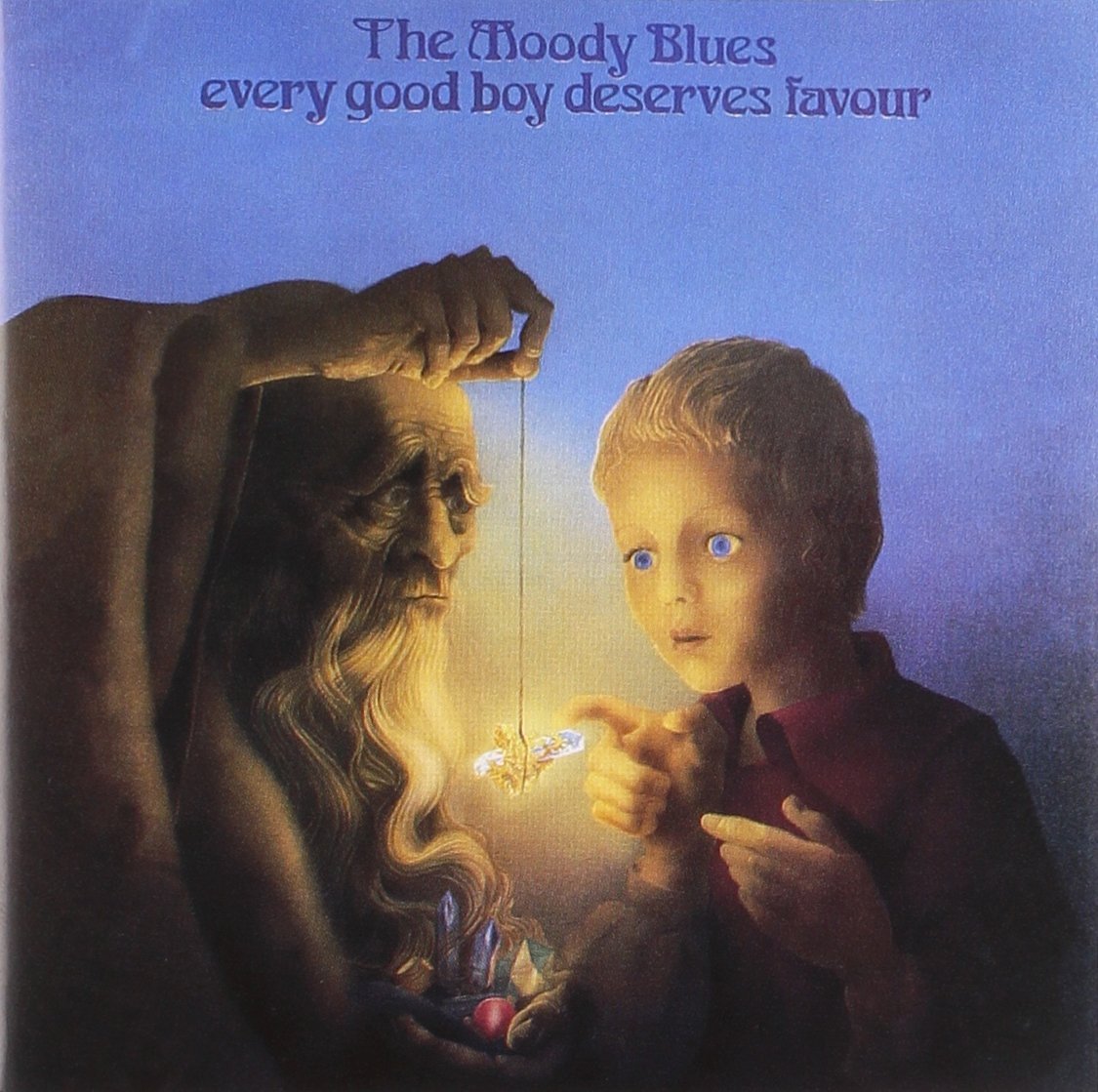
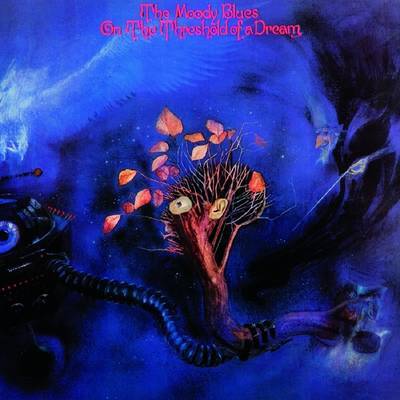
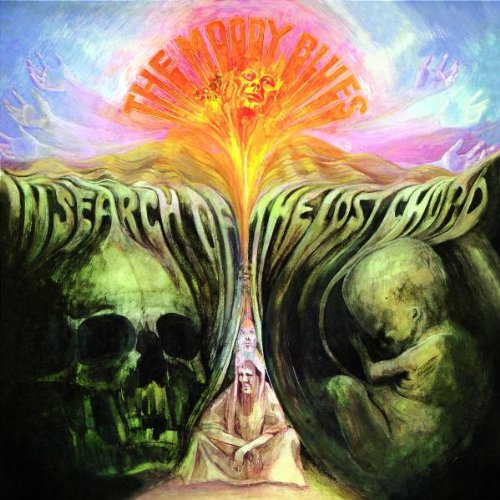
And somehow the two intertwined in my fertile child’s imagination and have remained that way ever since. The pastoral, flute-and-mellotron infused progressive rock of the Moodies’ halcyon days (1967-72) is strewn with a beauty, a very English sensibility and a wide-eyed wonder that spoke to my innocent heart, and seemed somehow to conjure the same fantasy worlds as the imagery of Tolkien’s Middle Earth.
“Voices in the Sky” (1968)
When I read years later that The Hobbit and The Lord of the Rings were major inspirations for the band’s music of this period, I knew for the first time that it wasn’t just my imagination. It was theirs. My favorite band was inspired by my favorite author. It wasn’t coincidence that I found echoes of one in the other.
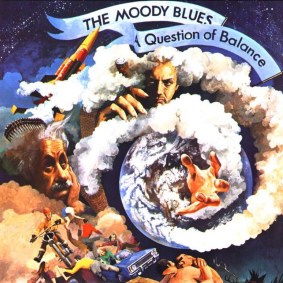
Whether huddled in a quiet corner of the house or front porch absorbed in the adventures of the Fellowship, or lying on my bedroom floor poring over wondrous album artwork and lyric sheet while amazing music swirled in the headphones, these kindred works of otherworldly beauty and wonder formed the bedrock of my taste in both music and literature. I have measured so much of what I’ve discovered since by the imaginative standard set by Tolkien and the Moody Blues.
I’m glad they are finally receiving this overdue honor, and while they are all still with us.
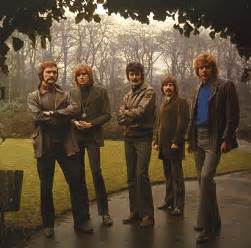
Additionally I’m excited at the prospect (although I’ve heard no discussion in this regard) of the classic lineup reforming to perform at their induction. Flutist Ray Thomas retired at the end of 2002 due to illness and keyboardist Mike Pinder, who gave the band its trademark symphonic rock sound with his Mellotron wizardry, hasn’t performed with the group since the 70’s.
“Are You Sitting Comfortably” (1969)
If they indeed take the stage together once more, a fragment of my childhood will be restored for a moment, even as I witness with sadness my heroes in the sunset of their performing years–always, always the bittersweet experience of the dedicated long-time fan; always an essential part of the epic. Just like the epilogue of The Lord of the Rings.
“You Can Never Go Home” (1971)
From the Moodies website:
Los Angeles, CA (Dec. 13, 2017)—The Rock & Roll Hall of Fame announced this morning that rock legends The Moody Blues will be inducted into The Rock & Roll Hall of Fame in 2018. Current members Justin Hayward (lead guitar, vocals), John Lodge (bass guitar, vocals) and Graeme Edge (drums); will receive the honor alongside former members Ray Thomas (flute/vocals) and Mike Pinder (keyboard/mellotron/vocals). The Moody Blues are one of five 2018 Inductees including Bon Jovi, The Cars, Dire Straits and Nina Simone,. Award for early Influence goes to Sister Rosetta Tharpe. The 33rd Annual Rock & Roll Hall of Fame Induction Ceremony, presented by Klipsch Audio, will take place on Saturday, April 14, 2018 at Public Auditorium in Cleveland, Ohio. The Rock & Roll Hall of Fame 2018 Induction Ceremony will be televised on HBO, and a radio broadcast on SiriusXM.
Says Justin Hayward: “I’m extremely grateful to the Rock & Roll Hall of Fame, first for creating the supreme temple to all that has brought endless joy into my life since I was a small boy, and now, after all these years, for including us. It’s a privilege to be celebrated in the same building, on the same street even, as my own heroes – Buddy Holly and the Everly Brothers – and now, at last, with us, my heroine Nina Simone. But all the thanks must go to The Moody Blues fans for giving us a wonderful, wonderful life in music – our induction has now validated the music they so love, and I’m so, so pleased, for us all. Yippee!”
Says John Lodge: “The fans are the heart of the Moody Blues — their faith, support and love have moved mountains. Their voices have been heard, and I am proud to say, “we have been inducted into the Rock & Roll Hall of Fame.” Thank you to American Radio for keeping the faith in the Moody Blues, and to the Rock n Roll Hall of Fame for our induction.”
Says Graeme Edge: “I want to thank all of my peers who bestowed the honor of voting us in. Most of all, I’d like to thank all of our fans who have supported us over the years, and have steadfastly stood by us. I would also like to thank the Rock & Roll Hall of Fame foundation for putting a cap on my career; one that continues to astonish me with its gifts.
A limited number of pre-sale tickets are available for Rock & Roll Hall of Fame members in advance of the public sale date. To be eligible for the member pre-sale opportunity, you must be an active Rock & Roll Hall of Fame member by December 31, 2017. Supporters of the Donor Circle by December 31, 2017 can access VIP packages and premium balcony tickets immediately. Additional public ticket details and pre-sale offers will be announced in January.
Fans can pre-order exclusive 2018 Inductee t-shirts now at rockhall.com/store and receive 18% off their order. The Rock Hall store is also offering fans 10% off regular items and free shipping for a limited time.
The Moody Blues recently announced upcoming 2018 dates of their special live tour celebrating the 50th Anniversary of their iconic, 1967 landmark album, DAYS OF FUTURE PASSED. The tour begins on January 10 in Hollywood, Florida, continuing through January 31 in Las Vegas, Nevada, where the band will complete a run of four shows at the Wynn Las Vegas. Titled DAYS OF FUTURE PASSED – 50TH ANNIVERSARY TOUR, the tour kicked off earlier this year, and features the band performing their greatest hits in the first half, and DAYS OF FUTURE PASSED performed in the second half.
PBS also premiered The Moody Blues’ “Days of Future Passed Live” nationwide on November 25 recorded at Toronto’s Sony Centre during this year’s DAYS OF FUTURE PASSED – 50TH ANNIVERSARY TOUR (check local listings); and Ume released The Moody Blues’ DAYS OF FUTURE PASSED50TH ANNIVERSARY DELUXE EDITIONon November 17. The 2CD/DVD and digital audio deluxe edition features the album’s newly restored original 1967 stereo mix, which makes its CD debut.
The Moody Blues have been creating music that bridges the gap between rock, classical and pop-rock genres for the last five decades. Their sound has held its ground in a genre of music that is ever-changing, and has sold in excess of 70 million albums worldwide. The band has been awarded 14 platinum and gold discs, and their roster of hits include: “Nights In White Satin,” “Tuesday Afternoon,” “Ride My See Saw,” “The Story In Your Eyes,” “Isn’t Life Strange,”“Question,” “I’m Just A Singer (In A Rock And Roll Band),” “Your Wildest Dreams,” and “I Know You’re Out There Somewhere,” to name a few.
The Moody Blues’No. 1, Top 5, Top 10, Top 20,Top 40, Multi-Platinum, Platinum and Gold albums and singles, have generated sold-out tours on a consistent basis over the course of several decades, making them one of the top-grossing album and touring bands of all time.
Music is an audio-based medium (duh), but the associated visual elements also form a big piece of how we understand it. Album covers are very often our first look at an record, so they better at least start to tell the story of the album, or give listeners some inkling of what they’re in for. Otherwise, what’s the point?
Similarly, songs try to tell a story or express a feeling, so if you’re going to forever tie it to an accompanying video, the audio and the visual better mesh in a way that makes both profoundly and undeniably better. Credit where it’s due: There were plenty of videos that accomplished that in 2017, which led to a long list of candidates for this list, which, in case the headline wasn’t descriptive enough, breaks down the five strongest music videos that came out this year. There were a few that stood out among the others, though, and these are them…
(via the Ohio State University website) By: Misti Crane
COLUMBUS, Ohio – Remember those drawn-out, dramatic intros into the pop power ballads of the 80s? They’re all but gone in today’s chart toppers, according to new research, and listeners’ short attention spans may be to blame.
Intros that averaged more than 20 seconds in the mid-80s are now only about 5 seconds long, the study found.
Depending on what rocks your musical world, the popularity of streaming services might be to thank or to curse for a move away from the instrumental intro, said Hubert Léveillé Gauvin, a doctoral student in music theory at The Ohio State University. His study appears in the journal Musicae Scientiae…
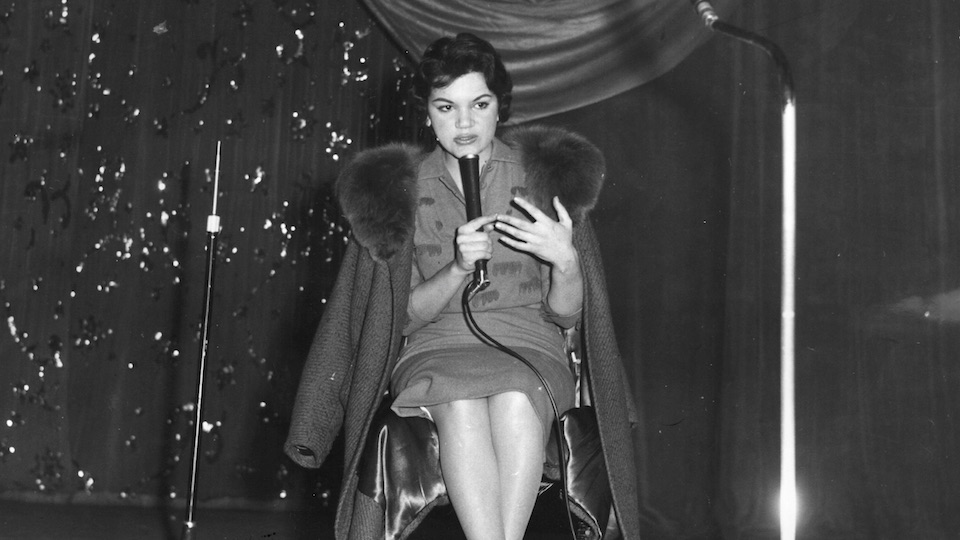
With apologies to Mr. Seger, rock and roll sometimes “forgets.” Sometimes inexplicably so. Consider, if you will, the case of one Connie Francis, (nee’ Concetta Rosemarie Franoconero of West Orange, New Jersey), a star of the highest caliber of song and screen in the genre’s development, and included too rarely in conversations of the all-time greats. It’s hard to pinpoint any particular reason why this should be, but rather than dwell upon the reasons for Connie’s absence in the conversation, let’s try to accentuate the positive and give her her proper due.
Connie Francis was a whirlwind. Her biggest hits – “Who’s Sorry Now,” “Stupid Cupid,” “Lipstick On Your Collar” – were ubiquitous radio fare between her first Top 40 hit in 1955 and her final one in 1964. Her star turn in the movie, Where the Boys Are, confirmed her as a multi-dimensional talent. The movie has aged shockingly well, its humor mostly intact. Her charm was complete and undeniable. Her mezza-soprano was a genuine gift of nature. She sold more than 200 million records…
Rock like you’ve never heard it before. An orchestra like you’ve never seen before. An event like you’ve never experienced before.
Introducing Chrysalis Orchestra- a brand new concept in entertainment brought to you by the legendary Terry Ellis, music visionary and co-founder of Chrysalis Records.
Imagine the greatest rock anthems of all time performed with all the power and magnificence of a complete symphony orchestra. But this is not a typical orchestra with musicians sitting pinned behind their music stands. Instead, it’s a forty piece “rock band” with young musicians, each one a virtuoso on his or her instrument, and each one a great performer, on their feet, interacting with the audience.
In its look, its sound, and in every other way, Chrysalis Orchestra is a big show, with dynamic and powerful performances that will get the audience out of their seats. There are no vocalists or electric guitars – it’s an orchestra playing reinterpretations of the rock songs we all know and love, in tribute to the great composers of the rock era. Rather than the music of Mozart and Beethoven, it presents the familiar compositions of Page and Plant, Cobain, Springsteen and the other outstanding writers of their time, with all the rock and roll energy of the original versions.
This is rock in its full glory, celebrated by a generation that grew up with it, and a new generation experiencing it for the first time. The music is timeless; Rock Re-imagined.