"There's a time in life for Hoagy Carmichael. There's a time in life for Claude Debussy. There's a time in life for Jerry Lee Lewis. There's a time in life for Destiny's Child. All these things have their moment." ~Elvis Costello
From early 1965. As the Beach Boys record what would become their second #1 hit, a drunken Murry Wilson (father of Brian, Carl and Dennis) offers the kind of unsolicited input that eventually led to the Boys purchasing a fake mixing console that he could man harmlessly.
Murry’s “help” mostly seems to take the form of taunts, put-downs, muzzy musical advice, and morale-crushing references to how much better they used to sing–and includes his infamous “I’m a genius too” at 2:09.
Notorious head case Brian comes across as the clear-headed one here. And despite Murry’s request to stop recording, Brian makes sure the tape keeps rolling to preserve their exchange. As a result, we have this audio document of the relationship between the band and the father they ultimately had to fire as manager.
Murry’s presence so marred the recording of “Rhonda” that the Beach Boys recorded a new version weeks later.
Incidentally, in a vindictive attempt to top his own sons’ act Murry Wilson began managing a cover band called the Renegades, changing their name to the Sunrays. They hit #51 with “I Live for the Sun”.
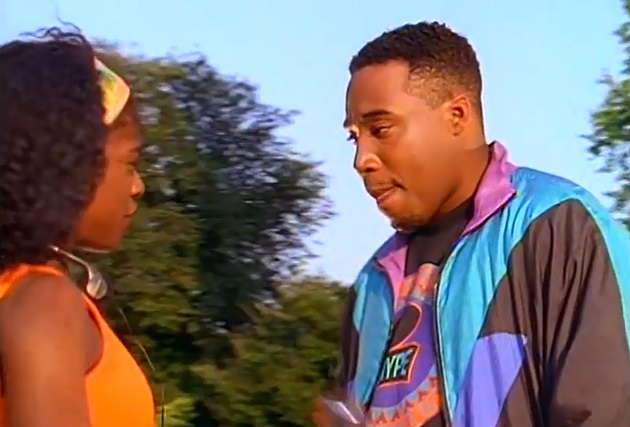
One-hit wonder Positive K’s lone Top 40 entry (#14 in 1993) becomes a more interesting listen when you learn the rapper did both the male and female vocals on the song. It being his debut, perhaps there was no budget for guest vocalists? At any rate, the “female” voice was K’s own, the pitch adjusted with the aid of studio technology.
It’s one of the biggest decisions any band will face: what to call themselves. And yet, so many get it so wrong. Fortunately, for every group that comes up with a terrible name and sticks with it, there’s a band that comes up with a terrible name, plays a few shows under it, maybe releases a demo or even an album or two but then finally comes to its senses. Many well-known and successful groups – from Creedence Clearwater Revival to Green Day – have been through the latter growing pains, starting out life cursed with a misguided moniker before landing on a name destined to adorn the T-shirts of millions of devoted fans. The name makes the band, as they say; here are 25 bands that almost didn’t get made.
Between her run as half of a prolific hit songwriting duo with her husband Gerry Goffin (“One Fine Day”, “The Loco-Motion”, “Pleasant Valley Sunday”, “Up On the Roof”, “Will You Love Me Tomorrow”…) and the singer-songwriter genre-defining Tapestry album, Carole King’s short stint with folk-rock band The City is the long-lost missing link.
As King’s marriage to Goffin was breaking up, she headed in a different direction–geographically, by moving west to California’s Laurel Canyon with her two daughters; and musically, by meshing her talents with guitarist/vocalist Danny Kortchmar and bassist (and King’s future husband) Charles Larkey, finding a more progressive sound and unbridling from her Brill Building pop standard style of writing.
The City released one mostly-forgotten album which is being re-released this week by Light in the Attic Records.
Now That Everything’s Been Said shows touches of the folk queen King would become, and it’s not without hit material of its own, although it would be via other artists that several of its songs would reach a wider public, since the album itself went, as lyricist David Palmer says, “number zero with a bullet”.
“Hi-De-Ho” became a top 20 single for Blood, Sweat & Tears in 1970:
The Byrds made “Wasn’t Born to Follow” their own with a version that appeared in the film Easy Rider:
And American Spring and the Monkees interpreted “Now That Everything’s Been Said” and “A Man Without a Dream” respectively.
Check out the City’s mellow “Snow Queen” with jazzy fills by drummer Jimmy Gordon of Derek & the Dominos and Pet Sounds fame:
With production by Lou Adler and lyric contributions by Gerry Goffin and David Palmer (later of Steely Day) and of course Carole King stepping up to the microphone to interpret her own material for the first time, Now That Everything’s Been Said deserved a better fate than to languish in obscurity. But with its re-release we’re given the second chance to hear the lost chapter in the career of one of pop’s most accomplished writers.