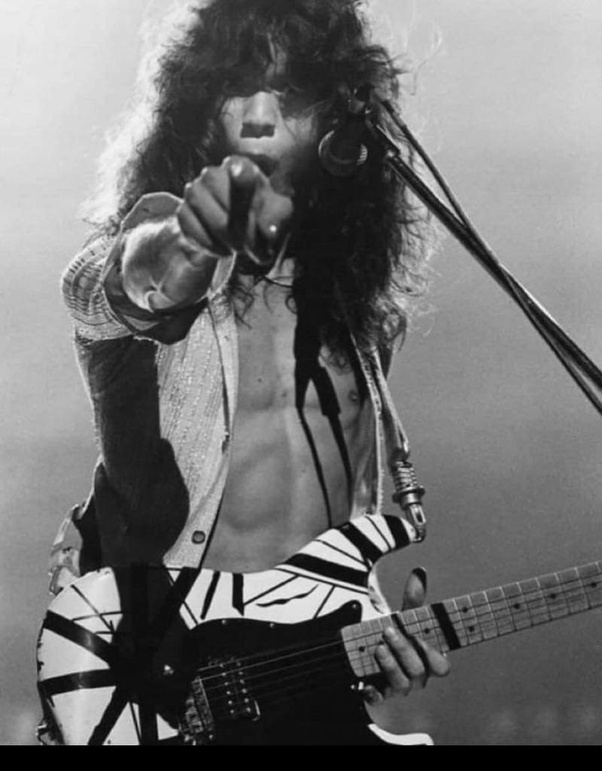
“Dance the Night Away” is a song by Van Halen, and written by its group members. It is the second song from their 1979 album Van Halen II. While the rest of the songs from this album had existed in various forms since their days doing demos and playing clubs, this song was possibly the only song written during the recording sessions for the album.
The band members conceived the song during the recording sessions while they were standing in a circle humming to each other. It was inspired by Fleetwood Mac’s “Go Your Own Way”. Eddie Van Halen purposely left a guitar solo out of the final version of the song, replacing it instead with a riff of tap harmonics. David Lee Roth originally wanted to call the song “Dance, Lolita, Dance”, but Eddie Van Halen convinced him that “Dance the Night Away” was more suitable and the chorus was changed to reflect that.
Roth claimed, during a 2006 performance in San Diego, California, that he wrote this song in tribute to an intoxicated woman who was having sex in the back of a truck and ran with her pants on backwards while escaping police officers into the bar where the fledgling band was playing. This was also mentioned at a 2006 performance in Detroit, Michigan.
Considering it was June of 2016 when the third part of this series posted, we thought we were long overdue for a fourth gentle reminder that so many of your favorite songs aren’t as original as you might have thought.
Sorry to destroy your illusions and you’re welcome.
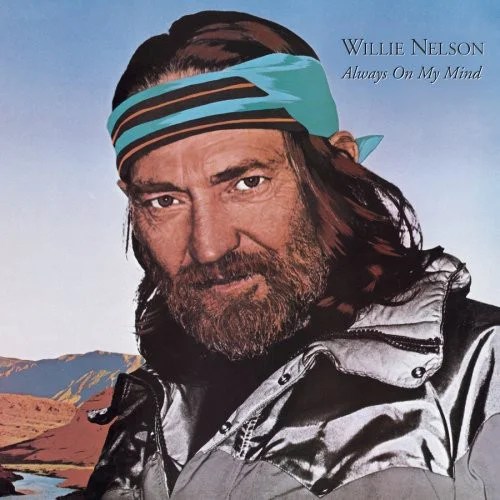
“Always On My Mind”-Willie Nelson
The ballad most often associated with the Red Headed Stranger was first recorded by Brenda Lee in 1972 although Gwen McCrae’s recording was released a few months sooner, with Elvis Presley releasing a successful version of the song also that same year.
There are over 300 recorded versions of “Always On My Mind”, but when Nelson released his version in 1982 it shot to the top of the country charts and the top 5 on the pop.
The clip features Nelson, Presley, McCrae and Lee in that order.
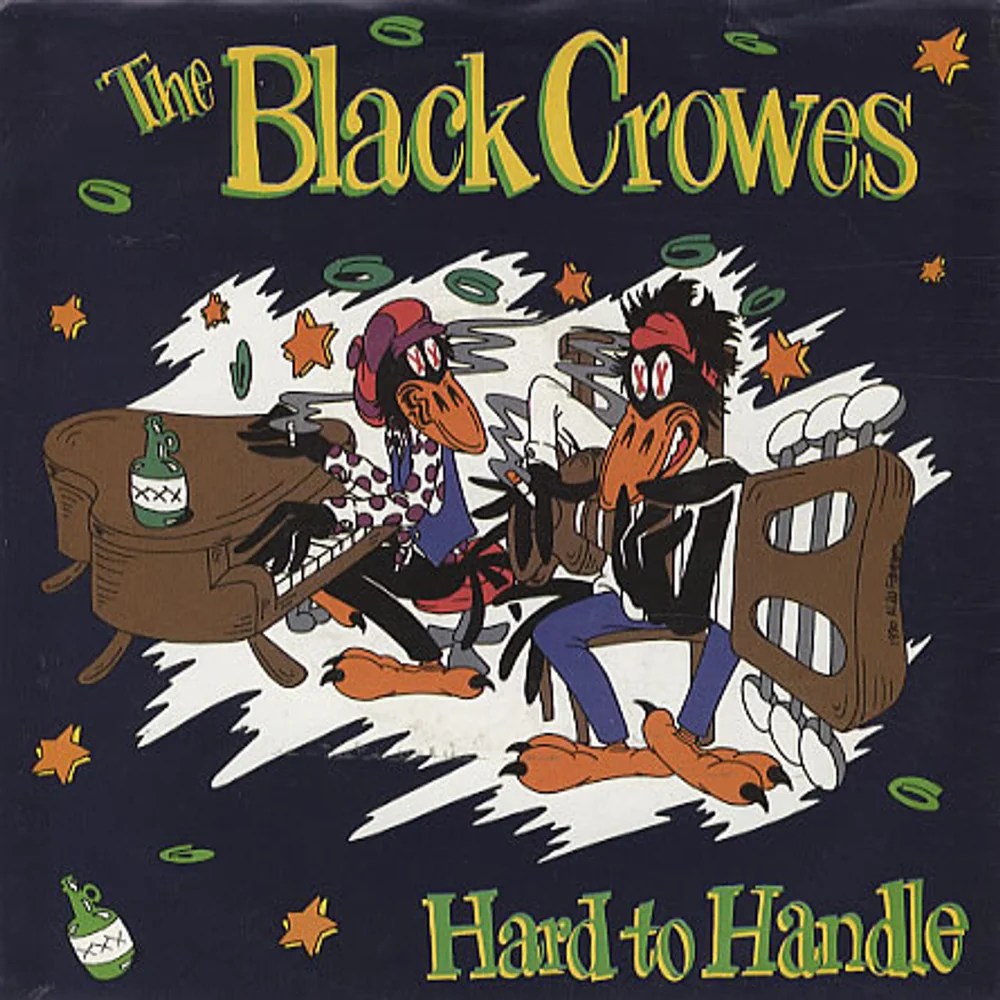
“Hard to Handle”-The Black Crows
Nope. Not an original either, but a 1968 Otis Redding B-side.
And yeah, the fact that this band’s biggest hit (look it up) was a B-side for Redding sums up their legacies relative to one another.
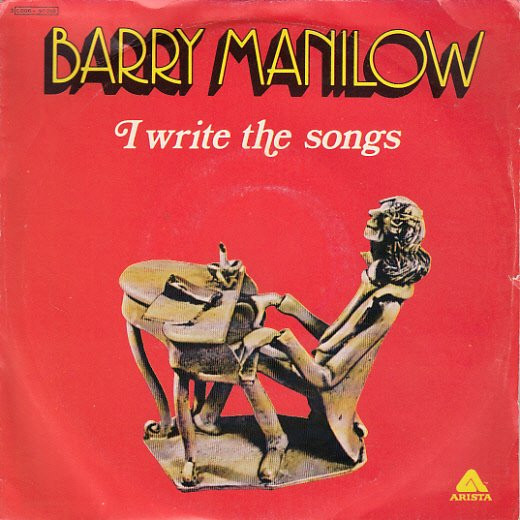
“I Write the Songs”-Barry Manilow
On a few occasions the “I Write the Songs” guy didn’t write the songs. This includes, ironically, “I Write the Songs”, which was written by Beach Boy Bruce Johnston.
While it’s been said the song was written in tribute to Johnston’s songwriting genius bandmate Brian Wilson, the song’s writer say’s the “I” in the song is actually God, and the song is about the universal power of music to inspire, comfort, and bring joy.
While Manilow’s version went to #1 and won the Song of the Year Grammy, it had been recorded one year earlier in 1975 by The Captain & Tennille.
“Captain” Daryl Dragon was given his nickname during his tenure touring with the Beach Boys, when Mike Love referred to him as “Captain Keyboard” because of the ship captain’s hat he wore onstage.
David Cassidy also recorded “I Write the Songs” the year before Manilow. We’ve spared you his version in the above clip.
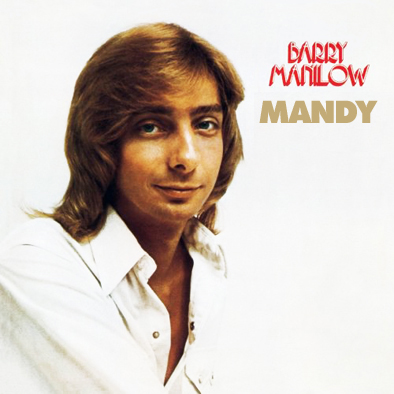
“Mandy”-Barry Manilow
“Mandy” got around a bit too prior to Manilow getting his hands on her. But she was a different girl back then. The original, written by Scott English, was titled “Brandy” and charted in the UK in 1971.
New Zealand singer Bunny Walters covered “Brandy” in 1972, but by the time Manilow recorded the song, the Looking Glass had had a number 1 hit with “Brandy (You’re a Fine Girl)” and the name was changed to “Mandy” to avoid confusion.
The clip samples Manilow, Walters and English in that order.
We don’t mean to pick on Barry Manilow especially. In fact, what is starkly clear from the clips is that his arrangements are sublime, and huge improvements on previous versions.
In other words, the opposite of the Black Crows.
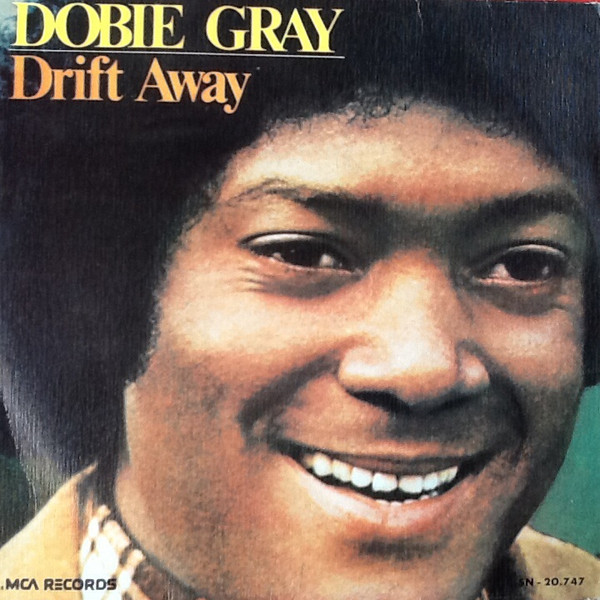
“Drift Away”-Dobie Gray
Soul singer Dobie Gray’s 1973 worldwide smash has become an evergreen. But it has a similar story to “Always On My Mind” in that it has two 1972 antecedents.
The clip moves backward from Gray’s cover to John Henry Kurtz’ November 1972 version to Mike Berry’s original from just two months previous.
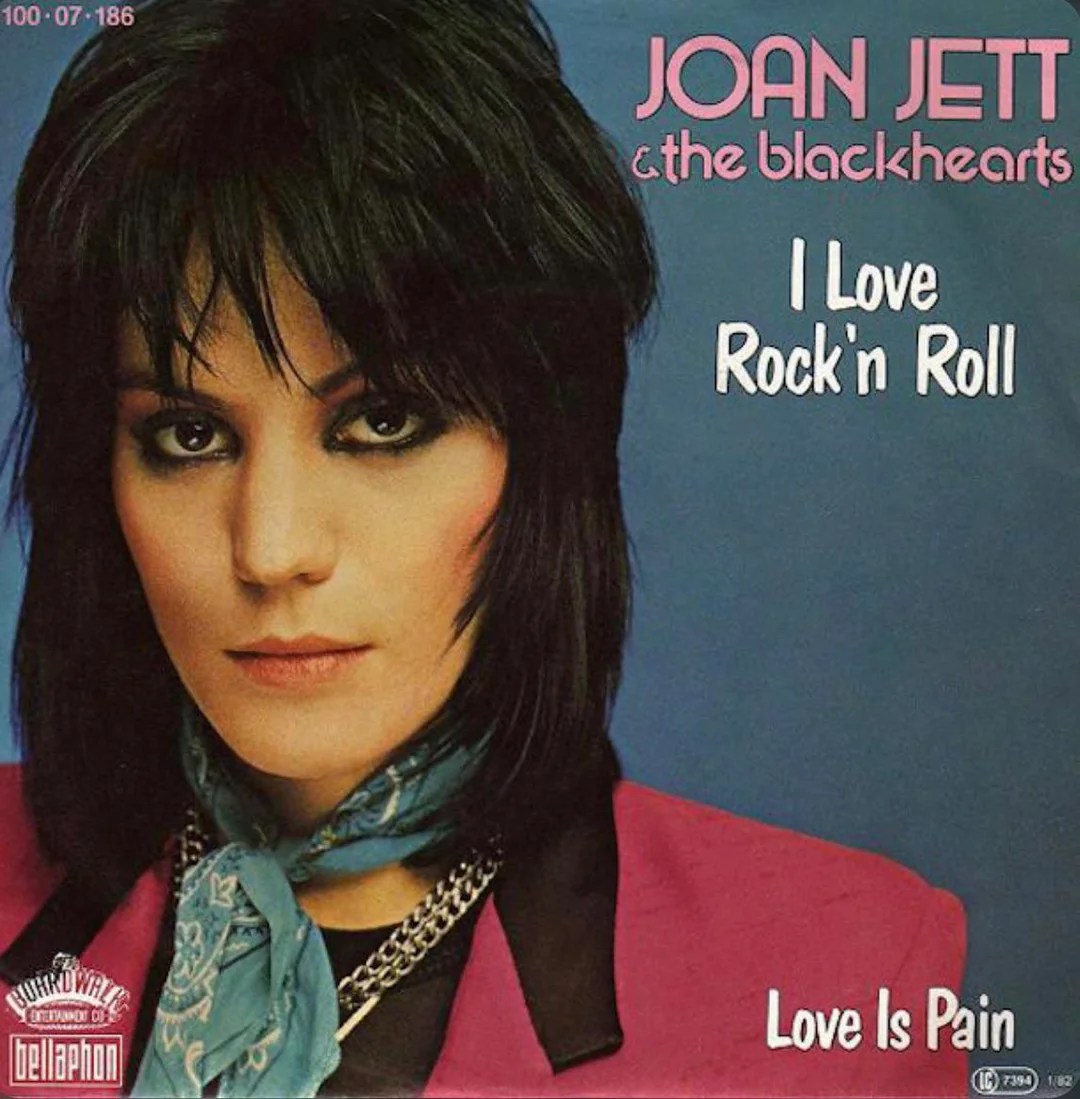
“I Love Rock ‘n Roll”-Joan Jett
Sad really that the authors of such universally-loved perennials remain obscure and unknown.
But that’s what we’re here to remedy in our little way.
The kick-ass anthem you probably thought was penned by Joan Jett herself was first written and recorded by British rock band the Arrows in 1975, 6 years prior to the Blackhearts version.
Jett saw them perform the song–inspired by the Rolling Stones’ “It’s Only Rock ‘n Roll (But I Like It)”–on British TV in ’76 and the rest is rock history.
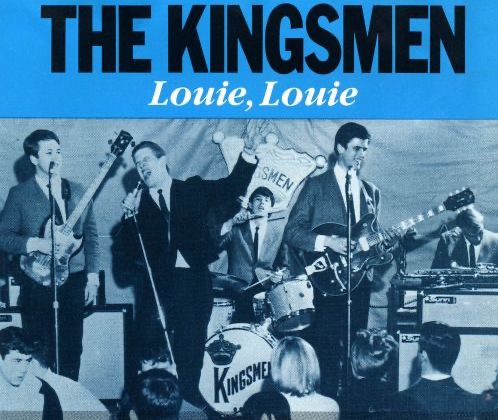
“Louie, Louie”-The Kingsmen
We have Richard Berry, not the Kingsmen, to thank (or blame) for this musically primitive 3-chord lovesick sailor’s lament.
Berry, the song’s writer (again, thanks Richard. Where would Western Civilization be without you?) released his version in 1957, 6 years before the Kingsmen’s one-hit wonder cover version.
That’s all I have to say about that.
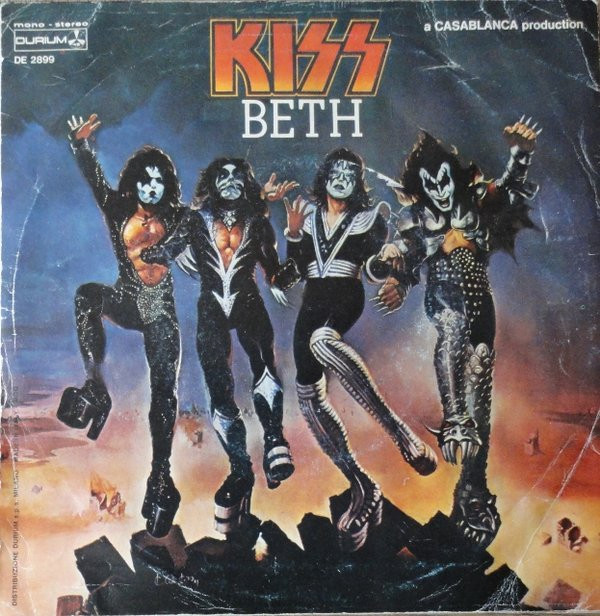
“Beth”-Kiss
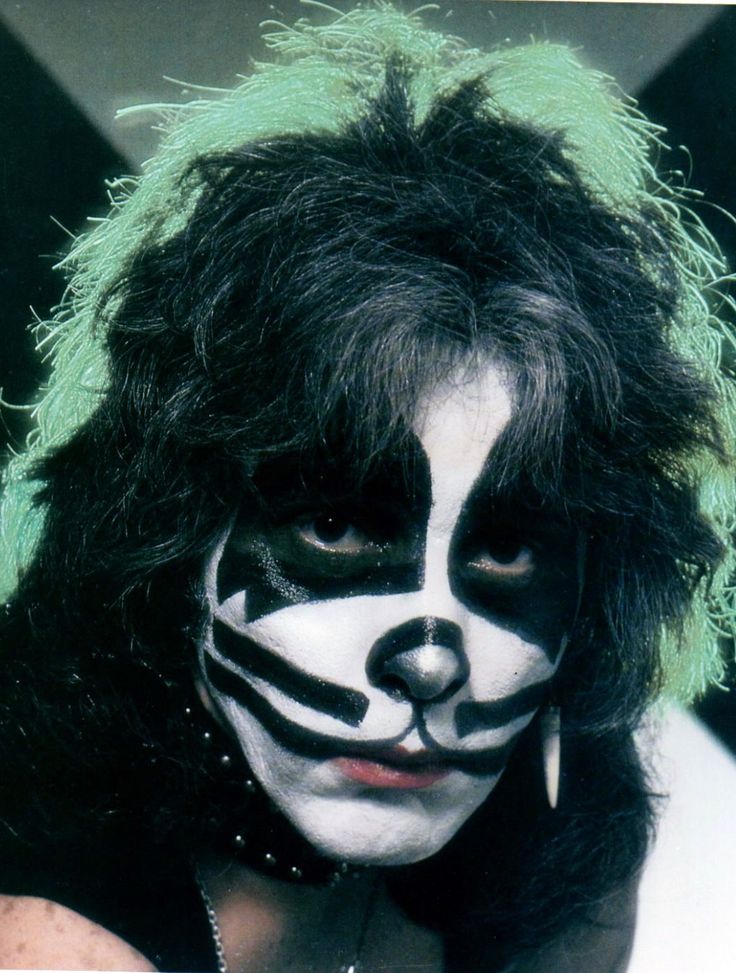
During a limousine ride in 1975, drummer Peter Criss, whose songwriting contributions to Kiss had been, to put it gently, minimal over the band’s first three records, sang a version of a demo his previous band Chelsea had recorded to bandmates Gene Simmons and Paul Stanley, the band’s primary songwriters.
One might expect such a scene scene to go down very much like this:
But to their credit, Simmons and Stanley were receptive and encouraged Criss to sing it to their producer Bob Ezrin.
Ezrin, in typical genius Ezrin fashion, saw the song’s potential, assuring Criss the sentimental ballad would make a successful offset to the band’s usual sex-obsessed fare.
Ezrin re-worked the music and lyrics. Simmons suggested the name change from “Beck” (short for Becky, the wife of Criss’ Chelsea bandmate) to “Beth”. Oddly, the Becky who inspired the original song had a twin sister named Beth.
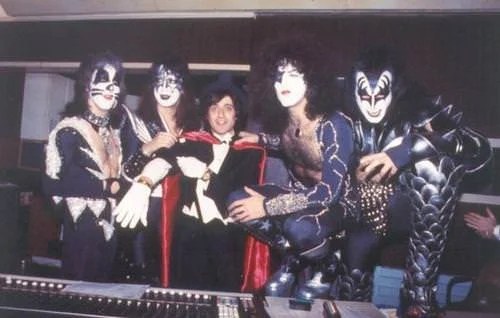
Ezrin enlisted the New York Philharmonic and had all 25 members wear fake tuxedos. Peter Criss was in full Kiss makeup and Ezrin wore a top hat and played grand piano.
Truly that there is no video documentation of this session is a loss to us all.
The 1976 Destroyer album was already sliding down the charts, when “Beth” was released as its fourth single, none of the first three having duplicated the success of “Rock and Roll All Nite” from the previous year’s Dressed to Kill LP.
Casablanca president Neil Bogart allegedly hated the song because Beth was his ex-wife’s name and he felt it reflected the circumstances of their divorce.
In any case, he tried to bury it as the B-side of the 3rd single from Destroyer, “Detroit Rock City”.
But DJ’s chose to play the B-side and listener requests influenced radio stations to add it to playlists. Thus the decision was made to re-release “Beth” as an A-side and the drummer’s song suggestion became the band’s biggest commercial hit in the United States.
Somewhere in between Steely Dan‘s debut, Can’t Buy a Thrill, and the 1973 follow-up, Countdown to Ecstasy, the band recorded a jingle for the Milwaukee, Wisconsin-based brewing company Schlitz Beer.
The untitled song was recorded during an eight-month break between the band’s first and second albums. “It was soon after ‘Reelin’ in the Years’ that someone called and asked if the guys would write a song for the Schlitz commercial,” shared Gary Katz, the band’s longtime producer. “And as I remember it, Donald [Fagen] said, ‘OK, but we’re gonna write it.’ By which he meant, they didn’t want to do a commercial somebody else wrote.”
Co-founding guitarist Jeff “Skunk” Baxter, added “The band was still pretty young in its career, so everybody was reaching out for whatever opportunities there were.”
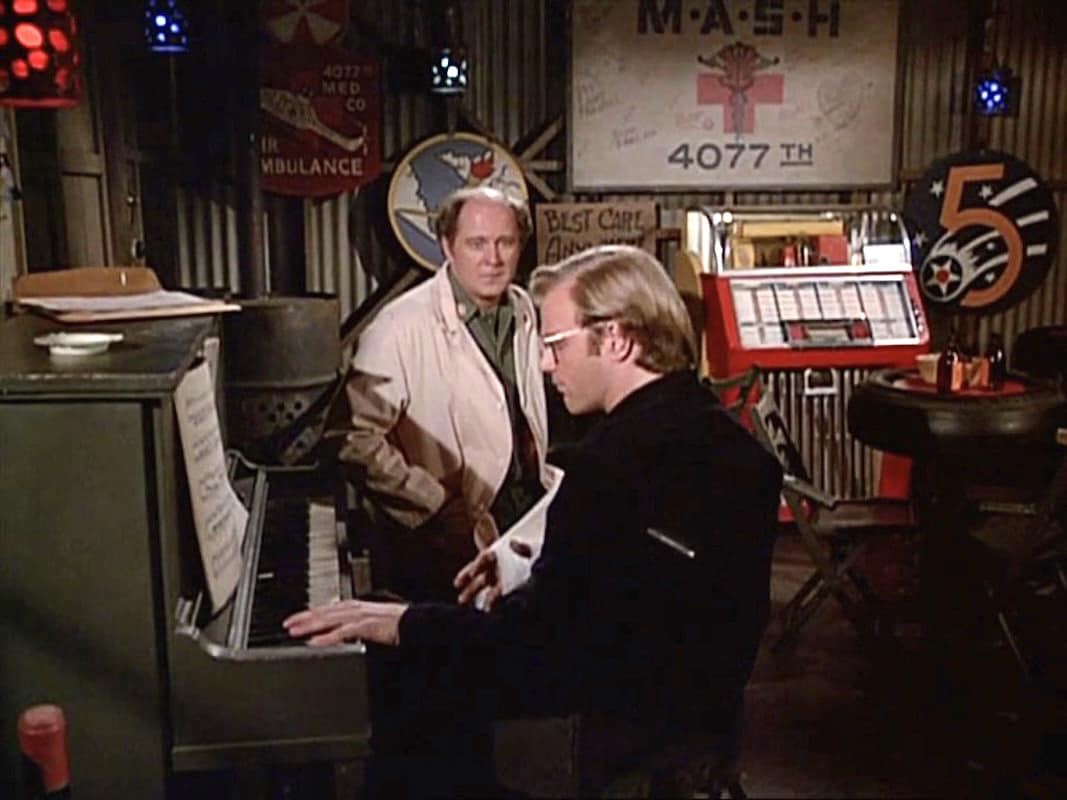
Major Charles Winchester: Don’t you see? Your hand may be stilled; but your gift cannot be silenced if you refuse to let it be.
Private David Sheridan: Gift? You keep talking about this damn gift. I had a gift, and I exchanged it for some mortar fragments, remember?
Major Charles Winchester: Wrong! Because the gift does not lie in your hands.
[David huffs in frustration]
Major Charles Winchester: I have hands, David. Hands that can make a scalpel sing! More than anything in my life… I wanted to play. But I do not have the gift! I can play the notes; but I cannot make the music. You’ve performed Liszt, Rachmaninoff, Chopin! Even if you never do so again, you’ve already known a joy that I will never know as long as I live! Because the true gift is in your head, and in your heart, and in your soul. Now you can shut it off forever, or you can find new ways to share your gift with the world – through the baton, the classroom, the pen. As to these works, they’re for you! Because you and the piano will always be as one.
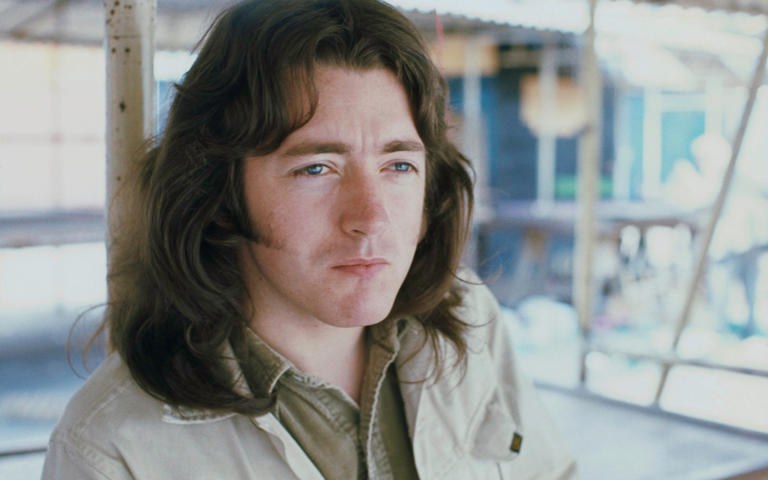
Long before Noel and Liam Gallagher of Oasis sent the nation into a Britpop frenzy, there was only one rock and roll Gallagher that mattered. His name was Rory, and nearly 30 years after his untimely death, there’s plenty who would consider the Irish guitar slinger the only Gallagher worthy of being acclaimed a genuine musical genius.
On October 17, Bonhams auction house in London will host a sale of Rory Gallagher’s guitar collection, along with amps and accessories from his career. Amongst the items is Rory’s original 1961 Fender Stratocaster, bought second hand from Crowley’s Music Store in Cork in 1963. Gallagher was just 15 but already a professional working musician, playing covers on the Irish showband circuit. He paid £100 on credit for the guitar, persuading his parents that it would ultimately save money because he could play rhythm and lead at the same time, so wouldn’t need a second guitarist in his band. Today, it’s value is estimated at up to a million pounds.
It is a beautiful, battered looking instrument that Gallagher played all his life, as he rose to become Ireland’s first rock star. It is the instrument he would have been playing when his original power trio Taste supported Cream for their final concert at the Royal Albert Hall in 1968. Eric Clapton later credited Rory for “getting me back into the blues.” Before he formed Queen, Brian May was a huge Gallagher fan, attending many shows at the Marquee in London. “He could make his guitar do anything,” according to May. “It seemed to be magic. I remember looking at his battered Stratocaster thinking ‘how does that come out of there?’”
For a short period, in the late sixties and early seventies, the recording industry lost control of the music for the first time in history. They literally had NO IDEA what would or wouldn’t sell, and they were dealing with musicians who hadn’t come up through the club circuit, so they didn’t follow the script of previous generations of musicians.
Also, a lot of them wrote their own songs! The Beatles opened the doors to bands and performers having the ability (if they were savvy enough) to control their money, though most got outfoxed on that score.
But for a brief period, performers had a level of power and control that had never existed before. The recording industry was literally throwing money at EVERYBODY and letting them do whatever they wanted, because they had no idea what would or wouldn’t succeed.
So you had an explosion of unfettered creativity. Helped that there was probably the greatest collection of talent that had ever existed in popular music just doing whatever the hell they wanted.
But the first generation got rich, got lazy, got egotistical, and gradually started either running out of ideas or actually dying.
Meanwhile, the industry was starting to figure things out. And you started to see, in the late 70s and early 80s, the evolution of bands specifically designed to fit into the industry’s boxes. The whole concept of “commercial” rock became first a possibility, then a standard. New bands were willing to play the game according to the industry’s rules, and the older acts started opting for commercial success over music as an art form.
And let’s face it…after a decade, the fans started growing up and getting more boring. As Greg Allman of the Allman brothers put it, the same people who had dropped acid in the 60s and wanted an hour of Whipping Post all started doing cocaine in the 80s and wanted all the songs under five minutes!
And once the industry sussed it out, every attempt to bring rock back to its radical roots was quickly quashed and made “acceptable.” So punk quickly went from Television to Blondie. “Alternative” quickly found IT’S way “commercially viable” and so on.
So it goes. At least SOME of us got to live through it and watch it die. Those were good times.
 Every Moment Has A Song