"There's a time in life for Hoagy Carmichael. There's a time in life for Claude Debussy. There's a time in life for Jerry Lee Lewis. There's a time in life for Destiny's Child. All these things have their moment." ~Elvis Costello
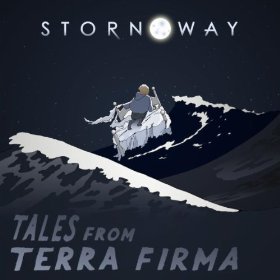
Impressed by this Oxford, England band’s latest, I wanted to select a representative song to post in another category of this blog. Trouble was, I couldn’t choose between the beautifully haunting song, the smartly philosophical song, or the cheerfully whimsical song. So here we are, under the heading of Recommended Albums.
“Farewell Appalachia” is the haunting melody, and one that shows the band’s penchant for using atypical instrumentation (and even non-instruments). In the past, the sound of a saw or that of carrots being chopped have served as percussion. In this case, and fittingly so, it’s the sound of crunching leaves accompanying the scene-setting first stanza’s lyric “From the cape/To the hook/With a carpet of leaves underfoot”.
The insinuative melody evokes the work of a band like Winterpills or even the Decemberists, whose songs similarly reward repeated listening–even require repeated listening, but then sink deeper into your soul than the ephemeral pop of lesser bands.
A second point of comparison with the Decemberists is a lyric that is both of the caliber and style of Colin Meloy:
And in the house where I last held you our bed was cast adrift all night and you were taking me to higher ground out of my skin above the clouds
“The Bigger Picture” rambles along to an organ/mandolin vibe as vocalist Brian Briggs puts context to mundane concerns by casting them against the larger universe. Briggs’s distinctive dialect isn’t immediately identifiable as English; rather it possesses only a vaguely European quality that lends intrigue to the band’s sound. It’s one more point of similarity to the Decemberists’ Meloy who, despite calling Portland home and being American, possesses a dialect seemingly all his own.
“The Great Procrastinator” takes a cheeky lyric tone with lines like “I’ve been busy as a beaver/And I’ll be damned if I don’t ease the flow” to an arrangement that conjures a ragtime feel, of all things.
Tales of Terra Firma is smartly engaging throughout, and Stornoway are exactly what I’d expect from a band that formed at Oxford University. Not a cup of tea for everyone, mind you. But an aromatic and gently intoxicating blend for people of a certain taste.
Riverside emerged as the best of a crop of metal-influenced Polish progressive rock bands who formed in the 2000’s. Their debut, 2004’s Out of Myself, was remarkable for its seamless blending of the metal and prog genres. It was a brooding concept album on which quiet, contemplative acoustic tracks intermingled with heavier guitar songs over a well-paced, melodic, and never-dull 53 minutes.
Subsequent releases have possessed the same magic to lesser degrees, or have leaned toward one or the other of the band’s main dynamic moods, but each seemed to trade chiefly on guitar and keyboard atmospherics ahead of songcraft.
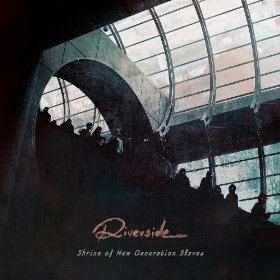
With Shrine of New Generation Slaves however, the focus seems to have shifted. Lead singer and chief songwriter Mariusz Duda’s propensity for acronym literally spells that out. Where their last release, Anno Domini High Definition, was an exploration of modern life’s constant swirl of motion and activity–and had a title with the acronym ADHD, the acronym code this time, SONGS, bears out the stronger emphasis on tighter, more focused writing.
And if this is indeed the breakout album for Riverside in America that many are saying it could be (they’ve already established significant followings in countries like Holland and Germany and are unquestioned kings of Poland’s prog scene) it will be the songs that kick down the door. From the multi-textured beauty of “The Depth of Self-Delusion” to the retro stoner rock sound of “Celebrity Touch” to the emotional resonance of “We Got Used to Us”, the band have assembled their finest collection of songs at least since their debut.
Nothing feels forced, it all feels organic: a well-placed riff here, a spare breakdown there…all adding up to a masterful album by a band who’s clearly come of age. And all in the capable hands of singer Duda, one of contemporary prog’s most lauded vocalists.
Spend some time with this one and it’ll reward your effort.
“All that glitters is gold/Only shootin’ stars break the mold” is a true jumblefuck of mixed metaphors that never sat well with me. That said, if you think “Disney soundtrack lightweights” when you think of Smash Mouth, you probably missed part of the picture.
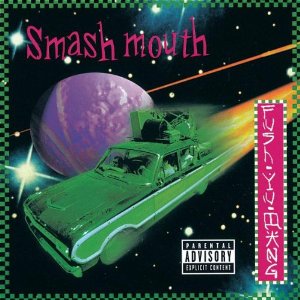
Prior even to “Walkin’ On the Sun” beginning it’s stupefying 60-week chart stranglehold in July of ’97, I took a flyer on their debut album based on a review in Goldmine magazine.
Come to think of it, that’s also where I read about Barenaked Ladies’ debut Gordon album, and liked them way before it was…uh…
Anyway, “Walkin’ On the Sun ” was the only song from Fush Yu Mang to grace the American pop charts, although a cover of War’s “Why Can’t We Be Friends” did make a dent in the Alternative top 40. Within a year, the follow-up LP was out and there were no further efforts to cull singles from the debut. Not that there were any more hits, but there were, in my opinion, some very entertaining songs that deserved wider exposure.
I think.
The one necessary caveat is that the “Walkin’ On the Sun” isn’t representative of the album. Smash Mouth was a ska-punk band at this stage; the evolution to their signature catchy, farfisa-drenched retro pop sound was basically complete by the second album. But what we have with Fush Yu‘s album tracks is trashy hyperactive ska with sly, rapid-fire lyrics that are worth a replay if you don’t catch them on first listen.
“Pet Names” tells of a love affair gone stale through the lens of those cutesy love “handles”. “Padrino” takes a cheeky poke at the mob. “Disconnect the Dots” has riffs galore, and makes me wonder if someone put a bunch of pills in Herb Alpert’s espresso and invited him to play along.
It may be too late to revise your opinion of the band; or maybe you like the sound of “I’m a Believer” Smash Mouth better. That’s certainly valid. But I think it’s worth knowing that before they made that right turn onto Main Street, they careened breathlessly through some relatively interesting neighborhoods–places where Shrek definitely wouldn’t hang out.
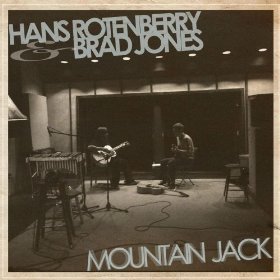
Hans Rotenberry & Brad Jones: Mountain Jack (2010)
The original compact disc, as developed by engineers from Philips and Sony in a rare collaborative effort, was 74 minutes, 42 seconds in length. Why? Because Norio Ohga, the head of Sony and a former opera singer, insisted his company not produce a new format that could not play Beethoven’s Ninth Symphony in its entirety.
But musically speaking it’s a long way down from Beethoven to the bottom-feeders. And the fact that we now have 70+ minutes’ capacity on an album, as opposed to the 45 or so the vinyl LP afforded, is too often taken as an invitation for modern artists to shovel additional music onto an album–music that wouldn’t have made the cut in the vinyl era.
That’s why it’s refreshing when an album like Mountain Jack comes along. Clocking in at under 33 well-paced, enjoyable and ballad-free minutes, it sounds like an edit I’d make myself from a longer album.
Hans Rotenberry is lead singer, guitarist and songwriter of Nashville power pop band the Shazam and Brad Jones is that band’s long-time producer. Outside of Tennessee the Shazam’s profile is pretty low; for these guys to release an album outside the band umbrella places it into even more obscure territory.
But this one’s well worth tracking down.
Mountain Jack is just a good old-fashioned guitar rock album, leaning toward the power pop sound in some places (“Back to Bristol” and the sunny, anthemic album closer “It Would Not Be Uncool”) and hewing closer to a rootsy Americana vibe in others (the Steve Earle-channeling “Ain’t Gonna Hurt Anyone” and the Wilburyesque shuffle “Next to You”). And “Greef” is the best new Rolling Stones song I’ve heard in years.
Rotenberry always knew how to deliver power pop with a little more backbone than most. His winning formula consists of plenty of bottom, some vocal grit and an extra helping of guitar riffage. And personally, I’m always trying to get more riffage in my diet.
Joey Eppard is quite simply a beast. As lead guitarist, lead vocalist and main songwriter of the band with the Google search-challenged moniker of 3, he’s the kind of talent TV shows like American Idol and The Voice are geared not to discover–which is probably a post for another day, but I’ll touch on it here anyway.
In 1964 the Beatles essentially began re-formatting youth culture. It’s always kind of cute when a latter-day band is compared with them in any serious way (or when a band–Oasis, for example–has the stones to make the comparison themselves) because the fact is no band since the Beatles has come close to making the kind of impact they had on music and culture. We can talk about everything from haircuts to sitars here, but pertinent to the matter at hand is the fact that they helped make the rock foursome–lead, rhythm and bass guitars and a drummer–de rigueur.
There have been many exceptions, of course. To achieve a different purpose, a different–and usually larger–configuration is required. Jam bands who feature multiple soloists, for example; or ELO.
But for most of the past 50 years when most kids dreamed of making it in music, their dream usually included a few pals, three guitars and a drum kit.
And one more thing: original songs. The Beatles, in defining the new Pop Standard, included writing new pop standards. Elvis hadn’t needed to write his own songs to become an icon of the young in the 50’s. Country singers still don’t. But in the pop and rock music arenas in the last half-century there has been a premium on good original songwriting, and the artists performing their own compositions just have more credibility, in part because that’s the way the Beatles did it.
Slowly, though, that imprint seems to finally be giving ground to a new and, I would insist, a lesser, standard. In the era of the modern singing competition TV show genre, momentum is swinging toward a new de facto format: the solo artist with microphone. American Idol and its competitors are now funneling prefabricated “stars” into the recording studios and up the charts every year, most of whom share these common traits: no ability to play an instrument or to write songs.
Perhaps if there were a successful show with a focus on young rock bands, it would help bring us back around to an appreciation of that combination of instrumental virtuosity and writing talent that none of these shows is showcasing, and the playing field would tilt again toward talents other than voice.
In the absence of such a change, many talents like Joey Eppard are destined to exist in popular music’s margins, remaining undiscovered by the public at large, perhaps selling enough music to carry on year to year, and perhaps not.
The music of 3 straddles metal, prog and even emo. But essentially their forte is propulsive melodic rock which blends acoustic and electric textures to exhilarating effect, with lyrics which may have you scratching your head if you try to understand every line. But when it comes to any kind of metal, I always prefer head-scratching to mind-numbing. Eppard’s songs do have a degree of lyrical sophistication–this is no Mötley Crüe record.
These arrangements are polished, well-constructed, and filled with sonic detail. Eppard and Co. know how to build up to great moments within a song, such as the guitar solo, intercut with vocals, which reaches a climax at 2:27 in “The Better Half of Me”.
They also take the trouble to show originality even in the way they end a song. There are bands who rely heavily on formula here, ending most of their songs in the same way simply because it’s not a priority to “write” an ending. Then there’s the work of a great band like Fleetwood Mac, who often wrote a coda, unlike any other part of the song, as a conclusion. (Think of the “falling, falling, falling” ending to “Say You Love Me” or the “ooh, don’t you look back” that fades out on “Don’t Stop”) That, I suspect, is attributable to Christine McVie and Lindsay Buckingham’s dedication to pop craftsmanship. “Rabid Animals” and “Automobile” are, similarly, songs that have original, written endings and not just a lazy fadeout. These songs, and this band, seem to have a pure strain of 70’s-80’s classic rock running in their veins.
Revisions’ title is a reference to the fact that it is a collection of previously-recorded songs that the band saw fit to give new life to, since they’d refined their sound quite a bit over a 5-album span. Although it wasn’t universally well-received by the band’s established fans (who were eager for new material at the time) it is the ideal introduction to the band for the uninitiated.
If this is a “metal” band, as they’re usually categorized, they’re the best kind–much less concerned with showing off their shredding skills than filling their songs with great hooks.
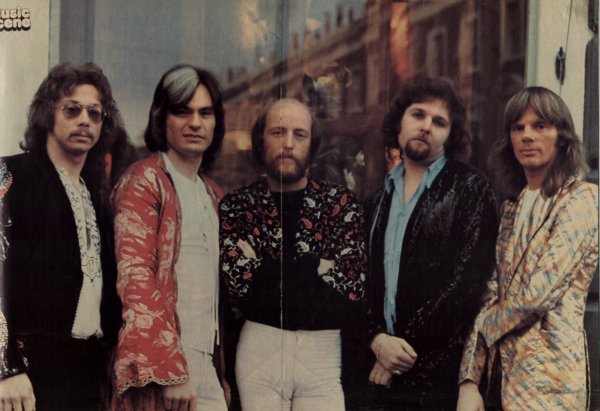
I’ll turn this one over to an Amazon.com customer review who identifies himself as Lucius, with whose appraisal of Strawbs, one of my favorite three artists of all time, I heartily concur:
“…Strawbs are the best unknown “English Progressive” band of the seventies (aka, the Strawberry Hill Boys in the 1960’s). Of course, Strawbs never stood a chance, even in the wake of “progressive” bands such as Emerson, Lake and Palmer, Jethro Tull, and Yes (each of whom The New York Times despised back in the early ’70’s).
Because rock critcs took as a given self-evident gospel truth that the wellspring of Rock and Roll was the Blues, choirboy music never stood a chance in America. And so Dave Cousins, folkie choirboy lover of orchestral rock and instrumental virtuosity, was just rendered irrelevant for one reason or another – too “intense”, too “conceptual”, too British? Too good, I’d say.
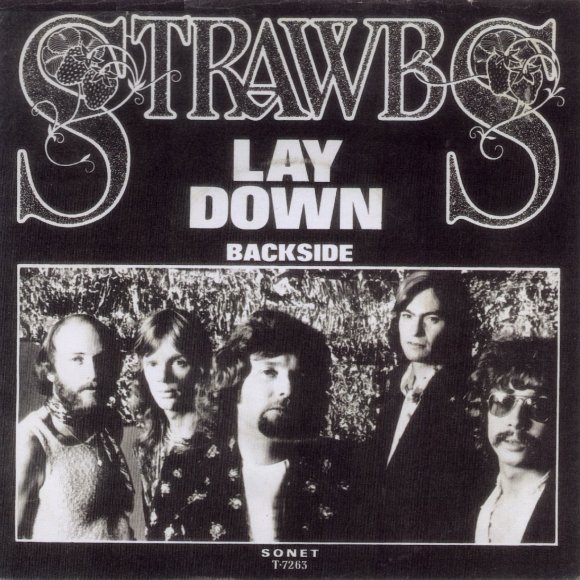
The only song of the Strawbs I remember on the radio was “Lay Down”, which hooked me; it was the best song being aired at the time (though I suspect I heard “Part of the Union” at some point prior to that). But with Disco and the Eagles and the New Wave/Punk thing just around the corner, where were the Strawbs going to find a place? Alas.
And just as Ian Anderson has been making incredible music for 30 plus years without a word of mainstream “critical” praise, just so Dave Cousins is anonymous here in the USofA. Go figure.”
By Lucius
_________________________
Any analysis of this band I attempt is bound to end in unabashed fanspeak; so it is with the things I love too much…
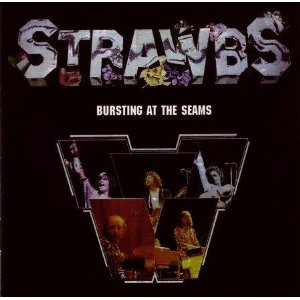
Bursting At The Seams is the ideal place to start in getting your ears around the Strawbs catalog. The fourth of their seven-LP output while on the A&M label, it marks a transitional period between the more pastoral/acoustic earlier work and the “proggier”, more electric later output.
But despite being plagued with the lineup changes that caused the stylistic musical shifts, Strawbs weren’t in the business of mediocrity and Bursting At The Seams is no mere “transitional album” in their catalog. Rather it is a high-water mark, along with Grave New World which preceded it and Hero And Heroine which followed–their period of greatest musical fertility and lyrical depth. New members Lambert, Hudson and Ford brought along material strong enough to stand beside–and even complement–the work of one of the most gifted writers in all of rock, David Cousins, himself at the peak of his powers. No one in all of British folk/rock or prog rock or whatever genre you place this genre-defying band had a greater gift for placing the introspective alongside the anthemic, the mystical in the company of the visceral. For a few years during this period, Strawbs (not THE Strawbs, as they are frequently misnamed) made music of a quality rarely seen before or since–a music that didn’t sacrifice beauty for power, or power for beauty.
Many, many times in the years when I was discovering this music I imagined I felt the same thing Dave Cousins experienced when he wrote the song “Stormy Down” (which appears on this album). He was “high on Stormy Down thinking of my friends below…but they had gone some other way, they did not want to know…” It would have been utterly futile explaining to my 14-year-old peers the unique beauty I found in this music. Even friends who were into progressive rock seldom scaled ecstatic heights such as these. For me it was–and is–to quote Cousins again, “a glimpse of heaven”. My friends at the time, for whom musical quality was measured quantitatively (by the number of decibels) had “gone some other way”.
But speaking for those of us who DID “want to know”, I’m thankful someone was true enough to himself to write music about the interior life, for those of us just uncool enough in our youth to care about such things. Thank goodness for songwriters like Mr. Cousins whose songs were built of such solid stuff that to this day and even in all-acoustic settings (as most Strawbs concerts now are) they bring more force and meaning to bear than so many artists of wider acclaim. And thank heavens for songwriters, Cousins being a prime example, who show us rock can be so much greater and more than butt-shaking, ear-shattering party soundtrack music.