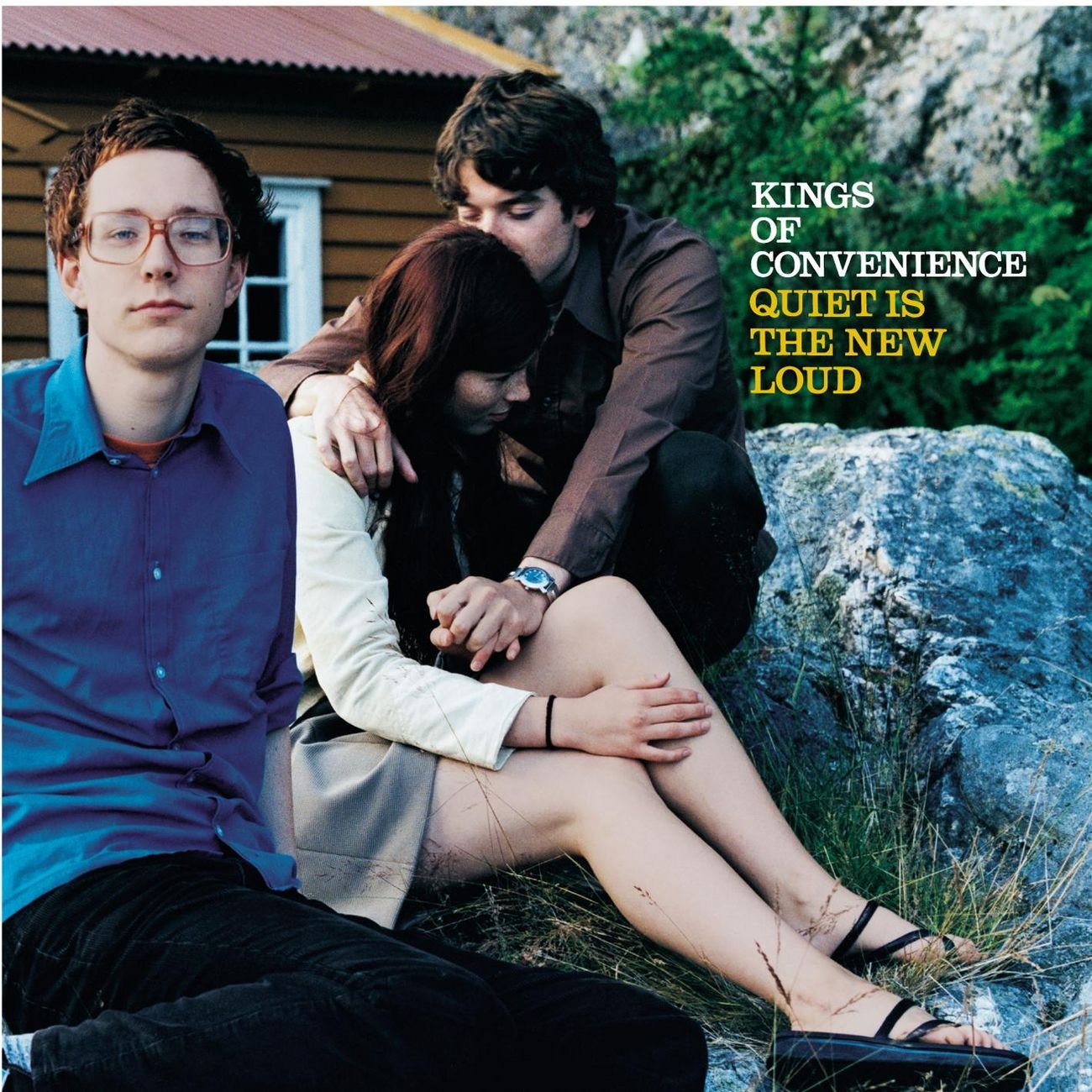
Kings of Convenience: “I Don’t Know What I Can Save You From” (2001)
From Kevin Maidment’s Amazon.com album review:
Although Kings of Convenience are keen to play down any blatantly self-evident similarities to Nick Drake, Simon and Garfunkel, and Belle and Sebastian, the winsome and placidity-favoring Norwegian duo of Erlend Oye and Eirik Glambek Boe have probably already got the subway buskers of tomorrow lining up to lend an ear. Studentlike in appearance (one of them has a duffel coat and John Major specs) and unashamed to softly impart such nonrock lyrics as “put the kettle on” and “using The Guardian as a shield to cover my thighs against the rain,” the weightless and airy acoustic guitar muse of Quiet Is the New Loud isn’t a million miles from Radiohead’s “Nice Dream” or Pink Floyd’s “If” with a subliminal swish of bossa-nova rhythm. A contentedly purring cello, a plaintive touch of piano, and the muffled sound of a trumpet add necessary sonic depth, and the results are as pleasant and civilized as a little light conversation over tea in the drawing room. But what a shame they chose to name themselves after a lavatory.
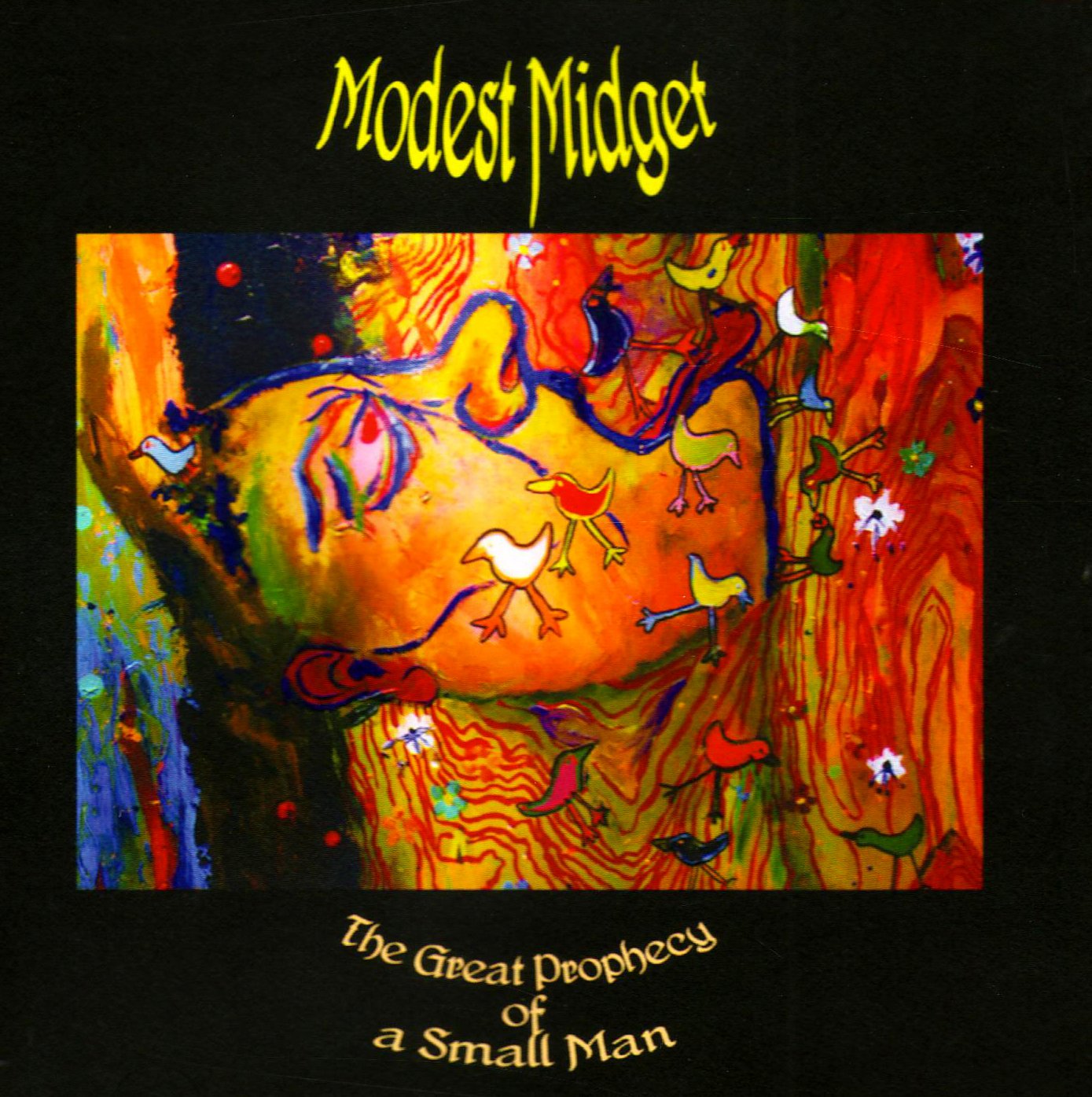
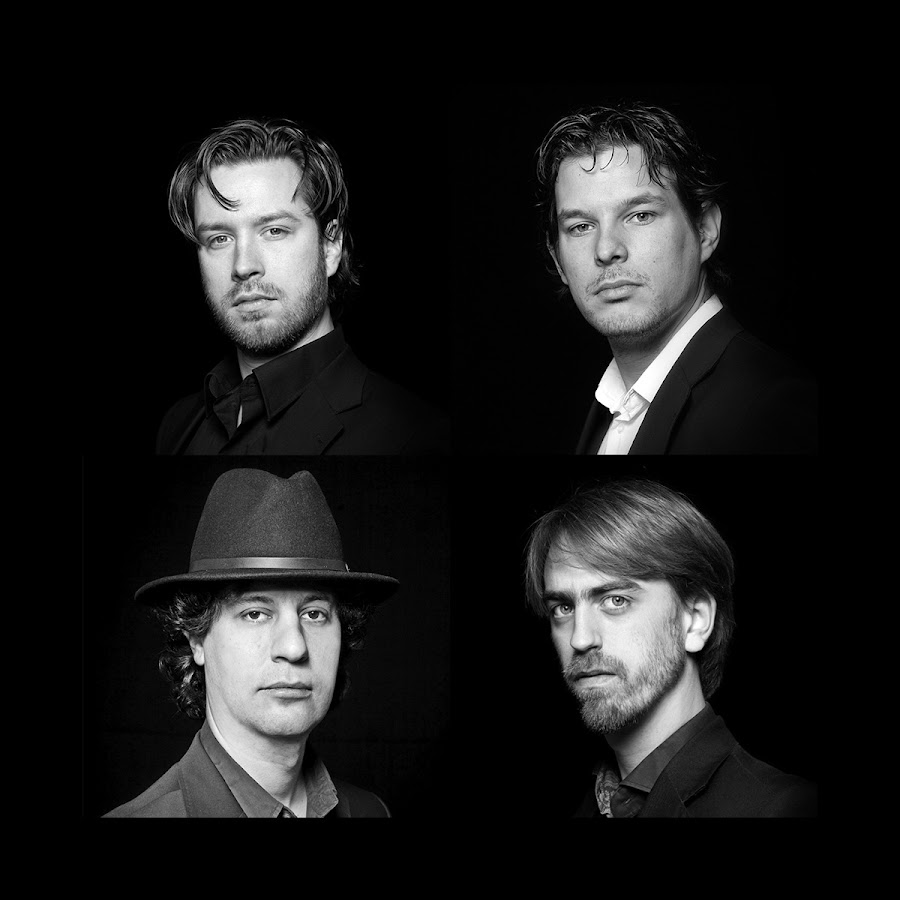
From the Dutch progressive/pop fusion band Modest Midget’s 2010 debut, The Great Prophecy of a Small Man.
“Troubles in Heaven” is mostly built around a single infectious motif, but with enough key modulations to keep it fresh and enough stylistic pivots to make you wish you could have a look at songwriter/vocalist Lionel Ziblet’s record collection.
The instrumental break is a swerving musical rollercoaster ride: Zappa-esque for a moment…timpani fills…then country fiddle. Then synth. Then a bit of straight-ahead rock and roll guitar. Then a second, middle eastern-sounding breakdown–klezmer music? (Ziblet grew up in Israel).
I guarantee you’ve heard nothing like it.
Decide for yourself if it’s Gentle Giant or XTC or something else this band brings to mind over the course of a frolicsome 3-minute ride.
Modest Midget is a little eccentric, a little schizophrenic, and a lot of fun.
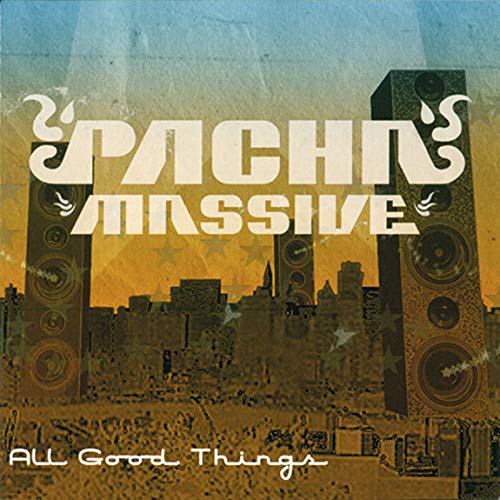
The Bronx duo of Dominican-born Nova (on keys and guitar) and Columbian-born Maya (on vocals and bass) stir up a melting pot of musical flavors on their 2006 debut.
Their music is equally at home on a dancefloor, in a laid-back lounge, wafting across your living room or pulsing from your car.
No milk today, my love has gone away The bottle stands forlorn, a symbol of the dawn No milk today, it seems a common sight But people passing by, don’t know the reason why
How could they know just what this message means? The end of my hopes, the end of all my dreams How could they know a palace there had been Behind the door where my love reigned as queen?
No milk today, it wasn’t always so The company was gay, we’d turn night into day
But all that’s left is a place dark and lonely A terraced house in a mean street back of town Becomes a shrine when I think of you only Just two up two down
No milk today, it wasn’t always so The company was gay, we’d turn night into day As music played the faster did we dance We felt it both at once, the start of our romance
Graham Gouldman wrote hits for the Hollies (“Bus Stop”, “Look Through Any Window”) the Yardbirds (“For Your Love”, “Heart Full of Soul”) Herman’s Hermits (“Listen People”, “No Milk Today”) and the band of which he was a member, 10cc (“I’m Not in Love”, “The Things We Do For Love”, Dreadlock Holiday”).
He says his father, who regularly proposed song titles and helped him with his songwriting, suggested he write a song with the title “No Milk Today”. Graham says his first reaction was negative until his dad explained the milk bottle on the porch–from the days of the milk man, of course–was a metaphor for a relationship that had ended.
Gouldman proceeded to write a poignant lyric and set in in an alternating minor- and major key setting. Then John Paul Jones (yes, that John Paul Jones) created an inspired baroque pop arrangement with strings and bell chimes, and when Peter Noone added his crisp, sympathetically plaintive lead vocals, a minor pop classic was born.
Except producer Mickie Most didn’t hear it. The record company wanted to release it as a single, but Most, who hadn’t even wanted to record the song, resisted.
Only Jones’ lobbying for the song caused Most to relent. Mickie Most is legendary for the ability to hear a single, but somehow missed completely on “No Milk Today”. Noone swears it was John Paul Jones’ enthusiasm for the song that saved it.
However, despite going to number 7 in England, the song was released only as the flipside to “There’s a Kind of Hush” in America. Yet it received enough airplay even as a B-side to make it to #35.
Hard to say if it would have been top ten if promoted as an A-side. With lyric lines like “just two up, two down” (a reference to a modest home with only two rooms upstairs and two downstairs) it has a peculiarly British feel.
But then, songs like “Mrs. Brown, You’ve Got a Lovely Daughter” and “I’m Henry the VIII, I Am”, which sound as British as can be, were huge hits in America, while they weren’t even released as singles in England.
The analysis video below, by the excellent Phil from Wings of Pegasus, helps one fully appreciate both song and performance.
The second video, featuring Graham Gouldman’s own performance, explains the song’s genesis.
I look forward to Walter Martin’s vacations almost as much as he does. The man always returns with sweetly skewed descriptions of his adventures.
He’s pop music’s David Sedaris.
Some of his records are children’s records. But all of his records have a childlike nature. This guy stands on his tip-toes to see things in a way most of us have forgotten to look.
Like contemporaries Kansas, who leaned more toward progressive rock, Styx had a pretty clearly-defined two-album artistic career peak. Both bands released their two finest albums between 1976 and ’78.
Pieces of Eight, which followed platinum breakthrough The Grand Illusion, was a more than worthy follow-up. It combined some of the progressive tendencies of their pre-Tommy Shaw early work with tight, commercial singles like “Blue Collar Man” and “Renegade”.
While all three of the album’s singles were penned by Shaw (the third being the joyous “Sing For the Day”) Dennis DeYoung’s “I’m O.K.” certainly could have been a single.
Perhaps the church organ solo disqualified it.
But this song is like DeYoung’s answer to Shaw’s “Fooling Yourself (The Angry Young Man)” from the previous LP–uplifting pop/rock psychology from an era when so-called “classic rock” was trying to hold its own in a landscape altered by disco and punk.



 Every Moment Has A Song