From the upcoming third album–a double CD/triple LP conceptual rock opera, no less–by the punk-ish Jersey indie rockers.
The album and its artwork are inspired by the 1594 Shakespeare play of the same name. The song’s title is slang for turning the knob on an amp or instrument up to the max, or ten (unless you’re Spinal Tap). And the lyric is one fuel-injected, rapturous ejaculation of punk-pop glory.
Bobby Bland: “Ain’t No Love in the Heart of the City” (1974)
If ever an artist should have been forcefully prevented from sampling a song of a previous era, that artist would be Jay-Z, whose unholy appropriation of Bobby Bland’s soulful ’74 ballad checks most every box on the offensive lyric checklist.
The real crime here, in addition to that of artistically spinning silk thread somehow into a burlap dress, is that young fans of the Kanye Wests and Jay-Z’s of the world are typically uninformed as to the true source of inspiration, and come away with the impression that their favorite rap artist has created, when he has merely synthesized.
It is not true to say that all the best music was created in decades past. But the rap genre seems to be making the most convincing arguments that it was.
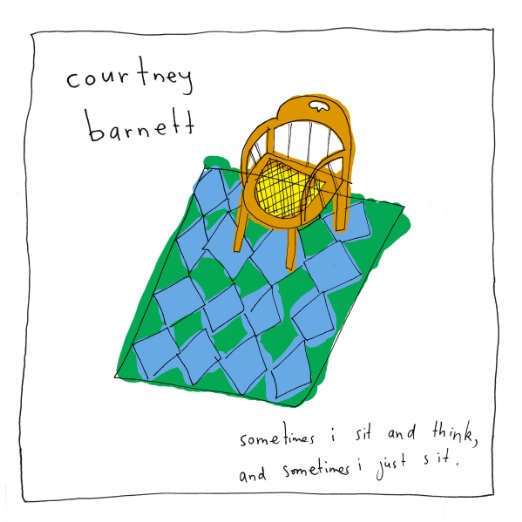
If we have to be subjected to absurd “new Dylan” comparisons every few years or so, it’s refreshing at least to hear them applied to a female for a change. Australian singer-songwriter Courtney Barnett’s dry, witty, rambling lyrics have called a lot of attention to her debut album, Sometimes I Sit and Think, and Sometimes I Just Sit.
But she rocks too, coming as she does from a grunge/garage band.
“Dead Fox” illustrates the toll exacted on animal and even human life by dangerous highway freight trucking in the name of big business and lower supermarket prices (I know, another song about that).
But Barnett’s sardonic stream of consciousness lyric style makes what should be a pedantic diatribe instead sound like a droll (if pointed) anecdotal musing.
It’s pretty catchy too.
The video, animated and directed by Rory Kerr and Paul Ruttledge, drives home the song’s point in rather grisly fashion.
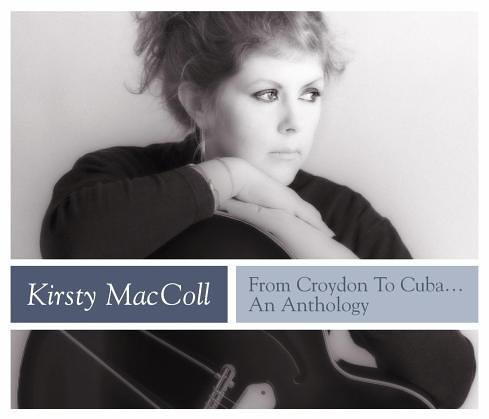
Such was Kirsty MacColl’s gift that even when she tried her hand at traditional folk balladry–a form in which she had no real background–the results were transcendent.
This gem of a B-side, sparsely arranged and featuring the haunting penny whistle of The Pogues’ Spider Stacey, puts MacColl’s voice to the forefront to achingly beautiful effect, perhaps made sadder still in light of her own premature and tragic demise.
Thanks to a recently posted bit of archival video we’re thrilled to present a second piece of the early musical history of a dear friend, Mr. Zach Sestili aka Zach Pendulum.
All I know or recall about “Christy” (I hope Zach will correct me if I’m in error) is:
1. It was written at around age 16 for a high school crush and, despite playing it for her one day in school, Zach failed to win the girl.
2. By the time I saw Zach perform this song a few years later he had altered (and improved) the melody of a portion of the bridge section (“…and it makes me wonder, what do you need but a guy like me”) but though this video captures the song at an earlier stage of development it’s still more than worthy of the share.
3. Originally that bit of lyric was written as:
Christy, you have everything/And it makes me wonder, what do you need with a guy like me
But, ever one to take an optimistic point of view in his songs, Zach changed the single word “with” to “but” to give the lyric a more hopeful slant.
I keenly miss living in the same city as Zach. He was, and is, the kind of artist I’d never miss the opportunity to see perform. But I’m glad to have seen him up close on the occasions I did–it was simply mesmerizing.
As is the case with the song we previously presented here (“When the Lashes and the Stars Fall”) Sestili’s obvious writing, arranging and performing talents shine through despite the limitations of the original audio sources. If “Christy” and its accompanying video pique your interest, check out the “Lashes” post, wherein we gush at length about this guy’s gifts.
James Hunter could be seen as a forerunner to the British retro-soul revival that gave us Amy Winehouse and Corinne Bailey Rae. The obvious inspirations here seem to be Sam Cooke, Jackie Wilson and the like, with perhaps a dash of Van Morrison’s horn charts. And the original songs are convincingly retro–like the kind of material you’d swear was written for a Stax Records session in the 60’s.

 The album and its artwork are inspired by the 1594 Shakespeare play of the same name. The song’s title is slang for turning the knob on an amp or instrument up to the max, or ten (unless you’re Spinal Tap). And the lyric is one fuel-injected, rapturous ejaculation of punk-pop glory.



 Every Moment Has A Song