The songwriting partnership of John Lennon and Paul McCartney deservedly has hallowed status on the basis of the many classics the Beatles themselves recorded.
But as songwriters they remain perhaps under-appraised even so, considering their many other, lesser-known songwriting credits on hit songs they gave to others to perform–songs which might have added to the Beatles’ own lengthy list of hits had they chosen to release them themselves.
Paul was particularly active in promoting other fledgling acts by giving them hit songs, even though his compositions at the time were still credited to the Lennon/McCartney team. One such example is “Goodbye“, which he gave to an 18-year-old Mary Hopkin, and which was a #13 single in America (#2 UK) Here’s Mary’s recording:
…and Paul’s demo version:
Hopkin’s debut album was produced by McCartney and featured the massive worldwide hit “Those Were The Days”.
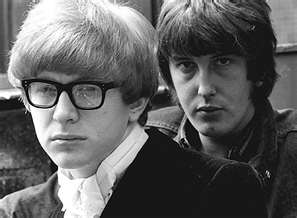
The sixties hit duo Peter and Gordon’s first three hit singles were all penned by Lennon and McCartney, although if you listen to Beatles demo versions you hear Paul singing the lead vocals, a pretty sure sign (judging from the Beatles’ catalogue itself) that he was at least the primary and perhaps sole writer of these songs also:
“A World Without Love“, a number 1 hit in 1964, almost certainly would have topped the charts in Beatle-recorded form as well. It’s a British Invasion classic:
(Peter Asher is the Austin Powers-looking gent at left)
Here’s the Beatles’ demo version:
The other two Peter and Gordon hits written by the Beatles:
“Nobody I Know” (#12 US hit):
…and “I Don’t Want To See You Again” (#16 US):
Another British Invasion act, Billy J. Kramer and The Dakotas, were produced by George Martin and recorded many Lennon/McCartney songs. Bad To Me (below) reached number 1 in England (#9 US) and its sound is pure 1964 Beatles.
The “J” in Billy J. Kramer, by the way, was the suggestion of John Lennon, who thought it gave Billy a tougher image. (Lennon also gave the band The Cyrkle its name. Maybe Beatle-influenced band nomenclature is an article unto itself…)
“I’ll Be On My Way”, “I Call Your Name”, “I’ll Keep You Satisfied”, and “From A Window“, all recorded by the Dakotas, were Lennon/McCartney songs. And their recording of George Harrison’s “Do You Want To Know A Secret” was also a number 2 hit in the UK.
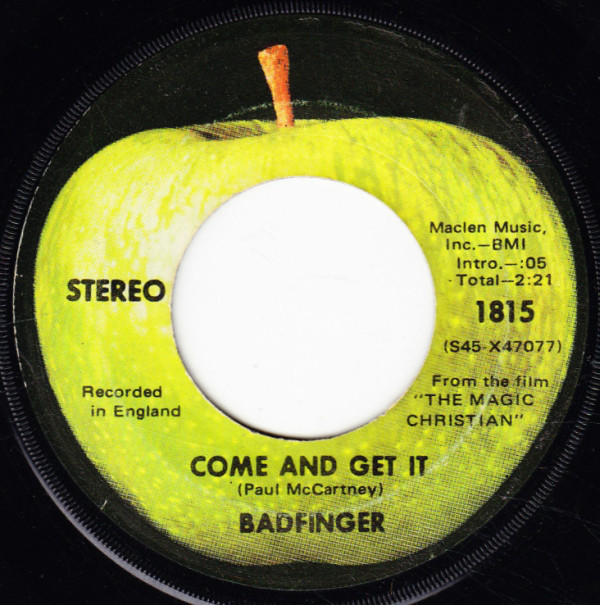
Badfinger, who, like Mary Hopkin were signed to the Beatles’ Apple Records, had their career jump-started in 1969 when Paul McCartney gave away another (#7 US) hit, “Come And Get It“.
Beatle fans who’ve never heard the demo will find that Badfinger pretty much stuck to Paul’s blueprint:
This is by no means a complete list. It’s merely meant to point out that Lennon and McCartney weren’t just hitmakers as Beatles. From the mid-60’s through the early 70’s their songwriting was here, there and everywhere.
When three sweet-voiced, videogenic friends from the country of Georgia uploaded a music video of their performance of a Georgian folk song and it garnered over five million views, Trio Mandili was born.
Tatuli Mgeladze, Tako Tsiklauri, and Mariam Kurasbediani–who bear such likeness to one another you’d swear they were sisters–upload new videos regularly.
Most feature the rustic countryside of their homeland as well as the girls’ three-part polyphony, accompanied by a traditional Georgian stringed instrument called a panduri.
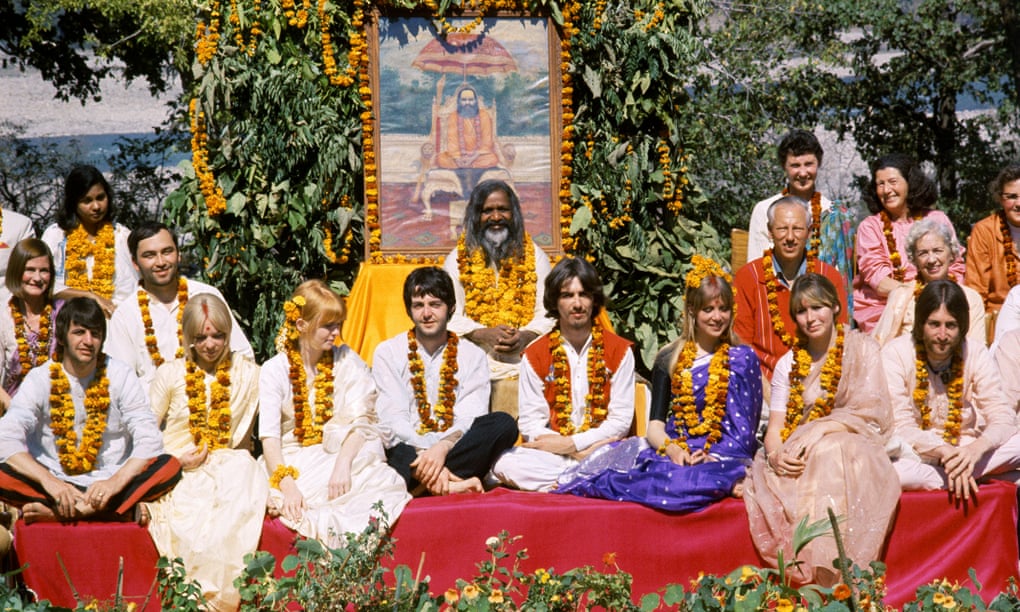
In 1968, Paul Saltzman was a lost soul. The son of a Canadian TV weatherman, he was working as a sound engineer for the National Film Board of Canada in India when he received a “Dear John” letter from the woman he thought was going to be his wife. “I was devastated,” he says. “Then someone on the crew said: ‘Have you tried meditation for the heartbreak?’”
Saltzman went to see the Maharishi Mahesh Yogi – the founder of transcendental meditation – speak at New Delhi University. Emboldened by promises of “inner rejuvenation”, Saltzman then travelled to the International Academy of Meditation in Rishikesh. It was closed, due to the arrival of the Beatles.
As explained by Paul McCartney in the Beatles book Anthology, the exhausted group, still coming to terms with the suicide of their manager Brian Epstein in August 1967, had arrived in Rishikesh with wives and girlfriends to “find the answer” through the teachings of the Maharishi, whom Paul, George and John had first encountered at a lecture at the London Hilton. “There was a feeling of: ‘It’s great to be famous [and] rich,” said McCartney, “but what it’s all for?’”















 Every Moment Has A Song