Great Writers on the Power of Music

(via brainpickings) BY MARIA POPOVA

“Music is the best means we have of digesting time,” Igor 
Stravinsky once remarked (a remark often misattributed to W.H. Auden). “Music is the sound wave of the soul,” the wise and wonderful Morley observed. Psychologists have studied why playing music benefits your brain more than any other activity and how listening to music enraptures the brain. But, more than that, music works over the human spirit and stands as a supreme manifestation of our very humanity — something Carl Sagan knew when he sent the Golden Record into the cosmos as a representation of the most universal truths of our civilization.

Gathered here are uncommonly beautiful reflections on the singular power of music by some of humanity’s greatest writers, collected over years of reading — please enjoy.
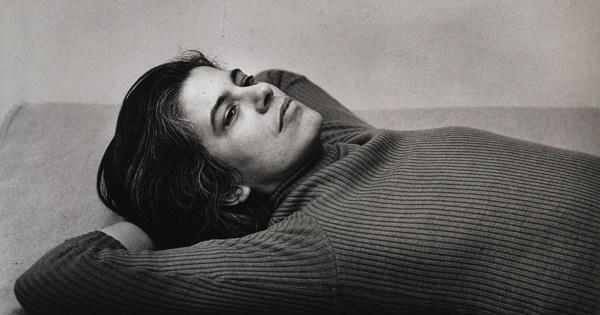
Susan Sontag spent the majority of her adult life reading between eight and ten hours a day, and never fewer than four. Her intense love of literature was paralleled by a commensurate love of music. In a diary entry found in Reborn: Journals and Notebooks, 1947–1963 (public library) — the spectacular volume that gave us young Sontag on personal growth, art, marriage, the four people a great writer must be, and her duties for being a twenty-something — she writes at age 15:

Music is at once the most wonderful, the most alive of all the arts — it is the most abstract, the most perfect, the most pure — and the most sensual. I listen with my body and it is my body that aches in response to the passion and pathos embodied in this music.

In his final essay collection, A Man Without a Country (public library) — the source of his abiding wisdom on the shapes of stories — Kurt Vonnegut wrote that music, above all else, “made being alive almost worthwhile” for him. He synthesized the sentiment in an extra-concentrated dose of his wry irreverence:

If I should ever die, God forbid, let this be my epitaph:
THE ONLY PROOF HE NEEDED
FOR THE EXISTENCE OF GOD
WAS MUSIC

Read more: Great Writers on the Power of Music – Brain Pickings

On a Lighter Note…

Did You Ever Realize…

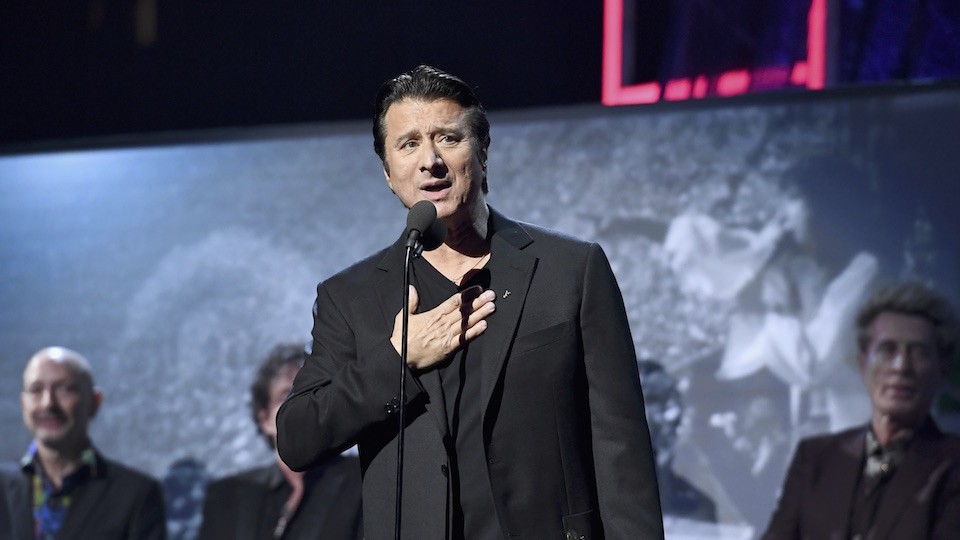
Whatever Happened To… Steve Perry’s Journey After Journey

(via Culture Sonar) by Will Wills

Did you know that Journey had a singer before Steve Perry?  The band had been around since 1973, with plans to be a backing group for solo acts. Then they switched to being a jazz fusion band with Gregg Rolie on vocals.  That particular incarnation of Journey released a few albums through 1977 that only charted as high as #85 on the Billboard Top 200.

In 1977, the band hired Robert Fleischman to take over lead vocals and transitioned to a musical style more rock than jazz. They opened for acts such as Judas Priest, and Emerson, Lake, and Palmer. And while they found slightly more success, it wasn’t until Steve Perry was snuck onto the stage during a soundcheck that it was immediately decided that he would be their new lead singer…

Read more: Steve Perry’s Journey…After “Journey” – CultureSonar

Video of the Week: Making That Thing You Do!

See also: Songs You May Have Missed #189 | Every Moment Has A Song (edcyphers.com)

Songs You May Have Missed #681

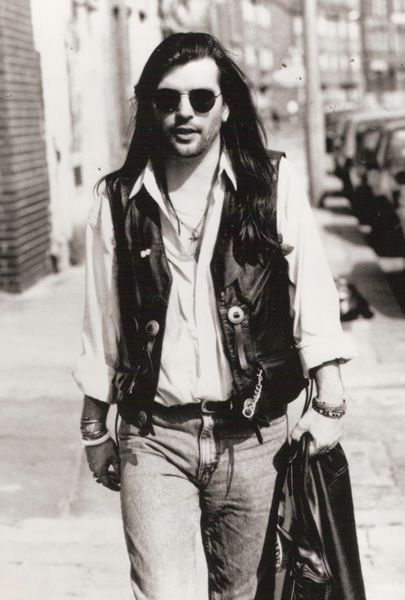
Steve Earle: “The Devil’s Right Hand” (1988)

Steve Earle’s enviable songwriting chops are on display in this story song about the perils of the gun.

Earle comes across like a more authentic Springsteen, and was part of a golden era for country radio in which the likes of Lyle Lovett, k.d. lang, Texas Tornados, Dwight Yoakam, Alison Krauss and Los Lobos enjoyed airplay before the format chose to eschew diversity and closed in on itself.

Los Lobos became too experimental. Lovett too artsy and sardonic. For lang, who was a lesbian and an outspoken anti-meat advocate, it was only a matter of time before country radio turned its back. And I suppose Krauss just didn’t embrace country cliche consistently enough–despite winning more Grammy awards (27) than any other female artist in any genre.

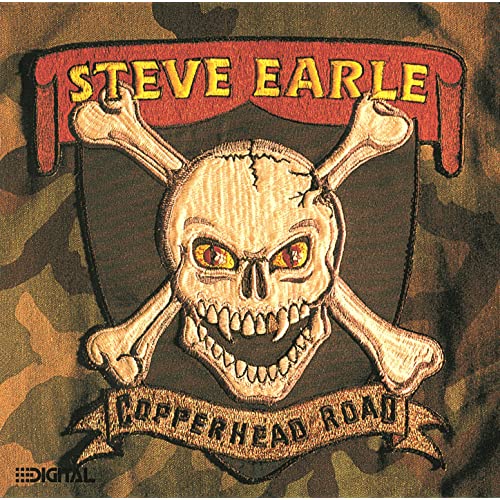
As for Earle, despite 1986’s breakthrough hit album Guitar Town, he too was soon left outside looking in. Perhaps he was just too rock for country radio and too country for rock radio (which only ever embraced one of his tunes, “Copperhead Road”)

One thing’s for sure: the lyrical gut punch the guy delivers ensures that he is more at home on public radio stations than country.

See also: https://edcyphers.com/2025/05/07/songs-you-may-have-missed-778/

Previous Older Entries Next Newer Entries