"There's a time in life for Hoagy Carmichael. There's a time in life for Claude Debussy. There's a time in life for Jerry Lee Lewis. There's a time in life for Destiny's Child. All these things have their moment." ~Elvis Costello
One version of rock history could be told by the many songs that have been written about the alluring dangers of drug use. From “Purple Haze” and “White Rabbit” to “White Lines” and “Under the Bridge,” there’s a bottomless supply of popular music about cocaine, heroin, marijuana and hallucinogens. What follows is a sample survey of 10 songs that may not be quite as obvious as Eric Clapton’s “Cocaine,” the Velvet Underground’s “Heroin” or Brad Paisley’s “Alcohol” – but they’re no less about messing with your mind…
The first time I met her was at a mutual friend’s wedding. We were introduced. I asked her to dance. By the time our three-minute dance was over, I was in love. Deeply, madly in love.
It was the kind of love they write about in songs. That over-the-moon, head-over-heels, what’s-happened-to-me, everything’s-coming-up-roses kind of love. At age 53, I’d never felt anything like it before, though I’d been married and divorced twice.
She was much younger—21 years so, in fact—but we became friends. We spent time together. After a couple of months of this friendship, I told her I loved her, that I was crazy about her, that I couldn’t live without her. This was true. We were outside. It was summer. The moon was out. We kissed for a moment. Then she pulled away. She said she was crazy about me, too, but had a boyfriend who lived in France. I said I didn’t care and kept kissing her. She didn’t stop me, but she no longer gave anything back…
Double albums are always bold statements from artists, and often they can make or break a band. While some have too much filler and lack direction, there have also been several fantastic double albums in the rock genre. These records often celebrate everything that is so great about the band, but it also gives them the time and space to explore new musical avenues and themes. Sometimes, double albums take the form of concept records, which gradually unfold brilliant and fascinating tales. Many of the following excellent double albums are even considered the artist’s most celebrated and successful work.
10. The Clash – London Calling
Many double albums have too much filler and lack direction, but this cannot be said about The Clash’s immensely popular 1979 record London Calling. Each track is excellent and vital to the record’s cohesion, and this has led many to label it as one of the best albums of all-time, and a pioneering post-punk record. It incorporates a range of styles, including punk, ska, rockabilly, pop, lounge jazz and hard rock. Whilst some claim that The Clash abandoned their roots with this album, others argue that it pushed the punk genre into new terrain. The subject matter of London Calling is also varied, with themes that include social displacement, unemployment, drug use, racial conflict and the responsibilities of adulthood. The album also features the titular track, which is by far their most famous and celebrated song. Other noteworthy singles from the album include “Clampdown” and “Train in Vain”.
With the Beatles’ catalog now available via streaming, it gives fans yet another opportunity to appreciate band’s prodigious output. As with any masterpiece, Beatles’ music opens a new door with each visit. No matter how many times (roughly a billion in this case) you hear the songs, there’s always something fresh to appreciate.
In this round of bingeing, it was John Lennon’s guitar playing that re-introduced itself. Paraphrasing Mr. Lennon himself, if George was The Beatles’ forgotten singer, John was their forgotten guitar player…
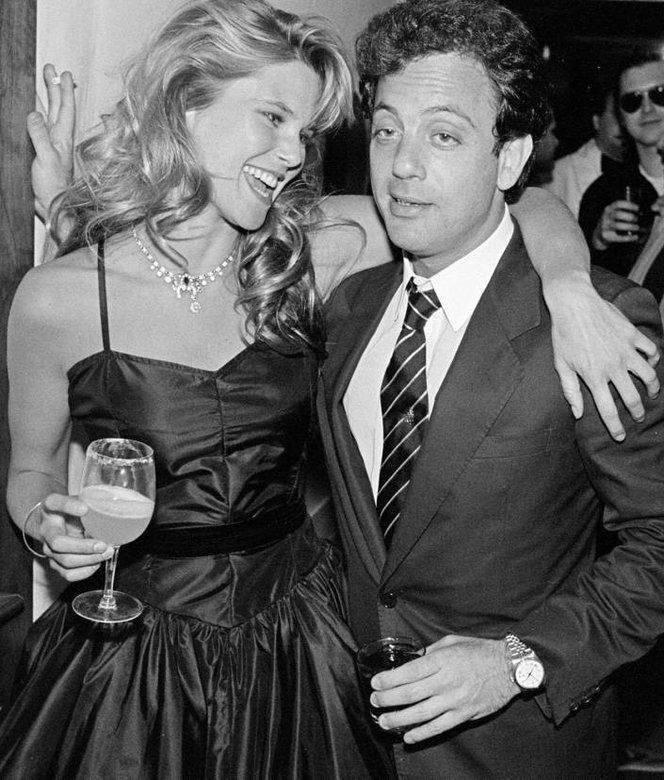
I was never a big Billy Joel fan but that doesn’t mean I couldn’t have married him when I had the shot. Yes, that could have been MY LIFE. I could have been Mrs. Billy Joel, the uptown girl, living in an uptown world. If only.
It was the early Eighties, and I was a waitress at a nouveau-hot restaurant on the Upper West Side of Manhattan. Early one Saturday night, a limo pulled up out front. Out stumbled two guys who looked like trouble. I was drawn. I’ve always enjoyed a nice batch of trouble.
I watched from my station on the balcony as the limo riders were led up the stairs to my empty section. The short one was disruptive, singing to the Billy Joel tape that was playing throughout the restaurant. He began waving from the steps like an emperor, claiming, “Hi, I’m Billy Joel! I’m Billy Joel!”
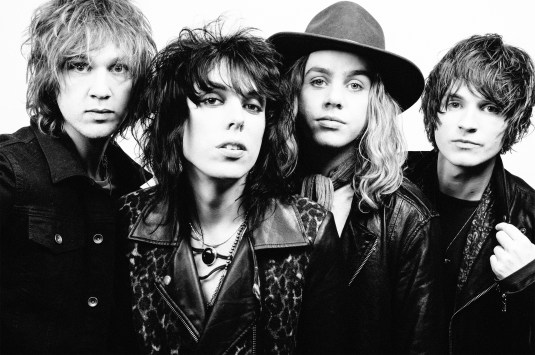
Luke Spiller’s Mercurial (as in Freddie) vocals and propensity for a singalong chorus have earned The Struts millions of YouTube views and a number one placing on Spotify’s Viral Top 50 (for this very song).
It also has fans hailing them as the Next Big Thing, which, unfortunately, they are not.
Not because they aren’t a good, exciting band. But because we’ve seen this not pan out before. Their retro Anthem Rock sound with the glammily androgynous, big-voiced, Jagger-swaggering front man is an update of The Darkness for the 2010’s. The Darkness were an engaging retro rock band, too.
But they didn’t change the world. Because the world isn’t ready for that change. I don’t know if Rock will ever again be what it once was–the dominant form of popular music for young music consumers. But at last check, albums like Everybody Wants The Struts weren’t showing promise of elbowing Drake and Kanye from the Billboard Top 40.
Still, with songs like this stirring ode to giving life your all (reminiscent of some of Frank Turner’s better work) the Struts certainly deserve to find an audience.
Even if that audience will likely never be a Queen-sized one.