"There's a time in life for Hoagy Carmichael. There's a time in life for Claude Debussy. There's a time in life for Jerry Lee Lewis. There's a time in life for Destiny's Child. All these things have their moment." ~Elvis Costello
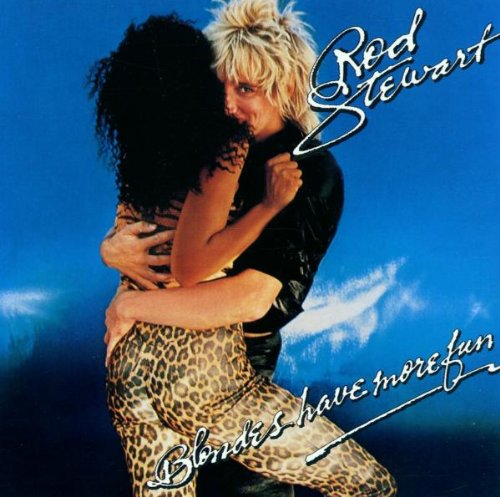
I find Rod Stewart infuriatingly chameleonic. The same guy who gave us some of rock’s most tender ballads (some self-penned, others well-chosen covers) has seemed content at other times to cover himself in schmutz like “Hot Legs” and “Da Ya Think I’m Sexy?” and the same artist who blended folk and rock in innovative ways has satisfied himself too often with recording superficial pap or simply lending his voice to American pop standards.
I stopped paying attention for the most part when his records went from sounding something like this:
to sounding more like this:
The same album that found him crossing into disco territory for the first time also brought us this gem of an album track.
“The Best Days of My Life” begins with one of those superfluous acoustic intros Rod used to be so fond of, similar to those that adorned the LP versions of “Maggie May” and “You Wear it Well”, before giving way to one of his trademark melodic and heartfelt love songs, a statement of devotion of the same cloth as “You’re in My Heart”.
Shel Silverstein may be best known, especially to parents, as the author of well-loved children’s books such as Where the Sidewalk Ends, The Giving Tree, and A Light in the Attic.
But though Uncle Shelby’s books have sold over 20 million copies, it’s often overlooked that he also enjoyed careers as a screenwriter, Playboy cartoonist, and singer-songwriter.
And while some of his songwriting output certainly deserves to be overlooked by anyone with even a hint of political correctness about them, a few of his songs are rightly embraced as classics.
Let’s take a rummage through the mixed bag:
“The Unicorn” by the Irish Rovers (#7 in 1968)
Many would be surprised to learn that their favorite St. Patty’s Day anthem didn’t originate from the Emerald Isle itself, but was in fact written by a Jewish guy from Chicago.
It was a career-making song for the Irish Rovers, and they parlayed its success into a TV show and long run as a recording and touring act. And it’s a tune that generations of kids have sung along to, right up to the present. “The Unicorn” may in fact be Shel Silverstein’s most enduring work.
“A Boy Named Sue” by Johnny Cash (#2 in 1969)
Country music icon Johnny Cash is regarded as one of the most successful and influential artists of the 20th century and has sold over 90 million records worldwide. But his highest-charting hit was this novelty record written by ole Uncle Shelby.
“Father of a Boy Named Sue”
Pop song sequels are almost always a bad idea but “Father of a Boy Named Sue” might have been the worst ever. Here’s Shel’s own take on his attempt to tell the same story from the other point of view. Yes, Uncle Shelby’s implication is that he sleeps with his son. But only “on the nights that he can’t score”.
I guess Cash wasn’t interested in recording this one for some crazy reason.
“Sylvia’s Mother” by Dr. Hook and the Medicine Show (#5 in 1972)
Quite a clever story song in that the story is pushed along solely by use of a telephone conversation, with the interruptions by the operator to ask for more coin only upping the dramatic ante.
While I can understand this song being categorized by some with 70’s melodrama such as “Daddy Don’t You Walk So Fast” and “Seasons in the Sun”, it’s actually an affecting song sensitively rendered and deserves recognition as a 70’s pop classic.
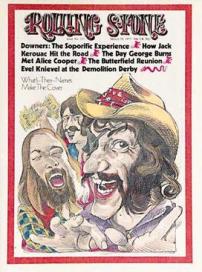
“The Cover of ‘Rolling Stone'” byDr. Hook and the Medicine Show (#6 in 1973)
A cheeky look at early 70’s rock and roll excess and another smash hit for Dr. Hook–their last prior to reinventing themselves as the sappy balladeers of “A Little Bit More” and “Sharing the Night Together”.
According to members of the group, they really did buy five copies for their mothers.
What is impressive is the breadth the band showed in mustering what was called for here–an arrangement that feels loose enough to be a session outtake or rehearsal–just as they’d found the sensitive soul of “Sylvia’s Mother”.
“Put Another Log on the Fire” by Tompall Glaser
Country singer Tompall Glaser’s highest-charting country hit (#21 in 1975) was another bit of snark which happened to fit the “outlaw country” niche inhabited by David Allan Coe and Johnny Paycheck. Incidentally, in 2016 “Johnny Paycheck” sounds more like a rapper than a country singer.
“I Got Stoned and I Missed It” by Dr. Hook and the Medicine Show
Ok so Uncle Shelby really liked weed too. And his more adult material showed sensitivities that might have shocked some whose exposure was limited to “The Unicorn” and The Giving Tree.
“Sarah Cynthia Sylvia Stout Would Not Take the Garbage Out”
Shel himself recorded some of the poems from his children’s books. And though he never cracked the top 100 as a performer of his own work, this one actually was released on a 45.
Although the word roadie may conjure up images of non-stop partying with rock stars, the reality is that most work unglamorous, physically and emotionally demanding jobs. They lug the gear, set up the instruments, manage the stage, run the sound, sell the merch, drive the bus, and generally do whatever it takes to make concerts possible. We talked to a few roadies (who probably wish we’d stop calling them that—see below) to get the inside scoop.
1. ROADIE IS AN OUTDATED TERM.
Some roadies who worked in the 1960s through the 1980s later wrote books bragging about their sexual conquests, wild partying, and drug use while on the road. Although that lifestyle is not completely obsolete—genres such as metal, rap, and hip hop supposedly see more illegal activity than indie, pop, folk, and alternative—most roadies don’t refer to themselves as such.
Morgan Paros, a violinist and singer based in Los Angeles, says that the generic term roadie seems slightly derogatory now. Instead, it’s better to use terms that more specifically describe individual duties. “Anyone on a tour is generally working very hard to fulfill their role of tour manager, front of house (sound engineer), light tech, stage manager, instrument tech, or merchandise manager,” Paros says. “These individuals make everything possible for the performers every night.”
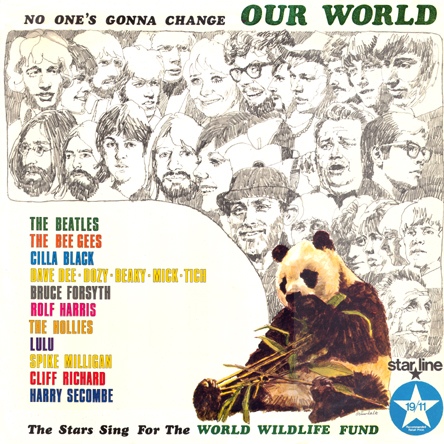
This rare track, one of the last the Hollies recorded with Graham Nash in the fold, never appeared on any of that band’s albums. It was included on a 1969 UK charity album to benefit the World Wildlife Fund. The album is perhaps best known for the first release of the Beatles’ “Across the Universe”; a line from that song gave compilation its name.
The voice of then-16-year-old New Zealander Hayley Westenra was (and is) a wondrous instrument, with enviable range and immaculate diction. “Never Say Goodbye” is adapted from Ravel, in case the tune is familiar.
In addition to possessing an angelic voice, Westenra is also a dancer who has performed with the Royal New Zealand ballet company.