"There's a time in life for Hoagy Carmichael. There's a time in life for Claude Debussy. There's a time in life for Jerry Lee Lewis. There's a time in life for Destiny's Child. All these things have their moment." ~Elvis Costello
I have a weird relationship with Jack Johnson. I warmed very slowly to his laid-back acoustic surfer pop–or whatever it is–till a few albums into his career. After buying this 2005 album mainly because I was being asked to play “Banana Pancakes” at weddings, it sat on a pile of CDs on my desk for months before I actually forced myself to listen to it all the way through. Turns out the bad taste that “Banana Pancakes” had left in my mouth was at least somewhat misleading.
Although much of what he does still doesn’t light me up, certain of his songs knock me out. I think his 2010 album To the Sea is terrific, possessing hooks sharper than on previous albums. And “Never Know” just has an effortless-sounding cool about it. As if, unlike “Banana Pancakes”, this song isn’t trying so hard to get me to like it. Or something.
That Paul McCartney guy…not only was he part of the number two pop singles act of the rock and roll era (the Beatles trail only Elvis) but his solo work alone racked up enough singles success to rank him at the number sixteen position. He has so many hits that none of his Best-of collections have done even a decent job of collecting them all (and he’s probably the most significant artist not to have released a true career-spanning box set). Thus music buyers of more recent eras who haven’t collected the individual albums along the way will have some significant gaps in their collections.
Actually, many of his 1970’s hits weren’t even included on albums, making it infuriatingly difficult to find them until remastered import CDs appeared with these singles included as bonus tracks.
Let’s take a little tour of Mac’s dustier hits and see how many you remember…
1. “Give Ireland Back to the Irish” (#21 in 1972)
People tend to forget that Lennon wasn’t the only solo Beatle to get topical and court controversy.
Written in response to the events of Bloody Sunday in Northern Ireland in 1972, this divisive ditty was banned from all UK media outlets. Despite the complete lack of airplay it still rose to number 16 in the British charts. It was a number one hit in the Republic of Ireland (go figure), while it got Wings guitarist Henry McCullough’s brother beaten up by thugs in Northern Ireland when they found out Henry was in the band.
2. “Mary Had a Little Lamb” (#28 in 1972)
Wings’ next single was the polar opposite of its predecessor–about as innocuous a pop song gets.
3. “Hi, Hi, Hi” (#10 in 1973)
Oops. Controversy again. Banned by the Beeb for its lyrical content. They not only assumed “we’re gonna get hi, hi, hi” was a drug reference (a safe bet knowing Paul’s habits at the time) but objected to the sexual content i.e. lines like “get you ready for my body gun”. Paul insisted the correct lyric was “get you ready for my polygon” and that he was going for an abstract image. Not convincing.
Again the BBC’s banning didn’t hurt and might have helped. The song charted at number 5 in the UK.
4. “Sally G” (#17 in 1975)
Paul goes country. This B-side to “Junior’s Farm” (neither song appeared on an album at the time) went top twenty in its own right. Recorded in Nashville with local backing musicians adding to the country vibe, this song actually charted at #51 on the country singles chart in addition to its top twenty pop placing.
5. “Letting Go” (#39 in 1975)
This one’s long forgotten.
Honestly I have no recollection of this rather heavy-sounding 1975 hit. But it did scrape the top forty. And its vibe is fairly unique among his single releases. If you don’t remember it, give it a few listens and it’ll creep under your skin.
6. “Venus and Mars/Rock Show” (#12 in 1975)
Despite leading off both his 1975 Venus and Mars album and the live Wings Over America LP of the next year, this one’s fairly forgotten in terms of latter-day radio airplay, thanks to the tendency of oldies formats to retain some of an artist’s hits (mainly the top tens) and shun others. I’ve complained about this syndrome ad nauseam in other posts.
7. “Girls’ School” (#33 in 1978)
Here’s a mind-blowing fact to help remind you that it’s a whole different world across the pond: This song was released as a double A-side in the UK along with “Mull of Kintyre” and was McCartney’s only number one single in that country in the entire decade of the 1970’s. During that time, America sent no fewer than six of his songs to the top spot (“Uncle Albert/Admiral Halsey”, “My Love”, “Band on the Run”, “Listen to What the Man Said”, “Silly Love Songs” and “With a Little Luck”.)
Interestingly, “Mull of Kintyre”, despite its status as a radio staple, never actually made the pop charts in America, although it did hit #45 on the Easy Listening chart. In other words, a song that never made the top 40 is much more familiar to Americans than any of these songs that did.
8. “I’ve Had Enough” (#25 in 1978)
“With a Little Luck” was the number one smash from 1978’s London Town album, but the LP also spawned two less successful follow-up hits. The first is this rather feisty (for Paul) rant.
9. “London Town” (#39 in 1978)
The title track is a pleasant thing, and pretty much lost to history.
10. “Getting Closer” (#20 in 1979)
One of McCartney’s finest and most propulsive pop rock songs. It surprises me this one’s never been included on any of his greatest hits compilations. It almost has a “Live and Let Die” feel to its instrumental coda.
11. “Arrow Through Me” (#29 in 1979)
This one’s really gotten dusty. But it’s a great listen. The horn charts are Stevie Wonderesque.
12. “So Bad” (#23 in 1984)
Criminally overlooked, this one. I think it’s one of the true lost gems of McCartney’s catalogue. From 1983’s Pipes of Peace and re-recorded for 1984’s Give My Regards to Broad Street (also lovely). This was the follow-up single to “Say Say Say”, which was so bad.
13. “Spies Like Us” (#7 in 1986)
This uber-80’s sounding title song from the Chevy Chase/Dan Aykroyd film sounds like something Robert Palmer (wisely) left off one of this albums. I’m not a fan. And it’s too long. And it’s really stupid. I should have mentioned at the outset that there are a few here I don’t actually mind being forgotten.
14. “Press” (#21 in 1986)
Another not-so-stellar moment in a stellar career. Not awful. Just not representative of one of pop’s greatest living songwriters.
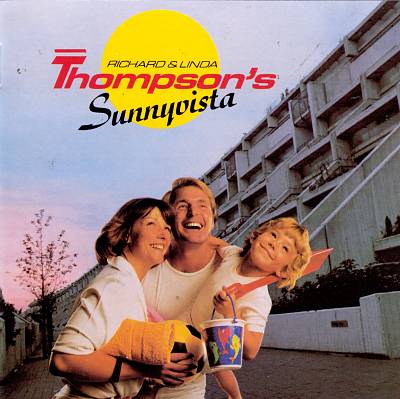
No one can sing a sad song like Linda Thompson. And no one can write one like her one-time husband Richard.
It’s not that they were stylistic one-trick ponies: their albums showed them to be quite adept at political, comical or satirical material. And all resonated with a trademark passion and authenticity, and each brimmed with the tasteful guitar work of one of the instrument’s true masters.
But it’s the tear-jerkers that seem to stay with you once the needle hits the end groove–or what have you.
The guzheng was born in China over 2500 years ago. Originally made out of bamboo and silk strings, the instrument became very popular in the imperial court during the Qin period (221 to 206 BCE), and by the Tang Dynasty (618 CE to 907 CE), it was perhaps the most popular instrument in China. According to the San Francisco Guzheng Music Society, it remained popular through the late Qing dynasty (1644 A.D. – 1911 A.D.) and into the 20th century, when, in 1948, “the renowned musician Cao Zheng established the first university level guzheng program” in the country, and the “old silk strings were replaced with nylon strings, which are still being used today.”
In the estimation of most long-time Yes fans, Rick Wakeman would be considered part of the band’s “classic” lineup–the keyboard player they’d most like to see manning the Moog if they were to put money down to see the band live.
Wakeman’s contributions to pop also include the atmospheric Mellotron on David Bowie’s “Space Oddity” and the sublime piano on Cat Stevens’ “Morning Has Broken”.
But in addition to his musical contributions, he’s pretty well-known for leaving bands too. He bolted from Strawbs in 1971 when Chris Squire invited him to join Yes. And he left Yes on several occasions for various reasons.
In 1973 ambitious rock acts like Yes were enjoying a boom in terms of popularity–and income. Prog magazine writer Mike Barnes picks up the story:
But although Wakeman might have been a young musician who was, in his own words ‘riding a wave’ with no idea when it might break, in 1973 the money started to pour in. “Suddenly the band was earning enough money for someone to collect your suitcase in the morning,” he reminisces. “I thought: ‘Bloody hell, what’s going on?'”
Wakeman feels that this new-found wealth had adverse effects on Yes and contributed to the disaffection he felt with Tales from Topographic Oceans, which resulted in him leaving the group for the first time in 1974.
“That was a difficult time. Because if a band is earning so much money that it can do anything it wants, that power is really dangerous,” Wakeman admits. “We had an interesting situation with Topographic Oceans. From pre-orders we already knew we had a
Number One album (In England. The record peaked at number 6 in America). We had enough material for an album and a bit, so we could either reduce it or add to it and the vote went in favour of adding to it. But most of the additional material was made up in the studio–and it was a lot of padding.
“That annoyed me because I said: ‘Listen guys, there are some great melodies and sounds, what’s all this crap that’s going on there–a percussion thing”?’ It was a mixture of everyone’s banging drums, which went on for an eternity. I was going: ‘What the fuck’s all that about”‘ They were going: ‘That’s another six minutes, lads!’ And I’m going: ‘No, no, no, no, no, no, no’. I ended up really hating the album because of that and because the more I said I hated it, the more said they loved it.
“Jon (Anderson) and I have discussed this numerous times at length and we both agree that if the CD had been available back then we wouldn’t have had the problem, because the album would have been 60 minutes long.”
Tales from Topographic Oceans was the most ambitious (slash pompous) release of the band’s career–possibly the most ambitious of any band’s career: it was comprised of four album-side length songs, which Wakeman disliked performing live because of the time it took away from playing their more popular material. It was after this tour that Wakeman departed from Yes.
He’d return for the albums Going for the One and Tormato, which has the following amusing story attached to it (quoting Wikipedia):
The original album title was to be Yes Tor, referring to a geological formation in southern England. The photographs taken by Hipgnosis for the album cover were seen as so unimpressive that Rick Wakeman, in frustration, threw a tomato at the pictures. The cover and title were adjusted accordingly.
Wakeman is correct in his assessment that Tales from Topographic Oceans contains some beautiful bits of music, which perhaps remain undiscovered by the band’s more casual fans due to being buried within non-radio friendly 18-to-20-minute pieces. The edits below extract two such highlights:
“The Ancient: Giants Under the Sun” (2:22 edit)
“The Revealing Science of God: Dance of the Dawn” (8:17 edit)
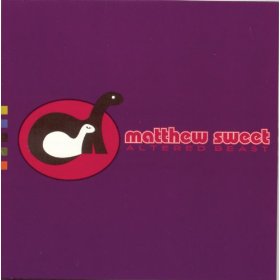
In his excellent and devastatingly funny piece Give Me Centrism or Give Me Death! (reprinted here) Chuck Klosterman examines the most accurately rated artists in music. His evaluation of Mathhew Sweet is as follows:
Every Matthew Sweet album has only one good song, and this good song is inevitably the first single, and this single is always utterly perfect (“Sick of Myself” off 100% Fun, “Where You Get Love” off Blue Sky on Mars, “Girlfriend” off Girlfriend, etc.). He sells enough albums to live comfortably, and that seems reasonable.
Funny, and not so far from my opinion of Sweet. “Time Capsule” is most certainly the highlight of 1993’s Altered Beast. Sweet is an artist to compile a homemade compilation of; the highlights may not come as often as you’d like, but they certainly make it worth checking out each new release.