"There's a time in life for Hoagy Carmichael. There's a time in life for Claude Debussy. There's a time in life for Jerry Lee Lewis. There's a time in life for Destiny's Child. All these things have their moment." ~Elvis Costello
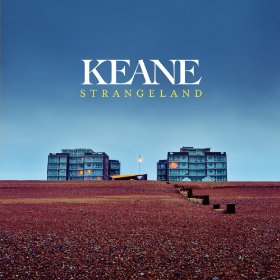
Keane retreats to familiar territory on their fourth album after some experimentation on 2008’s Perfect Symmetry. It’s for the best–this is exactly what they do well.
Mayer Hawthorne’s latest funk-soul offering sprinkles more 70’s sounds into the stew of retro-soul (or is it “neo-Motown”?) he’d been serving up on his previous two albums. I appreciate the man’s willingness to try a number of styles, sounds and lyrical themes, although what it produces is a real mixed bag. The difference between Where Does This Door Go and its predecessors is that the high points point a little higher.
“Wine Glass Woman” is like Steely Dan Lite, which is hardly a bad thing. “Robot Love” mimics the falsetto croon of the likes of Curtis Mayfield. And “The Stars Are Ours” thieves the rhythm of Stevie Wonder’s “Higher Ground” just as Robin Thicke’s “Blurred Lines” borrowed that of Marvin Gaye’s “Got to Give it Up”.
For all intents and purposes, Roye Albrighton is Nektar. Lead guitar wizard, lead vocalist, main songwriter–he’s everything to the band Ian Anderson is to Jethro Tull.
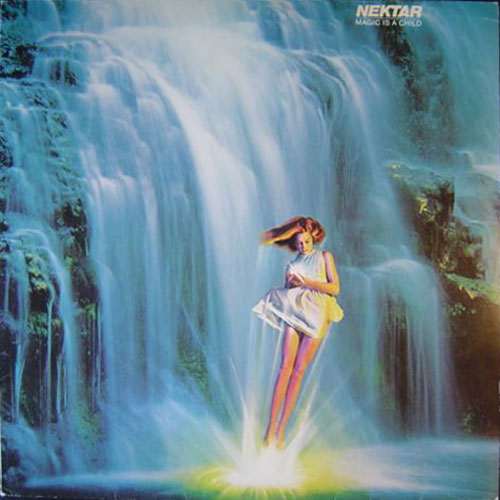
The last thing Nektar fans would want is an album without Albrighton. But when he left the band for a brief period that’s what they got in 1977’s Magic is a Child. And though it’s the least Nektar-like (and least prog-sounding) album in the band’s catalogue, it’s actually a pretty decent record.
Most of it sounds like straight-ahead 70’s British rock, stripped of the lofty space rock tendencies that are Albrighton’s forte. But the title track sounds a different note entirely. What it sounds like is exactly what it was to me as teenager: a sort of anthem for hyper imaginative, inward-turned, Tolkien-reading misfits.
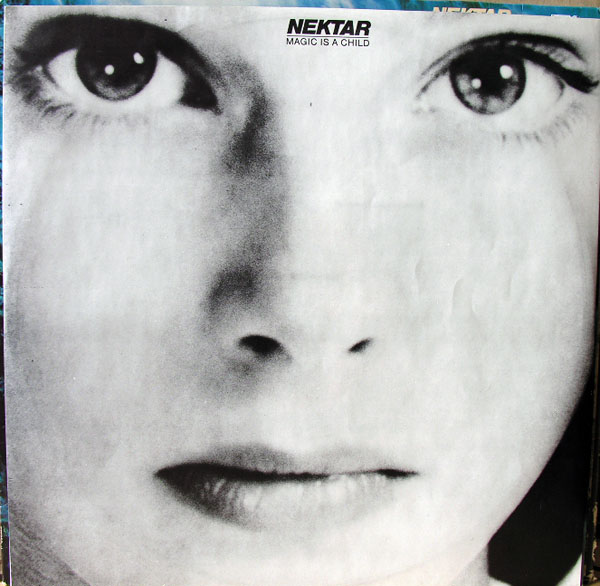
Oh, and that happens to be a young Brooke Shields on the album’s cover and inner sleeve–speaking of the genre of fantasy.
At the time I was a little boy All my senses were in bloom The forests were adventure There dwelt the legends of my mind I was the keeper of the golden key I made all the rules I only had to dream to create the scene
Magic is a child Imagination is alive Magic is imagination A child is alive
How the trees were so high The cheese in the sky Were part of my imagination I was goblins and elves With small mushroom shelves As Brothers Grimm would tell their stories
Opening my eyes in the morning I would see Patterns in the trees making shapes that were a Face to me
In those tireless times And those carefree lines That we draw ourselves But they’re never kept I know magic is a child Imagination is alive Magic is imagination A child is alive Magic is a child Imagination is alive Magic is a child Alive as a child’s imagination
Kurt Cobain discussed a variety of topics, ranging from condemning sexism to wondering if he was gay, in an interview with British journalist Jon Savage for a profile that ran in The Observer in 1993. Now, over two decades after that feature ran, PBS has hilariously animated a portion of that interview for its Blank on Blank series, which has given a similar treatment to artists like Beastie Boys, Janis Joplin and Ray Charles.
The clip begins with Cobain talking about how awkward he felt in high school and then moves into family life, as he admits that he didn’t know his family name was Irish until after he had already played in the city his surname hailed from. Quizzically, he said he’d even resorted to calling “Coburns” in phonebooks throughout America. The rest of the video finds Cobain discussing his stomach issues, his disappointment in the lyrics of Aerosmith and Led Zeppelin and how he found some spiritual solace after marrying and having a child with Courtney Love, among other subjects. Throughout the video, snippets of Nirvana songs play stitch together the narrative.
It starts with a beat. Just one, before a woman begins singing over a simple rhythm about a hopeless case and a resolve to love. Then comes another voice and horns — harmonizing, swelling, building. A full minute goes by before “Sonsick” practically explodes in a burst of musical euphoria and lyrical heartbreak. The stop-you-in-your-tracks song is by San Fermin, and it’s irresistible. The voices belong to singers Jess Wolfe and Holly Laessig, who lead another rising Brooklyn band in Lucius. San Fermin is the brainchild of Yale composition grad Ellis Ludwig-Leone, who recruited Wolfe and Laessig to help bring his project to fruition. While “Sonsick” infuses its indie-rock sound with classical flourishes, you don’t need a trained ear to be knocked out by its epic beauty. Just as quickly as you’re swept up by the fanfare, everything falls away, leaving nothing but a few piano chords and that voice, resolving to love.
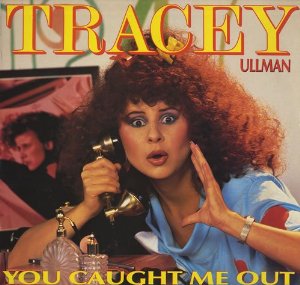
Tracey Ullman: “I Don’t Want Our Loving to Die” (1984)
Saccharine Alert! Tracey Ullman’s two mid-80’s albums may be too sweet for some, but for fans of bubblegum or 60’s girl group pop they are a treasure.
Despite Ullman’s dismissive attitude toward her short-lived career as a pop star, this may be the finest retro girl pop ever produced, making stuff by latter-day practitioners such as She & Him seem pale and watered-down by comparison. The first key element is the material: well-chosen, fairly obscure oldies mixed with more contemporary material by sympathetic writers such as titanic talent Kirsty MacColl. Then there’s the sparkling production, which takes the elements that made the original girl-group stuff so great and pushes it all over the top.
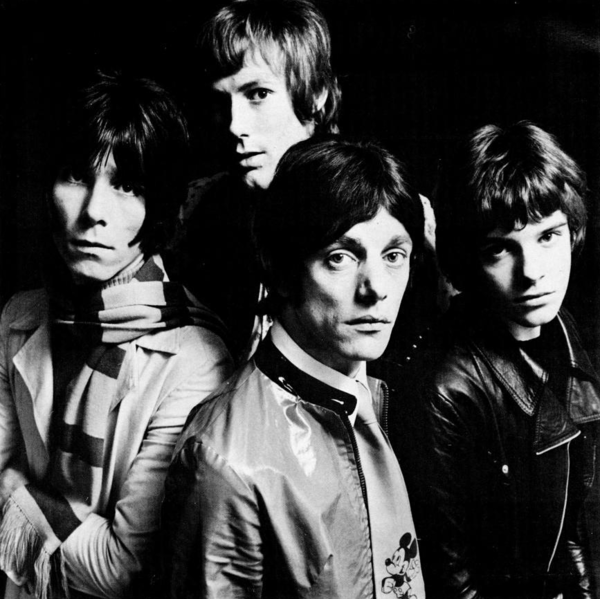
“I Don’t Want Our Loving to Die” was originally recorded by Peter Frampton’s pre-Humble Pie band The Herd (Pete’s at right in the below photo). Compare their version to Ullman’s and decide for yourself who sells the song more effectively. Even Tracey’s grunt (17 seconds in) trumps the boys. In fact it might just be the best girl singer grunt of all time.