Songs You May Have Missed #332

indian girl

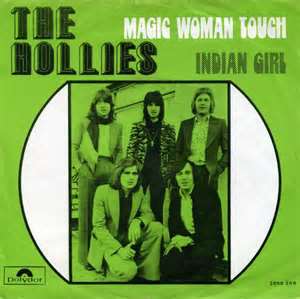
The Hollies: “Indian Girl” (1972)

While this song’s lyric wouldn’t pass the political correctness test today, its story of a young man and the Indian maiden he wishes to marry hits on a familiar pop music theme: young, determined love. The suitor in this case can’t afford the ten hides and twenty horses that tribal law has set as the price for marrying the girl he loves, so he’s asking her to run off with him instead.

“Indian Girl” was the non-LP B-side to the Hollies’ 1972 “Magic Woman Touch” single.

See also: https://edcyphers.com/2016/03/23/songs-you-may-have-missed-578/

Bohemian Rhapsody at Indiana University

A song that lends itself to so many styles, from the sublime to the ridiculous…

See also: https://edcyphers.com/2012/03/01/best-version-of-bohemian-rhapsody-ever-played-in-a-vw-7/

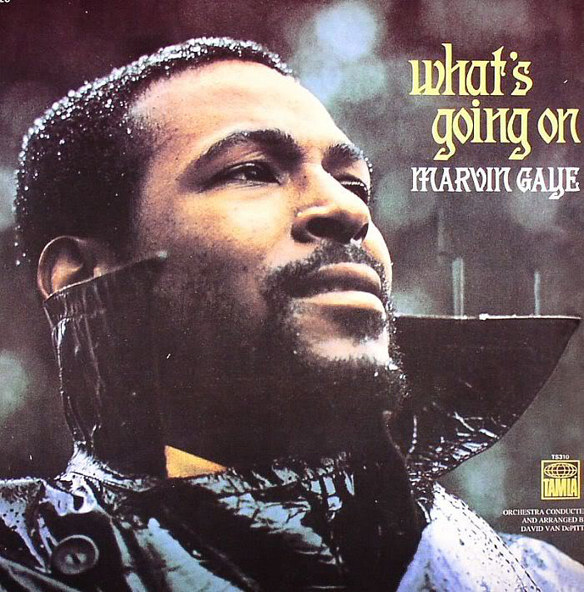
Valentine’s Day Quiz: Marvin Gaye Lyric Or Nietzsche Quote?

Gaye(Reprinted from Thought Catalog)

By Zach Schonfeld

Can you tell the difference between Marvin Gaye or Nietzsche quotes about love? Test yourself with this Valentine’s Day quiz!

“In the end one loves one’s desire and not what is desired.”

“Gonna get it together. Gonna love every day every night till I get it.”

“What else is love but understanding and rejoicing in the fact that another person lives, acts, and experiences otherwise than we do…?”

“Boy, it’s the sweetness of your charms. Makes me love you more each day. In your arms I wanna stay.”

“I don’t know where you come from, baby. Don’t know where you’ve been, my baby. Heaven must have sent you, honey, into my arms.”

“It offends us beyond forgiving when we discover that where we were convinced we were loved we were in fact regarded only as a piece of household furniture and room decoration for the master of the house to exercise his vanity upon before his guests.”

“I’ll be lovin’ you, I can’t help myself. I’ll be lovin’ you and nobody else.”

“There is always some madness in love. But there is also always some reason in madness.”

“If we live together with another person too closely, what happens is similar to when we repeatedly handle a good engraving with our bare hands: one day all we have left is a piece of dirty paper.”

“When I get that feeling, I want sexual healing. Sexual healing, oh baby.”

“Sensuality often hastens the growth of love so much that the roots remain weak and are easily torn up.”

“Where’d you get such sweet sugar? I’ll be lovin’ you day and night. In and out, wrong or right. Cause I want you, baby, for my wife. Oh girl, you’re so divine.”

“When you stare into the abyss the abyss stares back at you.”


Oh, Oh, Telephone Line–How ELO’s First Album was Given its Title by Mistake

no answer

(Reprinted from Snopes.com)

Claim: A record label inadvertently mistitled the U.S. version of the Electric Light Orchestra’s debut album because of a misunderstood phone message.

Status: True

Origins: In the early 1970’s Jeff Lynne, Roy Wood and Bev Bevan, members of a group called The Move, developed a concept for fusing rock and classical music. All three continued to bide their time recording and performing as The Move while they assembled the collection of classical instrumentalists they needed to flesh out their “Electric Light Orchestra”. Meanwhile, their manager, Don Arden, managed to line up a recording contract for the nascent group with Harvest Records (UK) and United Artists (U.S.)

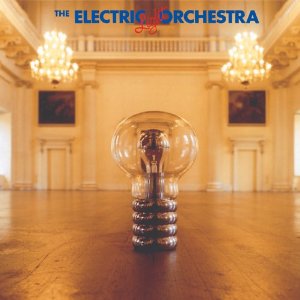
After some delay while The Move wound down, the Electric Light Orchestra finally recorded their first album, which was released in the UK by Harvest in December 1971 and (in line with common practice for debut LPs by new groups) assigned the eponymous title of Electric Light Orchestra. When the same album was released in America by United Artists three months later, however, it bore a completely different title: No Answer.

Why the switch?

As groups such as the Beatles had learned years earlier, American record companies had no compunctions about retitling (and even rearranging) the LPs of British groups to suit their notions of what would sell in the American record market. But what possessed United Artists to reject a straightforward album title in favor of one that seemingly made no sense? After all, No Answer wasn’t the name of a song on the LP, the phrase wasn’t found in any of the album’s lyrics, and it certainly didn’t signify anything of importance to the American record-buying public.

The answer is that the title was an accident, the result of a misunderstood phone communication.

The legend differs slightly in some of the details from telling to telling, but the basic premise is that when United Artists was preparing to schedule Electric Light Orchestra’s debut album for release in the U.S. someone from United Artists (either an executive or his secretary) placed a call to someone connected with ELO (either an executive at Harvest Records or the group’s manager) to find out, among other things, what the LP should be titled. The caller, having failed to reach the desired party, jotted down the notation “no answer”, a phrase which was mistaken for an album title and assigned to the U.S. version of the group’s debut record.

This all sounds like a story a PR person might have concocted to garner some free publicity for a new band, but no one has ever offered a plausible alternative explanation for the origins of the No Answer album title, and Bev Bevan, ELO’s drummer, affirms that the familiar account is true:

Bevan confirms the story that the album was called No Answer in America due to a misunderstanding. The American record company phoned to discuss the title with ELO manager Don Arden, but his secretary couldn’t contact him and replied with the two words that became immortalized on the album sleeves.

“It was quite a good title, though, wasn’t it?” says Bevan, the band’s drummer and percussionist.

In an odd coincidence, a similar mix-up at about the same time resulted in a Byrds LP mistakenly being released with a title of Untitled.
Songs You May Have Missed #331

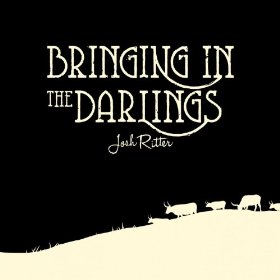
ritterJosh Ritter: “Love is Making its Way Back Home” (2012)

By somewhat fluky circumstances related to touring Ireland with the Frames, Idaho-born Josh Ritter broke through on radio and as a sold-out touring act in that country while still pretty much an unknown here at home. In fact at one point there was a tribute band there named Cork who played only Josh Ritter songs.

Years later his following is still a modest one, but devoted.

The hopeful sentiment of “Love is Making its Way Back Home” is an appropriate one for Valentines everywhere. And the video, produced by Prominent Figures, took a grueling two months to complete and used 12,000 pieces of construction paper–and zero special effects.

See also: https://edcyphers.com/2015/12/09/songs-you-may-have-missed-560/

Songs You May Have Missed #330

wilcox

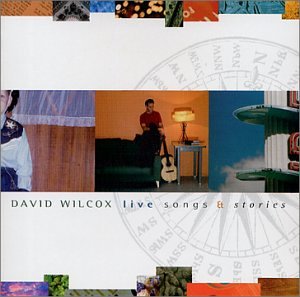
David Wilcox: “Start With the Ending” (Live) (2002)

The wit and wisdom of David Wilcox are on full display as he explains why the secret to a successful relationship just might be…ending it.

See also: https://edcyphers.com/2013/11/10/songs-you-may-have-missed-501/

See also: https://edcyphers.com/2015/03/27/songs-you-may-have-missed-527/

Previous Older Entries Next Newer Entries