Songs You May Have Missed #314

april smith

April Smith: “Can’t Say No” (2010)

To quote Amazon.com’s editorial review:

This Brooklyn singer-songwriter combines country and swing, making crackling songs that wink and smile and sway. She’s got a rich, plummy voice, and she lays it on thick over a taut guitar strum, making for music as long on charm as it is on melody”.

See also: https://edcyphers.com/2012/02/15/songs-you-may-have-missed-15/

An Infamous Pop Music Moment: Catwoman Steals Chad & Jeremy’s Voices

Chad & Jeremy guest star on Batman (as singing duo Chad & Jeremy). Catwoman and her evil companions, on the cue “Let’s get them!”, proceed to use a ray gun to steal the singers’ voices, which Catwoman intends to put into a box and hold the British government ransom. (The government will refuse to pay. Hmm.)

Batman, superhero that he is, is nonetheless completely neutralized by a darkened room–seems among all his high-tech gadgetry he doesn’t carry a simple flashlight. But nabbing Catwoman isn’t his priority anyway, nor is returning the stolen voices. Quieting an excited group of young females is the job for this superhero.

Your Preteen Hip-Hop Fan May Be Headed for Trouble

lilwayne

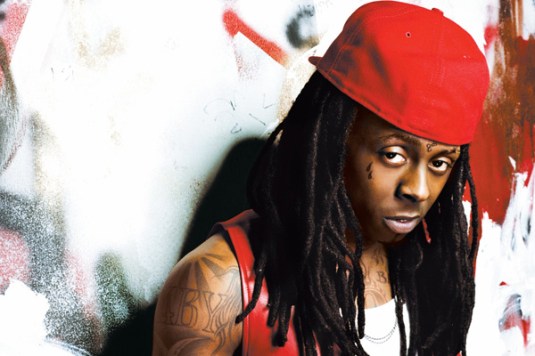
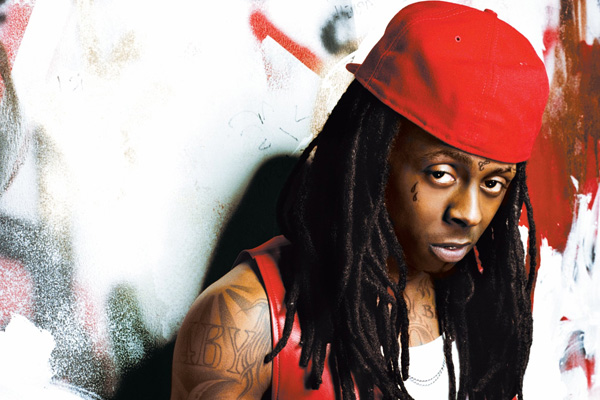
Lil Wayne

New research from the Netherlands suggests a youngster’s music preference can predict whether he or she will be a shoplifter or vandal four years later.

(Reprinted from The Guardian)

by Tom Jacobs

Concerned that your 12-year-old is on the road to delinquency? Newly published research suggests an easy way to either assuage or confirm your fears:

Check what’s on their iPod.

“Music choice is a strong marker of later problem behavior,” a research team from Utrecht University in the Netherlands writes in the journal Pediatrics.

Specifically, the scholars report, kids “with a strong early preference for music types that have been labeled as deviant—hip-hop, heavy metal, gothic, punk, and techno/hardhouse—were more engaged in minor delinquency in late adolescence” than their Beyonce- and-Bieber-loving peers.

The study featured 149 boys and 160 girls attending urban high schools in the Netherlands. They took surveys at ages 12, 14, 15 and 16, in which they rated their appreciation of various musical genres. They also reported “how many times they had committed minor offenses, such as shoplifting, petty theft and vandalism in the previous year.”

After controlling for such factors as academic achievement, the researchers found “evidence that an early preference for different types of noisy, rebellious, non-mainstream music genres is a strong predictor of concurrent and later minor delinquency.”

Specifically, those kids who loved hip-hop, metal, gothic and/or trance music at age 12 were more likely than their peers to exhibit delinquent behavior, both at age 12 and age 16. Those who preferred rock, R&B, punk and techno at age 12 were not more likely to be delinquents at that age, but were more likely to engage in such behavior by age 16.

The researchers, led by Tom F.M. ter Bogt, caution that “public claims that engaging with ‘deviant’ media will inevitably lead to problem behavior are wildly exaggerated.” They point out that the study measures not hard-core criminality, but rather “typical adolescent norm breaking behaviors that tend to disappear in early adulthood.”

They also note that, in their study, gradually developing preferences for non-mainstream music in the years between 12 and 16 was not related to delinquency in late adolescence. Rather, the correlation was found only among kids who were already heavily into alternative music at age 12.

The researchers believe such youngsters tend to congregate with peers who have similar musical tastes, creating cliques that are cut off from mainstream influences and behavioral norms. “In peer groups characterized by their deviant music taste, norm-breaking youth may ‘infect’ their friends with their behaviors,” they speculate.

If they’re right, it isn’t the music per se that leads kids into delinquency (although anti-social lyrics could conceivably play a role). It’s more the fact that kids who gravitate to other nonconformists at a young age miss out on the benefits of being part of mainstream society—including the positive influences of popular peers.

So if your preteen is listening to Metallica, some early intervention may be in order. On the other hand, if he or she is into Mozart or Monk, fear not: Such kids may also be outside the mainstream, but this isolation does not manifest itself in a negative way.

Indeed, the researchers report, “Preferences for classical music related negatively to delinquency at age 12.”

Songs You May Have Missed #313

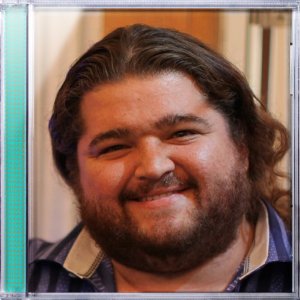
hurley

Weezer: “Ruling Me” (2010)


Although Weezer fans’ patience is put to the test at times by their uneven output–not to mention confounding album art (such as titling an album “Hurley” after a character from TV show Lost)–Rivers Cuomo reminds us now and then that few in the business are his equal when it comes to the kind of glorious pop rock chorus that makes you want to crank it up and put the top down. (Even if you drive a minivan and not a convertible.)

To my ears this song shares DNA with the music of power pop founding fathers the Raspberries. With no disrespect to any current platinum-selling act, the fact that there’s no place on the current pop charts for this kind of pop speaks to our general musical impoverishment.

My favorite lines:

We first met/In the lunchroom/My ocular nerve went pop! zoom!

I’ve never observed such a beautiful face

Sweet lady/Don’t play me/If I am a knob don’t fade me

You can’t win the game if you pass the Ace

See also: https://edcyphers.com/2013/10/04/songs-you-may-have-missed-484/

See also: Recommended Albums #81 | Every Moment Has A Song (edcyphers.com)

Songs You May Have Missed #312

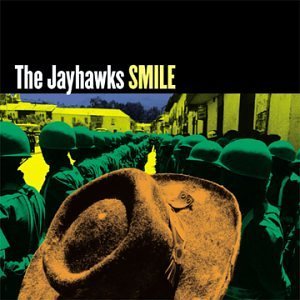
smile

The Jayhawks: “A Break in the Clouds” (2000)

Another pretty Gary Louris tune; there are dozens of them waiting to be discovered if you like the sound of blissful, cathartic choruses and country rock harmonizing. It’s like the Eagles minus the egos.

See also: https://edcyphers.com/2012/10/25/songs-you-may-have-missed-206/

See also: https://edcyphers.com/2016/05/04/songs-you-may-have-missed-588/

See also: https://edcyphers.com/2015/06/24/recommended-albums-63/

James Taylor’s 1970 BBC Performance

(Reprinted from Open Culture)

James Taylor Sings James Taylor, a BBC broadcast from November 1970, appears above. Though the nearly 40-minute solo performance showcases a player who has developed and mastered his distinctive musical persona, it also showcases one who has only reached a mere 22 years of age. But don’t let his aw-shucks youthfulness fool you; by this point, Taylor had already endured a lifetime’s worth of formative troubles. He’d fallen into deep depression while still in high school, spent nine months in a psychiatric hospital, taken up and quit heroin, bottomed out and spent six months in recovery, underwent vocal cord surgery, taken up methedrine, gone into methadone treatment, had an album flop, and broken his hands and feet in a motorcycle wreck. Fire and rain indeed. But he’d also found favor with the Beatles, becoming the first American signed on their Apple label and recruiting Paul McCartney and George Harrison to play on his “Carolina in My Mind.” At the end of the sixties, the world at large didn’t know the name James Taylor, but his fellow musicians knew it soon would.

“I just heard his voice and his guitar,” said McCartney, “and I thought he was great.” Earlier in 1970, many listeners surely felt the same thing after dropping the needle onto Taylor’s breakthrough second album Sweet Baby James. By the time James Taylor Sings James Taylor went to air, he’d accrued enough of an international reputation to guarantee appreciation from even non-Beatles on the other side of the pond. Knowing his audience, Taylor opens with a rendition of Lennon and McCartney’s “With a Little Help from My Friends.” The Beatles connections don’t stop there: Songfacts reports that Taylor’s “Something in the Way She Moves,” the first single from his pre-Sweet Baby James Apple debut, may have inspired George Harrison to write “Something.” What’s more, Taylor had originally titled his song “I Feel Fine,” before realizing that the Beatles had recorded a song by that name. Though more troubled times lay ahead for the humble (if already well on his way to wealth and fame) young singer-songwriter, this production captures Taylor just before superstardom kicked in.

Previous Older Entries Next Newer Entries