"There's a time in life for Hoagy Carmichael. There's a time in life for Claude Debussy. There's a time in life for Jerry Lee Lewis. There's a time in life for Destiny's Child. All these things have their moment." ~Elvis Costello
I’ve always wondered about the tendency, when you discover an artist well into their career, to forever prefer the album that served as your introduction to that artist over the rest of their catalogue. Although it may be merely a sentimental, subjective attachment, there could also be valid reasons why this so often happens.
If that album was recommended by a fan of the artist it’s entirely appropriate that they should select that artist’s finest work in their attempt to evangelize you. And it just makes sense that, whether it’s word of mouth or a tendency for a music retailer (we used to call them “record stores”) to stock more copies of the better stuff, that a singer or band’s best work will be the most likely to blow through your transom at some point.
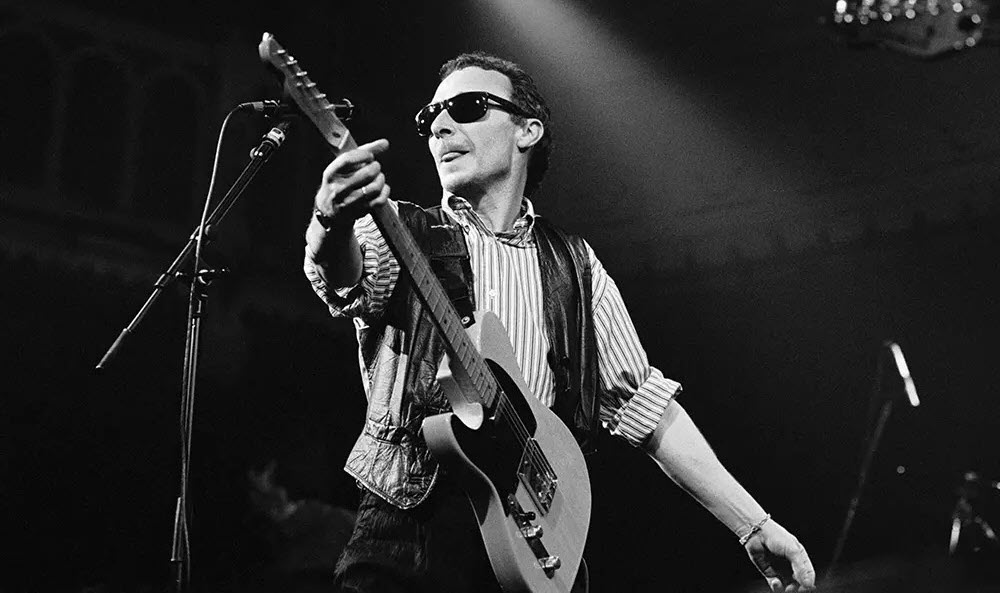
My introduction to Graham Parker was overlaid with all the symmetry of obsolete two-sided music media: a friend made me a cassette with the The Mona Lisa’s Sister on one side and Warren Zevon’s Sentimental Hygiene on the other. Each album has been described as a return to form by a long-established rocker, each served as my introduction to an artist, and each remains my favorite of the two artists’ respective catalogues.
I’m just gonna tell it like it is: as much as music critics rave about Howlin’ Wind and Squeezing Out Sparks–Parker’s early work from the late 70’s–to my ears The Mona Lisa’s Sister is his most satisfying record. But of course I must add the disclaimer that it was the one I heard first, so I may be biased.
This album features more acoustic guitar than on Parker’s previous work. As he described it, the desire to make a record that focused on the singer, the song and acoustic guitar in the era of blown-up Phil Collins, George Michael and Whitney Houston productions got him kicked off his record label. Sticking to his intentions to not sound like everyone else’s music, he signed on with RCA and proceeded to make an album “stripped of superfluous information, devoid of artifice, and free from the stamp of a ‘producer'”.
Cutting his vocals live as opposed to overdubbing, adding bass, keys and lead guitar only as spare enhancements, Parker made an album that still sounds good today, while much 80’s pop and rock sounds like it was buried under an avalanche of synths. Graham himself relates:
“Funnily enough, I bumped into two engineer/producers not long after the album had been released and they seemed confused by its popularity and good reviews. One thought it sounded ‘unfinished’ and the other one decided that there was something just plain wrong with it! I knew then that I had attained Success.”
While I agree it was indeed a success (or, as Graham might say, “SUCK-sess”) in the interest of equal time I’ll reprint Allmusic Guide‘s brief and particularly unflattering review:
Graham Parker moves to his fourth record label (actually, his fifth, if you count Atlantic, which dumped him before releasing an album) for one of his less inspired efforts. When he sings “Get Started, Start A Fire,” he seems to be talking to himself, and when he resorts to covering the old Sam Cooke hit “Cupid,” he seems to be grasping for material.
Of course, I couldn’t disagree more strongly but, as a recent post on this site asserted, the appreciation of music is a very subjective thing, and one man’s “great” is another man’s “meh”. So listen and decide for yourself…
What would minor-scale hits like REM’s “Losing My Religion” and Metallica’s “Nothing Else Matters” sound like had they been written and sung in major scales? Now we know. MajorScaled TV is a site where such songs are re-worked digitally into major-scale versions.
Now that killer on the road in the Doors’ “Riders On the Storm” doesn’t sound like such a menacing fellow somehow…
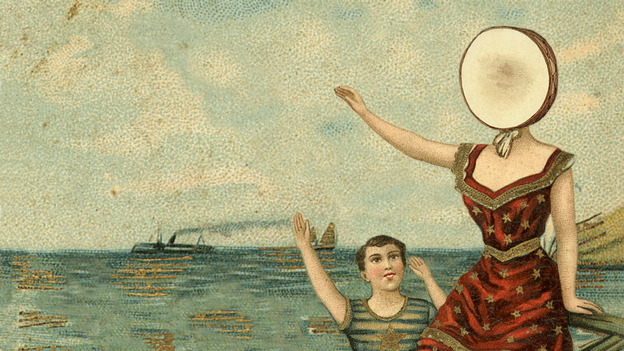
Kyle Perry writes: “Do you ever feel obligated to return and re-listen to something that you don’t like, but that everyone says is great? I just can’t seem to love and adore In the Aeroplane Over the Sea by Neutral Milk Hotel, but it seems like everyone in my life insists that it’s great, so I’ve tried multiple times to get into it. At what point do you give up and concede that something that’s critically or popularly acclaimed is just not good to you?
I think you’re just about there: You’ve listened to your friends; you’ve listened to the record; you’ve tried. Great music isn’t great to everyone — it simply can’t be. Great music stirs intense emotions, and intense emotions are destined to polarize, or they wouldn’t necessitate intensity.
Now, I do happen to think that In the Aeroplane Over the Sea is a masterpiece, and it’s certainly one of my favorite albums of the last 15 or 20 years. But I’m not coming to it cold. I found it on my own and I fell in love with it at my own pace, under pressure from no one, on headphones, during solitary walks. It came to me a little late, when I was ready to come looking for it — I was ready for its passion and intensity and sideways beauty, and the mystery of it transfixed me. But that doesn’t make me “right” or “wrong” about In the Aeroplane Over the Sea; if it were made for everyone to love, that fact would alienate the people it now attracts.
I’m a big fan of “not for me” as a descriptor — tinged with a hint of disappointment rather than defiance. It bugs me when I don’t love something that’s supposed to be great! I like loving things! This past summer, I dragged myself to a Lumineers concert because I wanted to interrogate my reflexive dislike of the group’s music; it didn’t help, but I still do my absolute best not to dump on The Lumineers’ music around friends who rave about the band. It’s just that it’s Not For Me.
Finally, while this isn’t true in all cases, it doesn’t hurt to revisit classic records at different times in your life, whether you love them or not. When I was in my early 20s, Tom Waits was squarely in the Not For Me bin. I just needed life to smack me around a little bit before his music meant to me what it was meant to mean.