"There's a time in life for Hoagy Carmichael. There's a time in life for Claude Debussy. There's a time in life for Jerry Lee Lewis. There's a time in life for Destiny's Child. All these things have their moment." ~Elvis Costello
Monsters of Folk are Bright Eyes’ Conor Oberst and Mike Mogis, Jim James of My Morning Jacket and singer-songwriter M. Ward, who is also one half of She & Him (with Zooey Deschanel). The indie folk supergroup’s collaboration produced some super results…and some just average ones. “Whole Lotta Losin'” is decidedly one of the highlights.
How is it that you can hear the outdoors in Dan Fogelberg’s music? How do certain musicians conjure a sense of the place, the scenery that moves them, in a song with no words? Whatever the secret, it’s a sign of true musical artistry.
Fogelberg always had a gift for evoking scenic outdoor vistas and the soul’s interiors all at once. His 1978 Twin Sons of Different Mothers album, recorded with flautist Tim Weisberg, had a little of everything: songs that showcased Dan’s oft-overlooked guitar prowess (on electric or classical acoustic), jazzy flute instrumentals, tasteful covers (of the Hollies and Judy Collins)…oh, and Dan’s highest-charting hit up until that time (“The Power of Gold”).
“Hurtwood Alley” is the type of song we heard now and then in the ’70’s, but rarely now–a structured instrumental written in the same pattern as a vocal song, with chorus- and bridge-like sections, as opposed to a “jam” or anything blues-based. People like Elton John (“Funeral For a Friend”) and Jeff Lynne (“Fire On High”) made such songs lead tracks on platinum and gold-selling LP’s.
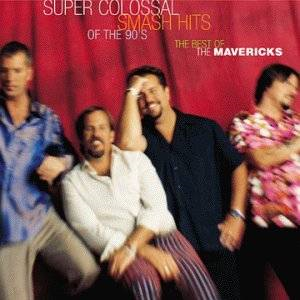
Unfortunately, since its appearance on the Mavericks’ Super Colossal Smash Hits of the 90’s compilation, golden-voiced front man Raul Malo has seen fit to exclude this song from subsequent hits collections in favor of covers of classics and songs he himself wrote or co-wrote. But “Things I Cannot Change” has vocal and instrumental hooks to equal any Mavericks tune, and doesn’t have the feel of a genre exercise as much of this band’s recorded output does.
The first thing that strikes me about the Rolling Stone Best Disco Songs of All Time list is: Rolling Stone magazine would never have lowered itself to making such a list back in the era of Disco, when the music was seen as anathema and the very antithesis of everything the magazine stood for. But times have changed indeed: many forms of music co-mingle under the Rolling Stone banner nowadays as the periodical does what it can to survive in what is a lean era for actual Rock ‘n Roll.
But as for the list itself: not bad! I think the Rolling Stone readers actually named the ten best (mainstream at least) Disco songs. The order could be argued ad infinitum and I won’t bother. Check out the list here:
In a shady little hamlet of the musical world known as 1970’s British Folk Rock abides some very charming, pastoral, earnest work that barely registers in a world of in-your-face rap, risqué dance pop and indie eccentricity.
“Bordeaux Rosé” is two and a half minutes of a simple toast to the good things, and an invitation to the wine to do its work.
I love four things about this song: its description of the Bordeaux’s effect (we are swimming far beneath the scarlet glow); the flute, introduced at 1:24 for a single flourish and never heard again; the understated presence in the mix of sitar and mellotron, two instruments that tend to be used rather heavy-handedly but here are tasteful garnishes; and the way the song transitions from 3/4 time in the verses to a 4/4 chorus with gentle dexterity.
Among the things that catch my ear in a song I love is a subtle arranger’s touch–the ability to see that a particular instrument or effect will enhance the song, coupled with the tact to say, “just that much and no more”. That gentility of arrangement serves to keep a song fresh to the ear, makes one want to listen again, and gives the music the shelf life of a fine French wine.
Brett Dennen’s 2008 album, Hope For the Hopeless got him on Rolling Stone magazine’s Artists to Watch list that year. “Make You Crazy” is pretty indicative of his formula: a unique voice, an appealing, listenable vibe and a message in the music. Dennen would probably appeal to about 87% of Jack Johnson’s fans.