"There's a time in life for Hoagy Carmichael. There's a time in life for Claude Debussy. There's a time in life for Jerry Lee Lewis. There's a time in life for Destiny's Child. All these things have their moment." ~Elvis Costello
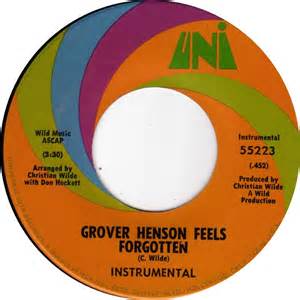
Bill Cosby: “Grover Henson Feels Forgotten” (1970)
“Grover Henson Feels Forgotten”, which charted at #70 in 1970, didn’t appear on any of Bill Cosby’s comedy albums, and would have been sorely out-of-place if it had. With this one he wasn’t going for a laugh, he was trying for tears. It’s a spoken word piece in a musical setting that tells the tale of a lonely soldier. Timely in terms of the Vietnam war, it was also typical of the kind of sentimental (maudlin?) performance the pop charts of the 60’s and 70’s were sprinkled with (see: “Seasons In The Sun”).
Having been released only as a single at the time it’s a fairly rare find today.
My 2011 award for Best Neil Young (or Best young Neil) impersonation goes to this doleful ditty. The Asheville, North Carolina native Ramsey could make a living as a Neil Young tribute act if his own singer-songwriter career doesn’t pan out. And he doesn’t just have the voice, he also has the same relaxed delivery. Doesn’t belt the chorus, just lets the song sing itself, like Neil does on his gentler stuff. Beautiful song.
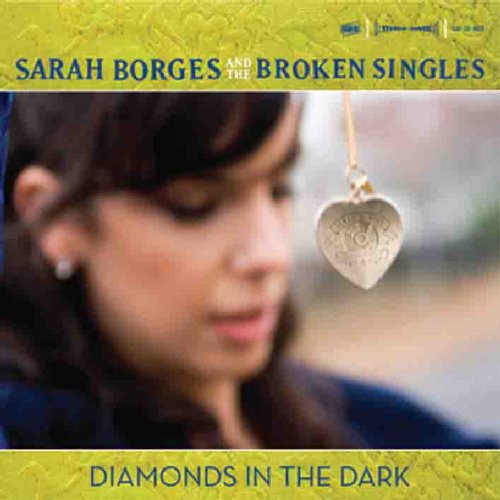
Sarah Borges & Broken Singles: “Stop And Think It Over” (2007)
Sarah Borges and her band Broken Singles mix country, rockabilly, punk, retro girl-group sounds and, with “Stop and Think it Over”, the kind of power pop we don’t hear often enough from female singers.
The Moog Cookbook: Ye Olde Space Bande: Plays The Classic Rock Hits (1997)
Classic rock is awesome. So awesome I can’t stand to listen to most of it anymore.
I was raised on the rock that’s now called “Classic” but it was never the only kind of music I loved. I followed the trail of melody that snaked its way through classic rock and Pop in the 70’s, meandered across Country for part of the 80’s, hid out in the badlands of alt country in the 90’s, and sometimes stays at the youth hostel of indie pop today. I’ll always love melody and harmony, but have an undying appetite for new music, so the classic rock songs I loved in my youth, while still magical, have been faded by radio’s heavy rotation. I’m numb from their overexposure.
I remember the visceral thrill of hearing ambitious, iconoclastic songs like “Hotel California”, “Sultans of Swing” and “Bohemian Rhapsody” for the first time. In some cases I actually remember where I was when I first heard them, they were that impactful and format-bending. And even today I love when any band shows a willingness to “take it to the limit” and try to write that Big One–the concert encore, their own “Stairway to Heaven”.
The flip side is, there’s a slippery boundary between the portentous and the pretentious, and I’ve found I’m capable of simultaneously feeling that a song is undeniably great and “a bit up itself”. So sometimes a “great” rock song needs somebody to take the piss out of it.
Enter The Moog Cookbook, a “band” made up Brian Kehew and Roger Joseph Manning, Jr. who perform rock’s sacred canon on cheesy analog synthesizers (mostly Moogs), the musical equivalent of drawing caricatures of Jesus in the margins of a Bible.
Having enjoyed its heyday in the Disco and New Wave eras, the synthesizer was eschewed by pop acts of the late 80’s and early 90’s. Brian and Roger, who shared a love for synth sounds, bought up unwanted keyboards at bottom dollar and got the idea to make a modern version of the type of album popular in the 60’s, when cheesy synthesizer instrumental tributes to the Beatles and others were popular. Their self-titled 1996 LP sent up contemporaries like Nirvana, Pearl Jam, Weezer and Green Day. “Ye Olde Space Band: Plays The Classic Rock hits” was another brilliant combination of parody and homage, with 70’s icons from Nugent to Skynyrd as its subject (or target, depending on your point of view).
“Hotel California” is a highlight. The original version being famous for one of the longest instrumental codas of any hit single (maybe second only to “Layla”) that coda is here used to pay tribute to a couple Moog riffs from the past (Hot Butter’s “Popcorn” and Del Shannon’s “Runaway”). On “25 Or 6 To 4” they raise the ante, throwing in pieces of Led Zeppelin’s “All My Love”, the Ventures’ “Walk, Don’t Run”, The Beatles’ “While My Guitar Gently Weeps” and War’s “Spill the Wine”, also demonstrating the chord progression the songs all share.
This album is like a music fan’s Easter egg hunt. It’s also really funny, if you’re inclined to get the musical joke. And the bonus: it pisses on Don Henley a little bit. And he kind of needed it.
About two minutes’ listen should be long enough for you to decide for yourself if it’s genius or rubbish. I know what I think.
Harry Nilsson’s recording of “Without You” is what a masterpiece sounds like. It won a Grammy for Best Male Pop Vocal in 1973, and the song has since become a standard, having been recorded and sung by literally hundreds of artists, including Mariah Carey, Ill Divo and Frank Sinatra. Not bad for a song that began as an afterthought.
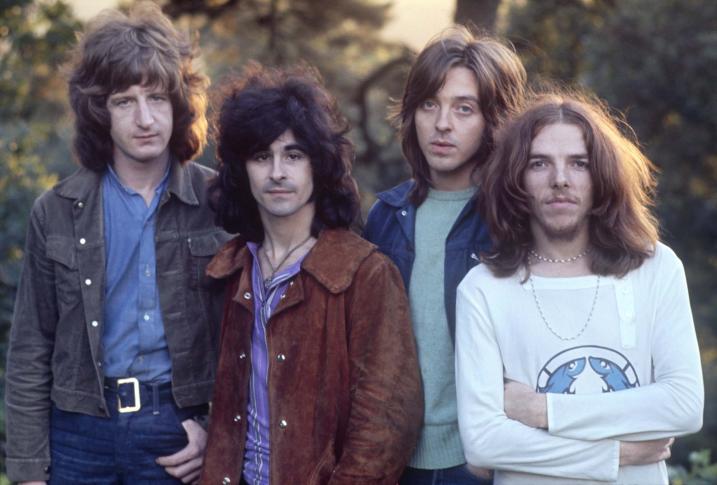
As retold by Joey Molland in the documentary Badfinger, the Liverpool band had recorded eleven songs for their (1970) No Dice album and were looking for one more. Tom Evan had written part of a song, the now-familiar chorus of “I can’t live, if living is without you…” but Evan hadn’t written verses for it.
Pete Ham had written a verse, “I can’t forget this evening and your face as you were leaving…” that was lyrically compatible. So the two unfinished songs were put in the same key and joined together to form “Without You”.
Seeing the song as a mere album track and not a potential single, they recorded a fairly basic guitar version, as lip-synched here:
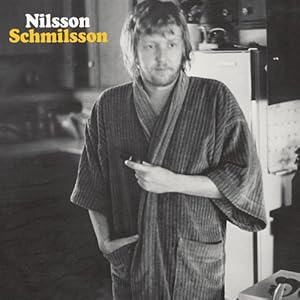
Harry Nilsson heard the song and obviously either he or his producer Richard Perry saw the potential for something much bigger in it. Again according to Molland’s recounting, Badfinger were recording “a couple years later” (what must have actually been their next album, Straight Up) when Nilsson, who was using another room of the same studio to record the Nilsson Schmilsson album, came into their control room.
He introduced himself, saying something like “I’m Harry Nilsson. I believe you guys are Badfinger”, and invited them down the hall to hear a mix he’d just finished. The band was blown away by the powerful arrangement of Nilsson’s cover version. It’s a jaw-dropping vocal performance and one of the greatest pop recordings of its era.
Producer Richard Perry has stated the soaring Nilsson vocal was captured in a single take. Nilsson himself claims he burst a large hemorrhoid hitting the song’s highest note.
Badfinger is one of those bands, like Nilsson himself, who wrote or recorded music everyone knows, but relatively few seem to know who actually did it.
Counting “Without You”, which became a classic thanks to Nilsson’s amazing version, along with “No Matter What” and “Day After Day” it is this writer’s opinion that Badfinger were responsible for writing three of the greatest pop songs of the 1970’s
“No Matter What”
“Day After Day”
Despite this band’s promise and obvious songwriting talent, the business wasn’t kind to them. Bad breaks and bad management (including the embezzlement of much of their money) eventually led to despondency. Pete Ham and Tom Evan, the two writers of “Without You” both committed suicide, Ham in 1975 and Evan in 1983.
I love three things about this song: the melody, the voice of Brian Briggs, and the sound of a saw as subtle added percussion in the final chorus (coming in at about 1:40 and ending with a piece of wood dropping to the floor).
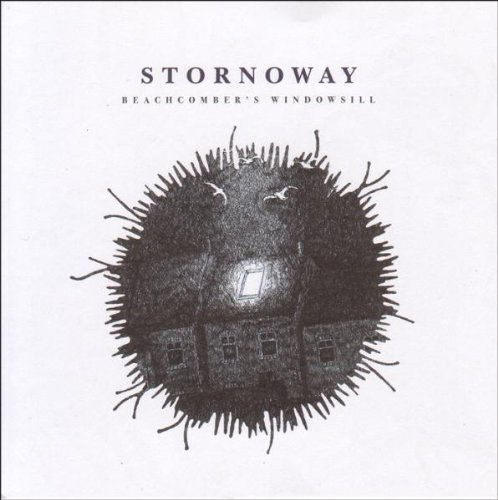
It’s from Stornoway’s Beachcomber’s Windowsill album, a charmingly understated and ruminitave debut which, according to Amazon’s band bio “has taken more than five years to make; a labor of love that includes over a hundred different instruments, the chimes of a Dutch church bell, one Morse Code message and the sound of several carrots being chopped”.
They went back to Oxford, where the band was formed, to make this video for “Fuel Up”. Love the autoharp on this one:
Although they may not possess the one dimension that could push them toward Decemberists-like mainstream success (namely, the ability to rock out) they do share a lot with that band: unconventional lead vocals, some left-of-center instrumentaion, British folk influences, and songs strewn with literary refences. But this is a band I don’t need to rock out, or to change anything about the beautiful sound they make. Okay, maybe one thing: don’t take five years for the next record.