Behind every great man with a guitar there’s a guitar tech, roadie or coke dealer who “sets him up”, as it were. And behind many of pop music’s stars and megastars there’s often someone with a less familiar name doing much of the artistic heavy lifting as well.
Today we pay tribute to a few of those whose names tend get lost as the credits roll–pop music’s “unsung” heroes.
1. Maury Muehleisen: I Got a Name
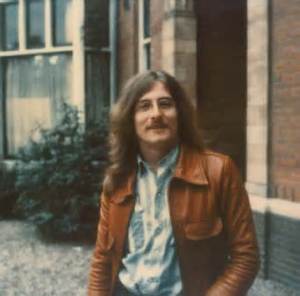
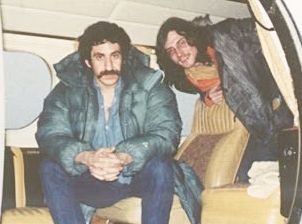
As a tribute website attests, “Maury Muehleisen was Jim Croce’s One Man Band. He was the heart and soul behind Jim’s music. Maury was the quiet friend who was rarely recognized for his influence on the beautiful guitar duets that changed the way many guitarists played and wrote songs.”
He was also the guy who enabled Croce to look into the camera or the audience during performance, rather than fretting (so to speak) over the finger work on his guitar. Maury’s lyrical playing style made Croce ballads such as “Operator” and “Time in a Bottle” things of understated beauty.
On September 20, 1973, after a concert in Natchitoches Louisiana, Maury Muehleisen was killed with Croce in a plane crash. And you probably didn’t even know his name.
2. Andrew Gold: Not all that’s Gold Glitters
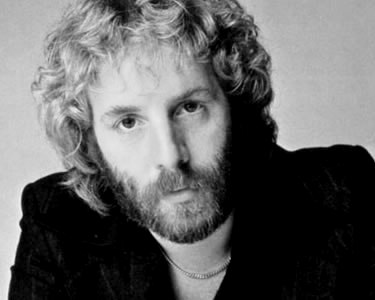
As a solo artist, Andrew Gold is known basically as a two-hit wonder, his big moments in the bright lights being perennial (and Golden Girls theme) “Thank You for Being a Friend” and the more interesting “Lonely Boy”, a song in that idiosyncratic 70’s style of a tragic lyric set to an irresistible hooky tune (see Gilbert O’Sullivan, Terry Jacks, ABBA, et al).
Elsewhere in this blog I theorize that one plausible explanation for Linda Ronstadt’s long-time exclusion from the Rock and Roll Hall of Fame (as if it matters–a Hall of Fame for Rock and Roll being a farcical idea in the first place) is the team effort behind the music was that issued forth under Ronstadt’s name. “Linda Ronstadt” was, for all intents and purposes, a band. And Andrew Gold was that band’s leader.
Significantly, it’s Gold taking the iconic solo in this performance of “You’re No Good”, while no less a guitarist than Jeff “Skunk” Baxter plays bongos:
Andrew collaborated on most of Ronstadt’s albums during her peak years in the 70’s and arranged hits for her such as “Heatwave” and “When Will I Be Loved”.
And “Thank You For Being a Friend” isn’t the only TV theme to Gold’s credit. He also sang “The Final Frontier”, the theme from Mad About You. “Final Frontier” was actually used as the wake-up call for the Mars Pathfinder space probe in 1996, thereby earning Gold the distinction of being the first human voice heard on planet Mars.
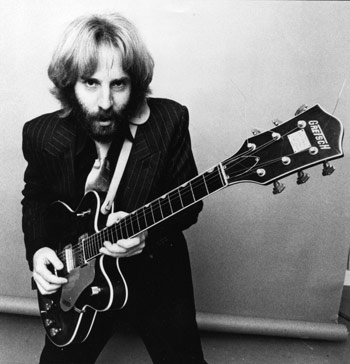
The list of artists he lent his vocal, instrumental, performing and/or arranging talents to the work of is almost wearisome in its length. It includes: Celine Dion, Carly Simon, 10cc, James Taylor, Paul McCartney, Ringo Starr, John Lennon, Brian Wilson, Jackson Browne, Don Henley, Diana Ross, Cher, Art Garfunkel, Trisha Yearwood, Wynonna Judd, Jesse McCartney, Eric Carmen, Jennifer Warnes, Stephen Bishop, Nicolette Larson, Eric Carmen, Maria Muldaur, Neil Diamond, Juice Newton, Leo Sayer, Vince Gill, Aaron Neville, The Nitty Gritty Dirt Band, and Japanese superstar Eikichi Yazawa.
Put simply, you most likely hear Andrew Gold’s work every day of your life and don’t know it.
Gold died in his sleep in 2011 at age 59.
The last word on Andrew Maurice Gold goes to Grammy-winning producer Peter Asher, who says:
“Andrew’s talent was almost eerie. He was a self-taught instinctive musician who seemed to be able to play any instrument he had a mind to. He was a brilliant writer, a great singer, and a highly imaginative producer and arranger — on top of being a multi-instrumentalist of the highest order. And he never failed to come up with something extraordinary every time he played.”
3. J.D. Souther: It Used to be His Town Too
Similarly to Andrew Gold, J.D. Souther’s time in pop’s spotlight as a solo act was fleeting. 1979’s “You’re Only Lonely” was his only actual solo top ten hit.
But in a more anonymous way, Souther made a huge footprint in the pop world, especially as a primary architect of the California country rock popularized by the Eagles and the aforementioned Linda Ronstadt.
Quoting his homepage: Mr. Souther has written for and with artists as diverse as India Arie, Brooks & Dunn, Jimmy Buffett, Glen Campbell, Joe Cocker, Tammy Wynette and Tanya Tucker, Crosby, Stills & Nash, Diamond Rio, Dixie Chicks, Don Henley, One Flew South, Roy Orbison, Bonnie Raitt, Lynn Anderson, George Strait, Brian Wilson, Trisha Yearwood, Warren Zevon…His songs have also been recorded by Michael Bublé, Tom Jones, Bernadette Peters, Raul Malo, Rita Wilson, Hugh Masekela, and hit Taiwanese pop girl group S.H.E., to name but a few.
Souther made his first significant impression teaming with ex-Byrd Chris Hillman and ex-Buffalo Springfield member Richie Furay in the Souther Hillman Furay Band, recording two albums of country rock before Furay’s conversion to Christianity caused him to abandon playing “secular” music.
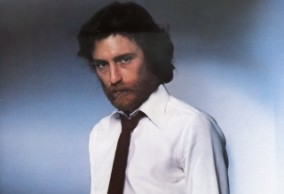
As Linda Ronstadt’s live-in boyfriend, songwriter and sometimes duet partner, Souther contributed to several of her multi-platinum albums.
Souther co-wrote and shared equal billing with James Taylor on the 1981 #11 hit duet “Her Town Too”, which most tend in retrospect to view as just another James Taylor song.
Souther’s contributions to the Eagles catalog were done pretty much in anonymity too. He was co-writer of such classics as “Best of my Love”, “Victim of Love”, “How Long”, “Heartache Tonight” (with Bob Seger sharing credit also) and “New Kid in Town”. He also co-wrote Henley’s solo hit “The Heart of the Matter”. Basically the Eagles’ legacy would be much less without Souther’s contributions. His gently loping melodies gave their multipart harmonies room to breathe; Souther’s songs were the perfect foil for the band’s trademark sound.

 Every Moment Has A Song