December 21, 1973 performance on the Midnight Special, with Skunk Baxter on congas, Andrew Gold on guitar and Little Feat’s Richie Hayward on drums.
Video of the Week: Linda Ronstadt on the Midnight Special, 1973
22 Aug 2026 Leave a comment
in Video of the Week Tags: linda ronstadt, you're no good
Unsung Heroes of Pop, Part 1
03 Nov 2016 Leave a comment
in General Posts Tags: andrew gold, eagles, j.d. souther, jim croce, linda ronstadt, maury muehleisen, pop music unsung heroes
Behind every great man with a guitar there’s a guitar tech, roadie or coke dealer who “sets him up”, as it were. And behind many of pop music’s stars and megastars there’s often someone with a less familiar name doing much of the artistic heavy lifting as well.
Today we pay tribute to a few of those whose names tend get lost as the credits roll–pop music’s “unsung” heroes.
1. Maury Muehleisen: I Got a Name
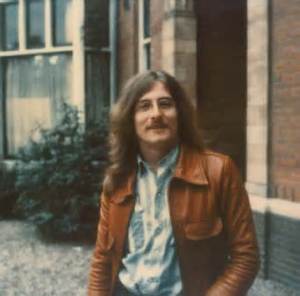
As a tribute website attests, “Maury Muehleisen was Jim Croce’s One Man Band. He was the heart and soul behind Jim’s music. Maury was the quiet friend who was rarely recognized for his influence on the beautiful guitar duets that changed the way many guitarists played and wrote songs.”
He was also the guy who enabled Croce to look into the camera or the audience during performance, rather than fretting (so to speak) over the finger work on his guitar. Maury’s lyrical playing style made Croce ballads such as “Operator” and “Time in a Bottle” things of understated beauty.
On September 20, 1973, after a concert in Natchitoches Louisiana, Maury Muehleisen was killed with Croce in a plane crash. And you probably didn’t even know his name.
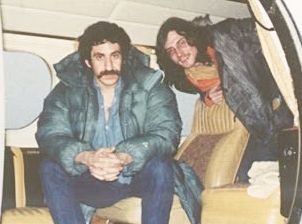
2. Andrew Gold: Not all that’s Gold Glitters
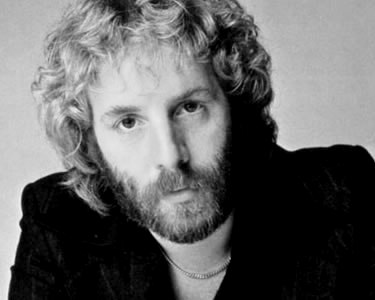
As a solo artist, Andrew Gold is known basically as a two-hit wonder, his big moments in the bright lights being perennial (and Golden Girls theme) “Thank You for Being a Friend” and the more interesting “Lonely Boy”, a song in that idiosyncratic 70’s style of a tragic lyric set to an irresistible hooky tune (see Gilbert O’Sullivan, Terry Jacks, ABBA, et al).
Elsewhere in this blog I theorize that one plausible explanation for Linda Ronstadt’s long-time exclusion from the Rock and Roll Hall of Fame (as if it matters–a Hall of Fame for Rock and Roll being a farcical idea in the first place) is the team effort behind the music was that issued forth under Ronstadt’s name. “Linda Ronstadt” was, for all intents and purposes, a band. And Andrew Gold was that band’s leader.
Significantly, it’s Gold taking the iconic solo in this performance of “You’re No Good”, while no less a guitarist than Jeff “Skunk” Baxter plays bongos:
Andrew collaborated on most of Ronstadt’s albums during her peak years in the 70’s and arranged hits for her such as “Heatwave” and “When Will I Be Loved”.
And “Thank You For Being a Friend” isn’t the only TV theme to Gold’s credit. He also sang “The Final Frontier”, the theme from Mad About You. “Final Frontier” was actually used as the wake-up call for the Mars Pathfinder space probe in 1996, thereby earning Gold the distinction of being the first human voice heard on planet Mars.
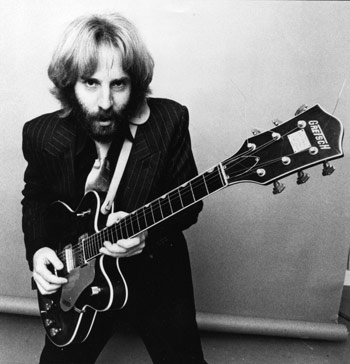
The list of artists he lent his vocal, instrumental, performing and/or arranging talents to the work of is almost wearisome in its length. It includes: Celine Dion, Carly Simon, 10cc, James Taylor, Paul McCartney, Ringo Starr, John Lennon, Brian Wilson, Jackson Browne, Don Henley, Diana Ross, Cher, Art Garfunkel, Trisha Yearwood, Wynonna Judd, Jesse McCartney, Eric Carmen, Jennifer Warnes, Stephen Bishop, Nicolette Larson, Eric Carmen, Maria Muldaur, Neil Diamond, Juice Newton, Leo Sayer, Vince Gill, Aaron Neville, The Nitty Gritty Dirt Band, and Japanese superstar Eikichi Yazawa.
Put simply, you most likely hear Andrew Gold’s work every day of your life and don’t know it.
Gold died in his sleep in 2011 at age 59.
The last word on Andrew Maurice Gold goes to Grammy-winning producer Peter Asher, who says:
“Andrew’s talent was almost eerie. He was a self-taught instinctive musician who seemed to be able to play any instrument he had a mind to. He was a brilliant writer, a great singer, and a highly imaginative producer and arranger — on top of being a multi-instrumentalist of the highest order. And he never failed to come up with something extraordinary every time he played.”
3. J.D. Souther: It Used to be His Town Too
Similarly to Andrew Gold, J.D. Souther’s time in pop’s spotlight as a solo act was fleeting. 1979’s “You’re Only Lonely” was his only actual solo top ten hit.
But in a more anonymous way, Souther made a huge footprint in the pop world, especially as a primary architect of the California country rock popularized by the Eagles and the aforementioned Linda Ronstadt.
Quoting his homepage: Mr. Souther has written for and with artists as diverse as India Arie, Brooks & Dunn, Jimmy Buffett, Glen Campbell, Joe Cocker, Tammy Wynette and Tanya Tucker, Crosby, Stills & Nash, Diamond Rio, Dixie Chicks, Don Henley, One Flew South, Roy Orbison, Bonnie Raitt, Lynn Anderson, George Strait, Brian Wilson, Trisha Yearwood, Warren Zevon…His songs have also been recorded by Michael Bublé, Tom Jones, Bernadette Peters, Raul Malo, Rita Wilson, Hugh Masekela, and hit Taiwanese pop girl group S.H.E., to name but a few.
Souther made his first significant impression teaming with ex-Byrd Chris Hillman and ex-Buffalo Springfield member Richie Furay in the Souther Hillman Furay Band, recording two albums of country rock before Furay’s conversion to Christianity caused him to abandon playing “secular” music.
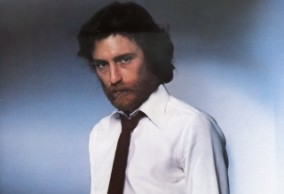
As Linda Ronstadt’s live-in boyfriend, songwriter and sometimes duet partner, Souther contributed to several of her multi-platinum albums.
Souther co-wrote and shared equal billing with James Taylor on the 1981 #11 hit duet “Her Town Too”, which most tend in retrospect to view as just another James Taylor song.
Souther’s contributions to the Eagles catalog were done pretty much in anonymity too. He was co-writer of such classics as “Best of my Love”, “Victim of Love”, “How Long”, “Heartache Tonight” (with Bob Seger sharing credit also) and “New Kid in Town”. He also co-wrote Henley’s solo hit “The Heart of the Matter”. Basically the Eagles’ legacy would be much less without Souther’s contributions. His gently loping melodies gave their multipart harmonies room to breathe; Souther’s songs were the perfect foil for the band’s trademark sound.
Take the Linda Ronstadt Challenge
26 Jun 2014 3 Comments
in General Posts Tags: linda ronstadt

Rock and Roll Hall of Famer Linda Ronstadt made a living interpreting the songs of artists of the two decades who preceded her, as well as those of some of her hip contemporaries. Below is a list of 16 of her top 40 hits and the 13 artists who originally recorded them (three artists are credited with two songs apiece).
The Challenge:
Without Googling (‘cuz that’s no fun) match the Linda Ronstadt hit with the artist who originally performed it.
Answers in the comment section.
The songs:
Heat Wave
Ooh Baby Baby
Different Drum
That’ll Be The Day
Poor Poor Pitiful Me
Tumbling Dice
I Can’t Let Go
Blue Bayou
Love is a Rose
Tracks of My Tears
It’s So Easy
Back in the U.S.A.
Just One Look
When Will I Be Loved
Hurt So Bad
You’re No Good
The original artists:
The Everly Brothers
Roy Orbison
Warren Zevon
Martha and the Vandellas
Buddy Holly (2 songs)
Mike Nesmith
Betty Everett
Little Anthony and the Imperials
The Miracles (2 songs)
The Rolling Stones
Chuck Berry
The Hollies (2 songs)
Neil Young
Any Objections to Inducting This Woman into the Rock and Roll Hall of Fame?
12 Jan 2013 2 Comments
in General Posts Tags: linda ronstadt, three dog night
“I Never Will Marry”
With Johnny Cash
“Long Long Time”
“You’re No Good”
With Andrew “Thank You For Being a Friend” Gold on guitar and the great Jeff “Skunk Baxter” on congas!
“When Will I Be Loved”
____________________
An artist like Linda Ronstadt exposes a significant flaw in the Rock and Roll Hall of Fame’s execution of its own concept.
First, one must admit that all judgments of music’s quality are subjective at least to a degree. There are people out there who think the Beatles were rubbish. So no judgment the Rock Hall makes can be backed up by “facts of quality”, only statistics of popularity at best. In short: it can, in the main, only be opinion-based. So the arguments of fans against the inductees the committee select, or for the ones they don’t, have validity because our criteria are the same as the committee’s: opinion. That said, I try to be responsible about my rantings against the Hall, though I do think it’s obscene that the work of The Moody Blues from 1967-72, and that of Chicago from about ’69 to ’75, for example, haven’t been recognized.
But Linda Ronstadt is a different case. She falls through a crack the Hall may want to patch up, though the patch might look a little messy.
Again, recognizing that this can only be an opinion-based argument, I think the following opinion would find a lot of support among those who listened to pop radio forty years ago:
Some of the best popular rock of the 70’s was released under the Linda Ronstadt banner.
She worked the same country-pop musical territory as the Eagles, who were in fact her studio band before they found stardom. Her singles were the equal of theirs in terms of songwriting, performances and production. But notice I didn’t phrase my opinion this way:
Linda Ronstadt belongs in the Rock and Roll Hall of Fame.
That’s an opinion that may or may not have as much support. And it’s clearly not the opinion of the Rock Hall’s committee. Probably because there are two main differences between Ronstadt and Hall inductees like the Eagles–other than levels of cocaine usage of course; they don’t call it the “rock hall” for nothing.
1) The Eagles primarily wrote their own material. Linda Ronstadt performed almost exclusively covers. Hmm. This does have validity with me to a point. In my own mind the Beatles will always be “greater” than Elvis (whatever that means) because they were the best pop songwriters of their generation in addition to what they did as performers and “pop stars”. Kind of like Babe Ruth was greater than Barry Bonds because he could pitch.
But no one held cover versions against Elvis. Or indeed any Motown act. Should it disqualify Ronstadt?
2) Secondly and more to the nub of the matter for me: Linda Ronstadt’s great singles are her best argument for the Hall–not her great stage presence or a groundbreaking style or any musicianship (she didn’t play an instrument). But those great singles were produced by a committee of sorts. As I said, the Eagles played on her early work. Andrew Gold, Waddy Wachtel, Russ Kunkel and some of the same stellar musicians who made Steely Dan records helped make those singles great. Listen again to “You’re No Good” or “When Will I Be Loved”–sometimes a guitar solo or great ensemble playing could be a highlight of a Linda Ronstadt song. It’s odd to say but perhaps true that if the same music had been released under a band name, that band would be in the Rock and Roll Hall of Fame. But the label on the record said “Linda Ronstadt”. And she was “just a singer in a rock ‘n roll band” to borrow a phrase. But if the “great pop by committee” approach didn’t keep a lot of Motown acts out of the Hall, once again why should it hold Ronstadt back?
So: my opinion is that if there is a museum dedicated to Rock and Roll (a weird idea in the first place) and it encompasses acts that straddle the borders of rock, pop and country (The Mamas and the Papas and Brenda Lee are in) then the great pop music credited to Linda Ronstadt ought to be recognized. And the simplest way to do that is to induct Linda Ronstadt–even if a girl, a microphone and a re-worked song don’t fit your mold as snugly as you may wish.
And I think Three Dog Night should be inducted by precisely the same logic.
Video of the Week: Linda Ronstadt–Long Long Time
07 May 2012 2 Comments
Certain things make me prouder than others of being “from the ’70’s”…
This is a great song and performance.

