McCartney pulls off a difficult songwriting feat by placing the verses and the choruses in neighboring keys (the verses are in B and the choruses are in A). At the end of the song, McCartney writes a key change so that the final chorus is in B, bringing the song full circle. Yet, it’s in the verse that McCartney injects a magical chord that helps make “Penny Lane” a case study in great songwriting. I’ll let you in on McCartney’s secret in this video.
Welcome to our little homage to musical homage. The following ten artists, whether by willful attempt or sheer happenstance, managed to pull off amazingly credible imitations of more notable musical acts. They say imitation is the sincerest form of flattery. We’ll let you decide:
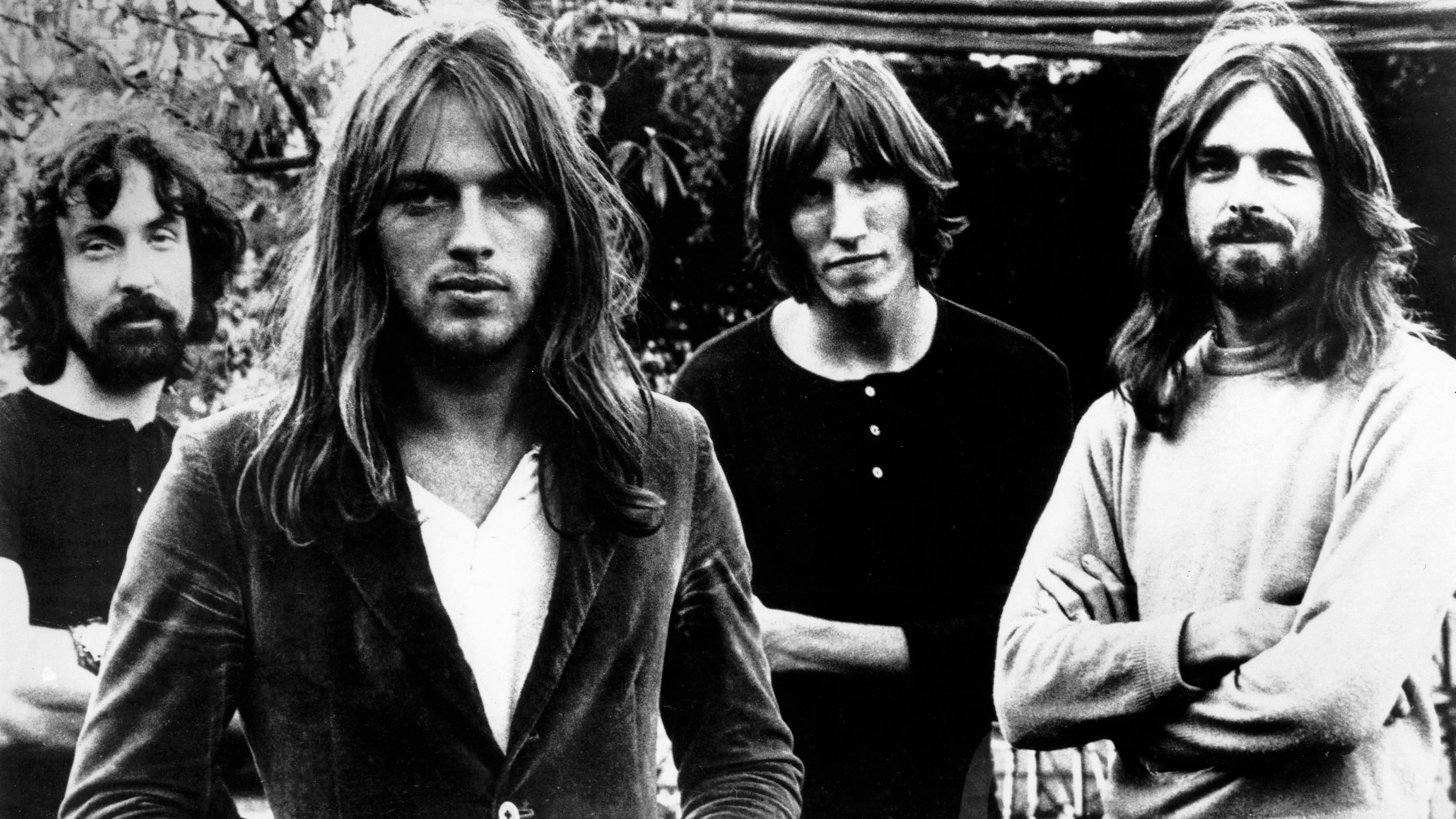
Dave Kerzner: “Stranded”
This Dark Side-era Pink Floyd sound-alike couldn’t possibly have happened by accident. Kerzner’s 2014 New World album, though it literally and figuratively shows its influences on its sleeve, is actually an outstanding progressive rock record in its own right. But “Stranded”, more than any song I’ve ever heard, shows an artist who’s assimilated the Floydian musical vocabulary.
____________________
Lissie: “Further Away (Romance Police)”
Late-70’s Fleetwood Mac is revisited by singer-songwriter Lissie, complete with the Lindsey Buckingham guitar and Stevie Nicks vocals.
____________________
Ali Thomson: “Take a Little Rhythm”
You may remember this #15 hit from 1980. If so, you almost surely thought it was Paul McCartney because it perfectly mimicked the sound of his late-70’s hits, not to mention the Tom Scott sax solo of “Listen to What the Man Said” and the prominence of the bass guitar in the mix. And also because who the hell is Ali Thomson?
____________________
Jeremy Fisher: “Scar That Never Heals”
With all the stories floating around about Paul Simon cribbing musically from other artists it’s good to see another singer so “inspired” by Paul. Or so it sounds to me.
____________________
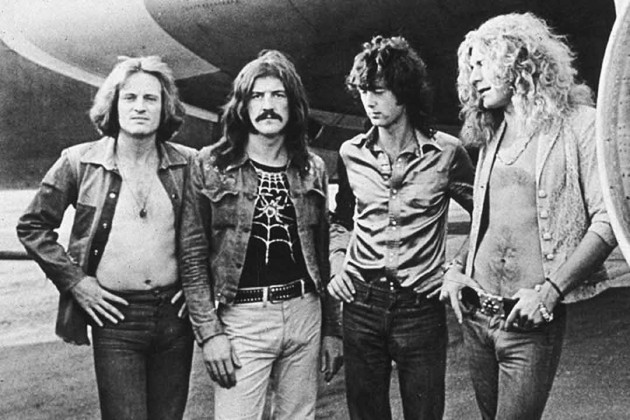
Kingdom Come: “Get it On”
This one’s just brazen. From John Bonham’s thunderous drum sound to Robert’s Plant’s wail to a riff that, to say the very least, “evokes” Led Zeppelin’s “Kashmir”…come on, guys. I mean, that sound is taken. Get your own.
____________________
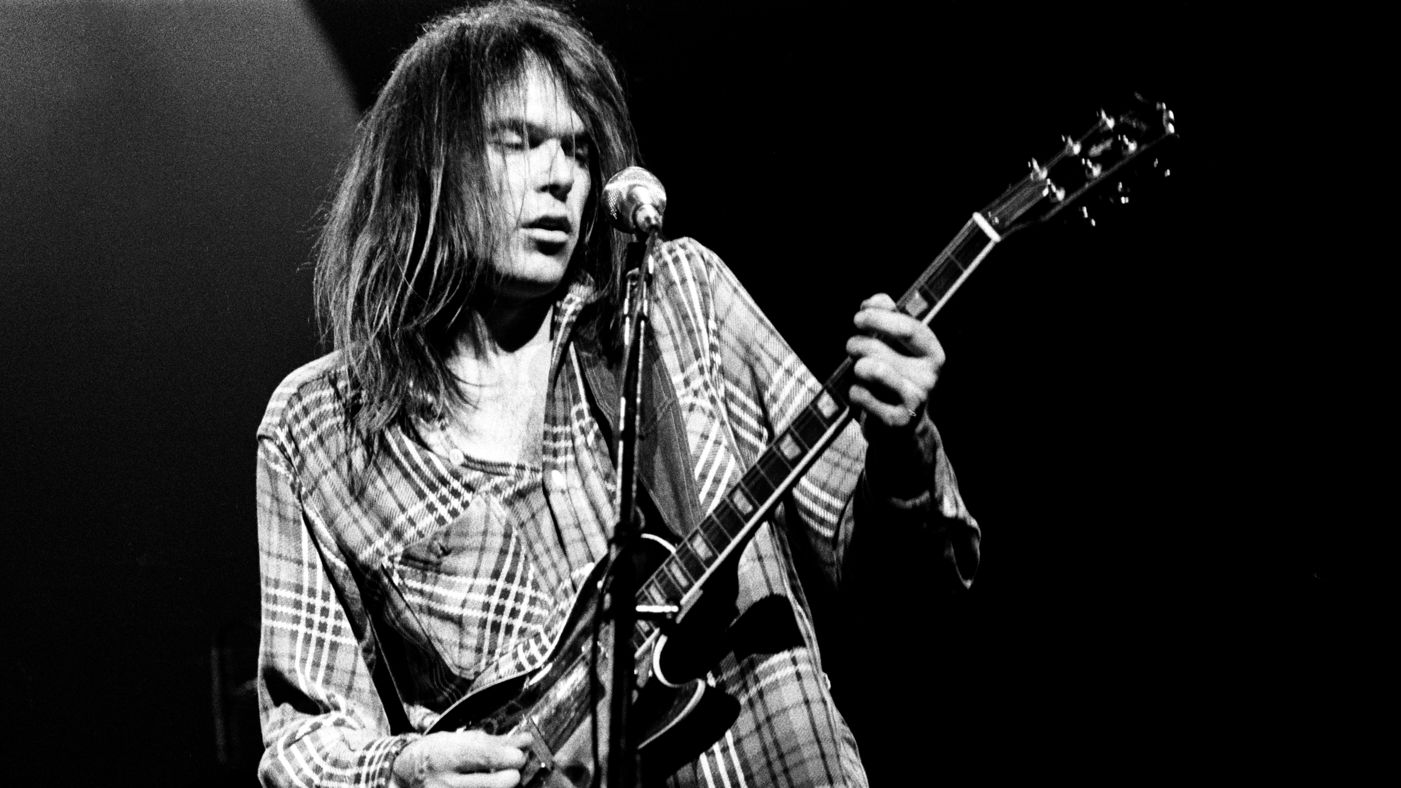
Tyler Ramsey: “Stay Gone”
Neil Young is channeled on this one, though it’s not clear if Tyler Ramsey consciously does so. I hear echoes here of some of young Neil’s early 70’s tunes such as “Winterlong”.
____________________
Band of Horses: “Long Vows”
Again with the Neil Young! Band of horses sound like they got hold of a Zuma outtake here. In a good way.
____________________
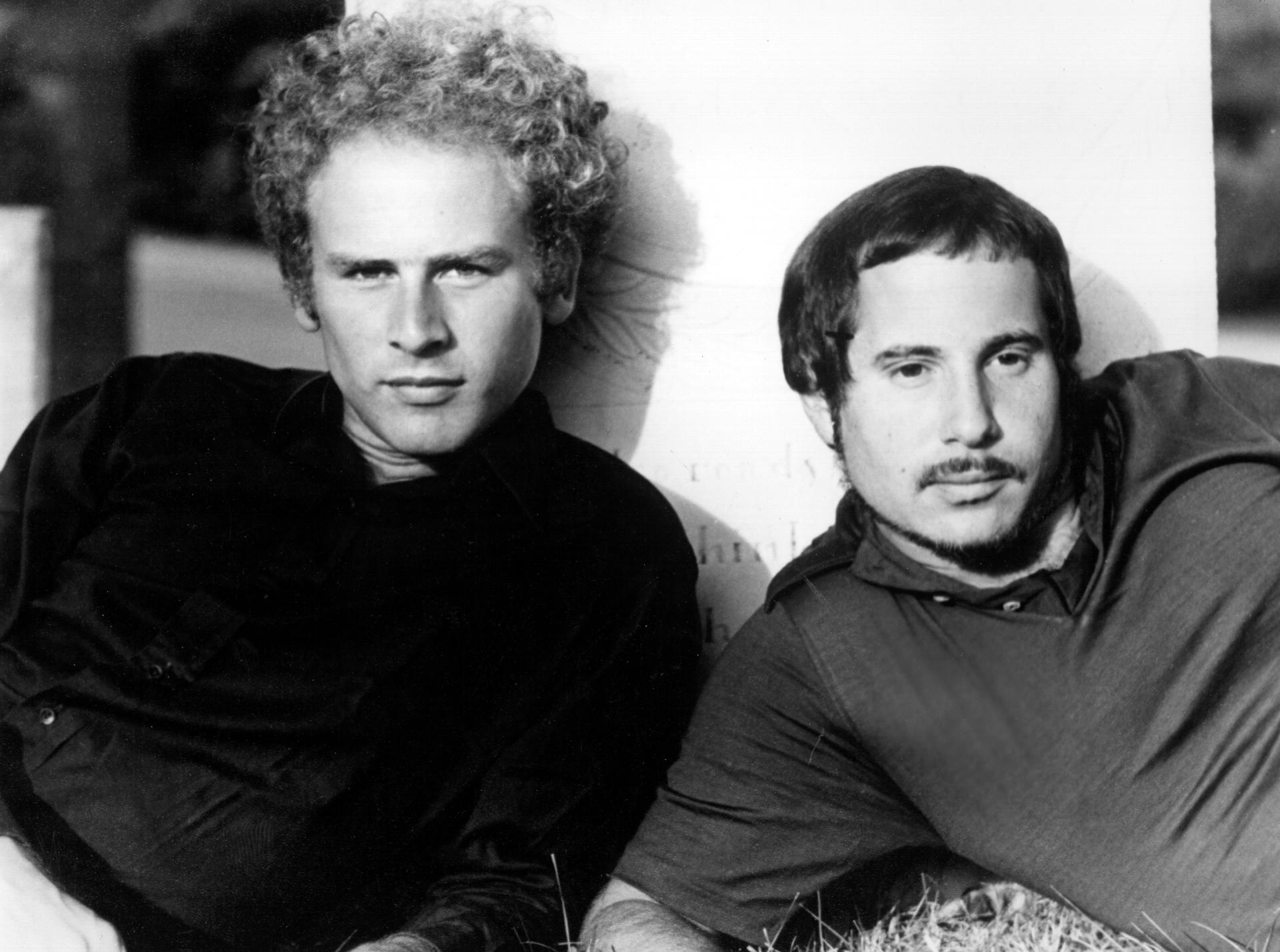
Kings of Convenience: “Homesick”
The Norwegian duo known as Kings of Convenience capture the close harmonies and intimate spare sound of “Scarborough Fair”-period Simon & Garfunkel on this one. Or as their own words in this very song describe it “two soft voices, blended in perfection”.
____________________
Accept: “Balls to the Wall”
It seems in the world of 80’s metal you could scrape out a bit of a career merely by imitating an iconic act. Since their red hot career has presumably cooled off by now (unless like Spinal Tap they’re enjoying a revival in Japan) I wonder if it’s occurred to no-hit wonder Accept–and to the previously mentioned Kingdom Come for that matter–that there’s always a living to be made as a tribute band? Who could better fill the AC/DC void now that Brian Johnson has called it quits?
____________________
Tin Tin: “Toast and Marmalade for Tea”
In case you’re not conversant with late-60’s pop, or old enough to remember that the Bee Gees had quite a successful career before anyone had ever heard of disco, Aussie duo Tin Tin was pretty much exactly what the Gibb brothers sounded like from about 1968 to ’72. It’s not a shock that Maurice Gibb produced the quaint “Toast and Marmalade for Tea”, Tin Tin’s only U.S. top 40 hit and a long-forgotten chestnut. It carries the stately sound of contemporaneous Bee Gees hits such as “Lonely Days” and “I’ve Gotta Get a Message to You”.
Irish guitarist Henry McCullough passed away Tuesday at age 72. McCullough was a former member of Paul McCartney and Wings and played on their 1973 Red Rose Speedway album. He is credited with the iconic solo on McCartney’s love song to Linda “My Love”.
His playing is also featured on Pink Floyd’s Dark Side of the Moon, among other things.
McCartney shared the following statement on Facebook:
“I was very sad to hear that Henry McCullough, our great Wings guitarist, passed away today. He was a pleasure to work with, a super-talented musician with a lovely sense of humour. The solo he played on ‘My Love’ was a classic that he made up on the spot in front of a live orchestra. Our deepest sympathies from my family to his.”
In 1982 Michael Jackson flew to England to record the song “Say, Say, Say” with former Beatle Paul McCartney at the famous Abbey Road studio. This was the second musical collaboration between Paul and Michael, the first being 1981’s “The Girl is Mine” which was featured on Jackson’s smash hit album “Thriller”. While working on “Say, Say, Say”, Paul invited Michael to stay with him and his wife Linda at their home in suburban London. One fateful night, after the three finished dinner, Paul took out a thick leather bookl and laid it out on the dining room table. This particular book listed every song and publishing right that Paul had acquired over the last 10 years. He made it clear to Michael that owning publishing rights was the only way to make really big money in the music industry. Paul further bragged that in the last year alone, he had earned approximately $40 million off his music catalogue.
“Every time someone records one of these songs, I get paid. Every time someone plays these songs on the radio, or in live performances, I get paid.”
Paul also clarified that none of those earnings came from Beatles songs because amazingly, he did not own them. Ironically, this free advice would come back to bite Paul in the butt two years later when Michael purchased the entire Beatles catalogue for $47.5 million. Paul felt appropriately back stabbed and his relationship with Michael was damaged forever. But how on earth did Paul McCartney and John Lennon lose ownership of The Beatles catalogue in the first place??!!
That Paul McCartney guy…not only was he part of the number two pop singles act of the rock and roll era (the Beatles trail only Elvis) but his solo work alone racked up enough singles success to rank him at the number sixteen position. He has so many hits that none of his Best-of collections have done even a decent job of collecting them all (and he’s probably the most significant artist not to have released a true career-spanning box set). Thus music buyers of more recent eras who haven’t collected the individual albums along the way will have some significant gaps in their collections.
Actually, many of his 1970’s hits weren’t even included on albums, making it infuriatingly difficult to find them until remastered import CDs appeared with these singles included as bonus tracks.
Let’s take a little tour of Mac’s dustier hits and see how many you remember…
1. “Give Ireland Back to the Irish” (#21 in 1972)
People tend to forget that Lennon wasn’t the only solo Beatle to get topical and court controversy.
Written in response to the events of Bloody Sunday in Northern Ireland in 1972, this divisive ditty was banned from all UK media outlets. Despite the complete lack of airplay it still rose to number 16 in the British charts. It was a number one hit in the Republic of Ireland (go figure), while it got Wings guitarist Henry McCullough’s brother beaten up by thugs in Northern Ireland when they found out Henry was in the band.
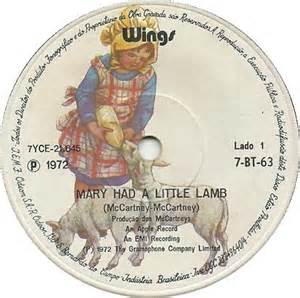
2. “Mary Had a Little Lamb” (#28 in 1972)
Wings’ next single was the polar opposite of its predecessor–about as innocuous a pop song gets.
3. “Hi, Hi, Hi” (#10 in 1973)
Oops. Controversy again. Banned by the Beeb for its lyrical content. They not only assumed “we’re gonna get hi, hi, hi” was a drug reference (a safe bet knowing Paul’s habits at the time) but objected to the sexual content i.e. lines like “get you ready for my body gun”. Paul insisted the correct lyric was “get you ready for my polygon” and that he was going for an abstract image. Not convincing.
Again the BBC’s banning didn’t hurt and might have helped. The song charted at number 5 in the UK.
4. “Sally G” (#17 in 1975)
Paul goes country. This B-side to “Junior’s Farm” (neither song appeared on an album at the time) went top twenty in its own right. Recorded in Nashville with local backing musicians adding to the country vibe, this song actually charted at #51 on the country singles chart in addition to its top twenty pop placing.
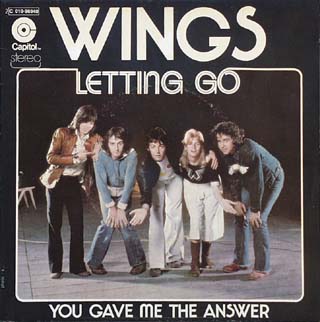
5. “Letting Go” (#39 in 1975)
This one’s long forgotten.
Honestly I have no recollection of this rather heavy-sounding 1975 hit. But it did scrape the top forty. And its vibe is fairly unique among his single releases. If you don’t remember it, give it a few listens and it’ll creep under your skin.
6. “Venus and Mars/Rock Show” (#12 in 1975)
Despite leading off both his 1975 Venus and Mars album and the live Wings Over America LP of the next year, this one’s fairly forgotten in terms of latter-day radio airplay, thanks to the tendency of oldies formats to retain some of an artist’s hits (mainly the top tens) and shun others. I’ve complained about this syndrome ad nauseam in other posts.
7. “Girls’ School” (#33 in 1978)
Here’s a mind-blowing fact to help remind you that it’s a whole different world across the pond: This song was released as a double A-side in the UK along with “Mull of Kintyre” and was McCartney’s only number one single in that country in the entire decade of the 1970’s. During that time, America sent no fewer than six of his songs to the top spot (“Uncle Albert/Admiral Halsey”, “My Love”, “Band on the Run”, “Listen to What the Man Said”, “Silly Love Songs” and “With a Little Luck”.)
Interestingly, “Mull of Kintyre”, despite its status as a radio staple, never actually made the pop charts in America, although it did hit #45 on the Easy Listening chart. In other words, a song that never made the top 40 is much more familiar to Americans than any of these songs that did.
8. “I’ve Had Enough” (#25 in 1978)
“With a Little Luck” was the number one smash from 1978’s London Town album, but the LP also spawned two less successful follow-up hits. The first is this rather feisty (for Paul) rant.
9. “London Town” (#39 in 1978)
The title track is a pleasant thing, and pretty much lost to history.
10. “Getting Closer” (#20 in 1979)
One of McCartney’s finest and most propulsive pop rock songs. It surprises me this one’s never been included on any of his greatest hits compilations. It almost has a “Live and Let Die” feel to its instrumental coda.
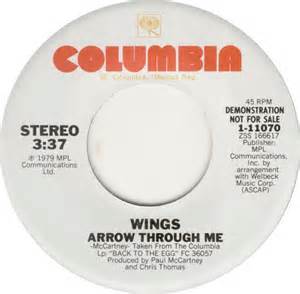
11. “Arrow Through Me” (#29 in 1979)
This one’s really gotten dusty. But it’s a great listen. The horn charts are Stevie Wonderesque.
12. “So Bad” (#23 in 1984)
Criminally overlooked, this one. I think it’s one of the true lost gems of McCartney’s catalogue. From 1983’s Pipes of Peace and re-recorded for 1984’s Give My Regards to Broad Street (also lovely). This was the follow-up single to “Say Say Say”, which was so bad.
13. “Spies Like Us” (#7 in 1986)
This uber-80’s sounding title song from the Chevy Chase/Dan Aykroyd film sounds like something Robert Palmer (wisely) left off one of this albums. I’m not a fan. And it’s too long. And it’s really stupid. I should have mentioned at the outset that there are a few here I don’t actually mind being forgotten.
14. “Press” (#21 in 1986)
Another not-so-stellar moment in a stellar career. Not awful. Just not representative of one of pop’s greatest living songwriters.
The Famous Beatles Songwriter and Musician Speaks to Sir David Frost About His Life in the Spotlight
(Source: Aljazeera)
Paul McCartney, one of the most famous musicians of all time, rose to prominence 50 years ago as part of the British pop sensation The Beatles.
From humble, working-class beginnings, McCartney, 70, is now one of the richest men in the world. He has even topped the bill at the White House, playing for Barack Obama, the US president.
He sits down with Sir David for a full hour to tell his own story of the band, and its break up; to discuss some of the highs – and a few lows – of his life; and to provide a glimpse into his world behind the headlines.
The Beatles – John, Paul, George and Ringo – helped to define the 1960s, transforming modern music. They played sell out concerts all over the world, in front of hysterical fans. At the height of “Beatle Mania”, fans screamed so loud that the band said they could not hear their own music.
With more than 20 number one hits through the 1960s, they were seemingly unstoppable.
But the glory days did not last and the group split in 1970. However, the songs written by McCartney and the late John Lennon continue to live on through the generations.
“John and I wrote together something like 300 songs, just short of 300. We would meet up, sit down to write and three hours later we would have a song. And never, never did we have a dry session, we always wrote a song …. It was a great thing. Looking back on it I really feel blessed to be the guy who wrote with John. Because he was pretty hot stuff. And writing with me, I was pretty hot stuff too, so the two of us gelled,” McCartney says.
Recalling the break-up of The Beatles, McCartney says: “I think it was time for John certainly to leave. It was a bit of a shock to all of us, he just announced ‘oh I am leaving the group’. We all said ‘are you sure about this?’ We tried to keep it together but he was definitely going to leave, so that was basically what did it.
“But I think, in a way, then we realised that we had come full circle, we had kind of done everything we wanted to do … So in actual fact it wasn’t that bad a thing.”
On Yoko Ono, Lennon’s then-wife who is often blamed for the break-up of The Beatles, McCartney says: “She certainly didn’t break the group up.”
“The group was breaking up and I think she attracted John so much to another way of life that he then went on to, very successfully, add a sort of second part to his career, writing things like ‘Imagine’ and ‘Give Peace a Chance’. I don’t think he would have done that without Yoko.”
On his own enduring career in music, McCartney says: “I saw something the other day where I was quoted as saying ‘It will be pretty sad to be prancing around on a stage at 40’.
“But no, I am still prancing,” he laughs. “And enjoying it.”





 Every Moment Has A Song