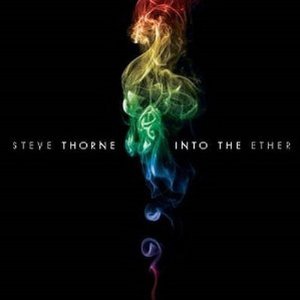
Steve Thorne: Into the Ether (2009)
Ironically in the era of music’s greatest-ever availability, more quality stuff goes unheard than ever before. The proliferation of releases today, combined with the rock genre’s less dominant status in the marketplace, have resulted in some very good rock albums going almost unnoticed.

British songwriter Steve Thorne’s Into the Ether is just a few years old and already out of print. I’m convinced it’s a better album than 90% of what sat on record store shelves for years in any of the past few decades–but so it goes for a musician whose style almost seeks out those cracks to fall between. He’s too British to be mass-marketed to Americans, too prog for straight rock fans, not prog enough for hardcore prog fans, too rock to be marketed as a singer-songwriter, too much of a singer-songwriter to be marketed as a rocker. And he’s way too low-profile to get much notice.
But he’s too good to be ignored.
The multi-instrumentalist Thorne enlisted a who’s who of high-caliber prog talent to record his third solo record: Pete Trawavas (of Marillion, Kino and Transatlantic) Nick D’virgilio (Spock’s Beard) Gavin Harrison (Porcupine Tree, King Crimson) Tony Levin (King Crimson, Peter Gabriel) John Mitchell (Arena, It Bites, Frost, Kino)…and on and on. They insure that there’s no fill, break or solo that’s merely dashed off. Each song is well-served with cracking performances by this all-star progressive rock lineup.
But is it a progressive rock album? I’d say it merely straddles the prog’s border with singer-songwriter rock. Although rather dark and dour in tone, it doesn’t set out to be particularly challenging, and other than the 7/8 time signature of “Black Dahlia” and a 5/4 moment here or there, it mostly lacks the rhythmic complexities that typically mark that genre.
The upside of that is, while prog album reviewers often commend an album that they refer to as “a thoroughly uncomfortable listen” or some such, Thorne’s clear objective is to make appealing music, even if his message is often a less than cheerful one. It’s hard to imagine any fan of melodic 70’s rock not appreciating a song like “Victims”, even if it is a rumination on the void we create by our self-imposed isolation from each other.
But if “Victims” isn’t hopeless enough, “Curtain” ought to do it. So convincing is its album ending “all is futility” statement and so heartfelt is Thorne’s lyric about the desire to bring down the thick red drapes (I was born by such fluke and I’m ready to die…) I honestly wondered if he’d make another album following Ether (he did). Still, it is beautifully rendered, as is the rest of Into the Ether.
See also: https://edcyphers.com/2013/02/25/songs-you-may-have-missed-342/
Listen to: “Feathers”
Listen to: “Paper Tiger”
Listen to: “Black Dahlia”
Don’t miss: “Victims”
Listen to: “The End”
Listen to: “Curtain”
 Every Moment Has A Song