A&M Records: Independent, With Major Appeal

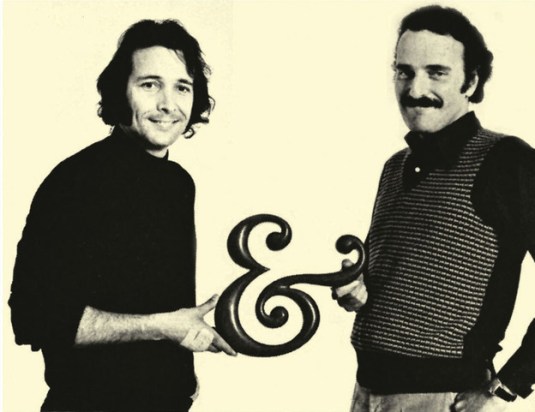
Herb Alpert (left) and Jerry Moss, who founded A&M Records in Alpert’s garage in 1962

(Source: NPR)

From the early 1960s to the late ’80s, A&M was one of the most eclectic and powerful independent record labels in the world. The roster of artists who recorded there includes The Carpenters, Captain Beefheart, The Police, Joe Cocker, Suzanne Vega, Procol Harum and Janet Jackson.

This year marks the 50th anniversary of A&M’s founding by trumpeter Herb Alpert and record promoter Jerry Moss. Among the first releases on the label was a song Alpert recorded in 1962 with his band, The Tijuana Brass, inspired by the bullfights he and Moss used to go to in Mexico.

“I was intrigued by the bass bands in the stands, announcing the bullfights,” Alpert recalls. “I was trying to capture that feeling. Jerry came up with the name.”

“The Lonely Bull” was the first hit for their fledgling record label, A&M (Alpert’s and Moss’ initials). The company was started out of Alpert’s garage in West Hollywood. “We kind of wired it up a little bit,” Moss recalls, sitting next to his partner. “There was a two-line phone in there and Herb, was it a two- or three-track Ampex tape recorder?”

“Two tape recorders,” Alpert answers, “and that’s where the Tijuana Brass sound started.”

Charlie Chaplin Studios

In time, the partners moved their operations into offices that once housed the studios of silent film star Charlie Chaplin (today it’s the headquarters of Jim Henson productions). Alpert says that from the start he wanted A&M to be something different from the cold, corporate record labels where he’d recorded before — something more personal.

“Jerry and I were in sync, not wanting to find the beat of the week,” he says. “We wanted to find something that was unique, find artists that had something to say in a unique way. We weren’t thinking of how much money we could make on each artist. We were just thinking about, ‘How can we put out great records? How can we put out records that we would buy ourselves?’ ”

Alpert says he wouldn’t necessarily have bought a Carpenters record himself, but A&M signed the duo in 1969. After receiving an unsolicited demo tape, he says he immediately he recognized the talent in Karen Carpenter’s voice.
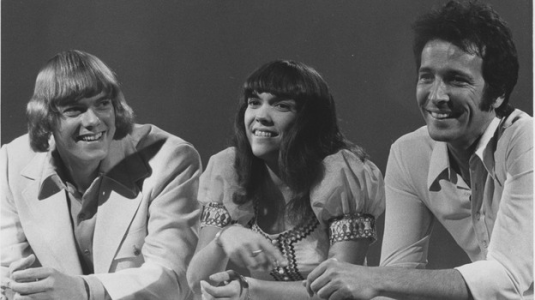
Herb Alpert with Karen and Richard Carpenter, whom the label signed in 1969.

I learned something years back, watching Sam Cooke,” Alpert says. “He showed me how to close my eyes and just go for the feel. He says people are just listening to a cold piece of wax and it either makes it or it don’t.”

The Carpenters went on to score 12 Top 10 singles. Their success, and that of other middle-of-the-road acts like Sergio Mendes and Brasil ’66, allowed the label to sign or license less well-known artists like Joe Cocker and Fairport Convention.

A&M had a remarkable reputation both for picking winners and for its eclectic taste, says longtime music journalist Dave Di Martino, now executive director of Yahoo Music.

“Every record was worth picking up, paying attention to,” DiMartino says. “Track for track and numbers for numbers, artists for artist, A&M’s accomplishments were fairly staggering. If you wanted smooth stuff, intelligent folksy stuff, they were very famous for sticking by their artists. If you wanted hard rock, particularly in the ’70’s, they had a lot of it.”

Frampton Sticks Around

In 1970, A&M signed the British band Humble Pie, featuring guitarists Steve Marriot and Peter Frampton. When Frampton decided to go solo, he stuck with A&M.

“If there was ever the perfect label for a musician at that time, it was A&M,” Frampton says. “They wanted the artists to become themselves.”

Frampton says Alpert — the musician — and Moss — the music lover — were always available whenever he wanted to drop in and talk. And he says A&M’s laid-back studios provided a family vibe.

“I never went to college, but I felt I was going to college at the A&M campus. That’s what it was like,” he says. “You’d see The Carpenters going into the studio and one day I saw Sting come in on a motorbike. It was the great place to hang out.”

Frampton says he got to sit in on other musicians’ sessions and was invited to help choose the cover art for his albums.”Word on the street was, ‘We’ve never had it so good here,’ ” he says. “They never once said, ‘You should do more of this,’ or ‘Don’t do that.’ They just let us do our thing. We made mistakes, and we learned by our own mistakes. And that’s sort of unheard of now.”

Nurturing Artists

Frampton’s third album for the label, Frampton Comes Alive, became the best-selling album of 1976. And just as it did with Frampton, A&M stuck with another artist until she finally scored a hit. From her home in England, singer-songwriter Joan Armatrading says success didn’t come until her third album with A&M.

“If you think about that today, after that first album, I don’t think I would have the second album made because people would probably be saying, hang on a minute, how come you haven’t given us that song yet? And the second album came and they’d probably be saying, well, you’ve had two albums and you haven’t done it, ” says Armatrading. “So A&M were very much into nurturing artists.”

Bryan Adams was just an 18-year-old Canadian singer when he got signed to A&M. “Those were great times,” he recalls. “The record business was flourishing; radio was a force. The people who were involved were dedicated to building A&M — which at the time was just an independent label — into a major label. It was a label that took their chances with artists who weren’t exactly mainstream until they found their niche. They took huge chances.”

The label helped launch the careers of Joe Jackson, Suzanne Vega and The Police — as well as Sting. Producer Quincy Jones says he and many other jazz musicians also have fond memories of recording at A&M.

“Honey, are you kidding?” Jones asks. “We recorded ‘We Are the World’ there in the A&M studios, That’s something you never forget.”
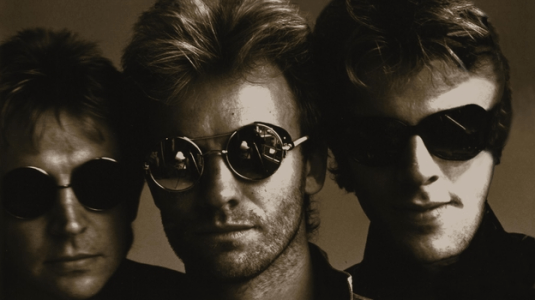
The Police’s 1978 single “Roxanne” helped the band secure its deal with A&M Records.

End Of An Era

A&M continued to produce hits through the 1980s. But in 1989, Moss says, he and Alpert decided to sell their label to Polygram Records for half a billion dollars.

“It was sad because we really wanted to make it bigger,” Moss says. “They bought the company, they said, ‘No changes. There will be no changes. You guys can run it the way you feel like.’ The first thing you hear is, ‘Um, we’re gonna close the Paris office.’ ”

Then A&M’s New York offices were shuttered. Moss says he and Alpert managed the label for three more years before bowing out, unhappy with their new bosses.

“They didn’t appreciate the founder’s way, so to speak, of doing business,” he says. “All of a sudden, they were taking away from us our individuality. And we thought, ‘That’s what you were buying, was the fact that we were different and unique!’ ”

Moss says they knew it was all over when, the week after he and Alpert sold the company, the new owners painted over murals — created by musicians from the San Francisco band The Tubes — on the outside walls of the recording studios. “Now why would anybody do that?” Moss says, shaking his head. “This is great art, this is important art. And they just whitewashed it. And it was like, ‘OK, that’s who they are, these people.’ ”

Moss and Alpert filed several lawsuits against their label’s subsequent owners for violating an “integrity clause” written into the sale. The suits were settled years ago. Since then, Moss and Alpert have donated A&M’s archives to UCLA, and in 2006 the partners were inducted into the Rock and Roll Hall of Fame.

Today, the label launched in Herb Alpert’s garage is owned by the giant Universal Music Group, which has released a 50th-anniversary collection of A&M artists. To this date, nearly 600 of A&M’s original albums are still available.

Madonna Bares Her Butt for Sandy Victims

(Reprinted from MSN Entertainment)

Madonna found a saucy way to raise money for victims of superstorm Sandy by baring her butt onstage as she asked for donations during her show in New York City this week.

The pop superstar went to visit relief workers at Far Rockaway in Queens on Monday to publicize aid efforts in the hours before she took to the stage for her MDNA show at Madison Square Garden. Madonna opened up about her experience at Rockaway Beach during the concert and paid tribute to all those who have stepped up to help in the aftermath of the storm.

She told the audience, “We … have to call attention to the fact that New York has been devastated by a hurricane and I think that people really underestimate the damage that has been done. The homes, the jobs, the livelihoods that have been lost. … There are many wonderful people, some of them here tonight, who have started amazing initiatives and have been giving help to people who have nowhere to live, who have no food and nowhere to sleep.

“A big thank you to all these people … I went down to Rockaway Beach yesterday with my children and we saw what was going on down there and we saw the destruction and it was really sad but we also saw amazing acts of humanity, people working hard, handing out food, blankets, giving love. … I wanna give a big thanks to those people too. We owe them a lot. New York owes them a lot.”

She took off her top to reveal the words “No fear” scrawled on her back and pulled down her pants, telling the audience “(I am) showing (my) naked a– for Hurricane Sandy victims” and encouraging them to throw cash donations at the stage. She added, “If you are going to look at the crack of my a–, you better raise some cash.”

_______________________________________

Not even two days ago I tacked something up here about Bono’s ridiculously ineffectual fundraising efforts. Compared to Mad Madge though, that guy deserves a Nobel Prize. I guess we all do what we’re capable of doing. And Madonna’s specialty, in this her pathetic career downside, has become the flashing of what I’d be calling her “lady parts” if she were a lady.

Sad for two reasons: 1) after visiting relief workers to call attention to the hurricane’s devastation (thanks, we were completely unaware) this is what a cultural icon decided would be her contribution to the effort, and 2) didn’t she used to be a singer? Seriously, didn’t people once talk about Madonna for reasons related to music? Now she’s reduced to selling primarily nostalgia and sex. The phrase “If you are going to look at the crack of my a–, you better raise some cash” sounds exactly like a prostitute because that’s what Madonna has become.

Oh, and way to show your sensitivity to the human suffering.

Songs You May Have Missed #236

pain

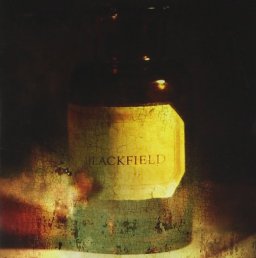
Blackfield: “Pain” (2005)

I gushed about these guys on other occasions so there’s no reason to repeat all the reasons I think they’re great. But I do want to share another of my favorite Blackfield songs so…feel my “Pain”.

When modern-day prog rock’s leading light, Porcupine Tree’s Steven Wilson, and Israeli pop rock legend Aviv Geffen get together they make a mesmerizing brand of shoegazing catharsis. As I’ve said before, if you can appreciate this kind of thing, you can appreciate that no one does this kind of thing better. Blackfield’s first two albums should be considered classics of their time.

See also: https://edcyphers.com/2012/10/01/recommended-albums-24/

See also: https://edcyphers.com/2013/02/11/songs-you-may-have-missed-329/

See also: https://edcyphers.com/2013/10/04/songs-you-may-have-missed-483/

Songs You May Have Missed #235

plume

Plume Giant: “We Got it Made” (2012)

It’s easy to let yourself get caught up in the happy vibe of this one. Plume Giant came together as students at Yale University and began making a fresh sound built on harmonies, whimsical humor and a willingness to play an unusual array of instruments (viola, harmonium, melodica). They graduated in May and released their first full length CD, Callithump in August. “We Got it Made” has a dash of dixieland, a pinch of Pink Martini, and loads of simple joy.

Here they actually bring something new and pleasant to “Strawberry Fields Forever”, although it looks like they picked a crappy spot for busking.

Is the Sound on Vinyl Records Better than on CDs or DVDs?

(Reprinted from HowStuffWorks)

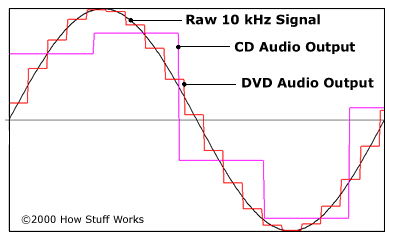
The answer lies in the difference between analog and digital recordings. A vinyl record is an analog recording, and CDs and DVDs are digital recordings. Take a look at the graph below. Original sound is analog by definition. A digital recording takes snapshots of the analog signal at a certain rate (for CDs it is 44,100 times per second) and measures each snapshot with a certain accuracy (for CDs it is 16-bit, which means the value must be one of 65,536 possible values).

Comparison of a raw analog audio signal to the CD audio and DVD audio output

This means that, by definition, a digital recording is not capturing the complete sound wave. It is approximating it with a series of steps. Some sounds that have very quick transitions, such as a drum beat or a trumpet’s tone, will be distorted because they change too quickly for the sample rate.

In your home stereo the CD or DVD player takes this digital recording and converts it to an analog signal, which is fed to your amplifier. The amplifier then raises the voltage of the signal to a level powerful enough to drive your speaker.

A vinyl record has a groove carved into it that mirrors the original sound’s waveform. This means that no information is lost. The output of a record player is analog. It can be fed directly to your amplifier with no conversion.

This means that the waveforms from a vinyl recording can be much more accurate, and that can be heard in the richness of the sound. But there is a downside, any specks of dust or damage to the disc can be heard as noise or static. During quiet spots in songs this noise may be heard over the music. Digital recordings don’t degrade over time, and if the digital recording contains silence, then there will be no noise.

From the graph above you can see that CD quality audio does not do a very good job of replicating the original signal. The main ways to improve the quality of a digital recording are to increase the sampling rate and to increase the accuracy of the sampling.

The recording industry has a new standard for DVD audio discs that will greatly improve the sound quality. The table below lists the sampling rate and the accuracy for CD recordings, and the maximum sampling rate and accuracy for DVD recordings. DVDs can hold 74 minutes of music at their highest quality level. CDs can also hold 74 minutes of music. By lowering either the sampling rate or the accuracy, DVDs can hold more music. For instance a DVD can hold almost 7 hours of CD quality audio.

CD Audio DVD Audio
Sampling Rate 44.1 kHz 192 kHz
Samples per second 44,100 192,000
Sampling Accuracy 16-bit 24-bit
Number of Possible Output Levels 65,536 16,777,216

DVD audio discs and players are rare right now, but they will become more common, and the difference in sound quality should be noticeable. To take advantage of higher quality DVD audio discs, however, you will need a DVD player with a 192kHz/24-bit digital to analog converter. Most DVD players only have a 96kHz/24-bit digital to analog converter.  So if you are planning to take full advantage of DVD audio be sure to look for a 192kHz/24-bit DAC.

(Thanks Dave!)

Recommended Albums #28

cover

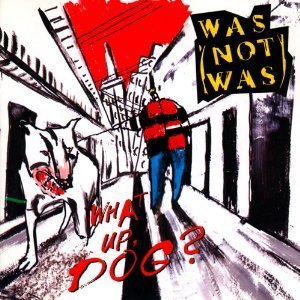
Was (Not Was): What Up, Dog? (1988)

The world didn’t really know what to make of Was (Not Was). They weren’t so much ahead of their time as from another planet. Even the band’s own singers didn’t always “get it”. But one of the weirdest and most wonderful albums to come out of the 80’s was this genius rollercoaster ride of dance pop, retro soul and avant-garde beatnik poetry. Or something.

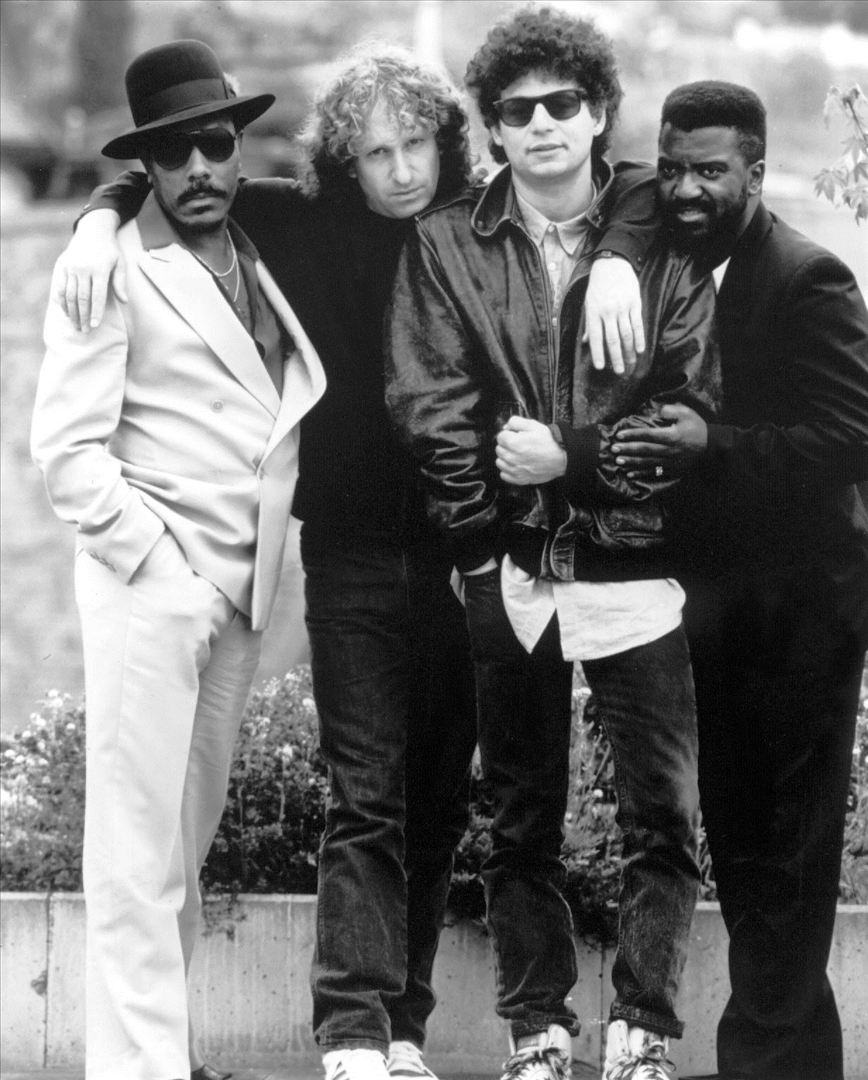
Was (Not Was) were David Was (actual name: David Weiss) and Donald Was (born Donald Fagenson) who were, of course, the “Was”, and R&B singers Sir Harry Bowens and Sweet Pea Atkinson, who accounted for the “Not Was”. Got that?

Don Was went on to become one of pop’s most sought-after producers after overseeing Bonnie Raitt’s Grammy-winning Nick of Time LP. The list of artists Was has produced is as impressive as anyone in the biz: The Rolling Stones, Bob Dylan, Elton John, Willie Nelson, Brian Wilson, George Clinton, Roy Orbison…no room here to do it justice and, anyway, it’s not the point of this post.

was

In 1988 old school pals Don and David Was set up shop very much like Steely Dan did in the previous decade. Their band was primarily a two-man songwriting partnership and brain trust that employed (in addition to Sweet Pea and Sir Harry) a revolving cast of singers and musicians to execute their grand plans. Over the course of the band’s 1980’s four-album run they used as vocalists: Mitch Ryder, Mel Tormé, Doug Fieger (of the Knack), Leonard Cohen, The Roches, Iggy Pop, Downtown Julie Brown, Ozzy Osbourne and Frank Sinatra Jr. Oh, and if I’m not mistaken, Marshall Cranshaw sang exactly one word (“feelings”). Even reading the album credits for this band is a weird revelation.

But basically two overly clever white Jewish guys (one with a name, Donald Fagenson, weirdly almost identical to Steely Dan’s Donald Fagan) wrote soul and dance music with lyrics dripping with a slick sickness, and a multiracial lineup helped give it the necessary authenticity of performance. Each singer had a specialty: Sweet Pea sang the gritty Motown-style workouts. Smooth-voiced Sir Harry took the seductive soul burners. And David Was himself performed bizarre, stream-of-altered-consciousness freakouts like “Earth to Doris” and the title track.

This album produced two top twenty hits, the #7 “Walk the Dinosaur” and #16 “Spy in the House of Love”. They were two of the “safest” songs on an otherwise fairly absurdist collection. Chuckle-worthy lyrics pop up frequently, including the following from “Shadow and Jimmy” which was co-written by Elvis Costello:

For men without women are like fish without water to swim in

With their eyes bugging out they flop on the beach/And look up at the girls who are just out of reach

An average songwriter could have written the first line. The rest is lyrical genius.

Of course, this album is too great to still be in print. Nobody likes a smart aleck. But you can find used copies for pennies. Or wait and hope that it’s reissued by the heroes of the music world, the respectful reissue labels.

Listen to: “Out Come the Freaks”

Listen to: “Earth to Doris”

Listen to: “Boy’s Gone Crazy”

Listen to: “Anything Can Happen”

Listen to: “Shadow & Jimmy”

Listen to: “Dad I’m in Jail”

Previous Older Entries Next Newer Entries