Recommended Albums #54

has been

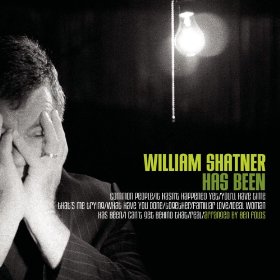
William Shatner: Has Been (2004)

When I tell people what a great album William Shatner’s Has Been is I’m consistently misunderstood. I know I have a snarky sense of humor at times. I know I often tend to communicate by saying the opposite of what I actually mean. But as unlikely a scenario as you might find it to be, I’m dead serious when I tell you this is a very, very good pop album.

And no, I don’t “like it ironically”. Albeit elements of novelty abound, this record is not in the category of Shatner’s 1960’s cheese-fest The Transformed Man, which can only be appreciated in the ironic sense. Rather than spotlight Bill Shatner the untalented singer as that spectacularly bad album did, producer Ben Folds plays to Shatner’s strengths here–namely, his ability to deliver dramatic spoken lyric. It works.
shat

When Folds signed on to produce and arrange this record (he and Shatner had worked together before, on Folds’ Fear of Pop project) he didn’t check his keen pop sensibilities at the door. The music here is top-notch, not to mention quite diverse.

And the guest performances are inspired. Listen for Joe Jackson’s impassioned take on the cover of Pulp’s “Common People”, the well-cast Henry Rollins on the duet/litany of general complaints “I Can’t Get Behind That”, or Brad Paisley taking a heartfelt turn on the chorus of “Real”. Folds himself takes vocals and piano on the tale of father/daughter estrangement “That’s Me Trying”. Folds’ plaintive melody and vocal delivery complement Shatner’s lamentation here perfectly.

Interlaced among all that is the astonishingly broadly-talented Mr. Shatner delivering what are at times shockingly honest and confessional-sounding self-penned lyrics. Most extreme example (not featured here) is “What Have You Done”, an unblinking account of Shatner’s discovery of his wife, dead in the couple’s swimming pool.

The guy has stones, or happens to be at the station in life when he just doesn’t give a shit anymore what people think. Probably both.

The album’s title track is possibly its highlight. Not only is it a brilliant musical lampoon of a now-obscure 60’s pop sub-genre typified by Lorne Greene’s “Ringo”, but it serves perfectly as a (hilarious) raised middle finger to Shat’s critics. Good for him.

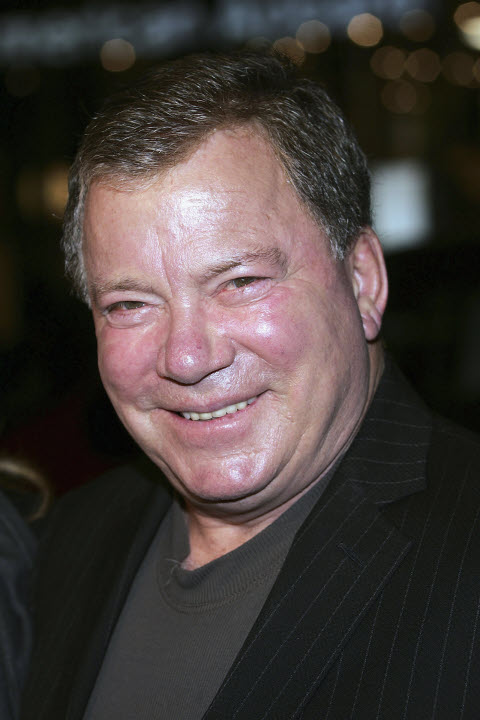
Of course he’s Captain James T. Kirk to most. But the list of William Shatner’s accomplishments–best-selling author, successful horse breeder, Priceline commercial icon, Emmy-winning Denny Crane, and of course, a singer of sorts–is admirable. As he says in the album’s final track, “Real”:

And while there’s a part of me

In that guy you’ve seen up there on that screen

I am so much more

While I’m dead serious about how good an album this is, the chief reason to listen is that It’s good fun.

Listen to: “Common People”

Listen to: “That’s Me Trying”

Listen to: “Ideal Woman”

Don’t miss: “Has Been”

Listen to: “I Can’t Get Behind That”

Listen to: “Real”

See also: https://edcyphers.com/2013/02/20/songs-you-may-have-missed-337/
Songs You May Have Missed #467

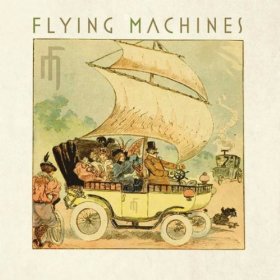
flying

Flying Machines: “Stay” (2009)

One might hear echoes of melodramatic symphonic pop of yesteryear in the sound of New York’s Flying Machines. I don’t throw out Freddie Mercury comparisons lightly, but there may be basis for it here.

“Stay” is from their consistently melodic and enjoyable debut.

Songs You May Have Missed #466

donohue

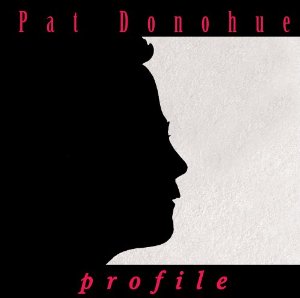
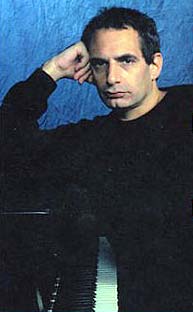
Pat Donohue: “Jazz Name” (2005)

Pat Donohue is not only a master of acoustic fingerstyle guitar, but his songwriting is pretty spectacular too. The winning “Jazz Name” throws a witty series of internal rhyme rabbit punches at you until you surrender with a smile.

See also: https://edcyphers.com/2013/02/02/songs-you-may-have-missed-317/

See also: https://edcyphers.com/2012/11/08/songs-you-may-have-missed-215/

Guitarist Brian May Explains the Making of Queen’s ‘Bohemian Rhapsody’

(Source: Open Culture)

“Bohemian Rhapsody” by Queen is one of the most audacious pop songs ever made. Part ballad, part opera, part heavy metal orgasm, the song has six distinct sections and took over a month to record. At just under six minutes, “Bohemian Rhapsody” was considered too long for pop radio. “The record company, in their infinite ignorance, of course immediately suggested that we cut it down,” said Queen drummer Roger Taylor, who stood by his bandmates and refused to let the song be cut. “It really was hit or miss. It was either going to be massive or it was going to be nothing.”

“Bohemian Rhapsody,” of course, went on to become one of the most popular songs in music history. It spent nine weeks at number one in the UK following its release in the fall of 1975, and went back to number one after the death of singer Freddie Mercury in 1991. In America the song peaked at number nine in 1976 and re-entered the charts in 1992, when it was featured in the movie Wayne’s World. Last year, an ITV poll in Great Britain listed “Bohemian Rhapsody” as “The National’s Favorite Number One” song in 60 years of music.

In this fascinating video, Queen guitarist Brian May goes back to the mixing board to explain the complexity of layers that went into realizing Mercury’s vision for the song. The original 24-track analogue recording system was far too limited, so the band used the ping-pong technique to “bounce” literally hundreds of overdubs into the mix. May explains how the operatic vocal layers were inspired by the “cascading strings” effect made famous by Annunzio Paolo Mantovani, a technique May first tried out in 1974 with the guitar solo on “Killer Queen.”

The video is an excerpt from Inside the Rhapsody, a documentary that was included on the 2002 DVD Queen: Greatest Video Hits 1. For more on the making of “Bohemian Rhapsody,” please see our post, “Listen to Freddie Mercury’s Wonderous Piano and Vocal Tracks for ‘Bohemian Rhapsody’ (1975).” And for a reminder of how it all came together, here’s the official video:

Songs You May Have Missed #465

moon safari

Moon Safari: “Heartland” (2010)

From the band that currently have me held firmly in the clutches of heavy–no, damn near continuous–rotation. This particular song has the tightest grip of all.

Moon Safari represents an astounding juxtaposition of seemingly incompatible musical components: the surprise-around-every-corner complexity of prog rock alongside an almost boy-bandesque propensity for catchy pop hooks, and a five-part harmony vocal sound simply unmatched in their genre.

At its absolute best prog rock is a triumph of possibility over musical triteness and cliché. It stretches the envelope. But it doesn’t need to tear the seams–to sound so “original” that it challenges more than pleases.

And that’s what Moon Safari seem to understand: ultimately music–even relatively complex music–is meant to be enjoyed. Melodic and instrumental hooks abound here. But like the best prog, it’ll take you many repeated listens to assimilate the song entirely–to be able to sing every lyric on cue and hit every correct note of the solo on air guitar or synth.

And long before you do–assuming you have a musical sweet tooth for the sunny, uplifting sounds typical of Swedish prog–you’ll be blaring it from a car window or hitting the repeat button on your device to enjoy another rapturous six-minute fix.

Ornate, yet entirely accessible. A treat for fans of complex music, but a great bridge into the genre for fans of more mainstream bands (Styx come to mind). This might be the perfect prog song.

Open all of your windows, can’t you hear the boys are calling
Step outside for the night, y’know it’s summertime, they’ll all be there
And they’re playing memories on the radio
Got your back pretty one, I know that you’ve got mine

Oh my love, there is trouble in the heartland
You and me, as we walk the square of possibility
Caught up in a love that could not be

I remember she used to refer to you as sweet, sweet prince
Though she’s always known that you’re nothing but a working man’s son
Your ambition was always to high for one of us
Surely you would go on, oh baby, to do what we can’t dream

Oh my love, there is trouble in the heartland
One last dance, save your worries for another rainy day
You wouldn’t want it any other way
But darling it’s time to say our goodbyes to summer romance
By the fall, all will be gone and then we’ll walk our separate ways
We’ll let this night be our last big mistake

From the heroes of yesteryear
The only one, still left standing
Tuned in to life’s radio
A blue song from long ago

Oh my love, there is trouble in the heartland
You and me, as we walk the square of possibility
Caught up in a love that could not be

But darling can’t you see?
We’re still soldiers of the heartland,
even now I still see you like I did when I could dream
of a place where we’d be known as king & queen

See also: https://edcyphers.com/2013/08/04/recommended-albums-52/

See also: https://edcyphers.com/2025/08/31/songs-you-may-have-missed-789/

Video Tutorial: Donald Fagen Deconstructs Steely Dan Songs

Donald-Fagen-04

One of the creators of some of the most sophisticated rock of the 70’s (or any other decade) discusses Steely Dan songs “Chain Lightning”, “Peg” and “Josie” in this video tutorial.

Previous Older Entries Next Newer Entries