Unfortunately, only about half of this excellent documentary is currently posted on YouTube. But it’s still a worthwhile view, whether you’re a fan of the genre or want to learn more about its, ehrm…genesis.
Queen Documentary: The Rise, Fall, Revival, and Tragic End of One of Rock’s Greatest
21 Feb 2013 Leave a comment
in General Posts Tags: freddie mercury, queen
(Reprinted from Open Culture)
If there was ever a band that perfectly embodied all of the massive excesses of late 70′s arena rock, that band was Queen. Occasionally ridiculous, often sublime, never boring, the four piece overtook The Who for stage theatrics and personality, and could boast of one of the most adventurous and innovative rock guitarists of all time in Brian May.
The rhythm section of John Deacon and Roger Taylor didn’t slouch either, but as we know, when we’re talking Queen, we’re talking Freddie Mercury, the most charismatic, powerful lead singer in rock history, or as Allmusic’s Greg Plato put it, “one of rock’s greatest all-time entertainers/showmen,” who “possessed one of the greatest voices in all of music and penned some of pop’s most enduring and instantly recognizable compositions.” I suspect there a little hyperbole there, but maybe not much.
In any case, Mercury sold all those “greatests” to hundreds of millions of fans, over a 20 year career spanning 26 albums and many hundreds of operatic megashows. Mercury and the band worked incredibly long and hard to earn every accolade, tribute, box set, and memorial since Mercury’s shockingly sudden death from AIDS complications in 1991. One of the most recent of those tributes is the documentary above Queen: The Days of Our Lives.
Released on the 40th anniversary of Queen’s founding in May 2011, the film takes its title not from the long-running soap opera but from the band’s final recording together, “These Are the Days of Our Lives,” written by drummer Roger Taylor and issued as a single in the U.S. just one month before Mercury’s death. The song (and video) subsequently became a poignant reminder of what the music world lost when it lost Freddie Mercury.
Originally released in two parts on UK television, the full version of the documentary above has Dutch subtitles, tons of archival footage and revealing interviews, and enough awesome guitar solos to fill up Wembley Stadium.
The History of Music Told in Seven Rapidly Illustrated Minutes (In Spanish)
21 Feb 2013 Leave a comment
in General Posts Tags: history of music, pablo morales de los rios
(Reprinted from Open Culture)
Your senses do deceive you, my friends. This is not the latest, greatest video from RSA Animate. No, this video comes to us via Pablo Morales de los Rios, a Spanish artist, who has artistically narrated the history of music — or the Historia de la Música – in a shade less than seven minutes. 6:59, to be precise. You don’t need much Spanish under your belt to realize that the story starts 50,000 years ago, then moves quickly from the Ancient Greeks, Romans and Egyptians, to the troubadours of the Middle Ages. The video gives disproportionate attention to classical music during the following periods – Renacimiento, Barroco, Classicismo and Romanticismo. But before wrapping up, we tack over to America and witness the birth of jazz and the blues, before heading back across the pond for the Invasión británica. Artistically speaking, it all culminates in a pretty interesting way. But we’ll let you see how things play out.
“Wagon Wheel”: Raiding Bob Dylan’s Wastebasket
15 Feb 2013 Leave a comment
in General Posts, Story Behind The Song Tags: bob dylan, darius rucker, old crow medicine show, wagon wheel
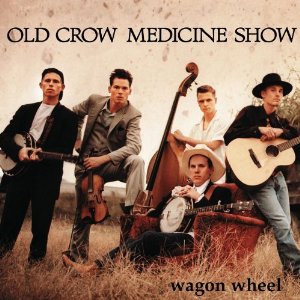

“Wagon Wheel” is a song with a very interesting story. It doesn’t sound like a typical 21st century country song. But it’s the kind of song 21st century country artists love to cover because it’s the kind modern country songwriters have so much trouble coming up with. Which is to say, it comes from a more instinctive place, taking the express track from the writer’s gut without that stop at the brain for mental market-testing.
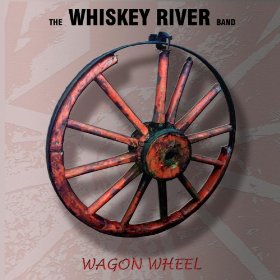

“Wagon Wheel” sounds like the work of one of the great folk songwriters of the 20th century, say a Woody Guthrie or a Stephen Foster…because it is in fact the work of one of the great folk songwriters of the 20th century–at least in part. I direct you to Wikipedia for the story:
(The following reprinted from Wikipedia)
“Wagon Wheel” is a song originally sketched by Bob Dylan and later completed by Old Crow Medicine Show. Old Crow Medicine Show’s version was certified gold by the Recording Industry Association of America in November 2011.
“Wagon Wheel” is composed of two different parts. The chorus and melody for the song comes from a demo recorded by Bob Dylan during the Pat Garrett and Billy the Kid sessions. Although never officially released, the Dylan song was released on a bootleg and is usually named after the chorus and its refrain of “Rock Me Mama.” Although Dylan left the song an unfinished sketch, Ketch Secor of Old Crow Medicine Show wrote verses for the song around Dylan’s original chorus. Secor’s additional lyrics transformed “Rock Me Mama” into “Wagon Wheel.” Secor has stated the song is partially autobiographical. The song has become extremely popular since its inclusion on Old Crow Medicine Show’s major label debut, O.C.M.S. in 2004, although the song appeared in earlier form on the now out of print “Troubles Up and Down the Road” EP in 2001. Dylan’s song is often credited to “A. Crudup.”, and the official publishing information is Dylan/Secor.
Old Crow Medicine Show: “Wagon Wheel” (2004)
Dan Milliken, reviewing the song for Country Universe, gave it an A+ rating, calling it “one of country music’s all-time great sing-alongs”.
The song has since been covered by numerous artists, including: Darius Rucker, Chad Brownlee, The Menzingers, Nash Street, Great American Taxi, Against Me!, Stephen Kellogg and the Sixers, Chris Pureka, David McMillin, Jeremy McComb, Matt Andersen, Mumford & Sons, Bodega, Little Feat, Donegal X-Press, Pat Buzzard of Saving Jane, Little Big Town, and Samjack Boys. (Note: there are lots more versions besides.)
Darius Rucker joined Old Crow Medicine Show at the Grand Ole Opry July 6, 2012, “for a special rendition of ‘Wagon Wheel.’” The fans “went crazy over Rucker’s cover of the Old Crow Medicine Show hit,” setting the stage for his tweeted announcement: “Secret out after @opry perf. I recorded a version of ‘Wagon Wheel’ for my new record & @ladyantebellum sings on track.” The new album, True Believers, is his third solo project on Capitol Records. Rucker’s cover is the album’s second single.
Darius Rucker: “Wagon Wheel” (2012)
The song did not at first appeal to Rucker. “Somebody had played ‘Wagon Wheel’ for me years ago,” he says. “It was one of those things that I didn’t really get.” When the faculty band from his daughter’s high school performed it, though, it had a different effect. Relating the story . .
“So, I’m at my daughter’s high school talent show, and I’m sitting in the audience with my family. We were watching my daughter, and the faculty band gets up. It’s just the faculty from her school, and they play ‘Wagon Wheel.’ I’m sitting in the audience, and they get to the middle of the chorus, and I turned to my wife, and I go, ‘I’ve got to cut this song.’ I’m serious. This all happened in three-and-a-half minutes, four minutes, while they’re playing the song.”
Bohemian Rhapsody at Indiana University
14 Feb 2013 Leave a comment
in General Posts Tags: queen bohemian rhapsody
A song that lends itself to so many styles, from the sublime to the ridiculous…
See also: https://edcyphers.com/2012/03/01/best-version-of-bohemian-rhapsody-ever-played-in-a-vw-7/
Valentine’s Day Quiz: Marvin Gaye Lyric Or Nietzsche Quote?
14 Feb 2013 Leave a comment
in General Posts, On a Lighter Note Tags: marvin gaye, nietzche
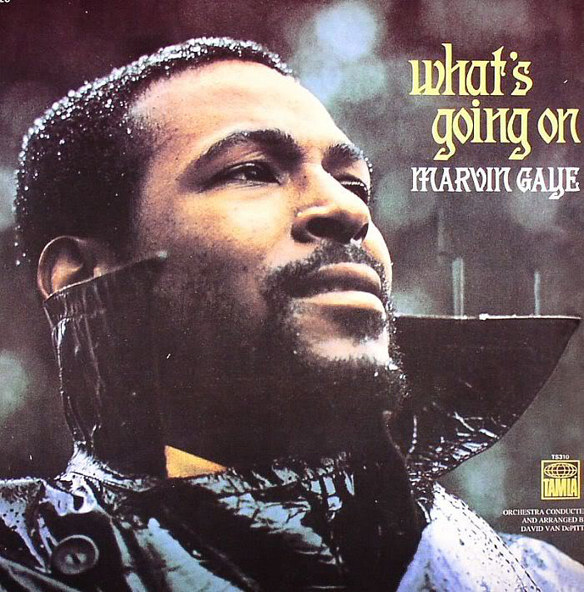 (Reprinted from Thought Catalog)
By Zach Schonfeld
Can you tell the difference between Marvin Gaye or Nietzsche quotes about love? Test yourself with this Valentine’s Day quiz!
“In the end one loves one’s desire and not what is desired.”
“Gonna get it together. Gonna love every day every night till I get it.”
“What else is love but understanding and rejoicing in the fact that another person lives, acts, and experiences otherwise than we do…?”
“Boy, it’s the sweetness of your charms. Makes me love you more each day. In your arms I wanna stay.”
“I don’t know where you come from, baby. Don’t know where you’ve been, my baby. Heaven must have sent you, honey, into my arms.”
“It offends us beyond forgiving when we discover that where we were convinced we were loved we were in fact regarded only as a piece of household furniture and room decoration for the master of the house to exercise his vanity upon before his guests.”
“I’ll be lovin’ you, I can’t help myself. I’ll be lovin’ you and nobody else.”
“There is always some madness in love. But there is also always some reason in madness.”
“If we live together with another person too closely, what happens is similar to when we repeatedly handle a good engraving with our bare hands: one day all we have left is a piece of dirty paper.”
“When I get that feeling, I want sexual healing. Sexual healing, oh baby.”
“Sensuality often hastens the growth of love so much that the roots remain weak and are easily torn up.”
“Where’d you get such sweet sugar? I’ll be lovin’ you day and night. In and out, wrong or right. Cause I want you, baby, for my wife. Oh girl, you’re so divine.”
“When you stare into the abyss the abyss stares back at you.”

