Quora: What is the meaning of the song “Helter Skelter” by the Beatles?

(Answered by Ely Matawaran)

A very interesting question. Because this song had two meanings:

The first was the meaning according to Paul McCartney which we could consider its true meaning since he was the one wrote the song.

And second was the meaning that Charles Manson found in the song that we could consider its twisted meaning since it made him and his group to kill people.

First of all, the title:

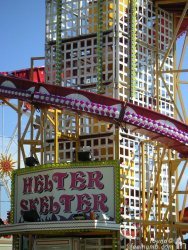
‘Helter Skelter’ referred to a fairground ride mainly popular in Britain, in which people could climb the inside of a wooden tower and slide down a spiral ride on the outside.

Paul McCartney about the song:

“I was using the symbol of a helter skelter as a ride from the top to the bottom -the rise and fall of the Roman Empire – and this was the fall, the demise, the going down.

“You could have thought of it as a rather cute title but it’s since taken on all sorts of ominous overtones because Manson picked it up as an anthem, and since then quite a few punk bands have done it because it is a raunchy rocker.

Charles Manson:

“Helter Skelter means confusion. Literally, it doesn’t mean war with anyone. It doesn’t mean that those people are going to kill other people. It only means what it means.

“Helter Skelter is confusion. Confusion is coming down fast. If you don’t see confusion coming down fast, you can call it what you wish.

“It’s not my conspiracy. It is not my music. I hear what it relates. It says, ‘Rise!’. It says, ’Kill!’.

“ Why blame it on me? I didn’t write the music. I am not the person who projected it into social consciousness! “

John Lennon commented:

“I don’t know what Helter Skelter has to do with knifing anyone. I’ve never listened to it properly, it was just noise.”

Yes, John Lennon said ‘Helter Skelter’ was just noise, and you’d wonder why the melodic Paul wrote this raunchy track which had been described as a prototype for 1970s Heavy Metal Sound.

Paul McCartney:

“I was in Scotland and I read in Melody Maker that Pete Townshend had said: ‘We’ve just made the raunchiest, loudest, most ridiculous rock ‘n’ roll record you’ve ever heard’. I never actually found out what track that was that The Who had made, but that got me going; just hearing him talk about it.

“So I said to the guys,’I think we should do a song like that; something really wild’. And I wrote ‘Helter Skelter’.

“You can hear the voice cracking, and we played it so long and loud and so often that by the end of it you can hear Ringo saying, ‘I’ve got blisters on my fingers!’”

As John Lennon once said about himself and Paul, “Whatever they can do, we can do it better.” And in the case of Helter Skelter, louder and wilder.

They made it so loud and wild that unfortunately, other people like Charles Manson heard it differently.

What’s In A Roar? Crafting Godzilla’s Iconic Sound

HEARD ON ALL THINGS CONSIDERED  By NPR Staff

(This story appeared in 2014 but we thought it had new relevance with the 70th anniversary of Godzilla and 2023’s release of the excellent Godzilla Minus One.

Quora: What is something a Pink Floyd fan may find surprising about Syd Barrett?

(Answered by Nick Ford)

This is the famous picture of Syd, taken when he walked into the Abbey Road studios while Pink Floyd were recording “Wish You Were Here”. Bloated, with shaven head and eyebrows, for a time he was unrecognized by his old bandmates only 6 or so years after leaving the band. Syd himself had ceased to make any sort of recorded music after 1974.

During and after this unfortunate encounter, Syd lived in a succession of London hotels, spending money on anything and everything, and often gifting his acquisitions to the staff.

Syd found communication with the band and his old life to be too upsetting and emotionally disturbing. He had a chance 1977 encounter with Roger Waters in the exclusive department store Harrods, as Roger recalled – “but we didn’t speak – he sort of scuttled away.” Apparently, Syd would buy sweets (candy) there, and this wordless meeting was disturbing enough for him to drop his purchases and flee.

When eventually the money ran out, he gave away all his possessions, leaving only a bag of dirty laundry, and walked the 50 miles back to his home town of Cambridge to live with his mother. He dropped “Syd” and returned to using his original name, Roger.

He would slam the door in the face of anyone looking for “Syd”.

Even though they never talked or met again after mid 1975, David Gilmour quietly made sure that his old friend Syd’s financial needs were taken care of until the day he died. As well as ensuring that royalties were getting paid, he would also insist on a Syd song being included on any PF compilation to ensure an income stream.

Syd lived out the rest of his life in a modest Cambridge house, decorated in a highly eccentric style, enjoying painting and DIY (as you can see in the video, with rather mixed results). His siblings kept a reasonably close eye on him until his death from pancreatic cancer in 2006. His last years were plagued with health issues- diabetes and stomach ulcers.

He watched a BBC documentary on himself, but didn’t like it. His sister reported that “He came to watch it with me. He didn’t enjoy it. He didn’t like it – he didn’t quite know what was going on, I don’t think. He just said, ‘It’s very noisy. The music’s very noisy.’”

Despite refusing all contact with most people from his past, and anyone associated with the music industry in general, in 2002, he surprisingly agreed to sign 320 copies of Mick Rock’s book of photographs called “Psychedelic Renegades”. As he no longer used the name Syd, he simply signed them “Barrett”.

His family always denied he had any form of mental illness, insisting that he lived his life as he saw fit, and didn’t feel the need to conform to others’ expectations.

Quora: Why Was ‘Frampton Comes Alive’ So Popular?

Why was ‘Frampton Comes Alive‘ so Popular?

(answered by Don Stuart)

Well I was there, a junior in high school (and a bass player) around the time Frampton hit it big. Here’s how I remember it going down.

KISS had been kind of a cult rock band until they released KISS ALIVE in September of ‘75, just as we were heading back to school. Rock and Roll All Night and Party Every Day was basically the motto of many mid-70’s high school kids in the US (see the film Dazed and Confused, it’s deadly accurate). So KISS had an AM radio hit on a double live album, kind of setting the stage for Frampton’s.

Peter’s band started appearing on a Friday night show called Midnight Special on NBC in the fall. There was no MTV in those days, not much rock to watch on TV at all, and us kids watched that show in droves because it came on after we had to be home (by midnight, right?).

The guy looked good and there was definite buzz among girls like my younger sisters who had watched him on TV. Plus he’d been killing on tour all year and some of the cool older girls had seen him in concert. They were the evangelists.

Frampton Comes Alive is released in January 1976, to little fanfare but a single off the album, Show Me The Way, breaks on AM pop radio rotation in February. Where I lived, Baby I Love Your Way broke on the radio first because girls were requesting it.

The girls have had to put up with KISS ALIVE and Ted Nugent (also released in Sept. ‘75) at our parties and in our cars for months now. Around Spring Break, they whip out Frampton. Us guys are like, “Okay, chicks dig it and he doesn’t completely suck.” Peter played great lead guitar, which was essential for 70’s rockers.

Turns out the album had brilliant song-order mastering, too. It definitely has a trajectory, peaks and valleys and a big finish with Do You Feel Like We Do. We used 8-track tapes in those days to do the audio at our outdoor keggers. Frampton Live was the soundtrack for the spring and summer party season in ‘76. That’s the niche it filled.

Nearly every year has an big record like this — one that epitomizes the party season. It has a hit song or two and sells like gangbusters. Frampton scored, and we scored with Frampton. I mean, we choreographed our makeout sessions to that album.

We smoked a lot of low-THC giggle weed and mashed with a bunch of mildly stoned girls who were happy that they could listen to music with us that wasn’t the absurd 70’s cock and prog rock that guys were usually blasting. Thanks Peter!

Bob Seger’s Live Bullet came out in the spring of ’76 too, so we had two new live albums to party with. The thing about live albums was they kind of blended and amplified the atmosphere and cacophony of the party scene.

In the Fall of ’76 came Boston’s mega-album, then the Eagles’ Hotel California and McCartney’s live album in December, followed by Fleetwood Mac’s Rumours in February ‘77.

Oh, and this happened, too. Rod Stewart’s “Tonight’s The Night (Gonna Be Alright)” The longest-running Billboard #1 since Hey Jude. The Stairway to Heaven of car-radio date songs.

Frampton got crushed, but it didn’t really matter.

Because Saturday Night Fever rolled in and ruined the party for all of us. When rock resurrected with Van Halen it was different, and an era was in the past.

Quora: Is Paul McCartney a Jerk?

(Answered by B.R. Bearden)

Is Paul McCartney a jerk?

McCartney was on the Oprah show in 1997. She seemed as much in awe of him as any fan. On her next show she talked about what kind of guest he’d been. She said something like: I have a lot of stars on my show, but nobody is bigger than Paul McCartney. Many of the stars are very demanding, wanting special things in their dressing rooms, champagne, wine, etc. Usually my staff handles their requests but I did it myself for Paul. I asked if there was anything special he wanted in his dressing room and he said he’d appreciate some bottled water, if it wasn’t too much trouble.

Then I asked him what he’d like to eat, as we could cater from anywhere in the city. He said he saw a buffet being set up in the back. I told him that was for the staff and camera crew. He asked if it would be OK for him to eat from that. No guest ever asked to dine with the staff before.

9 of The Best Beatle Intros

Getty images

(via CultureSonar) BY ADAM LEADBEATER

An often underappreciated element of the Beatles’ songwriting is their seemingly effortless ability to craft a truly memorable ‘intro.’ The art of writing a timeless song opening is a masterful skill. The Fab Four were particularly expert in doing so throughout their eight years together.

The band’s finest introductions are typically iconic in their own right, innovative for their time, and often acts of musical genius in and of themselves. Here are nine of the best intros by the Fab Four.

I Saw Her Standing There (1963)

One of the most simplistic yet impactful Beatles intros appears immediately on track one of their debut album Please Please Me.

Paul McCartney’s sharp and purposeful count of “One, Two, Three, Four!” injects raw energy into this relentless rock and roll classic.

The bouncing bassline and clanking guitar work are pure magic, perfectly setting the scene for the rest of the band’s first LP and also their formative years.

A Hard Day’s Night (1964)

“A Hard Day’s Night’s” intro is all about a single sound. This title track from the Beatles’ third album opens with a very distinctive note, created using a combination of twelve-string electric guitar, an acoustic six-string, bass, and piano. Strummed aggressively and left to ring out, the exact chord has become the subject of much speculation over the years.

“It is F with a G on top,” George Harrison would finally confirm in 2001. “But you’ll have to ask Paul about the bass note to get the proper story.”

Read more: https://www.culturesonar.com/9-of-the-best-beatle-intros/?mc_cid=8151c5c393&mc_eid=b43e532c6f

Previous Older Entries Next Newer Entries