9 of The Best Beatle Intros

Getty images

(via CultureSonar) BY ADAM LEADBEATER

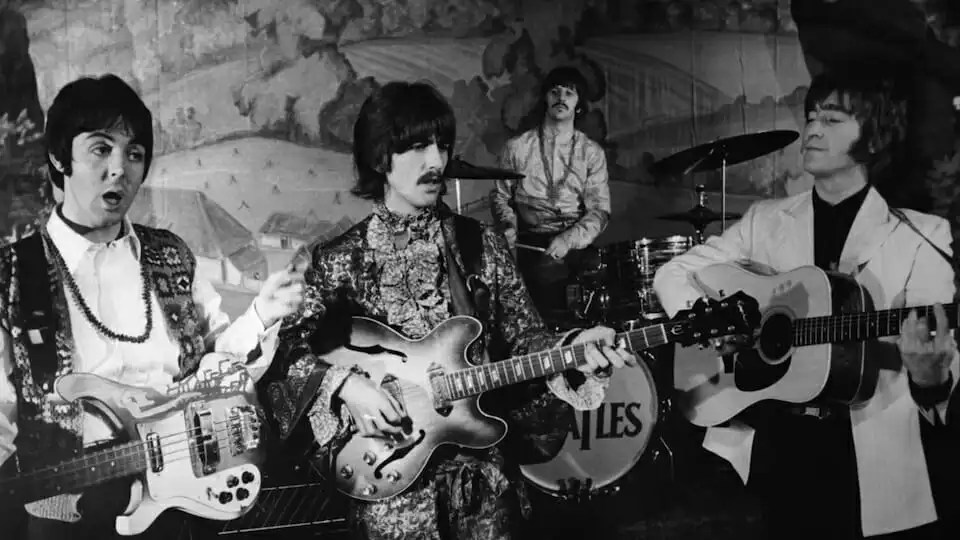
An often underappreciated element of the Beatles’ songwriting is their seemingly effortless ability to craft a truly memorable ‘intro.’ The art of writing a timeless song opening is a masterful skill. The Fab Four were particularly expert in doing so throughout their eight years together.

The band’s finest introductions are typically iconic in their own right, innovative for their time, and often acts of musical genius in and of themselves. Here are nine of the best intros by the Fab Four.

I Saw Her Standing There (1963)

One of the most simplistic yet impactful Beatles intros appears immediately on track one of their debut album Please Please Me.

Paul McCartney’s sharp and purposeful count of “One, Two, Three, Four!” injects raw energy into this relentless rock and roll classic.

The bouncing bassline and clanking guitar work are pure magic, perfectly setting the scene for the rest of the band’s first LP and also their formative years.

A Hard Day’s Night (1964)

“A Hard Day’s Night’s” intro is all about a single sound. This title track from the Beatles’ third album opens with a very distinctive note, created using a combination of twelve-string electric guitar, an acoustic six-string, bass, and piano. Strummed aggressively and left to ring out, the exact chord has become the subject of much speculation over the years.

“It is F with a G on top,” George Harrison would finally confirm in 2001. “But you’ll have to ask Paul about the bass note to get the proper story.”

Read more: https://www.culturesonar.com/9-of-the-best-beatle-intros/?mc_cid=8151c5c393&mc_eid=b43e532c6f

Quora: If Paul McCartney is a musical genius, why doesn’t he continue to write hit songs or music that’s at the level he used to?

(Answered by Douglas Cutler)

The answer is simple though you may not be willing to accept it.

But before I tell you I will suggest we could ask the same question of all the great aging singer-songwriters like Dylan, Joni Mitchell, Bruce Springsteen, Elton John, Neil Young, Jimmy Paige, Cheryl Crow, Leonard Cohen (now deceased), Gordon Lightfoot, Paul Simon, Billy Joel, even Sting. So many more. While many of these writers continue to write really good songs, they virtually never write material equal to the A-list songs of their prime. Why?

Also, ask why younger songwriters just don’t seem to quite measure up melodically to their musical forefathers. Also ask why we never hear new instrumental pop hits anymore like Linus and LucyGreen OnionsClassical Gas and Cast Your Fate to the Wind. Also ask why we never hear any more great new tunes in the American Songbook style – though thousands of musicians try every year. Also ask why classic country and western seemed destined to morph into new country.

Same answer in all cases: we’re running out of melodies. Melody is a finite set made up of only 12 steps in the chromatic scale, except in most cases 8 notes of the diatonic scale or 5 to 6 notes of the pentatonic scale which dominates so much soul and gospel flavored pop. Also a gospel and blues connection to country music. Plus, many musical motives define themselves in as few as 4–8 events. Think of the opening to Beethoven’s 5th: Ba Da Da Dah. Plus, there are further limitations like a melody must be comprised primarily of easy to sing step and skip-wise motions. Mathematically you could argue the possibilities for 12 pitches still run into the billions but most of those are random combinations full of hard to sing chromatic jumps. Also billions of atonal combinations but who cares about those?

Also, many melodies just sound common and mundane even if they follow the rules. Writing a hit song is like writing out a sequence of numbers equal to a winning lottery ticket, actually very rare compared to the hundreds of thousand songs that get written every year. There is something magical about a certain combination of notes that stick in your head in a uniquely pleasant way but such melodies just seem to get rarer as the years go by.

Break it down, Linus and Lucy melody in solfege: Do-Re-Mi/ Mi-Re-Do/ Re Do/ Do-Re-Mi-Mi. Can’t get much simpler than that and once it’s written it gone from the possibility set for the next generation of writers.

Ian Anderson Voted Best Rock n Roll Flautist For 55th Year in a Row

(via Madhouse magazine)

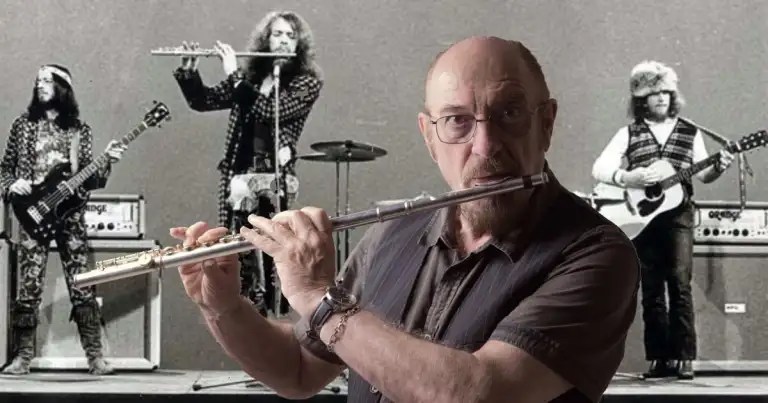
Ian Anderson, of the band Jethro Tull has been named the best Rock n Roll flute player aka flautist for the 55th consecutive year. The honor was unanimous and Anderson also came in second and third. 

Anderson first won the award in 1967 when Jethro Tull first formed. “In the 1960s I actually had a little competition” said Ian. “There were a few bands here and there that incorporated a flute in a song or two. Honestly they were all hippie hacks. Over time though there was less and less competition and eventually I was the only nominee. Go ahead name another Rock n Roll flute player, I dare you. I double dog dare you. See, exactly as I thought.”

Read more: https://www.madhousemagazine.com/ian-anderson-voted-best-rock-n-roll-flautist-for-55th-year-in-a-row/

Quora: Is it true that Jimi Hendrix inspired the song ‘Sunshine of Your Love’ by the band Cream?

(Image credit: Wikimedia Commons)


Answered by Phillip Coory

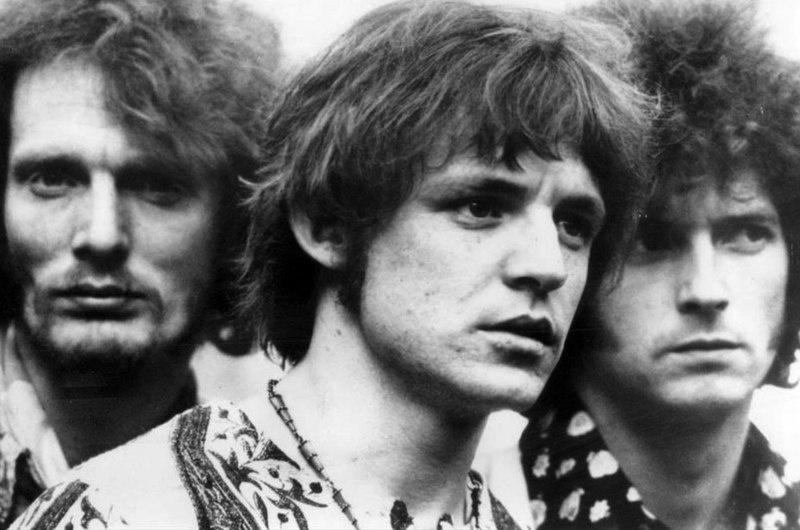
In January 1967, the Jimi Hendrix Experience, played their first date at Brian Epstein’s Saville Theatre on Shaftsbury Avenue. Cream were in the audience that night listening to Jimi do a souped-up rock’n’roll version of B.B. King’s ‘Rock Me bay’, ‘Like a Rolling Stone’, ‘Wild Thing’, ‘Hey Joe’ and one of Jimi’s compositions, ‘Can You See Me?’ Eric Clapton later related to Rolling Stone how Jimi’s performance that night inspired Cream’s most famous song, ‘Sunshine of Your Love’:

“He played this gig that was blinding. I don’t think Jack [Bruce] had really taken him in before. I knew what the guy was capable of from the minute I met him. It was the complete embodiment of all aspects of rock guitar rolled into one. I could sense it coming off the guy. And when he [Jack] did see it that night, after the gig he went home and came up with the riff. It was strictly a dedication to Jimi. And then we wrote the song on top of it.”

Coincidently, Jimi used to play this same song as a dedication to Cream, one of his favourite bands, unaware that he was in fact playing his own dedication.

Source: Jimi Hendrix – Electric Gypsy by Harry Shapiro & Caesar Glebbeek, Heinemann 1990.

Amazing Vintage Photos Of Bob Dylan’s Legendary Life And Career

Michael Ochs Archives/Getty Images | Michael Ochs Archives/Getty Images

(via Spin) by Steve P

The name Bob Dylan conjures up images of the 1960s and a legendary back catalog of music. Mind you, we don’t need to conjure: we’ve got an amazing selection of vintage pictures right here. From obscure details blowin’ in the wind, to Dylan’s fascinating personal and creative life that keep him forever young, here’s the electrifying lowdown on the timeless strummer, told through stunning photography.

Zimmerman into Dylan

Born Robert Zimmerman, he entered the world on May 24, 1941, growing up in the port city of Duluth, as well as Hibbing, Minnesota. Zimmerman changed his name in 1962, but why? “Welsh poet Dylan Thomas, Marshall Matt Dillon of TV’s iconic western Gunsmoke, and Dillon Road in Hibbing have all been suggested as possible sources,” noted an article on the website of Marquette University Law School…

Read more: https://feeds.spin.com/s/amazing-photos-bob-dylan/?as=799&utm_source=Organic&bdk=0

On Music…

Previous Older Entries Next Newer Entries