"There's a time in life for Hoagy Carmichael. There's a time in life for Claude Debussy. There's a time in life for Jerry Lee Lewis. There's a time in life for Destiny's Child. All these things have their moment." ~Elvis Costello
The name Bob Dylan conjures up images of the 1960s and a legendary back catalog of music. Mind you, we don’t need to conjure: we’ve got an amazing selection of vintage pictures right here. From obscure details blowin’ in the wind, to Dylan’s fascinating personal and creative life that keep him forever young, here’s the electrifying lowdown on the timeless strummer, told through stunning photography.
Zimmerman into Dylan
Born Robert Zimmerman, he entered the world on May 24, 1941, growing up in the port city of Duluth, as well as Hibbing, Minnesota. Zimmerman changed his name in 1962, but why? “Welsh poet Dylan Thomas, Marshall Matt Dillon of TV’s iconic western Gunsmoke, and Dillon Road in Hibbing have all been suggested as possible sources,” noted an article on the website of Marquette University Law School…
Residents of a small city in New Zealand are beset by drivers blasting Celine Dion songs late into the night. The loud music comes from cars that have been modified by local enthusiasts who participate in “siren battles” that run on any given day of the week from 07:00 PM to 02:00 AM, according to the AFP.
The siren battles are part of the car culture in Porirua, where enthusiasts gather to compete and drivers win by playing music at ear-splitting levels that can drown out rivals. A “siren king” is crowned at the end of the battles, but the object is not to outdo opponents simply by outputting the most sound…
When Jethro Tull released The Broadsword And The Beast in 1982, many of their fans breathed a sigh of relief: it seemed their favourite band had returned to their more traditional folk rock roots. Ian Anderson reveals the story behind the recently reissued and expanded album that he reckons contains some of Tull’s best music.
If ever Ian Anderson were to doubt the enduring popularity of Jethro Tull’s 1982 album The Broadsword And The Beast, he gets regular reminders of it when he meets long-time fans of the band. Perhaps not actually written all over their faces, but close enough.
“I’ve been asked to sign many an album-sized tattoo of the album cover on somebody’s back,” he says, “which is embarrassing, but I’ve seen very good likenesses of the album cover in glorious colour on the flesh of human beings. It’s beyond me why people do that sort of thing, but perhaps that’s a reflection of the affinity some fans feel to it.”
They can immerse themselves even more fully in it as the 40th anniversary edition (slightly delayed thanks to that pesky pandemic) has been released, offering an 81-track expanded version of the album replete with Steven Wilson remixes, live renditions, and a handful of previously unreleased tracks…
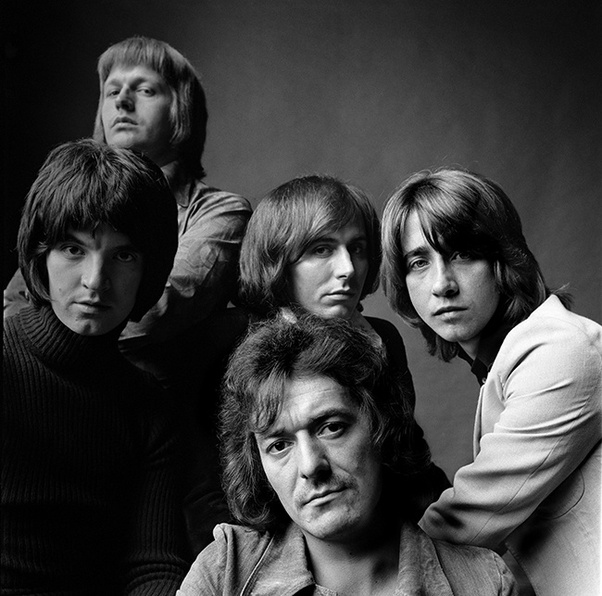
The Hollies in 1969, post-Nash. Allan Clarke is the second from right.
Answered by Gene Popa
How about an instance where a band realized they had made a mistake in getting rid of their lead singer, and so they brought him back?
The Hollies had been among the biggest hitmakers in Great Britain in the 1960s and had a number of hits in the U.S. as well. Allan Clarke was the group’s lead singer, but the signature Hollies sound was marked by the high harmony backup singing of Graham Nash. But wanting to pursue a different musical style from the rest of the band, Nash quit in 1968, and went on to form Crosby, Stills & Nash.
By 1971, wanting to scratch his own musical itch (and perhaps being a bit envious of the tremendous success that Nash was having), Clarke told the other members of the Hollies during a down time between recording and touring that he wanted to record his own solo album. He made it clear that he wasn’t quitting, only trying something different. However, the other members of the group found the idea of him doing solo work unacceptable, and they parted ways with Clarke.
They replaced him as lead singer with Mikael Rickfors, which was a bizarre (and unsuccessful) choice; Rickfors’s grasp of English wasn’t complete, and he sang with a noticeable Swedish accent. He also sang in a lower register than Clarke did, so his versions of older Hollies material could be off-putting to some fans. They also signed a new recording contract with another label, Polydor, and as a result their old label, EMI, sought to undercut attention for their first Polydor album by culling a track from their last EMI record, “Long Cool Woman in a Black Dress”, and releasing it in 1972 as a single.
Mikael Rickfors
The song broke into the Top 40 in the U.K., but it was a much bigger hit in America, going into the Top Five. The Hollies were now faced with the prospect of hitting the road to promote their current hit with a singer who sounded nothing like the voice singing the song.
Instead, the Hollies decided to mend fences with Clarke and bring him back into the fold. In exchange for his agreeing to return, the band had to allow him time to release his own solo albums. And that’s how things remained with the Hollies until Allan Clarke retired from recording and performing in 1999 in order to care for his wife, who was battling cancer, as well as to tend to vocal cord problems he had been having (although Clarke resumed his solo career in 2019).
The Hollies during Allan Clarke’s second tenure with the band.
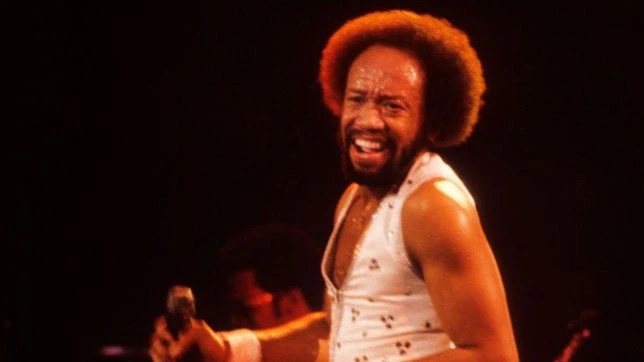
That’s the question Earth, Wind & Fire asks in their chart-topping 1978 hit, “September” – an irresistibly catchy tune that continues to be cherished by generations of fans due to its infectious bassline and cheerful chorus, even four decades after its release.
Since its debut as a single on the band’s initial greatest hits album, this song has transformed September 21st into an unofficial holiday, playfully known as “Earth, Wind & Fire Day.” This iconic track was originally released as a single in 1978, later featured on the group’s album “The Best of Earth, Wind & Fire, Vol. 1,” where it claimed the top spot on the US R&B chart, reached number eight on the Billboard Hot 100, and secured the third position on the UK singles chart.
However, it appears that those seeking a deeper meaning behind the date “Sept. 21″ don’t need to look too far.,,









 Every Moment Has A Song