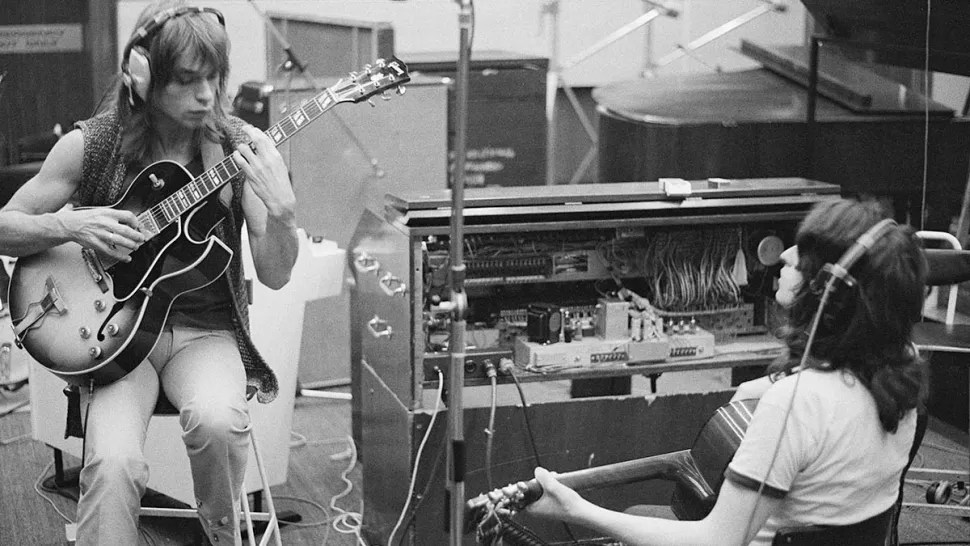
‘Fragile’ at 50: Steve Howe Tells the Story Behind Yes‘s Landmark Album

Getty Images/Michael Putland

(via Guitar Player) by Joe Bosso

There was no such thing as progressive rock, explains Howe. It was just that their sound needed a bigger canvas.

Steve Howe has no idea where the term progressive rock came from, but he makes one thing clear: It certainly didn’t start with him. “I never called us ‘progressive rock’ or ‘prog-rock,’” he says. “As I recall, when I first joined Yes, we all used to call our music different things. 

“There was ‘orchestral rock’ and ‘cinemagraphic rock.’ We never argued about it, but there were a lot of names and terms being tossed about.” So what term did he use to describe Yes’s music? 

Howe laughs. “I often called it ‘soft rock,’” he says. “I thought what I wrote was a sort of soft rock, but the phrase didn’t catch on, at least not with what we were doing. But progressive rock? Where that got started, I don’t know. I think it might have come after the fact.”  

Read more: https://www.guitarplayer.com/players/fragile-at-50-steve-howe-tells-the-story-behind-yess-landmark-album

How a Car Accident Began a Run of Bad Luck For Robert Plant

(via Ultimate Classic Rock) by Michael Gallucci

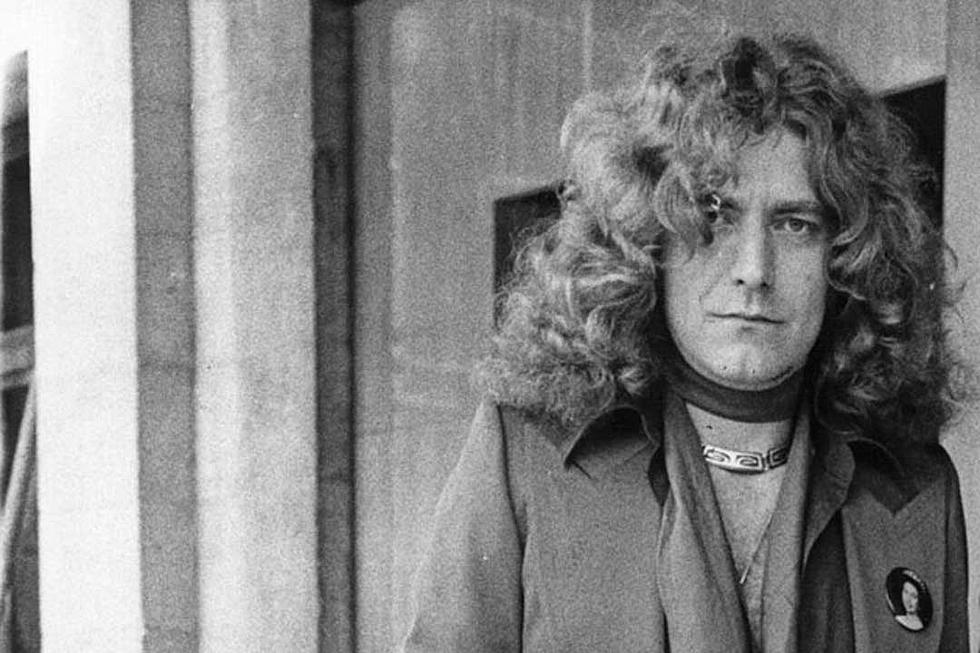
Robert Plant and his family were vacationing on Aug. 4, 1975 in Rhodes, Greece, when the car he was driving spun off the road and crashed. It was the first in a string of bad luck moments for the Led Zeppelin singer.

The band was on a short break and in between tour dates when Plant, along with his wife and children, took a trip to the Greek island of Rhodes. They rented a car, which Plant lost control of and crashed. The accident left Plant and his wife Maureen injured; his kids escaped with just a few bruises…

Read More: How a Car Accident Began a Run of Bad Luck For Robert Plant | https://ultimateclassicrock.com/robert-plant-car-accident/?utm_source=tsmclip&utm_medium=referral

Billboard’s Highest Paid Musicians of 2020: The Top Ten

Image

From Failures Come Pop Successes

(via Culture Sonar) by Mark Daponte

One of the more bizarre sayings (and something parents of an infant shouldn’t have to say to the nanny) is “Don’t throw the baby out with the bathwater.”  This advice, meaning don’t throw away something good in the course of throwing out something bad, was heeded by a number of rock stars who found gems amongst musical projects they had thrown out.

The most noteworthy salvage job was Pete Townshend’s unfinished sci-fi rock opera film called Lifehouse which started as a story written around several songs.  Pete recalled: “The essence of the storyline was a kind of futuristic scene.  It’s a fantasy set at a time when rock ’n’ roll didn’t exist.  The world was completely collapsing and the only experience that anybody ever had was through test tubes. In a way, they lived as if they were on television. Everything was programmed.  The enemies were people who gave us entertainment intravenously and the heroes were savages who’d kept rock ‘n’ roll as a primitive force and had gone to live with it in the woods.  The story was about these two sides coming together and having a brief battle.”

Read more: From Failures Come Pop Successes – CultureSonar

Are You Relivin’ the Years?: How Steely Dan Became a Cult Favorite for Millennials

Even as younger generations seem to be at war with baby boomer ideals, there is one relic of the ’70s they can get behind: the soft-rock sounds of Donald Fagen and Walter Becker. How did a band known for its love of jazz and songs populated with down-on-their-luck characters become popular all over again?

(via The Ringer) by Derek Robertson

To look at American society over the past decade—from its memes, to its cultural criticism, to even its electoral politics—one might surmise the nation is consumed by a bitter and Manichean generational struggle, where no quarter is given and none taken over the power baby boomers wield as they cling to institutional power.

Maybe so. But there are notable exceptions, and perhaps the most notable comes from the medium through which the boomers shaped America’s cultural identity for decades: classic rock. Steely Dan, the jazz-rock combo whose musical and lyrical checkpoints include those most boomer-ish of pursuits such as cool jazz, hot guitar licks, tiki drinks, and expensive cocaine, have become an object of millennial obsession, spawning viral tweetsmash-ups, and even a custom run of streetwear emblazoned with their album art. John Mulaney and Nick Kroll wrote a bit based on Steely Dan for their hit Broadway show Oh, Hello. David Crosby, a fellow Boomer icon who’s become a Twitter favorite in his own right, earned blog press with a new Dan-inspired (and cowritten) tune. The list goes on…

Read more: How Steely Dan Became a Cult Favorite for Millennials – The Ringer

Al Franken’s Gene Simmons Story

Al Franken describes his delightful encounter with Gene Simmons at the racquetball club.

Previous Older Entries Next Newer Entries