Are You Relivin’ the Years?: How Steely Dan Became a Cult Favorite for Millennials

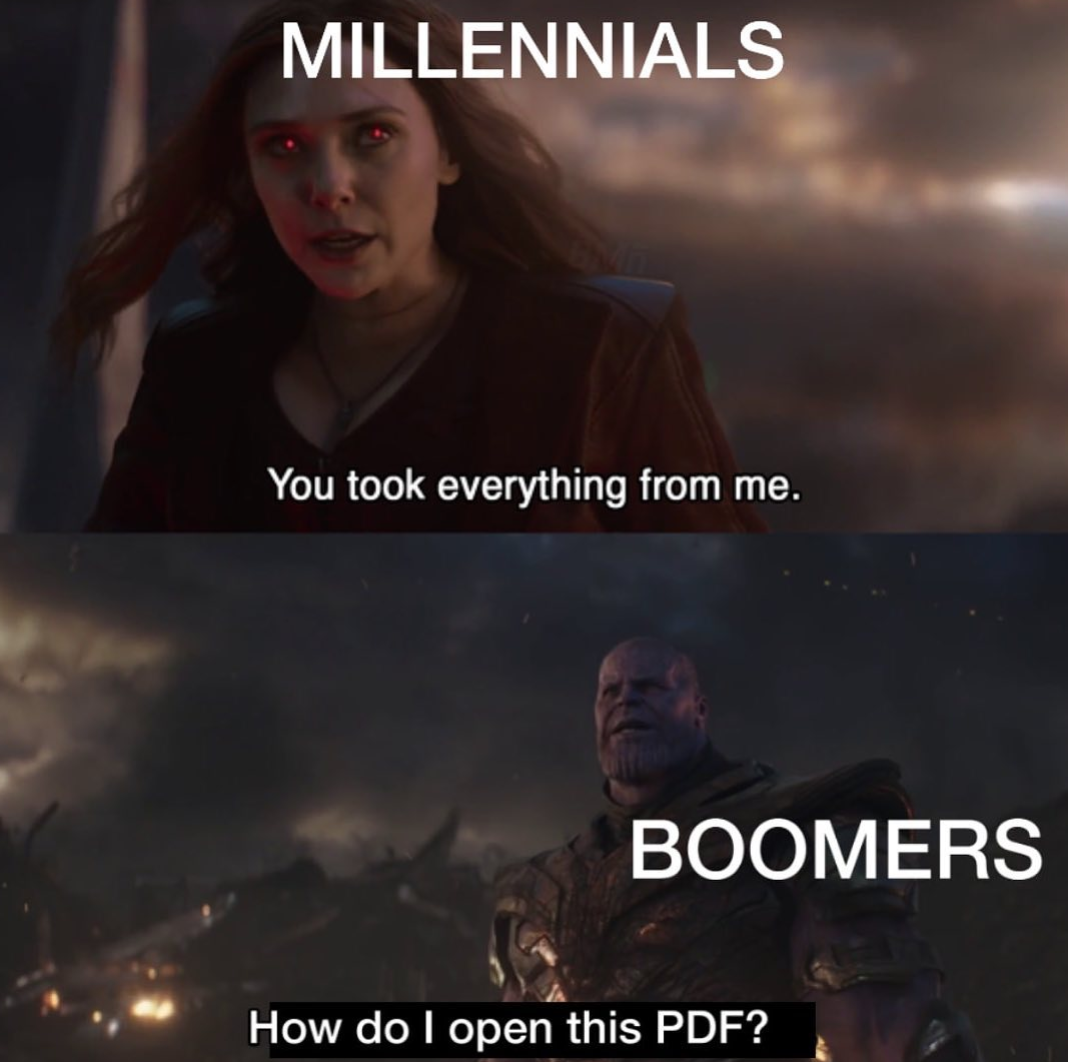
Even as younger generations seem to be at war with baby boomer ideals, there is one relic of the ’70s they can get behind: the soft-rock sounds of Donald Fagen and Walter Becker. How did a band known for its love of jazz and songs populated with down-on-their-luck characters become popular all over again?

(via The Ringer) by Derek Robertson

To look at American society over the past decade—from its memes, to its cultural criticism, to even its electoral politics—one might surmise the nation is consumed by a bitter and Manichean generational struggle, where no quarter is given and none taken over the power baby boomers wield as they cling to institutional power.

Maybe so. But there are notable exceptions, and perhaps the most notable comes from the medium through which the boomers shaped America’s cultural identity for decades: classic rock. Steely Dan, the jazz-rock combo whose musical and lyrical checkpoints include those most boomer-ish of pursuits such as cool jazz, hot guitar licks, tiki drinks, and expensive cocaine, have become an object of millennial obsession, spawning viral tweetsmash-ups, and even a custom run of streetwear emblazoned with their album art. John Mulaney and Nick Kroll wrote a bit based on Steely Dan for their hit Broadway show Oh, Hello. David Crosby, a fellow Boomer icon who’s become a Twitter favorite in his own right, earned blog press with a new Dan-inspired (and cowritten) tune. The list goes on…

Read more: How Steely Dan Became a Cult Favorite for Millennials – The Ringer

Al Franken’s Gene Simmons Story

Al Franken describes his delightful encounter with Gene Simmons at the racquetball club.

Lyric of the Weak: Daft Punk–“Around the World”

Image

Quora: Why has Paul McCartney never performed ‘Oh! Darling’ live?

Answer by Peter Levy:

To record the vocal for this song, Paul went into the studio each day for a week and recorded exactly one take of the lead vocal. It’s such a strenuous song to sing that he couldn’t try two times in the same day.

He also said at the time (when he was in his mid-twenties) that he could have nailed the vocal five years earlier. So he’s had trouble with the vocal from the very start.

I think that’s why he didn’t sing it in concert – it’s too hard.

These days he has trouble with a lot of vocals that he used to easily perform in concert, so it’s fair to say that he never will perform “Oh! Darling,” unless he changes the arrangement so it fits his range.

Answer by Jay Snead:

t’s a killer song to sing the way it was sung on the album. This was really hard for Paul to record even when he was 27 and on the top of his game.

If he did it early in a set, it would ruin his voice for the rest of the show. if he sang it last, he might not have the voice to pull it off.

He has an enormous repertoire and can afford to leave Oh! Darling alone.

Answer by John Nowman:

Paul went into the studio every day – over days and days in order to get his vocals sounding hoarse, which is the effect he wanted and had to nail the vocals, when finally put down, quickly before his voice let him down due to strain and effort. Lennon had similar vocal problems with Twist and Shout early in their career, as the track was left until the end of the recording session, where he had to produce the vocals in one go to prevent damage to his his vocal chords, He did it in 1 and 1/2 takes, I believe. Listen to the track and see how hoarse his voice actually was after a full day recording vocals for the LP they were working on – at this moment early in their career time and money were not a luxury then. On Revolution Lennon lay on his back for hours prior to singing the vocals allowing fluid to enter his lungs for the right sound effect. Hope this helps.

Read more: (5) Why has Paul McCartney never performed Oh! Darling live? – Quora
On Music…

A Little Help for Their Friends: Lennon/McCartney Non-Beatles Songwriting Credits

The songwriting partnership of John Lennon and Paul McCartney deservedly has hallowed status on the basis of the many classics the Beatles themselves recorded.

But as songwriters they remain perhaps under-appraised even so, considering their many other, lesser-known songwriting credits on hit songs they gave to others to perform–songs which might have added to the Beatles’ own lengthy list of hits had they chosen to release them themselves.

Paul was particularly active in promoting other fledgling acts by giving them hit songs, even though his compositions at the time were still credited to the Lennon/McCartney team. One such example is “Goodbye“, which he gave to an 18-year-old Mary Hopkin, and which was a #13 single in America (#2 UK) Here’s Mary’s recording:

…and Paul’s demo version:

Hopkin’s debut album was produced by McCartney and featured the massive worldwide hit “Those Were The Days”.

The sixties hit duo Peter and Gordon’s first three hit singles were all penned by Lennon and McCartney, although if you listen to Beatles demo versions you hear Paul singing the lead vocals, a pretty sure sign (judging from the Beatles’ catalogue itself) that he was at least the primary and perhaps sole writer of these songs also:

A World Without Love“, a number 1 hit in 1964, almost certainly would have topped the charts in Beatle-recorded form as well. It’s a British Invasion classic:

(Peter Asher is the Austin Powers-looking gent at left)

Here’s the Beatles’ demo version:

The other two Peter and Gordon hits written by the Beatles:

Nobody I Know” (#12 US hit):

…and “I Don’t Want To See You Again” (#16 US):

Another British Invasion act, Billy J. Kramer and The Dakotas, were produced by George Martin and recorded many Lennon/McCartney songs. Bad To Me (below) reached number 1 in England (#9 US) and its sound is pure 1964 Beatles.

The “J” in Billy J. Kramer, by the way, was the suggestion of John Lennon, who thought it gave Billy a tougher image. (Lennon also gave the band The Cyrkle its name. Maybe Beatle-influenced band nomenclature is an article unto itself…) 

“I’ll Be On My Way”, “I Call Your Name”, “I’ll Keep You Satisfied”, and “From A Window“, all recorded by the Dakotas, were Lennon/McCartney songs. And their recording of George Harrison’s “Do You Want To Know A Secret” was also a number 2 hit in the UK.

Badfinger, who, like Mary Hopkin were signed to the Beatles’ Apple Records, had their career jump-started in 1969 when Paul McCartney gave away another (#7 US) hit, “Come And Get It“.

Beatle fans who’ve never heard the demo will find that Badfinger pretty much stuck to Paul’s blueprint:

This is by no means a complete list. It’s merely meant to point out that Lennon and McCartney weren’t just hitmakers as Beatles. From the mid-60’s through the early 70’s their songwriting was here, there and everywhere.

Previous Older Entries Next Newer Entries