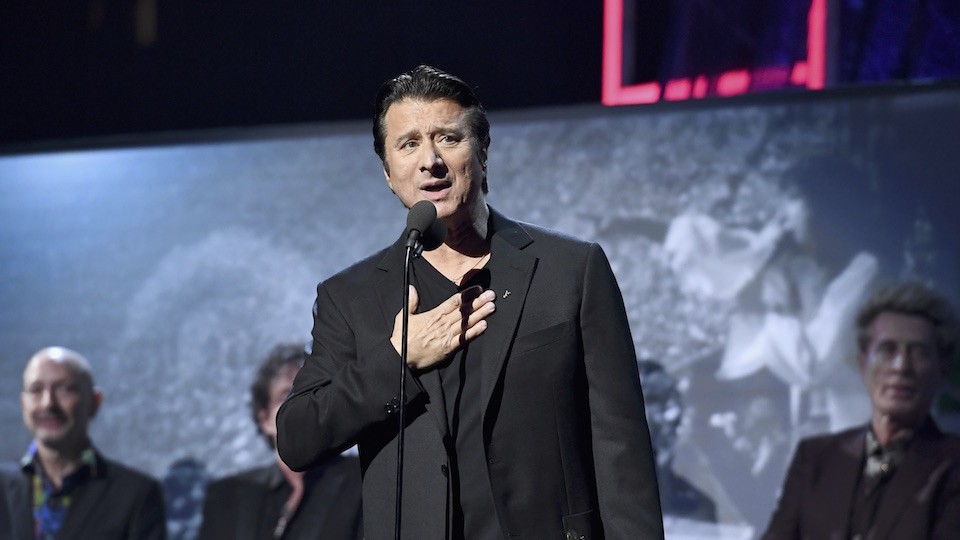
Whatever Happened To… Steve Perry’s Journey After Journey

(via Culture Sonar) by Will Wills

Did you know that Journey had a singer before Steve Perry?  The band had been around since 1973, with plans to be a backing group for solo acts. Then they switched to being a jazz fusion band with Gregg Rolie on vocals.  That particular incarnation of Journey released a few albums through 1977 that only charted as high as #85 on the Billboard Top 200.

In 1977, the band hired Robert Fleischman to take over lead vocals and transitioned to a musical style more rock than jazz. They opened for acts such as Judas Priest, and Emerson, Lake, and Palmer. And while they found slightly more success, it wasn’t until Steve Perry was snuck onto the stage during a soundcheck that it was immediately decided that he would be their new lead singer…

Read more: Steve Perry’s Journey…After “Journey” – CultureSonar

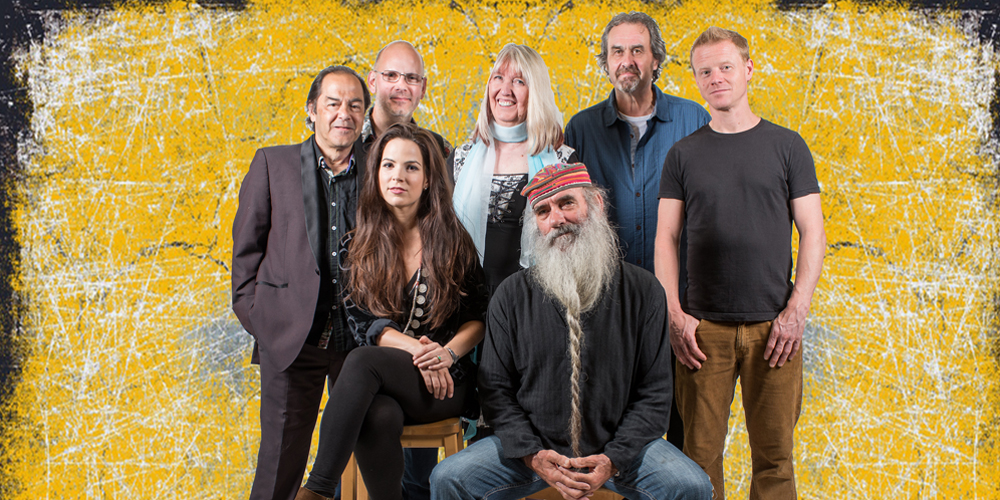
Some Important Observations On Steeleye Span, Experiments In Folk Rock And Cows

(via The ARTery) uly 20, 2015 by Chris Braiotta

I want to talk to you about what it means to experiment. Let’s begin with the following sentence: “We did try a reggae ‘Spotted Cow’ and we weren’t terribly convinced by it, so we stopped doing it.”

You’ll be needing a little context for that. “Spotted Cow” is a song from around 1740. It’s about a woman who’s lost her cow. She complains about it to this guy she runs into. He’s like, “Lady, I am game to help you find your cow. Let us do this.” They go off to a field to find it. Obvious place to start, right? Before long … well, you know how fields are. Sexiest thing in nature. So they decide to do what comes naturally to a man and a woman in a field, which isn’t really looking for cows. From then on, whenever the lady’s looking for a bit of you-know-what, she finds some guy and tells him about her cow.

The speaker of that sentence was Maddy Prior, singer of the great English folk-rock band Steeleye Span. This is a band that she’s led since 1969.

So, to sum up: ‘70s English folk-rock band, cow used as cover story for Georgian booty call. And then: reggae.

“When you’re experimenting with things they can’t all be winners,” she says. “I’m pleased that we tried things.”

I don’t care how “out there” you think your favorite band is. This is what it means to be fearless. This is what experimenting is…

Read more: Some Important Observations On Steeleye Span, Experiments In Folk Rock And Cows | The ARTery (wbur.org)

See also: Recommended Albums #47 | Every Moment Has A Song (edcyphers.com)

See also: Songs You May Have Missed #200 | Every Moment Has A Song (edcyphers.com)

The lost art of deep listening: Choose an album. Lose the phone. Close your eyes.

Clint Eastwood listens to records at his home in 1959. 
(CBS Photo Archive/Getty Images)

(via Los Angeles Times) By RANDALL ROBERTS

What’s your favorite album? When was the last time you listened — actually listened — to it from start to finish? With intention, like you were watching a movie or reading a novel.

Clear your schedule for the next three hours. Choose three full albums, whether from your collection or your streaming service of choice. Put them in an ordered queue as though you were programming a triple feature.

Because, listen:

Musicians spend years making their albums. They struggle over syllables, melodies, bridges and rhythms with the same intensity with which you compare notes on the “Forensic Files” reboot, loot corpses in “Fortnite” or pound Cabernet during pandemics.

But most of us are half-assed when it comes to listening to albums. We put on artists’ work while we’re scrolling through Twitter, disinfecting doorknobs, obsessively washing our hands or romancing lovers permitted within our COVID-free zones. We rip our favorite tracks from their natural long-player habitat, drop them into playlists and forget the other songs, despite their being sequenced to be heard in order…

Read more: Coronavirus tips: Why you should listen to music in this way – Los Angeles Times (latimes.com)

Albumlinernotes.com is the largest archive of Liner Notes on the internet.

Albumlinernotes.com is an absolute treasure trove of artist and album information intended to help fill the great information void brought on by the music download era.

Music has never before been so readily accessible. But liner notes–the band bios, song credits, and artfully written plaudits for the music you love–are sadly a thing of the past, unless you’re an avid collector of reissues like this writer.

This is the kind of site a music lover can get lost in. Check it out.

Album Liner Notes

How British Rockers Bankrolled Monty Python’s Career

British comedy troupe Monty Python including (left to right) Michael Palin, Terry Jones, Eric Idle, Graham Chapman (1941 – 1989), Terry Gilliam, and John Cleese, lounge about at the site of their filmed live show at the Hollywood Bowl, Hollywood, California, 1982. Chapman and Cleese smoke pipes. (Photo by Hulton Archive/Getty Images)

(via LAist) By Marialexa Kavanaugh with Jonathan Shifflett & John Horn

Eric Idle co-founded legendary sketch comedy group Monty Python. While writing and rewriting his new biography, Always Look on the Bright Side of Life, Idle realized the story he was telling was much larger than just him.

“You don’t really know what part of your life is interesting,” Idle said. “I discovered finally after three or four drafts that the book was actually about my generation, people growing up in our post-war England, rationing and poor. And that these kids who were born in the end of the war invented rock and roll.”

Monty Python is widely considered to have the same level of influence on the comedy world that the Beatles and the Rolling Stones did on rock. British rock and comedy had their own symbiotic relationship through the ’60s and ’70s — including financing Monty Python and the Holy Grail.

“I mean it was Led Zeppelin, Pink Floyd, Genesis, Jethro Tull — they all pitched in money so we could make the film,” Idle said…

Read more: How British Rockers Bankrolled Monty Python’s Career: LAist

The Greatest Prog Guitarists: An Essential Top 25 Countdown

Whether they’re the mastermind of the band or keep the cosmic flights well-grounded, we pay tribute to the best prog guitarists of all time.

(via udiscovermusic) by Brett Milano

Think of progressive rock and what immediately comes to mind is caped keyboard players navigating a sea of wires connected to their Moog. Yet many of the pivotal players in prog rock have been guitarists, and there are easily as many earth-shaking guitar solos in prog as there are in hard rock or metal. Sometimes those prog guitarists are the leader and mastermind of their band, sometimes they’re the player who keeps those cosmic flights well-grounded. This list pays tribute to some of prog’s landmark ax-slingers.

25: Steve Rothery (Marillion)

In both the Fish and Steve Hogarth incarnations, Marillion was always an unconventional prog band. They avoided instrumental prowess for its own sake, preferring slow and stately pieces built largely around the vocal. Steve Rothery can be a model of restraint, playing mood-enhancing textural parts, but he can also deliver a solo as dramatic as the one on “Easter,” Hogarth’s lament for Northern Ireland.

24: Franco Mussida (PFM)

Italy’s premier prog band, PFM absorbed some influence from their peers. Listening to Franco Mussida’s leads you can detect traces of Steve Howe, Robert Fripp, and Al DiMeola – all with a strong European classical influence. The latter came out when Mussida played acoustic, which he did often: PFM’s “Jet Lag” may be the only prog classic to open with three minutes of pure acoustic guitar. But he could also do a ripping electric solo; witness the live showpiece “Alta Loma Five Till Nine,” with a solo that keeps ramping up the power…

Read more: The Greatest Prog Guitarists: An Essential Top 25 Countdown | uDiscover (udiscovermusic.com)

Previous Older Entries Next Newer Entries